Liminal Space: The Hidden Moment Before You Become Yourself | Tommy Thompson Class 97
❝ Who are you before you rush to become yourself? ❞
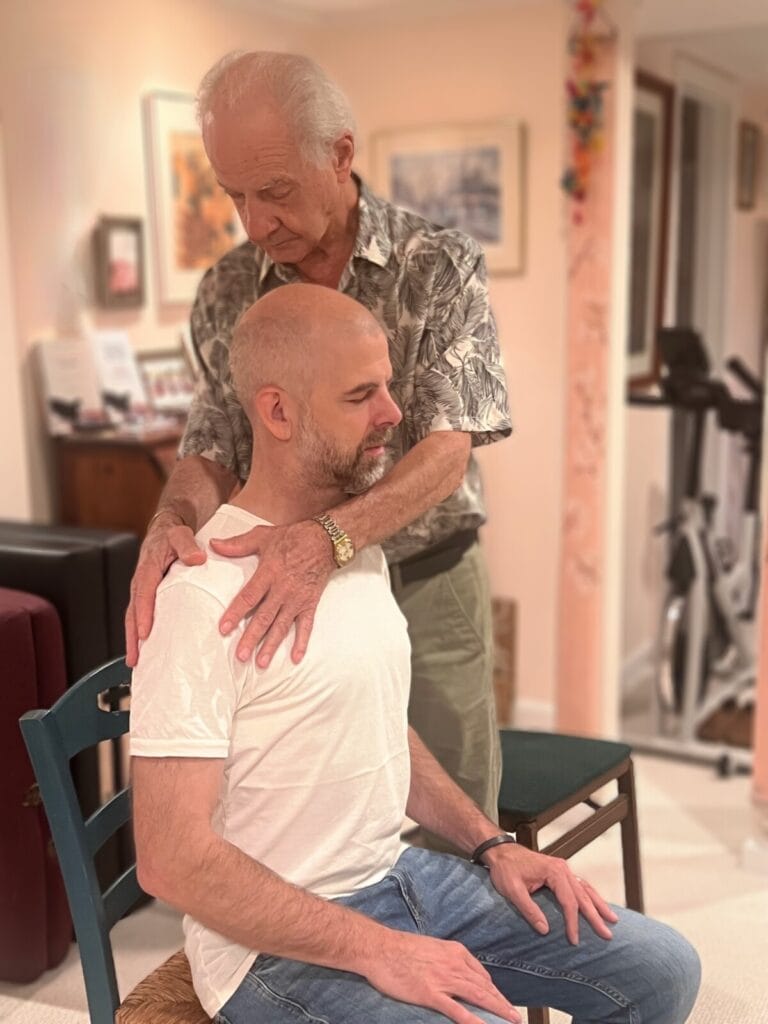
There is a moment before the word forms, before the throat tightens, before the familiar tone settles in and you quietly become “yourself” again. In the Alexander Technique, that instant is not philosophical. It is physical. It is perceptual. It is happening.
On November 20, 2025, in Boston, Massachusetts, USA, Tommy Thompson led a class in the Alexander Technique teacher training course that entered this exact threshold. He did not begin with posture. He did not begin with correction. He began with interruption.
“I have to inhibit, or withhold defining myself, at the moment I’m about to speak in the way I normally define myself.”
The desire appears. The body organizes. The habit prepares to execute. Most of the time, we move straight through it. But what if you do not rush? What if you stay inside the interval between impulse and action?
That opening is Liminal Space — the place where you do not have to become who you think you are.
In that interval, contraction does not have to tighten. The head can move forward and up without force. Personal narrative loosens its grip. Judgment falls away. And for a brief instant, you are not correcting yourself. You are seeing before you decide.
Key Objectives of the Class:
- To recognize the precise instant before habitual self-definition takes over
- To experience Liminal Space as a lived, kinesthetic interval
- To understand how forward and up emerges when unnecessary effort releases
- To explore teaching without judgment, guiding discovery rather than correction
This blog series is based on Tommy Thompson’s Alexander Technique classes. Each post follows the flow and insights of the class to expand both self-awareness and practical consciousness applicable to everyday life.
New here?
If you’re new to the Alexander Technique, you can start with the resources below.
Alexander Technique Class Flow at a Glance
1. The Opening Question
❝ What happens in your body before you become the version of yourself you already know? ❞
Not what you intend to say. Not what you intend to do. Not the story you are about to repeat. But what is physically organizing right now as self-definition begins to take shape.
In this Alexander Technique class, Tommy did not begin with ideas. He began with use. Before the word forms, before the movement completes, before the reaction settles in, something organizes first. The neck prepares. The breath adjusts. A familiar coordination gathers. The self you habitually know how to be starts assembling itself.
Most of the time, it completes itself before you notice.
Can you sense the organizing before it becomes you?
That is where the work begins. Not after the response. Not after the contraction. But in the instant when coordination is still fluid and identity has not yet sealed itself into form.
Tommy’s Word
“I have to inhibit, or withhold defining myself, at the moment I’m about to speak in the way I normally define myself.”
Tommy uses speaking as an example, but the principle extends beyond speech. It is the willingness to remain present at the threshold of self-definition—before the familiar version of yourself takes over.
That interval is Liminal Space.
In the Alexander Technique, change does not begin with correction. It begins at the threshold where identity is about to organize—and you choose not to rush into it.
2. Core Learnings from This Class
In this moment from Tommy Thompson’s Class 97, Tommy explores the pause between desire and action. He describes withholding definition as remaining present before habit determines how we see ourselves or others.
Watch how this pause opens the possibility of a different response.
What If You Stopped Defining Yourself? | Alexander Technique Inhibition
Class 97 · November 20, 2025 · Boston, MA
Core Concepts
Change begins at the moment self-definition starts to organize — before any word, movement, or reaction completes itself. Remaining present at that threshold alters everything.
Liminal Space is the lived interval between impulse and execution. It is where habit has not yet solidified and response is still fluid.
Withholding Definition is the refusal to immediately become the familiar version of oneself. It creates room for perception before identity hardens into action.
Personal Narrative shapes use before awareness catches it. Recognizing this does not judge the person; it opens possibility.
Five Key Messages
- You are already organizing before you act.
- Stay inside the interval instead of rushing to complete yourself.
- Inhibition is presence before automatic reaction, not control.
- Forward and Up appears when interference drops away.
- The teacher does not correct who you are; the teacher guides you to see how you are organizing yourself.
Essential Terms
Withholding Definition
Remaining present before self-definition seals into action.
Liminal Space
The threshold where coordination is still open and not yet fixed.
Inhibition
Pausing at the precise instant habit begins to organize.
Personal Narrative
The accepted identity that silently shapes response.
Forward and Up
The natural directional consequence of released contraction.
3. Tommy’s Insights
In Tommy’s words during class, there are not only the core principles of the Alexander Technique, but also practical wisdom that can be applied directly to daily life. His words go beyond simple advice about movement and prompt us to deeply consider how we choose to exist.“`html1. “A lot of the work involves guiding people into using a sense perception which they normally don’t use consciously. I have to inhibit, or withhold defining myself, at the moment I’m about to speak in the way that I normally define myself, so I’m using the word inhibition.”
➤ The work is not correction. It is remaining present at the precise instant self-definition begins to form.
2. “I free myself from whatever it was I was doing so that it lengthens, and then my head can move slightly away from the body rather than fold—but enough to go forward and up. Why? Because I feel I’m pulling in like that. So it has to go forward and up. This is the forward and up.”
➤ “Forward and up” appears when interference stops; it cannot be manufactured by will.
3. “So you’re living through that moment. So you’re extending, so then you’re sort of out of time within time.”
➤ In that interval, experience slows without stopping; awareness stretches beyond ordinary reaction.
4. “Frank said, ‘Be aware of your head moving in space, moving in space,’ and then include, as part of that awareness, the head’s relationship to the body. It didn’t start off with ‘Be aware of the head’s relationship to the body.'”
➤ Awareness begins in space. Relationship is discovered, not imposed.
5. “‘I’m not going to try and know in this conversation. I’ll try and see you for who you are. I see myself for who I am.’ And I’m seeing you with my hands. I’m feeling things in your body that you don’t even know are there.”
➤ Contact replaces analysis. Seeing precedes knowing.
6. “When I work with a trainee, I’m very much aware of personal narrative, not as a criticism, because you can’t criticize who you work with. There’s no way you can do that. You’re not living their life. But you can feel the personal narrative interfering with the possibility of something new.”
➤ Narrative is not wrong. It is simply the structure through which habit organizes itself.
7. “You respond with a tool that lets them know it’s perfectly understandable, because that’s going to happen. This work was often taught as judgment—’You’re wrong. You’ll always be wrong.’ That’s nonsense. It’s not that you’re wrong. There’s nothing to judge. You’re guiding the person into exploring who they have accepted themselves to be.“
➤ The teacher does not fix identity. The teacher creates conditions for exploration without judgment.
4. Practical Tips for Everyday Life
What’s the Goal?
The goal is not better behavior. It is to remain present before you define yourself and to sense the organization of reaction before it becomes action.
How to Practice
- Before You Speak
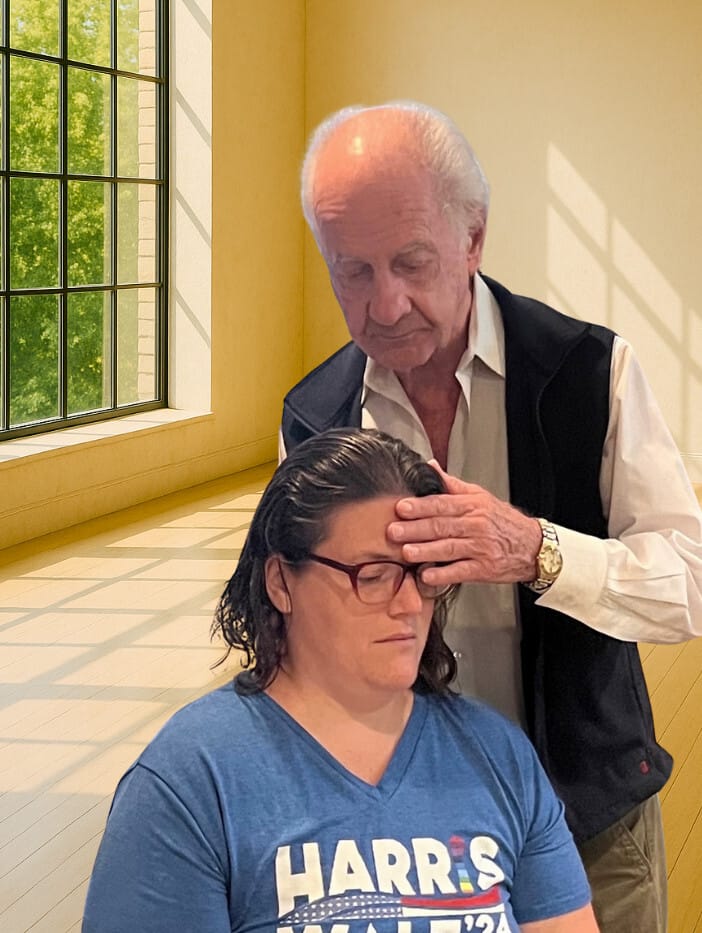
When someone asks you a question, notice the instant your neck and breath begin to organize. Do not correct anything. Stay present for one quiet breath before responding. - When You Stand Up
Instead of pushing yourself out of the chair, allow your head to move slightly forward into space and let the body follow. Let forward and up occur rather than forcing it. - In a Difficult Moment
When you feel the impulse to defend or explain, sense the tightening and pause. Widen your awareness to include the space around you and listen without rushing to define yourself.
What You’ll Notice
Time feels less compressed. Your head pulls back less. Reactions soften. Most importantly, you experience that you have a choice before habit completes itself.
5. Closing the Class
Key Takeaways
The work does not begin after the reaction. It begins at the instant coordination starts to organize. Change occurs when you notice self-definition beginning to form and choose not to complete it.
Forward and up is not something you do. It appears when interference stops. When unnecessary effort is withdrawn, the organism reorganizes without force.
Nothing is imposed. Something is allowed.
Core Insights
This work is not about being right or wrong. Judgment has no functional place here. What matters is whether you can remain present at the moment you are about to become the familiar version of yourself.
Withholding definition is not suppression. It is the willingness to stay at the edge of organizing without rushing into identity. In that interval, perception becomes clearer and choice becomes available.
The teacher does not correct the person. The teacher guides the student to observe how they are organizing themselves. When judgment disappears, exploration begins.
A Final Invitation
Coordination is always forming — before speech, before movement, before explanation. The question is not how to improve yourself. The question is whether you can remain present at the moment you habitually become yourself.
That moment continues long after the class ends — in the next breath, the next step, the next conversation.
6. One Key Practice
The single most important takeaway to put into action from this class is this:
Do not speak at the moment you are ready to speak.
When the answer forms and your neck gathers, stay there. Do not fix anything. Remain present for one quiet breath before the word leaves you.
It is small. It changes everything. This is how the work enters life.
7. Three Questions to Ask Yourself
- As I am about to respond, what is happening in my neck and breath?
- Am I rushing to become the self I already know?
- If I allow one more second of awareness, does something reorganize on its own?
These questions are asked in the middle of living, not after it.
8. For Those Who Wish to Learn More
Recommended Books
- Touching Presence – Tommy Thompson
This book articulates the philosophical ground beneath this class. Thompson explores how touch becomes a means of perception, how definition can be withheld before identity hardens, and how real change occurs in the living interval before reaction completes itself. Change unfolds in the moment before self-definition solidifies. If this session awakened your curiosity about Liminal Space, seeing rather than knowing, and guiding without judgment, this text extends those themes with clarity and lived authority.
Official Website of Tommy Thompson
www.easeofbeing.com
This is the official website personally managed by Tommy Thompson, offering a wide range of resources and programs to deepen your understanding and practice of the Alexander Technique:
- Private session reservations and inquiries
- Workshop and seminar schedules
- Overview of international teacher training programs
- Essays and articles on the Alexander Technique
9. Next Class Sneak Peek
You’ve noticed the pause before action. But what truly lives inside that pause?
In Class 98, we turn directly toward the liminal moment—the instant before inhibition, before identity settles into reaction.
What if real change happens before you even try to change?
We’ll explore how to recognize that moment earlier and remain within it long enough for something new to organize.
10. Join the Alexander Technique Journey
Did this class leave a small resonance within you? Feel free to quietly hold it in your heart or share it in just a sentence or two. The comments are always open. Your one simple word may leave a gentle ripple in this ongoing journey.The journey of Resonance Flow continues across social media as well. Let’s continue this journey together.
 YouTube
 Instagram
 Threads
 Facebook