Back Support: The Principle That Quietly Organizes Action in the Alexander Technique | Tommy Thompson Class 96
❝ When you shake hands, are you truly standing on your Back Support—or are you already falling forward? ❞
What is Back Support in the Alexander Technique? It is not strength. It is not posture correction.
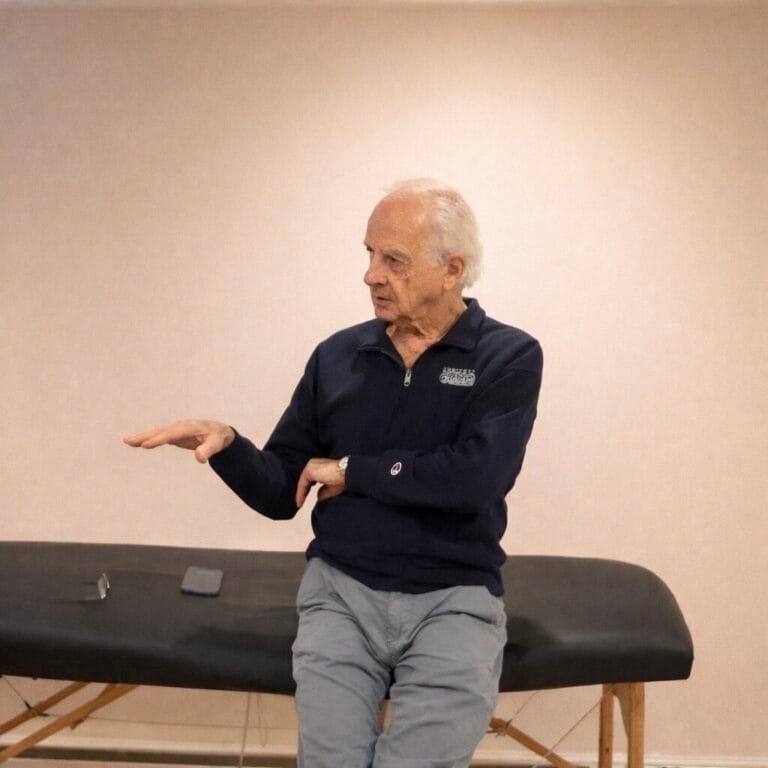
On November 19, 2025, in Boston, Massachusetts, USA, Tommy Thompson led a class in the Alexander Technique teacher training course where a simple handshake revealed something essential: if your hand does not belong to your back, there is no real contact.
Tommy reminded the trainees that the brain does not teach you how to stand; it teaches you how not to fall. Standing is the consequence.
Back Support is organized coordination within gravity. When the back supports coherently, the neck can be free, posture habits stop repeating, and embodied Wellness becomes lived rather than theoretical.
Key Objectives of the Class:
- To clarify what back support truly means in the Alexander Technique beyond muscular effort
- To explore how contact changes when the hand belongs to the back rather than to distal contraction
- To understand uprightness as a reflexive consequence rather than a goal
- To recognize that freeing the neck is central to restoring whole-system organization
This blog series is based on Tommy Thompson’s Alexander Technique classes. Each post follows the flow and insights of the class to expand both self-awareness and practical consciousness applicable to everyday life.
New here?
If you’re new to the Alexander Technique, you can start with the resources below.
Alexander Technique Class Flow at a Glance
1. The Opening Question
❝ When you shake hands, are you standing on your own support—or are you already falling forward? ❞
In this class, the issue was not the handshake. It was gravity.
Most people reach from the wrist. There is a squeeze. There is effort. But there is no organization through the back. When the hand does not belong to the back, coordination fragments and posture habits quietly repeat.
This is where Back Support becomes the decisive factor. It is not muscular strength. It is the organized relationship of the whole system within gravity. When that relationship is absent, the head moves forward, the chest pulls down, and the organism compensates.
Tommy reduced it to one uncompromising line:
“When you shake hands with someone, you don’t leave yourself. You shake from where you are, rather than where you’re going.”
That is the philosophy of the Alexander Technique in action. Contact is not forward projection. It is organized presence. When you move from anticipation, you subtly fall. When you move from where you are, uprightness organizes itself.
The handshake becomes diagnostic.
Are you still with yourself? Or have you already gone somewhere else?
2. Core Learnings from This Class
Core Concepts
- The hand belongs to the back.
A handshake reveals whether action is local or systemic. When the grasp originates in the wrist, it becomes a squeeze. When it originates in the back, contact becomes whole. - Standing is the consequence.
Uprightness is not achieved by trying to stand correctly. It appears when interference is reduced. - The brain teaches how not to fall.
Support happens automatically. Effort shows up when something is already off. - Everything serves one aim: to free the neck.
When the neck is free, the head can organize over the spine and the system rebalances. - Back Support organizes gravity.
Without it, posture habits return no matter how much effort is applied.
Five Key Messages
- Real contact cannot arise from distal contraction.
- A squeeze is not support.
- Uprightness is what remains when interference stops.
- Support must precede action.
- If you leave your back, you leave yourself.
Essential Terms
Back Support
The organized relationship of the back within gravity that allows upright coordination without force.
The Hand Belongs to the Back
Tommy’s phrase describing action that originates from whole-system support rather than from the wrist or fingers.
Standing Is the Consequence
A core teaching that uprightness emerges naturally when interference is reduced.
How Not to Fall
The brain’s reflexive task in organizing balance, replacing the idea of “trying to stand.”
Free the Neck
The central aim of coordination in the Alexander Technique. When the neck is free, the organism reorganizes.
3. Tommy’s Insights
In Tommy’s words during class, there are not only the core principles of the Alexander Technique, but also practical wisdom that can be applied directly to daily life. His words go beyond simple advice about movement and prompt us to deeply consider how we choose to exist.1. When you shake hands with someone, or you touch someone, you’re affecting them through the way you’re using yourself—so not much happens. There’s no real contact being made.
➤ Contact is determined not by the hand, but by how you are organizing yourself.
2. Now, if you’re non-habitual and you start to shake hands with someone, you’re together enough that when you shake hands with them, they offer their hand in a different way. Because most people just offer their hand naturally, with nothing there except a squeeze. And the squeeze comes from here—from the wrist to the fingers. That’s it.
➤ When habit is inhibited, the handshake shifts from a local squeeze to an exchange organized through the whole system.
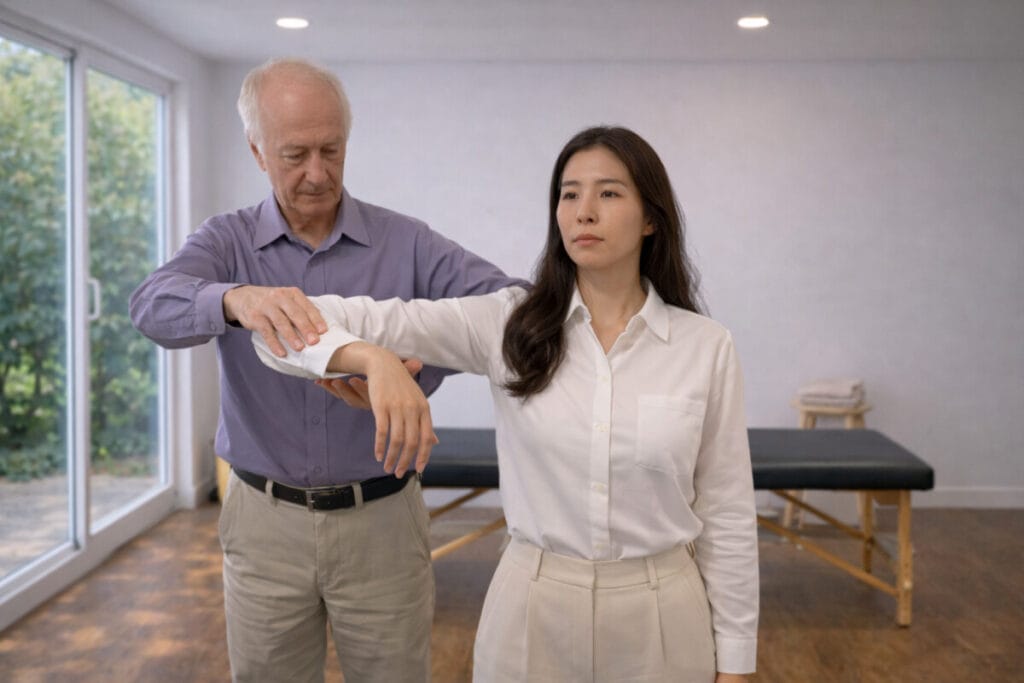
3. If you’re shaking hands from an Alexander point of view, you shake hands knowing that your grasp belongs to the back—and it does belong to the back muscles.
➤ The hand is not primary; it is the visible extension of the back’s support and the organism’s upright organization.
4. The inspansion is connected when you shake a person’s hand.
➤ Inspansion reflects the subtle inward–outward coordination that sustains uprightness within a shared field of gravity.
5. When you shake hands with someone, you don’t leave yourself. You shake from where you are, rather than where you’re going.
➤ True presence arises when intention does not outrun embodiment.
6. The brain is not teaching how to stand—it’s teaching how not to fall. Standing is the consequence.
➤ Uprightness emerges from refined inhibition within the gravitational field, not from muscular achievement.
7. It’s all designed to free the neck. Everything we do, anywhere in the body, is designed to free you.
➤ When the neck is free, primary movement resumes and the whole system reorganizes toward integration.
8. You go into the tissue with just enough pressure to excite the muscle tissue to release.
➤ Non-manipulative touch stimulates the organism’s intrinsic capacity for self-regulation rather than imposing correction.
4. Practical Tips for Everyday Life
What’s the Goal?
The goal is not better posture but restored back support before action. When the back organizes within gravity, the neck can be free and standing becomes the consequence. This is where the Alexander Technique becomes lived Wellness rather than correction.
How to Practice
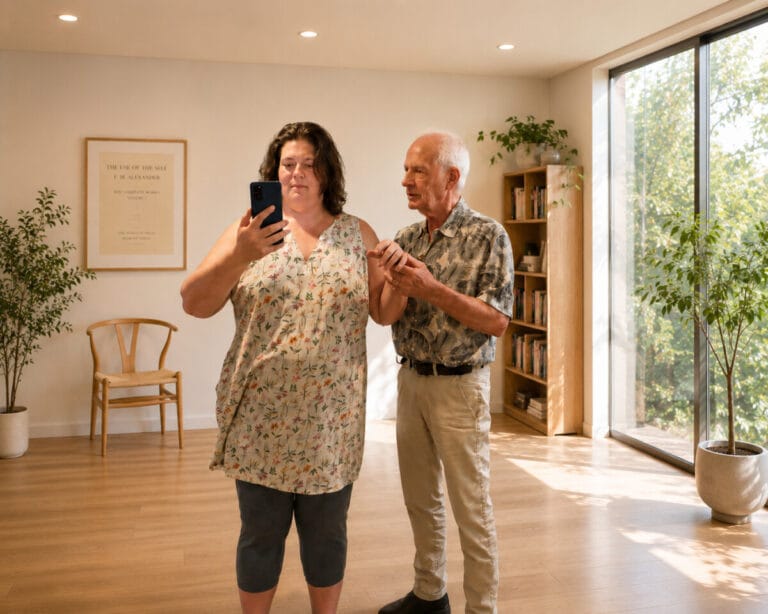
- Before you shake hands, pause and feel your back organizing you. Let the arm hang from that support and then reach.
- While standing in conversation, reduce the subtle forward lean. Allow the back to widen and the head to balance rather than project.
- When walking, notice whether your head moves first. If it does, let support organize you before the step.
What You’ll Notice
Effort decreases. Contact feels steadier. Standing becomes quieter. Movement feels supported rather than managed. You are no longer trying to hold yourself upright; you are simply not interfering.
5. Closing the Class
Key Takeaways
This class was not about improving a handshake. It revealed where action originates. When the hand leaves the back, coordination fragments. When back support is present, uprightness reorganizes without effort.
Tommy reminded the trainees that the brain does not teach you how to stand. It teaches you how not to fall. Standing is the consequence.
Core Insights
Support must precede action. Most people act first and stabilize afterward. In this class, movement was slowed until its origin became visible.
Tommy was clear: You do not create balance; you stop disturbing it. When the neck is free, gravity organizes you.
A Final Invitation
Before you reach, speak, or step, notice where the action begins. If it begins without support, pause. If it begins from organized coordination, allow it.
The Alexander Technique is not something you perform. It is something you stop interfering with.
Standing then simply happens.
6. One Key Practice
Do not act until you are supported
Pause before you move. Notice whether the action begins in your back or in your anticipation. If it begins in effort, wait. If it begins in organized support, proceed.
That is how back support becomes lived practice.
7. Three Questions to Ask Yourself
- Am I supported right now, or reaching ahead of myself?
- Am I trying to stand, or simply not falling?
- If I pause, does my neck free or fix?
Ask in real time. That is where the Alexander Technique lives.
8. For Those Who Wish to Learn More
Recommended Books
How You Stand, How You Move, How You Live – Missy Vineyard
This book presents the Alexander Technique as a method for exploring how your brain and body interact, helping you understand why habitual tension persists and how awareness can transform movement patterns. Vineyard uses clear explanations, lesson stories, and simple self-experiments to show how coordinated support can replace effortful habits, helping you relate mind and body in everyday life rather than merely correcting posture.
Official Website of Tommy Thompson
www.easeofbeing.com
This is the official website personally managed by Tommy Thompson, offering a wide range of resources and programs to deepen your understanding and practice of the Alexander Technique:
- Private session reservations and inquiries
- Workshop and seminar schedules
- Overview of international teacher training programs
- Essays and articles on the Alexander Technique
9. Next Class Sneak Peek
There is a threshold between who you habitually become and who you have not yet allowed yourself to be. It is not reaction, and it is not restraint. It is the unstable, living ground where definition has not yet closed.
What if that ground is not uncertainty—but Liminal Space, the place where real choice begins?
In Class 97, we’ll explore: the lived experience of Liminal Space—where identity loosens, perception widens, and transformation becomes possible before action takes form.
10. Join the Alexander Technique Journey
Did this class leave a small resonance within you? Feel free to quietly hold it in your heart or share it in just a sentence or two. The comments are always open. Your one simple word may leave a gentle ripple in this ongoing journey.The journey of Resonance Flow continues across social media as well. Let’s continue this journey together.
 YouTube
 Instagram
 Threads
 Facebook