What the Still Point Unlocks in Your Body – Tommy Thompson Class 49
❝What if the key to healing your posture, your stress, and your sense of self… wasn’t doing more—but learning how to stop?❞
You don’t need to fix yourself. You don’t need to do it better. You need to pause—fully—and listen. That’s where everything begins.
In the Alexander Technique, we often talk about movement. But before movement comes awareness. And before awareness comes the still point—that moment when you are not yet reacting, not yet doing, but simply available. That’s where real presence begins.
That’s where you stop chasing change and let it emerge from within.
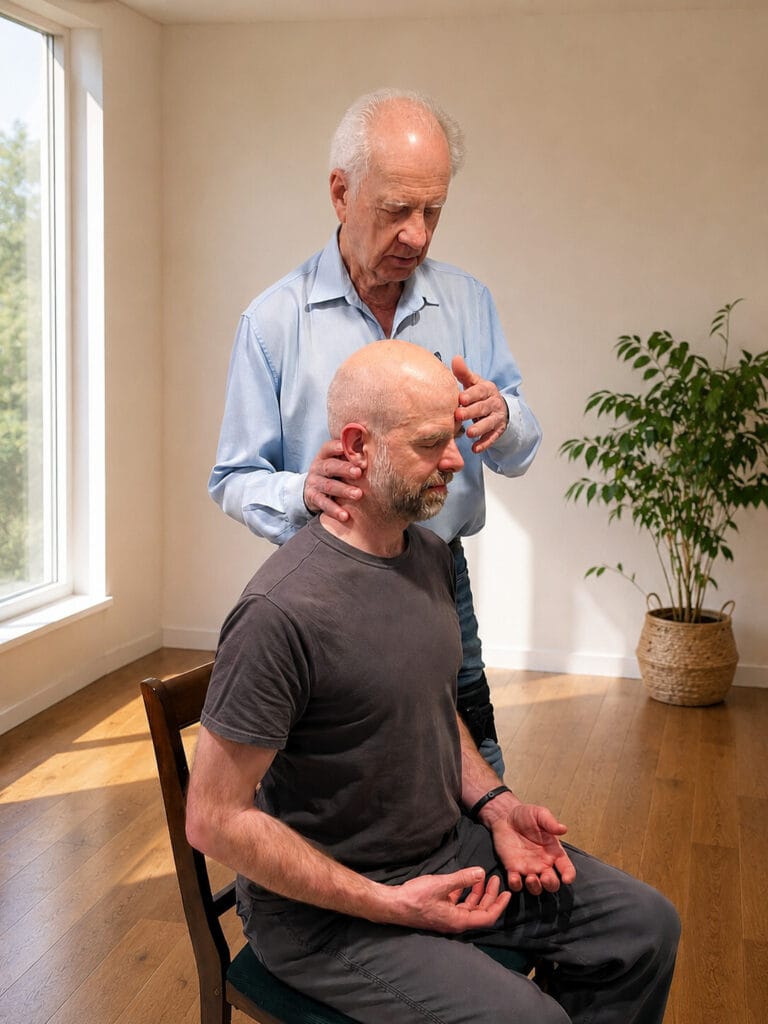
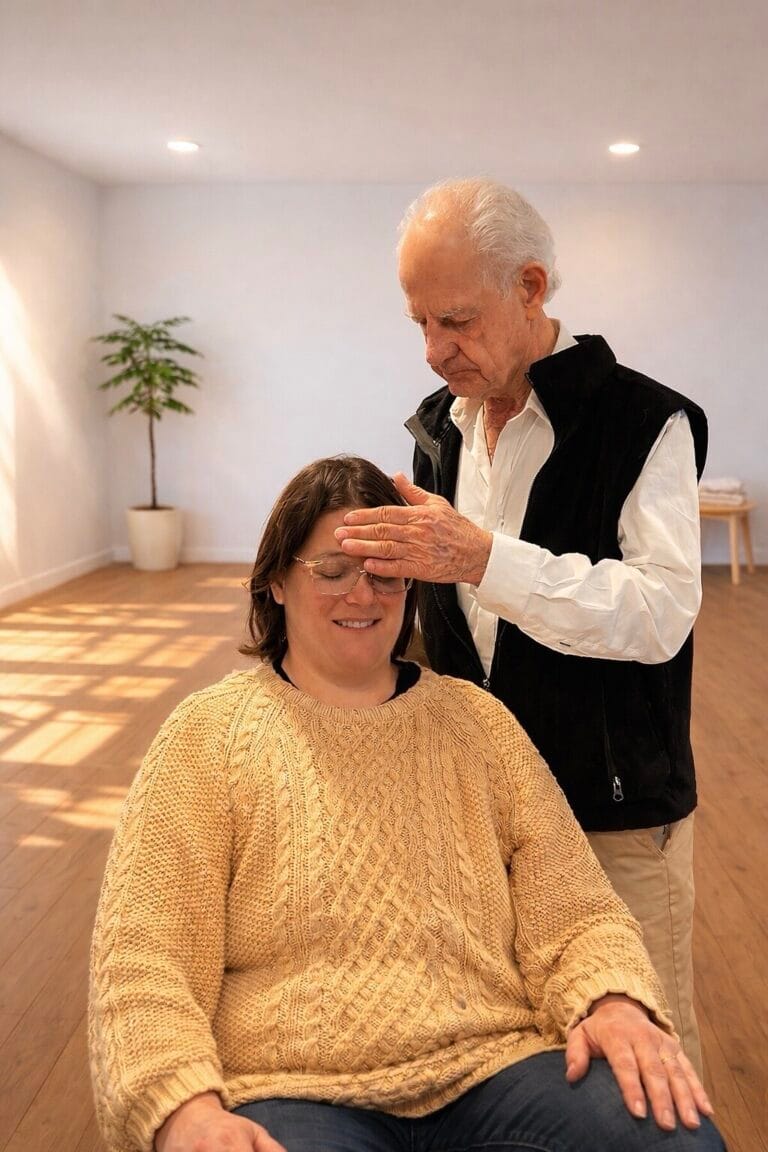
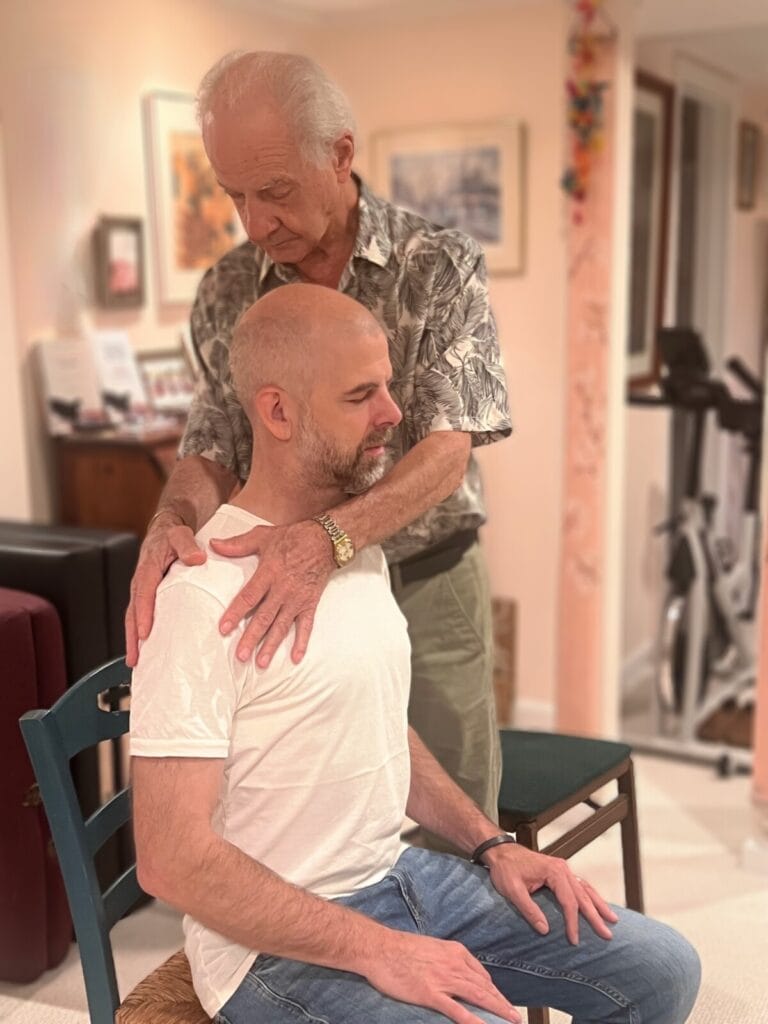
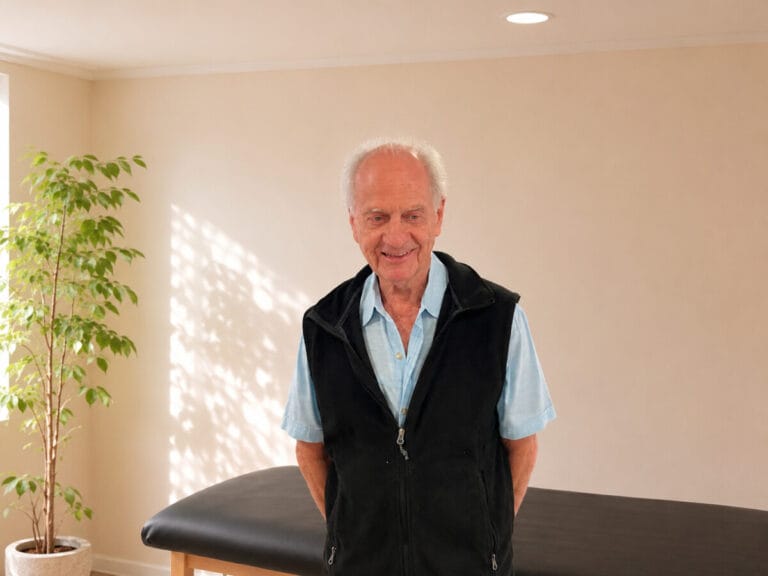
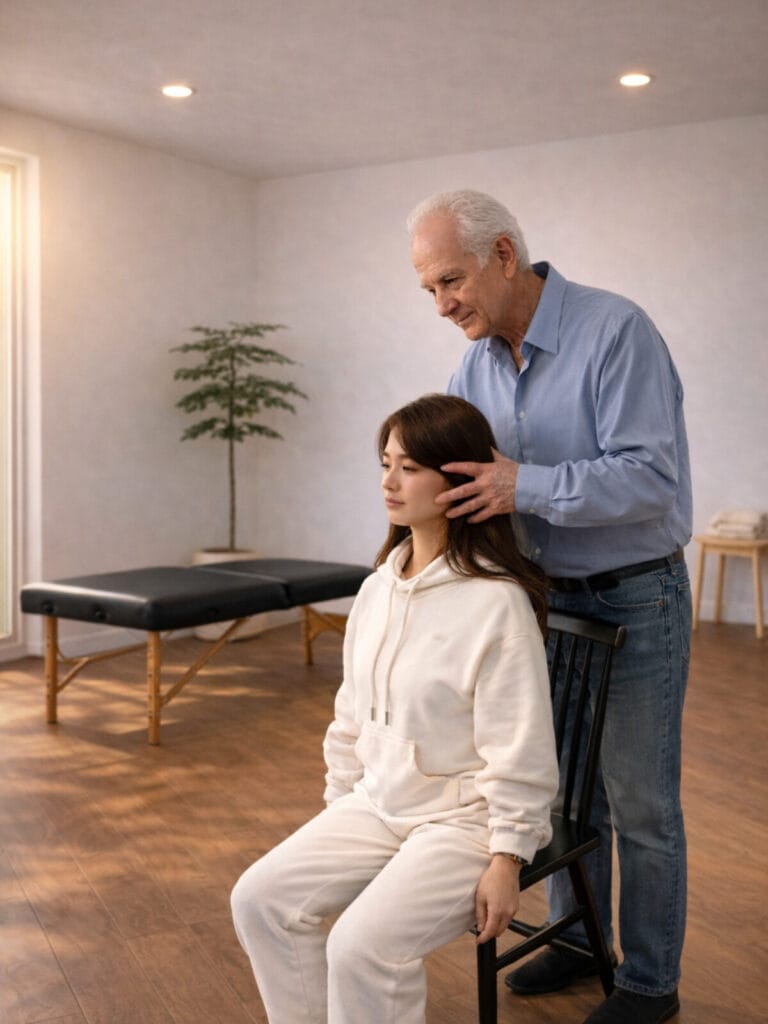
This was the focus of our class on March 18, 2025, in Boston, Massachusetts, USA, where Tommy Thompson led a group of trainees in the Alexander Technique teacher training course. It wasn’t a class about fixing posture or learning cues. It was about how the nervous system, when given space, begins to reorganize toward support—and how that subtle process starts not with movement, but with inhibition, with presence, with waiting.
“You wait. And in waiting, listen carefully. In waiting, you’re both withholding defining how you should do the next move, which lets the nervous system decide for you…”
In that pause—whether one second or one nanosecond—you don’t lose yourself. You meet yourself. And in that brief moment, we began to notice something more honest, more familiar within ourselves.
Key Objectives of the Class:
- To explore the Still Point as the central gateway to integration, movement, and identity
- To refine the Alexander Technique through waiting, sensing, and non-directive teaching
- To connect the practice to everyday wellness, not as a technique but as a way of being
This blog series is based on Tommy Thompson’s Alexander Technique classes. Each post follows the flow and insights of the class to expand both self-awareness and practical consciousness applicable to everyday life.
New here?
If you’re new to the Alexander Technique, you can start with the resources below.
Alexander Technique Class Flow at a Glance

1. The Opening Question
❝What happens in your body the instant you stop trying to control it?❞
Your whole system—muscles, breath, thoughts—has been trained to push, brace, and control. But the deeper question is: what happens when you don’t? When you drop the intention to improve? When you stop micromanaging your posture, your presence, your movement?
That’s not surrender. That’s the moment your nervous system comes online as your ally, not something to be fixed or overridden.
In that instant—brief as a nanosecond—you’re no longer moving as parts. You’re moving from the whole. And it all begins in the Still Point, where nothing is imposed and everything is sensed.
Tommy’s Word
“The nanoseconds really count in the nervous system time, because the nervous system time is working far quicker than you can possibly make yourself. And that’s the moment of inhibition. And inhibition at that moment is when you want to find a still point—the still point of support—before you continue.”
This isn’t theoretical. It’s a moment-to-moment reality in the Alexander Technique. Tommy reminds us that the nervous system doesn’t wait for permission. It operates faster than cognition. And in that speed, there’s a chance to reorganize everything—not by doing more, but by doing less at the exact right moment.
That’s what this class was training: the discipline of not interfering, the skill of allowing coordination to emerge, and the Presence that becomes possible when we stop controlling and start listening.
2. Core Learnings from This Class
Core Concepts
- Still Point as the origin of integration
Tommy often guided us to recognize that stillness is not the absence of motion—it’s the beginning of organization. In the Alexander Technique, the still point is the moment the nervous system starts to gather direction, long before muscles engage. That’s when support becomes available—not from effort, but from intelligent timing. - Inhibition as intelligent interruption
We didn’t practice stillness as discipline—we practiced it as freedom.
Tommy made it clear: inhibition is not suppression. It’s the conscious, creative act of stepping aside so that the innate coordination of the system can reveal itself. Not doing less—but doing differently. - Presence through the body, not through thought
Tommy challenged us to stop chasing awareness with our minds and start feeling it through our structure. Presence in this work isn’t conceptual. It’s a sensory event—a felt integration of breath, balance, space, and self. You don’t make yourself present; you notice you already are, beneath the noise.
Five Key Messages
- Stillness isn’t passive—it’s where movement finds its direction.
Tommy showed us that if we pause before acting, the system begins to self-organize. Not with rigidity, but with clarity. Movement from this space feels coherent, not fragmented. - The nervous system works faster than your plans—learn to respect its timing.
Instead of initiating movement, we practiced listening. Tommy reminded us that in the nanosecond before reaction, coordination is already underway—if we let it happen. - Use begins at the core—not in isolated effort.
When movement starts from your center, tension drops and support rises. Tommy returned again and again to the idea that you don’t move your parts—you move as a whole. And that begins in the core of your design. - Teaching is not fixing—it’s making space for recognition.
Tommy never imposed solutions. He created conditions. In this class, we didn’t correct trainees—we offered them the chance to notice what was already present but overlooked. - If the experience came from you, it’s already yours to keep.
Again and again, Tommy reinforced this: If I didn’t give it to you, then it was you. So walk as you. The Alexander Technique isn’t about giving something to someone—it’s about helping them reclaim what was always theirs.
Essential Terms
- Still Point
A core term in Tommy’s approach. It refers to the moment—often barely perceptible—just before action, when the nervous system begins to gather itself. It’s where support, clarity, and direction emerge, and where movement should begin. The still point is not fixed, but dynamic and alive. - Inhibition
A cornerstone of the Alexander Technique, often misunderstood. In Tommy’s class, inhibition was taught as a moment of conscious non-doing—where habitual response is paused, and a new option can emerge. It’s the muscular and neurological “yes, but not yet.” - Use of the Self
A foundational Alexander Technique concept, referring to how a person organizes their whole self in activity—not just posture, but attention, intention, and direction. Tommy reframed it as a process of uncovering the self’s natural coherence, not shaping it into a mold. - Presence
In this context, presence is a physical event as much as a mental one. It emerges from a quiet, embodied awareness—not effortful attention, but deep kinesthetic listening. Presence in the Alexander Technique is the outcome of honoring the still point. - Support
Not something you add on, but something you return to.
Tommy often said that support is already there, embryologically and structurally. Our job is to stop overriding it. When you stop interfering, you find you’re already supported. - Direction
A term with deep meaning in Alexander work. Direction isn’t pushing or aiming—it’s thinking spatially and intentionally toward length, width, and depth. In Tommy’s class, direction was taught not as control, but as invitation.
3. Tommy’s Insight
In Tommy’s words during class, there are not only the core principles of the Alexander Technique, but also practical wisdom that can be applied directly to daily life. His words go beyond simple advice about movement and prompt us to deeply consider how we choose to exist.1. “The patterns of behavior that you acquire are also reflecting your sense of who you think you are—what you think you need to be at a given moment to be yourself.”
→ Our movement habits are shaped by internalized identity patterns. In Alexander Technique, this underscores how self-image conditions the use of the self.
2. “You wait. And in waiting, listen carefully. In waiting, you’re both withholding defining how you should do the next move, which lets the nervous system decide for you, because the nervous system knows that you’re doing what you’re doing, and it will integrate the whole of you and give you more support, rather than working against yourself while you do it. And you can give direction.”
→ True inhibition isn’t passive; it’s an active state of attentive presence that allows deeper coordination to emerge from within.
3. “If you start using yourself out of the core, in the way you’re designed to function, you’ll strengthen yourself out of the core, in the way you’re designed to function.”
→ Movement initiated from the core supports structural integrity. The Alexander Technique emphasizes organizing action from central support rather than peripheral compensation.
4. “The nanoseconds really count in the nervous system time, because the nervous system time is working far quicker than you can possibly make yourself. I mean—yeah. And that’s the moment of inhibition. And inhibition at that moment is when you want to find a still point—the still point of support—before you continue.”
→ The nervous system operates in micro-timings. Catching those subtle pauses creates space for conscious direction rather than habitual reaction.
5. “You’ve got to recognize the potentiality—the potential where the still point is going to occur. And you can do that. And then, when you move—whatever the movement is—you’re going to feel more integrated, more completely integrated.”
→ Awareness of potential still points primes the system for integrated action. This is presence in its truest form—sensing possibility before outcome.
6. “And so your job as a teacher is—when introducing a way of reclaiming your sense of hopes—reclaiming your belief that you are in complete support.”
→ The role of the teacher is not to fix but to restore the student’s innate sense of being supported—physically, neurologically, existentially.
7. “There’s a relationship between the pelvis and everything up in your body. The pelvis is Grand Central Station. Everything goes through the pelvis. So—if the neck—the simplest way—if the neck is dorsiflexed backward and downward habitually—then the pelvis is kind of cooked forward, in the way that you described.”
→ The body’s central coordination runs through the pelvis. Misuse in the head-neck relationship reflects directly in pelvic alignment, affecting the whole structure.
8. “I think that’s what we really are talking about. I mean, when we do that whole talk about connection, the thing you really must do is connect with the person. And you’re connecting with a person who’s riddled with a vision, and you’re connecting with that aspect of the person who is not riddled with the situation. But it is about connection—not lesson.”
→ The Alexander Technique is not transactional teaching. It’s about authentic connection—meeting someone beyond their habitual narrative.

4. Practical Tips for Everyday Life
What’s the Goal?
Not to fix. Not to stand straight. Not even to get it “right.” The goal is to be available. Available to gravity. To change. To your own presence.
Tommy’s teaching isn’t about better posture. It’s about relating to yourself—without the layer of control.
How to Practice
- Stand Still—Don’t Hold Still
Pick any moment you’d normally rush through—waiting for a screen to load, a light to change, a notification to pop up. Instead of holding, just notice. Let your breath move. Let the floor hold you. You’re not pausing action—you’re making space. - Reach from the Whole, Not the Hand
Before grabbing your phone or cup, pause. Let the action rise through your body—from your feet, pelvis, spine, all the way to your fingers. Don’t correct. Just connect. One clear reach can reset your entire tone. - Sit into Support
Before you sit, don’t drop. Don’t brace. Let the chair come to meet you. Lower yourself with intention, not collapse. Upward direction doesn’t stop—even when you’re down. It’s not sitting still. It’s sitting alive.
What You’ll Notice
- You’ll feel lighter—with less effort.
- You’ll stop bracing without trying.
- Your timing will change—you’ll actually have more time.
- You’ll remember your body before it reminds you.
This isn’t exercise. This is how you meet movement—every day.

5. Closing the Class
Key Takeaways
This class wasn’t about fixing. It wasn’t about better posture. It was about getting out of the way. Tommy didn’t ask us to try harder. He asked us to notice what happens when you don’t interfere.
The Alexander Technique doesn’t give you rules—it restores your choices. It’s a practice of relationship: with gravity, with time, with your own perception.
Core Insights
- Inhibition is the space where direction begins.
- Support doesn’t come from trying harder—it comes from trust.
- Coordination isn’t mechanical—it’s responsive.
- Movement follows identity—how you move reflects who you believe you are.
- The still point isn’t a place of pause—it’s a source of renewal.
When you stop insisting, something more whole can move.
A Final Invitation
Let yourself do less. Not to disappear—but to be more available. Be still—not to freeze, but to feel. This is where presence begins.
You don’t need to control your body. You need to remember: you already belong in it. And that’s what the Alexander Technique keeps pointing you toward: the still point of presence, where coordination begins.

6. One Key Practice
Pause before you move. Not to hesitate. Not to prepare. But to feel the exact moment where habit ends and choice begins.
That’s where coordination lives. Where presence waits. Where the still point aligns with direction. Where the Alexander Technique becomes real.
7. Three Questions to Ask Yourself
- Am I trying to hold myself up—or letting myself be held?
→ What if support didn’t have to be made—but sensed? Let your body show you the difference. - What changes when I stop trying to do it right?
→ Notice how effort shapes your movement. And what shifts when you stop adding the shape. - Where is my attention coming from right now?
→ Not just what you’re aware of—but where from. Feel where your attention is landing—in your body, or outside of it.
8. For Those Who Wish to Learn More
Recommended Book
→ Not a book about the Alexander Technique—but one that resonates with its essence. Eliot returns again and again to a phrase that could have come from Tommy himself:
“At the still point of the turning world, there the dance is.”
This “still point” is the same space as inhibition Tommy speaks of—where movement arises not from effort, but from presence. Tommy later expanded this idea into what he calls “the still point of support”—not merely a pause, but a moment when the nervous system reorganizes around internal support before action begins.
Four Quartets doesn’t teach you to move better. It invites you to become still enough to notice how movement begins. It’s not a technique. It’s how you inhabit your own being.
Official Website of Tommy Thompson
www.easeofbeing.com
This is the official website personally managed by Tommy Thompson, offering a wide range of resources and programs to deepen your understanding and practice of the Alexander Technique:
- Private session reservations and inquiries
- Workshop and seminar schedules
- Overview of international teacher training programs
- Essays and articles on the Alexander Technique
9. Next Class Sneak Peek
What if the most powerful thing you could do as a teacher… was to do nothing at all?
In the next class, something subtle—but radical—begins. We stop helping. We stop correcting. We stop managing.
Instead, we begin to witness. Tommy invites us to discover what emerges when we no longer interfere.
In Class 50, we enter the heart of what he calls non-interference—not passive neglect, but a precise form of presence that allows the body to reorganize itself.
“The system doesn’t need input. It needs space.”
This is a class about trust, about waiting, not knowing, and staying anyway. It’s not silence—it’s attention. It’s not stillness—it’s support.
If Class 49 showed how dialog begins, Class 50 reveals what happens when you stop leading—and let the body speak back.
10. Join the Alexander Technique Journey
Did this class leave a small resonance within you? Feel free to quietly hold it in your heart or share it in just a sentence or two. The comments are always open. Your one simple word may leave a gentle ripple in this ongoing journey.The journey of Resonance Flow continues across social media as well. Let’s continue this journey together.
 YouTube
 Instagram
 Threads
 Facebook