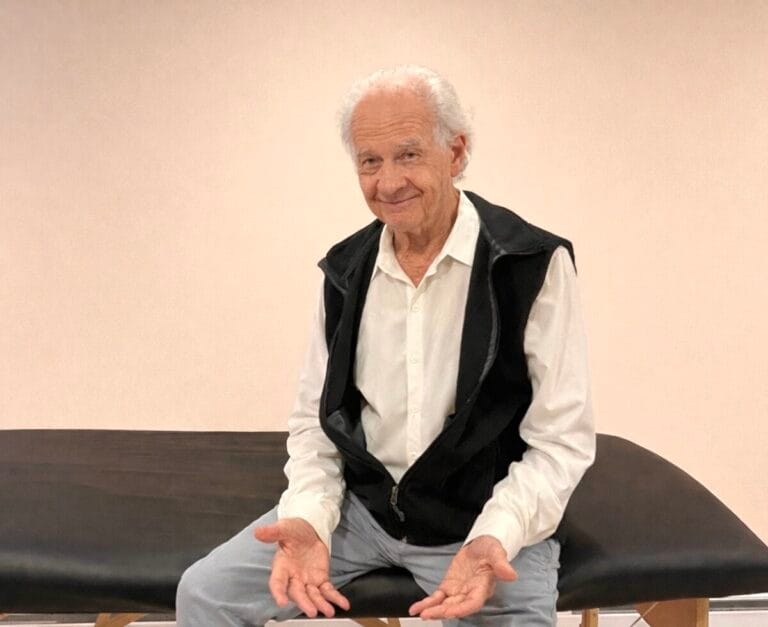
The Inhibitive Moment: The Pause That Changes Everything | Tommy Thompson Class 94
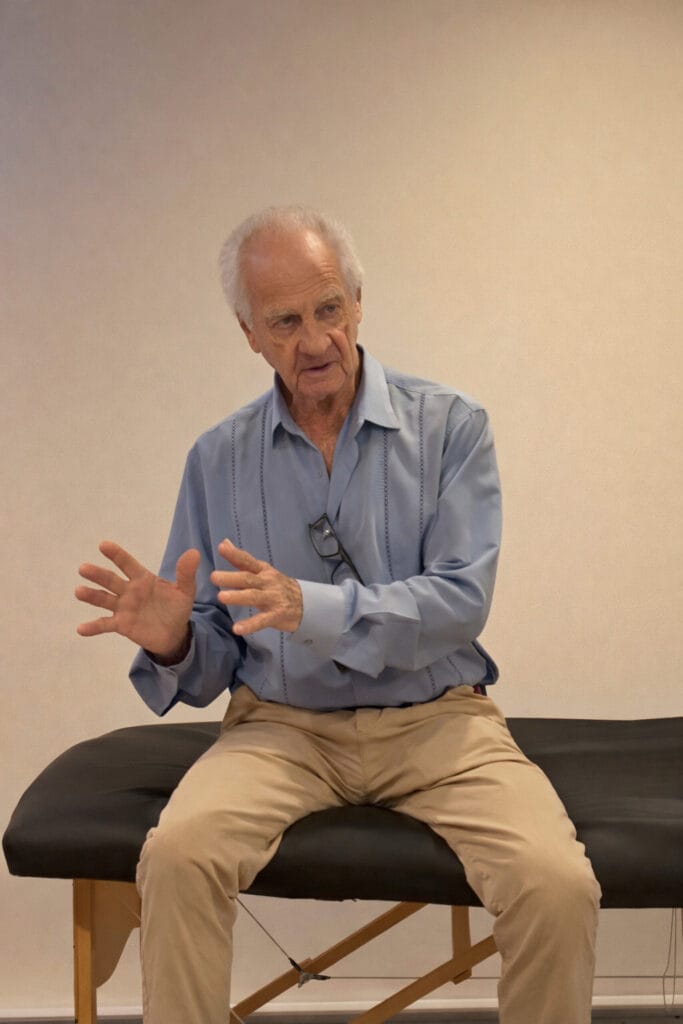
❝ What happens at the exact moment you choose not to do what you always do in the Alexander Technique? ❞
We usually expect change to come from doing something better. But in the Alexander Technique, real change begins in a very different place: the moment just before habit takes over. The instant when you are about to respond as you always have—and you don’t. This is the inhibitive moment, where effort drops away and the organism reorganizes itself without correction.
On November 13, 2025, in Boston, Massachusetts, USA, Tommy Thompson led a class in the Alexander Technique teacher training course using chair work and table work not as skills to master, but as demonstrations. What was revealed was not how to sit or stand correctly, but how the head–neck relationship organizes movement, perception, and response. Again and again, the work returned to a single, uncompromising question:
How do you bring this work into your life—especially when pain, habit, or circumstance seem to take over?
Key Objectives of the Class:
- To recognize how the inhibitive moment interrupts habitual reaction and allows integration
- To understand chair work and table work as demonstrations rather than techniques
- To experience how touch does not create change, but reveals what already exists
- To explore how response—not control—shapes lived experience
This blog series is based on Tommy Thompson’s Alexander Technique classes. Each post follows the flow and insights of the class to expand both self-awareness and practical consciousness applicable to everyday life.
New here?
If you’re new to the Alexander Technique, you can start with the resources below.
Alexander Technique Class Flow at a Glance
1. The Opening Question
❝ Where is the moment before habit decides for you? ❞
This question sits at the center of the class. Not how to move better, not how to correct posture, but where choice still exists. In the Alexander Technique, change does not begin with instruction. It begins when the usual response is delayed, even briefly.
That brief pause is the inhibitive moment, the instant when you are about to do what you always do, and you don’t. Nothing is added. Nothing is corrected. In that moment, the system reorganizes itself because the brain recognizes that something different is happening.
Tommy’s Word
“If you’re going to accomplish the same goal, all you have to do is not do what you usually do. In that moment, the brain does what it’s designed to do. It moves you with more integration.”
This question frames the entire class. Every demonstration, every use of touch, every return to chair work points back to it. Can you recognize the moment before habit and allow something else to take over?
2. Core Learnings from This Class
Core Concepts
- Choice precedes method.
The teacher’s primary work is not applying a procedure, but choosing how to begin based on the person’s condition, history, and capacity in that moment. - Chair work and table work function as demonstrations, not skills to master.
Their purpose is to reduce habitual doing so the whole system can be perceived as a coordinated unity. - Touch does not create change—it accentuates what already exists.
By altering conditions, touch allows perception to lead reorganization rather than effort or instruction. - The inhibitive moment is where integration begins.
When the usual response is briefly withheld, the brain recognizes the difference and organizes movement with greater coherence. - The work only matters if it enters life.
Its real test appears in pain, pressure, and ordinary activity—where response, not control, shapes experience.
Five Key Messages
- Change does not come from doing better, but from not doing the usual thing.
- Demonstration points to coordination; it is never the goal.
- Touch reveals organization already present in the organism.
- Inhibition restores perspective by interrupting reaction.
- The work belongs to life, not the lesson.
Essential Terms
- Inhibition
The capacity to pause habitual reaction, allowing a different organization to emerge. - Kinesthetic sense
The sensory means by which one perceives how they are using themselves in action. - Demonstration
A lived example that reveals coordination without instruction or correction. - Head–neck relationship
The organizing relationship through which movement and postural unity are expressed. - Withholding definition
Suspending fixed self-interpretation long enough for the brain to reorganize activity.
3. Tommy’s Insights
In Tommy’s words during class, there are not only the core principles of the Alexander Technique, but also practical wisdom that can be applied directly to daily life. His words go beyond simple advice about movement and prompt us to deeply consider how we choose to exist.4. Practical Tips for Everyday Life
What’s the Goal?
The goal is not to fix movement or remove pain. It is to recognize the instant when habit is about to take over—and to pause there. That pause changes how the organism organizes itself, without adding effort or instruction.
How to Practice
- Before you stand up
Notice the familiar urge to prepare yourself in the usual way. Instead of adjusting posture, take a brief moment where you simply don’t do that. Then stand. - When discomfort or pain appears
Rather than reacting immediately, notice how you are meeting the sensation. Allow a short pause before tightening or bracing, and see what changes in the quality of the experience. - During ordinary activity
While walking, reaching, or turning, notice the moment you commit to effort. Let that commitment soften for an instant, and allow the movement to reorganize itself.
What You’ll Notice
Movement feels less forced and more continuous. Attention shifts from control to perception. Even when circumstances don’t change, experience does. Over time, you begin to trust that the organism knows how to organize itself when habit is not deciding.
5. Closing the Class
Key Takeaways
- Real change does not come from correction, but from recognizing the moment before habit takes over.
- Demonstration is never the goal; it only points toward how coordination already exists.
- Touch does not impose organization—it reveals what the organism is already doing to support itself.
- The work matters only when it can be lived, especially under pressure, pain, and uncertainty.
Core Insights
At the end of the class, what remains is not a method to remember, but a capacity to notice.
The organism does not need to be corrected—it needs space.
That space appears when the usual reaction is paused.
When definition is withheld, coordination is no longer forced.
In that moment, the brain does what it is designed to do: it organizes movement, perception, and response as a unified whole.
A Final Invitation
The invitation is simple and demanding. Do not wait for ideal conditions. Do not retreat into explanation. Catch yourself in the middle of life—mid-movement, mid-reaction, mid-story—and notice the instant when you could do what you always do.
Then don’t. That moment is enough.
6. One Key Practice
One Moment Before You Act
Choose one simple action.
Just before you do it, pause for a brief moment.
Do not correct anything.
Then let the action happen.
This is the inhibitive moment—one pause, in the middle of life.
7. Three Questions to Ask Yourself
These are not questions to analyze afterward.
They are meant to be met while you are moving, acting, or responding.
- Where do I notice myself preparing to act before I actually move?
- What happens if I recognize that moment—and do nothing extra?
- How does my experience change when I let the action organize itself?
Do not answer them in your head.
Let them meet you inside the action itself.
8. For Those Who Wish to Learn More
Recommended Book
Touching Presence – Tommy Thompson
This book reflects the same inquiry at the heart of this class: how change occurs when we stop defining ourselves by habit. Rather than offering techniques to apply, Touching Presence explores how awareness, touch, and relationship allow the organism to reorganize itself without correction or effort.
Through reflections on withholding definition, habit, and lived experience, the book deepens the understanding of the inhibitive moment—the brief pause where the usual reaction is not taken, and life is met more fully as it unfolds.
Official Website of Tommy Thompson
www.easeofbeing.com
This is the official website personally managed by Tommy Thompson, offering a wide range of resources and programs to deepen your understanding and practice of the Alexander Technique:
- Private session reservations and inquiries
- Workshop and seminar schedules
- Overview of international teacher training programs
- Essays and articles on the Alexander Technique
9. Next Class Sneak Peeknext-class
What if you stopped before naming anything — not just in movement, but in thought and identity itself?
What if the space before definition revealed something you have been overlooking?
In the next class, we turn our attention to the quiet power of presence that emerges when habitual self-definition falls away, and how that subtle shift changes the way awareness unfolds.
In Class 95, we’ll explore: what arises when you do not complete your definition before experience.
10. Join the Alexander Technique Journey
Did this class leave a small resonance within you? Feel free to quietly hold it in your heart or share it in just a sentence or two. The comments are always open. Your one simple word may leave a gentle ripple in this ongoing journey.The journey of Resonance Flow continues across social media as well. Let’s continue this journey together.
 YouTube
 Instagram
 Threads
 Facebook