What Your Body Knows That You Don’t: The Hidden Intelligence of Spontaneous Movement | Tommy Thompson Class 19
❝ What if your body already knows how to move—and you’re the one getting in the way? ❞
We’re taught to correct, align, and control our posture—like we’re managing a machine. But in Alexander Technique, that approach is exactly what we begin to question. What if your effort to “fix” things is actually disrupting your body’s natural intelligence? What if spontaneous movement isn’t a breakdown of control, but a return to your natural coordination?
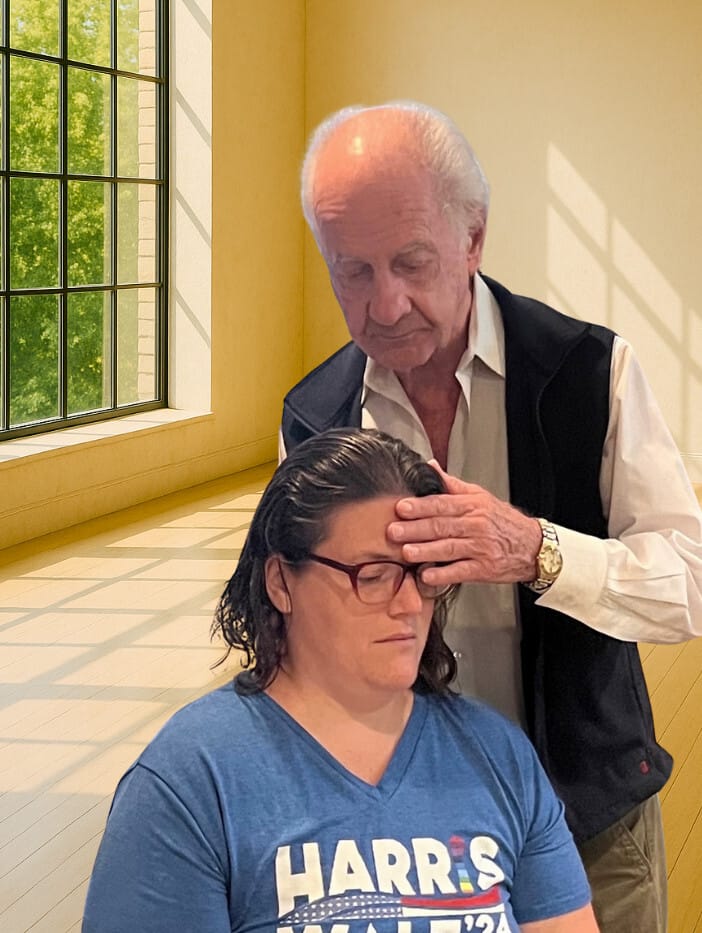
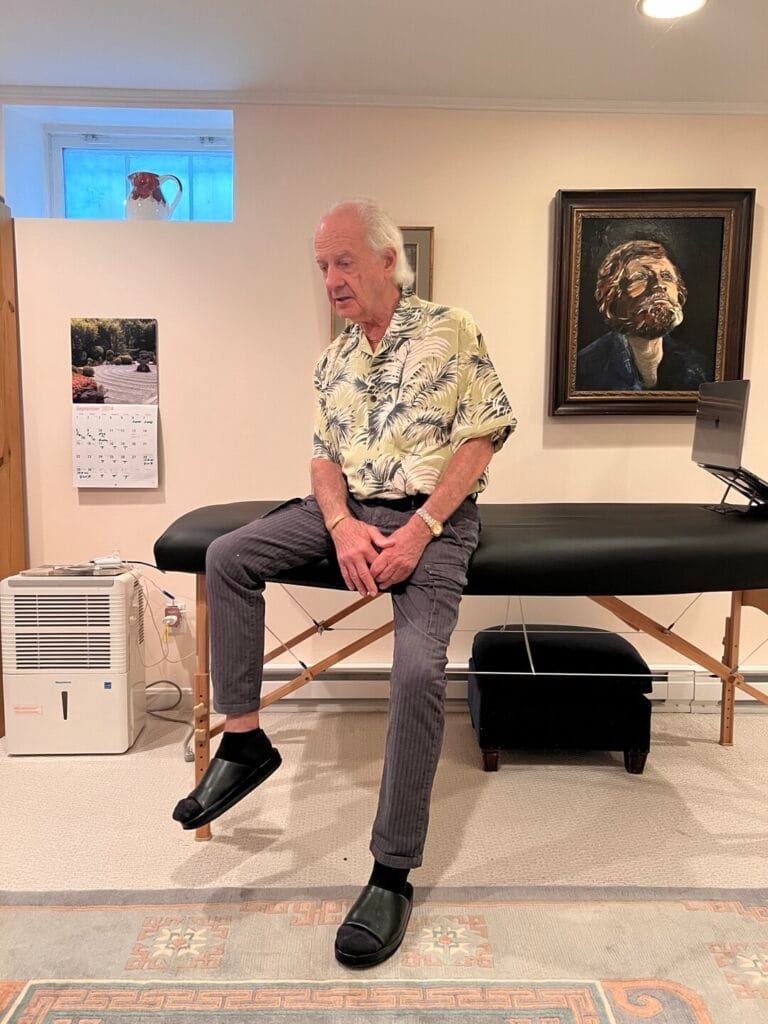
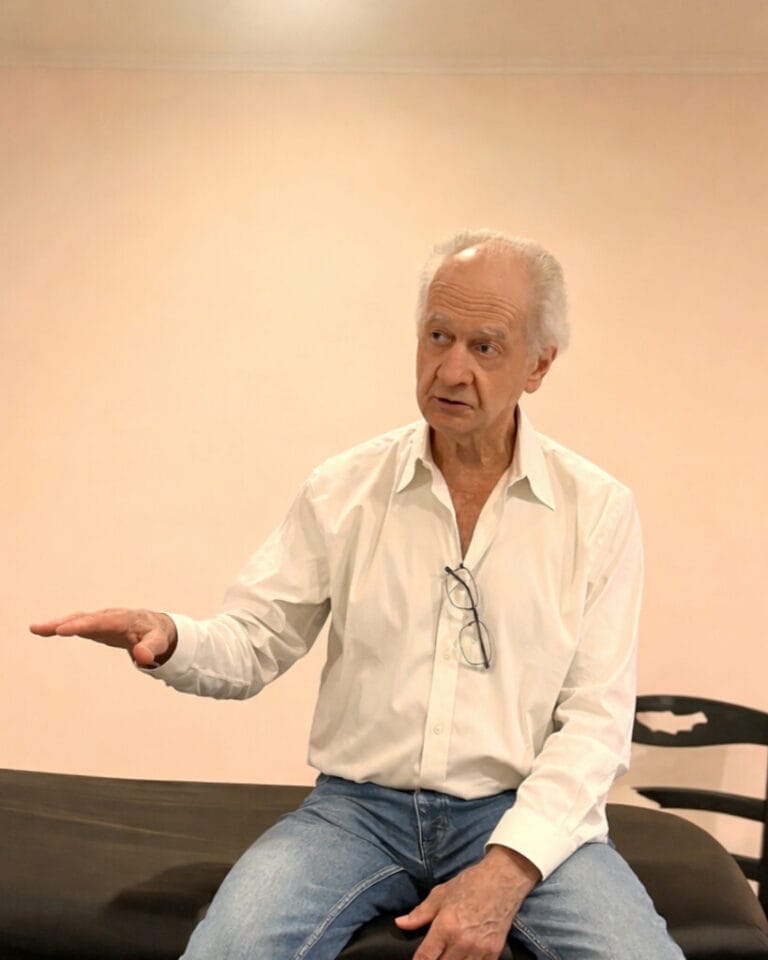
On October 28, 2024, in Boston, Massachusetts, USA, Tommy Thompson led a dynamic class in the Alexander Technique teacher training course. What unfolded wasn’t just another technique tutorial—it was a quiet revolution in how we relate to movement, support, and presence.
Instead of learning how to move “right,” we were learning how to stop interfering—to recognize the subtle moment when the body begins to organize itself and to follow rather than lead. Tommy’s class invited us to trust the body’s timing, to watch movement unfold in multiple directions, and to discover that when we stop trying to control everything, something deeper begins to move.
Key Objectives of the Class:
- To experience spontaneous movement as an emergent property of presence, not performance
- To understand how fascial release, hand placement, and emotional awareness affect coordination
- To support the body’s self-regulation through attention, stillness, and informed touch
This blog series is based on Tommy Thompson’s Alexander Technique classes. Each post follows the flow and insights of the class to expand both self-awareness and practical consciousness applicable to everyday life.
New here?
If you’re new to the Alexander Technique, you can start with the resources below.
Alexander Technique Class Flow at a Glance

1. The Opening Question
❝ Why do we trust tension more than balance? ❞
Think about that for a moment. Why is it that gripping, holding, adjusting—and even bracing—feels safer than letting go?
It’s not that we consciously choose tension. But over time, it becomes our default setting. We call it “good posture” or “staying strong,” but underneath those habits, there’s often fear. Fear of collapse. Fear of losing control. And maybe, a deeper fear of not knowing what will happen if we truly allow the body to move on its own.
In this Alexander Technique class, Tommy Thompson brought this exact question to the surface—not as a rhetorical idea, but as a felt experience. What happens when you stop “doing” movement and begin to notice the movement already happening inside you?
This wasn’t about perfecting performance. It was about reclaiming presence—and discovering that spontaneous movement isn’t wild or chaotic, but organized, layered, and deeply wise.
Tommy’s Word
Tommy wasn’t offering abstract advice—he was pointing to a direct, embodied principle: your body already has a logic, and conscious attention’s job is not to override it, but to support it. He urged trainees to step out of the role of “fixer” and into that of “witness”—to follow instead of command, to soften instead of impose.
“Movement should not be led but followed. The more we try to control the body, the more it tenses up. By respecting the natural flow, the body will find better balance on its own.”
In that space, something shifts. The body begins to move in ways you didn’t plan. Balance reveals itself—not through effort, but through allowance.
2. Core Learnings from This Class
Core Concepts
- Spontaneous movement arises when you stop directing and start listening.
Most of us try to move correctly—to control, adjust, or fix what we perceive as “off.” But in this class, Tommy showed us how true coordination doesn’t begin with action, but with awareness. When you stop telling the body what to do, you begin to hear how it’s already moving. - Fascial release is not the end—it’s the doorway.
A muscle may relax, the fascia may soften—but that doesn’t mean the system is free. Residual tension often hides beneath the surface, and true expansion requires sustained presence, not just mechanical release. - Balance is not something you hold—it’s something you allow.
Tommy emphasized that balance is an emergent quality, not a position to lock in. As movement expands in all directions, the body organizes itself more efficiently than conscious effort can manage.
Five Key Messages
- Less doing, more noticing.
➤ Awareness leads to coordination more reliably than effort. - The body moves in all directions when given the space.
➤ Movement is not linear—it’s dimensional. - Release doesn’t mean collapse.
➤ Letting go isn’t weakness. It’s what opens the door to integration. - “Touch supports, not corrects.”
➤ The hands are there to offer space, not instructions. - “Emotion can move through the body just like tension.”
➤ Spontaneous movement can unlock old patterns—both physical and emotional.
Essential Terms
Spontaneous Movement
Movement that arises not from decision or intention, but from the body’s own intelligence. It happens when we stop leading and start listening. This is not choreography. It’s coordination revealing itself. You don’t create this. You witness it. You follow what begins.
Self-Regulation
The body knows how to find balance—when we stop trying to impose it. Self-regulation is not a technique. It’s a principle. Your job isn’t to intervene. It’s to support the conditions that let the process unfold. You’re not in charge. You’re in the room while it happens.
Presence
Presence is attention without agenda. It’s the quality of your noticing, not the volume of your doing. Without presence, we interfere. With presence, we give the body time to show us what it already knows. Be with it. That’s all. That’s enough.
Residual Tension
After the visible release, something often stays. Hidden, protective, familiar. This residual tension isn’t waiting to be pushed—it’s waiting to be respected. It lets go when it feels safe, not when we tell it to. There’s still something holding it. Stay with it. It knows when it’s ready.
Fascial Release
Fascia surrounds and connects everything. When a muscle lets go, the fascia has room to respond. But that doesn’t mean the system is free. Often, another layer of tension remains underneath. Fascial release is just the first quiet sign that the body is beginning to open. The release is real—but it doesn’t mean you’re done. Now you wait, and see what’s next.
Hand Placement
Touch is never neutral. It either supports or shuts down. In Alexander Technique, the hands are there to listen, not correct. It’s not where you place your hand—it’s how you arrive with it. Don’t land on the body. Arrive with it
3. Tommy’s Insight
In Tommy’s words during class, there are not only the core principles of the Alexander Technique, but also practical wisdom that can be applied directly to daily life. His words go beyond simple advice about movement and prompt us to deeply consider how we choose to exist.“Movement should not be led but followed. The more we try to control the body, the more it tenses up. By respecting the natural flow, the body will find better balance on its own.”
→ This principle shifts us from directing movement to witnessing it. Tommy teaches that the nervous system organizes more effectively when we allow it to lead.
“When the body has space to self-regulate, our role is to support this process so that it flows naturally.”
→ Self-regulation is physical, not conceptual. Tommy reminds us that creating space—not control—is what activates the body’s internal intelligence.
“When movement happens in all directions at once, it can lead to spontaneous movement.”
→ Spontaneity emerges when the body is free from linear or segmented control. Tommy sees this as coordinated responsiveness, not randomness.
“Fascial release decreases restraint, allowing the tissue to adapt and change. However, this does not automatically result in the Alexander length, as tension may still be restricting it.”
→ Release doesn’t equal freedom. Tommy clarifies that unless underlying tension is addressed, full expansion remains blocked despite fascial softening.
“Allow movement to unfold naturally for deeper release.”
→ Timing matters. Tommy encourages us to wait rather than adjust—deep release arises when the body feels safe and unforced.
“Providing space for self-regulation is more effective than controlling movement.”
→ Improvement doesn’t come from fixing but from trusting. Tommy shows that when space is offered, movement organizes itself more efficiently.
“Some individuals experience emotional releases alongside physical movement, which should be observed without interference.”
→ Emotional release is part of deep movement change. Tommy’s role—as he models—is to stay grounded and simply witness, not intervene.
4. Practical Tips for Everyday Life
What’s the Goal?
The goal isn’t to fix your posture or move “correctly.”
It’s to rediscover how your body wants to organize itself—without interference. The practice of the Alexander Technique is not something you add to your movement, but something you subtract: excess tension, unnecessary direction, and mental noise. What you’re left with is presence.
How to Practice
Here are three practical ways to apply Tommy’s teaching in your daily life—no mirrors, no gadgets, no gurus required.
1. Pause Before You Move
→ Before you stand up, reach, or walk, give yourself a beat of space. This moment of inhibition—not reacting out of habit—invites your body to respond freshly. Even a half-second pause can shift you from reaction to presence.
2. Follow, Don’t Lead
→ Let movement initiate from your whole system, not from a single part.
For example, when turning your head, notice if your shoulders and ribs also want to follow. This non-linear awareness fosters coordination and ease, key principles of the Alexander Technique.
3. Soften Your Attention
→ Instead of focusing on a single goal or body part, widen your awareness. Include sounds, space, and sensation in your field of attention. This expanded field supports wellness, lightness, and better orientation in movement.
What You’ll Notice
With consistent practice, these subtle shifts bring unexpected results:
- less effort in simple tasks
- more balance without trying
- a quiet kind of confidence that comes from being in your own skin
These are not tricks or techniques.
They are the natural side effects of awareness.
5. Closing the Class
Key Takeaways
- Movement doesn’t need to be controlled—it needs to be trusted.
- The body isn’t waiting for orders. It’s waiting for space, time, and attention.
- True coordination doesn’t start with doing something. It starts with getting out of the way.
- Presence isn’t a technique—it’s the condition that allows change to happen.
- What we release is not just muscle tension—but the habit of interference.
Core Insights
Tommy’s class didn’t offer postural instructions or alignment tips. It offered a shift in relationship—between you and your body, your mind and your movement. What unfolded was not a better way to move, but a better way to listen.
In the Alexander Technique, presence is not a mystical state. It is the practical act of attending without interference. When you follow rather than lead, the body reorganizes itself in ways more intelligent than you can script. You don’t have to create balance—it’s already there. You just have to stop getting in its way.
This class was not about “doing” the right thing. It was about learning how to get out of the way of the right thing happening.
A Final Invitation
Take this with you:
Every moment of movement is a moment to listen.
You are not a sculptor shaping the body from the outside. You are a witness to what the body already knows.
Show up. Stay present. And follow.
6. One Key Practice
Let your next movement begin by itself.
Don’t lead. Don’t correct. Don’t prepare. Just pause—long enough to notice that movement can begin without you doing it.
This is not inaction. It’s the most powerful kind of participation: coordinating with life instead of commanding it.
Try this:
The next time you go to reach for your phone, get out of a chair, or take a step— don’t “do” it. Wait, and let your system initiate it.
You might discover that what you’ve called “your movement” has always been waiting for your Presence,
not your effort.
7. Three Questions to Ask Yourself
These are not questions to “figure out.” They’re doorways—into sensation, into timing, into Presence.
1. What am I preparing for right now—without knowing it?
→ So much of our tension is pre-movement. This question exposes the hidden micro-intentions that block spontaneity. Just by noticing them, the system begins to shift.
2. Can I wait half a second longer before I act?
→ Inhibition isn’t delay—it’s invitation. That small pause opens the door to choice, not habit.
3. Is my attention narrow or wide right now?
→ Narrow attention often creates muscular effort.
Widening your field—even just perceptually—can bring more ease into the system.
8. For Those Who Wish to Learn More
Recommended Books
Touching Presence – Tommy Thompson & Rachel Prabhakar
This is not a book of instructions—it’s a book of invitations. It reflects over 50 years of Tommy’s teaching in the Alexander Technique. Through teaching stories, moments of insight, and direct reflections, the book shows how presence becomes not just a concept but a lived, touchable experience. It aligns seamlessly with this class’s message: movement isn’t something you do, it’s something you join.
The Alexander Technique: Twelve Fundamentals of Integrated Movement – Penelope Easten
This book distills the essence of Alexander principles through twelve core fundamentals grounded in functional anatomy, neuroscience, and movement integration. The author explains how coordination, balance, and sensory awareness can be retrained—not by imposing correction, but by creating the conditions for natural change. It powerfully reinforces Tommy’s teaching that real learning is a system-wide reorganization, not a local adjustment.
Official Website of Tommy Thompson
www.easeofbeing.com
This is the official website personally managed by Tommy Thompson, offering a wide range of resources and programs to deepen your understanding and practice of the Alexander Technique:
- Private session reservations and inquiries
- Workshop and seminar schedules
- Overview of international teacher training programs
- Essays and articles on the Alexander Technique
9. Next Class Sneak Peek
What if letting go gave you better control?
Next time, we explore how intelligent movement arises—not from trying harder, but from interfering less.
- Tension isn’t strength—it’s noise.
Learn to spot excess effort and make room for balance. - Inhibition is power.
Discover how a pause can shift you from habit to choice. - Your body remembers.
When given space, it releases not just tension—but history. - Thinking is moving.
Shift your thoughts, and your posture follows. - Teaching begins with presence.
The space you hold is more powerful than what you say.
10. Join the Alexander Technique Journey
Did this class leave a small resonance within you? Feel free to quietly hold it in your heart or share it in just a sentence or two. The comments are always open. Your one simple word may leave a gentle ripple in this ongoing journey.The journey of Resonance Flow continues across social media as well. Let’s continue this journey together.
 YouTube
 Instagram
 Threads
 Facebook