Connection Isn’t What You Do—It’s Who You Are | Tommy Thompson Class 51
❝ When was the last time you truly felt yourself brushing your teeth? ❞
Not thought about it. Not rushed through it. But actually felt it—your hand, your breath, your body in space.
That’s not a small question. It’s the doorway to an entirely different way of being.
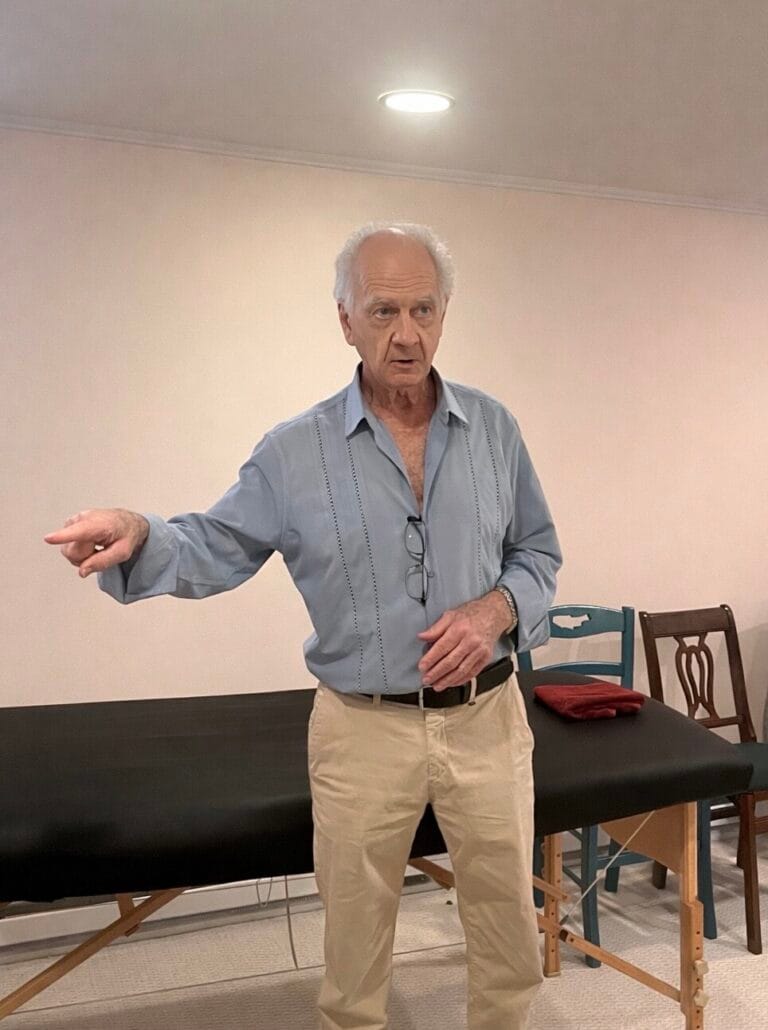
On March 20, 2025, in Boston, Massachusetts, USA Tommy Thompson led Class 52 of the Alexander Technique teacher training course, inviting trainees to explore the fundamental intelligence of Connection—not as a concept, but as the ground of human experience.
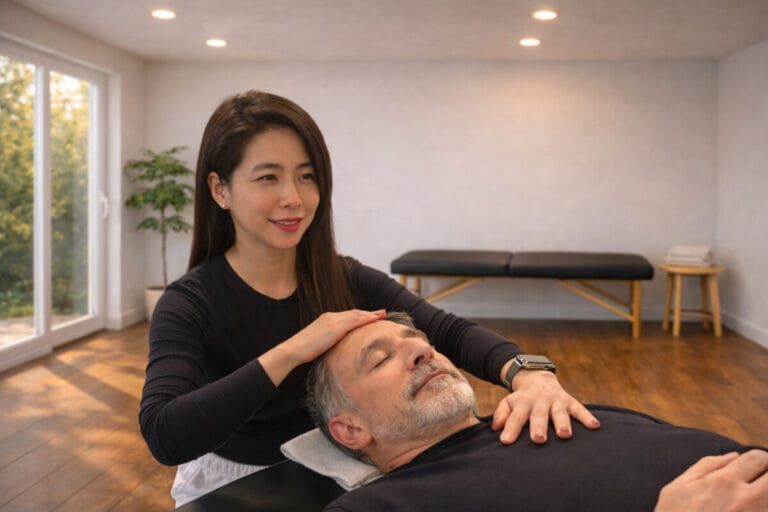
This wasn’t a class about fixing posture or correcting movement. It was an invitation to return—to your body, your breath, and your relational intelligence. To presence. To the space between moments. Through touch, breath, and relational awareness, Tommy Thompson asked: What if transformation doesn’t come from effort, but from the quiet intelligence that arises when we’re willing to connect?
Key Objectives of the Class:
- To explore Connection as the living core of every Alexander Technique experience
- To activate the body’s innate design through breath, sensation, and presence
- To shift the learning focus from correction to relational intelligence and self-recognition
This blog series is based on Tommy Thompson’s Alexander Technique classes. Each post follows the flow and insights of the class to expand both self-awareness and practical consciousness applicable to everyday life.
New here?
If you’re new to the Alexander Technique, you can start with the resources below.
Alexander Technique Class Flow at a Glance
1. The Opening Question
❝ What if change doesn’t begin with doing—but with being touched? ❞
This isn’t about being physically touched—at least, not only.
It’s about being moved. Moved by a word, a gaze, a moment of breath.
Being touched is what happens in the Alexander Technique when something lands in your system—not because someone fixed you, but because you connected.
In Tommy Thompson’s Class 52, trainees weren’t learning to “correct” others. They were learning how presence itself becomes the condition for transformation. And how change, in its deepest form, arises not through effort, but through relational attention.
This class asked a profound question:
Can you allow yourself to be touched while you are touching someone else? That’s not a technique. That’s a way of being.
Tommy’s Word
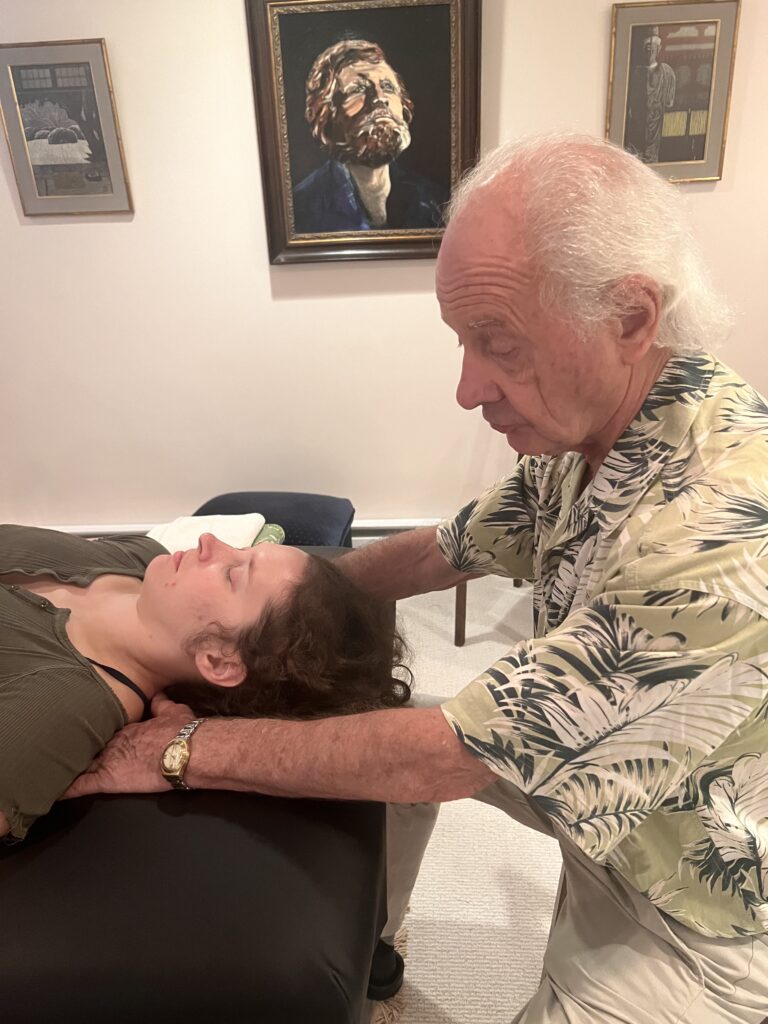
“Now just watch what happens when one person allows themself to be touched while they are touching another. Touch and be touched.”
This quote distills the core of embodied reciprocity. Change doesn’t arise from what we do to others, but from what we receive with them. In the Alexander Technique, the most intelligent adjustments happen not to the body, but with the body—in relationship.
2. Core Learnings from This Class
Core Concepts
- Connection comes first.
You’re not here to fix or be fixed. You’re here to connect—with yourself, with another, with the moment. That’s the ground where change becomes possible. - Touch is relational intelligence.
It’s not what you do with your hands, but how your entire system communicates presence. Touch is how bodies listen. - You are meant to move in harmony with your Original Design.
When you act in line with the way your body was built to function, coordination and wellness don’t have to be imposed—they emerge.
In this class, Tommy didn’t teach “how to do” the Alexander Technique. He guided trainees to recognize what already knows how to move—and how to listen for it.
Five Key Messages
- You can’t connect with others unless you’re connected with yourself.
- The body doesn’t need fixing. It needs listening.
- Stillness is not absence—it’s where things begin.
- Touch is a dialogue, not a direction.
- Real change arises in relationship, not in control.
Each message was embodied—not as theory, but as lived practice. What unfolded was not just technique, but a shift in being: from doing to receiving, from effort to Presence, from correction to Connection.
Essential Terms
- Connection
Connection is not something you create—it’s what you are built for. In the Alexander Technique, change begins when we stop trying to fix and start to relate—to ourselves, to others, to the world. - Touch
Touch is never just physical. It includes voice, gaze, heart, intention. Being touched is what opens the nervous system to receive, reorganize, and realign—without force. - Presence
Presence is not about stillness. It’s about aliveness in stillness. You can’t connect unless you’re first connected with yourself—and that’s where Alexander Technique begins. - Original Design
You are designed for this planet—not Mars. Your sensory systems are built for relational orientation.
When you move in harmony with your design, coordination doesn’t have to be taught—it’s remembered. - Still Point of Flow
This is the quiet pause between one breath and the next—a moment of stillness where the body naturally reorganizes without force. In the Alexander Technique, this isn’t a void, but a fertile pause where inhibition becomes a gateway to new coordination and possibility. - Relational Intelligence
You don’t help someone by correcting them. You help by connecting—and letting them respond from their own intelligence. This is the intelligence of the relationship itself—not one body fixing another, but two systems listening. - Breath as Gift
You didn’t take your first breath. It was given.
That exchange—receiving and giving—is the rhythm of connection and the basis of all relational movement.
Embodied Insight: Lili on Voice, Touch, and Relational Change
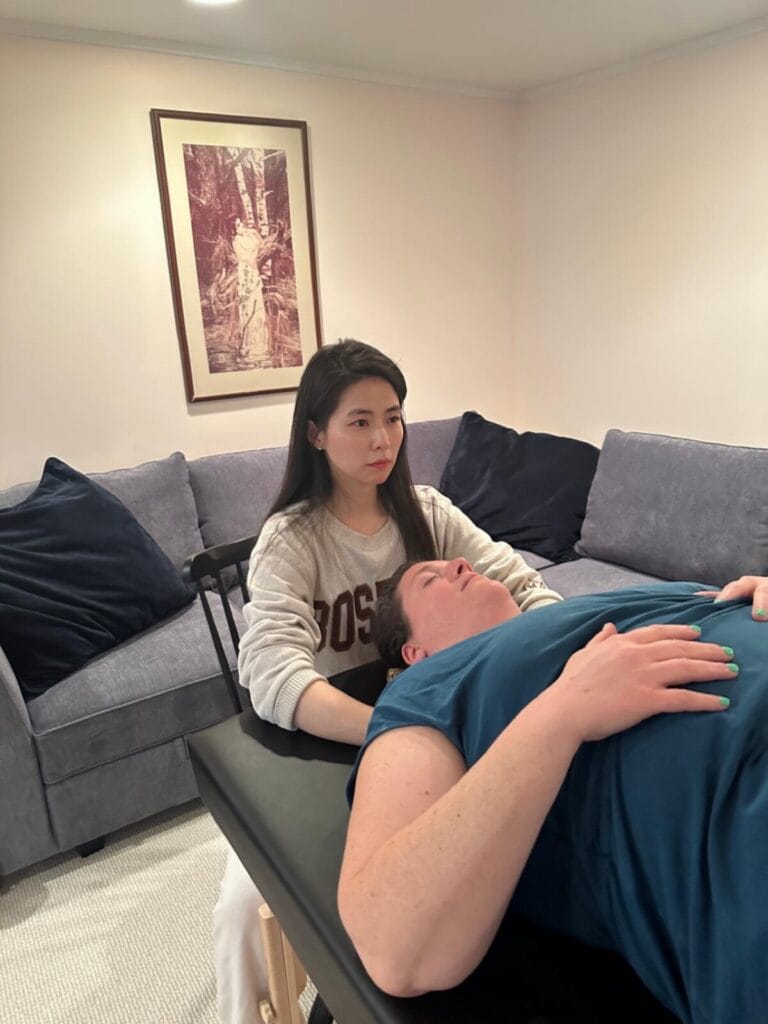
“I felt a more open flow of communication through that voice connection. I gave a lot more feedback today — it felt like one of the ways to express my intention to connect back.
At the beginning of my training, I was very focused on learning how to touch even lighter. But now, the message isn’t only about lighter and lighter, but also deeper and deeper. It’s more about deepening the connection.
I’m still surprised at how changed I feel after finishing a lesson. When I’m lying down, I don’t recognize the change happening. It’s only when I transition from being to doing that I realize the transformation.
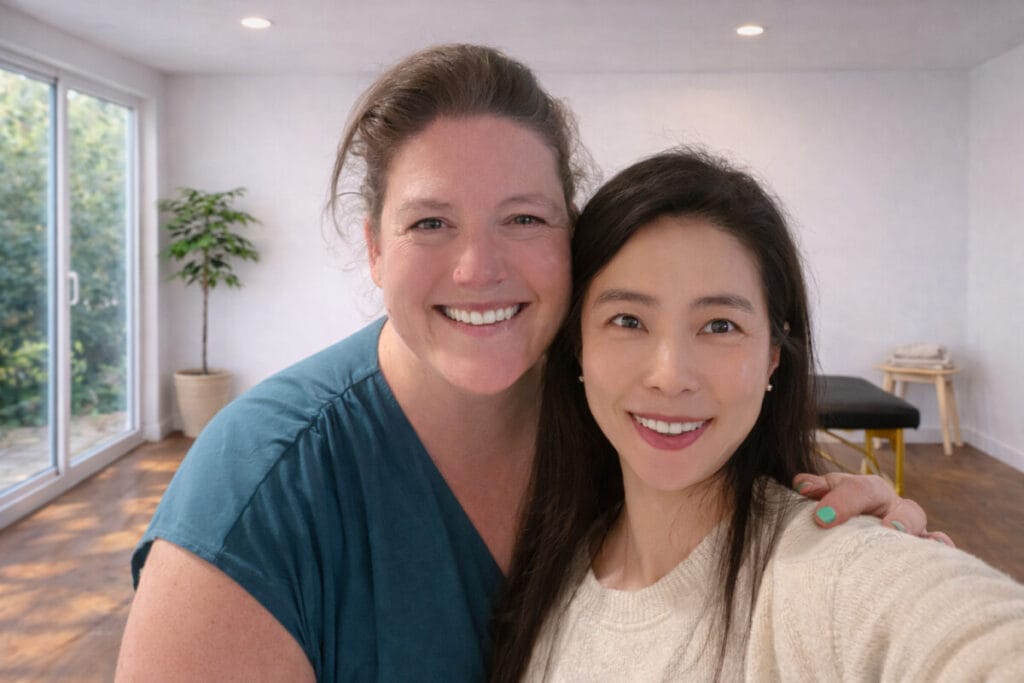
I noticed my impulse to hug or take a selfie — to reach out physically. That made me curious: How can I offer that same sense of connection without relying on my usual habits? How can I create closeness differently?”
3. Tommy’s Insights
In Tommy’s words during class, there are not only the core principles of the Alexander Technique, but also practical wisdom that can be applied directly to daily life. His words go beyond simple advice about movement and prompt us to deeply consider how we choose to exist.“I think that you always find yourself in the other, through your response in a partner relationship.”
→ Identity is not discovered in isolation but revealed through relational response.
“You’re more likely to connect the more you use yourself in accord with the way that you were originally designed—which is connection.”
→ True connection arises when you embody the design you were meant to live by.
“First of all, you can’t connect unless you’re connected with yourself. That’s the issue.”
→ External connection depends on inner coherence and embodied self-awareness.
“The participant came to a moment of quietness. The two of you got very much together. It was touch and be touched, listen and be listened to, speak and be spoken to—back and forth. And they’re still carrying it on right now.”
→ Connection is a mutual exchange of presence that lingers beyond the moment.
“And then when you start touching another, you’re touching with your voice, you’re touching with your eyes, you’re touching with your heart, you’re touching with your fingers, your hands, everything.”
→ Touch is not limited to the body—it is the full expression of your being in contact.
“So the idea of connection is something that can be preserved throughout the rest of your life, and you’re designed to experience that. Your five senses are designed to relate you to the world around you. And your kinesthetic sense is designed to know where you are in relation to something else.”
→ Connection isn’t learned—it’s embedded in your sensory and kinesthetic design, built to sustain relationship for life.
“Who you want to give is who you are in a given moment. You have to perceive who you might be in a given moment—that may not have ever shown up before.”
→ Expression is a revelation of self in real time; identity emerges through giving.
“We experience before and after. We’re experiencing before and after the moment. Do we allow ourselves to experience the transitional nature of what becomes fluid? That is the space.”
→ Change happens not in the fixed points, but in the fluid space between them.
4. Practical Tips for Everyday Life
What’s the Goal?
Bring Presence into your daily life—not as a technique, but as a way of being.
This isn’t about “doing it right.” It’s about meeting each moment with awareness, breath, and relationship.
How to Practice
- Brush with awareness.
Feel your feet. Notice your breath. Let the act of brushing become a chance to be touched by the moment. Let the rhythm of your brushing sync with your breath—as if your body is listening to itself. - Pause before you type.
Sit. Breathe. Place your hands as if about to touch a person. Start from relational contact, not reaction.
Imagine the keyboard as an extension of your intention, not just a task. - Speak as if they’ll remember.
Let your tone carry care. Not just what you say, but how you say it becomes the real message. Your presence enters before your words do. Every syllable lands in a nervous system.
These aren’t corrections. They’re simple ways to let connection guide your actions—in the small, unnoticed corners of your day.
What You’ll Notice
You’ll move easier, breathe fuller, and feel more in yourself.
Others will sense it too—because real presence invites presence in return. That’s how transformation begins—quietly, and relationally.
5. Closing the Class
Key Takeaways
- Change doesn’t start with what you do to others. It begins with how you show up—with breath, with attention, with willingness to be touched.
- The body isn’t a problem to solve. It’s a relationship to enter.
- Connection isn’t a technique. It’s your original condition.
Core Insights
- Tommy didn’t just teach postural awareness. He revealed that presence is intelligence—not something you add, but something you uncover.
- When you stop trying to “fix,” something deeper becomes available: your ability to respond from relationship, not reaction.
- This class wasn’t about mastering moves. It was about remembering how to move as a human being in contact with the world—whether folding laundry, greeting a friend, or sitting with silence.
A Final Invitation
- Don’t wait for special moments. Practice connection in the mundane. Let your toothbrush, your keyboard, your conversations become the classroom.
- Listen before you act. Feel before you speak.
Breathe—not to control—but to remember you’re alive, and already in relationship. - As Tommy might say:
“Let yourself be touched. That’s when the real change begins.”
Start with just one moment today. One breath. One touch. That’s enough.
6. One Key Practice
Let yourself be touched—before you try to do anything
This is where connection begins. Not with control. Not with intention. But with receptivity.
Before you speak, move, teach, or touch— pause.
Feel your own body.
Feel the breath you didn’t create.
Feel the ground that holds you.
And in that moment, ask:
Am I available? Or just active?
Connection isn’t something you do. It’s what shows up when you stop doing for a second—and let the world touch you back.
7. Three Questions to Ask Yourself
- Where do I feel contact right now?
Feet on the floor. Air in the lungs. Eyes meeting another’s. Contact is already happening—it only asks for your attention. - Am I leading this moment—or letting it lead me?
You don’t have to control it. Sometimes the most honest movement happens when you follow, not direct. - Can I let it live—just as it is?
Connection doesn’t need fixing. It just needs room to exist—without forcing, naming, or improving.
8. For Those Who Wish to Learn More
Recommended Books
Body, Breath and Being: A New Guide to the Alexander Technique – Carolyn Nicholls
This widely respected book offers a clear and grounded entry point into the Alexander Technique, focusing on how breath, body, and attention interact in daily life.
Nicholls draws from real-life stories—performers, people in pain, and ordinary movers—to show how presence, relational use, and embodied awareness can transform movement without effort or strain.
Its practical tone and sensory-based guidance echo Tommy’s approach: experiential, non-corrective, and rooted in lived connection with self, breath, and environment.
Official Website of Tommy Thompson
www.easeofbeing.com
This is the official website personally managed by Tommy Thompson, offering a wide range of resources and programs to deepen your understanding and practice of the Alexander Technique:
- Private session reservations and inquiries
- Workshop and seminar schedules
- Overview of international teacher training programs
- Essays and articles on the Alexander Technique
9. Next Class Sneak Peek
What if movement doesn’t begin with doing—but with allowing?
The next class opens a new possibility:
that movement isn’t something you generate, but something that finds you—when you get out of the way.
You’ll discover how effort often interrupts coordination, and how permission—not intention—is what lets the body organize itself from within.
Not knowing becomes a tool. Stillness becomes support. Attention becomes motion.
In Class 52, we’ll explore:
- how direction works without control
- the difference between doing and allowing
- permission as a physical state
- letting movement organize itself through presence
- trust as the condition for action
10. Join the Alexander Technique Journey
Did this class leave a small resonance within you? Feel free to quietly hold it in your heart or share it in just a sentence or two. The comments are always open. Your one simple word may leave a gentle ripple in this ongoing journey.The journey of Resonance Flow continues across social media as well. Let’s continue this journey together.
 YouTube
 Instagram
 Threads
 Facebook