What If Your Hands Could Think? Triadic Resonance Revealed | Tommy Thompson Class 62
❝ What if the intelligence of your touch could awaken the whole of you—without force, without effort? ❞

What if your hand—without gripping or doing—could create change simply by being present?
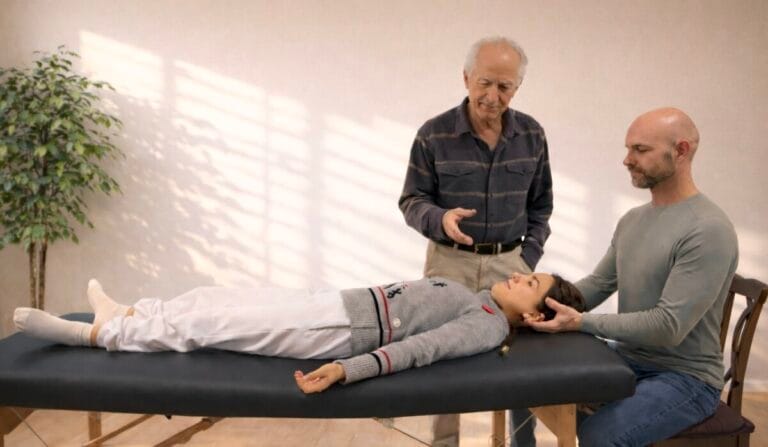
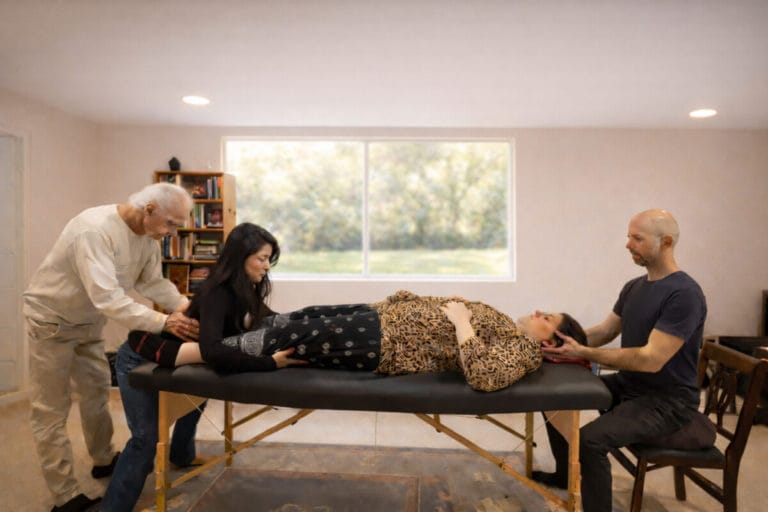
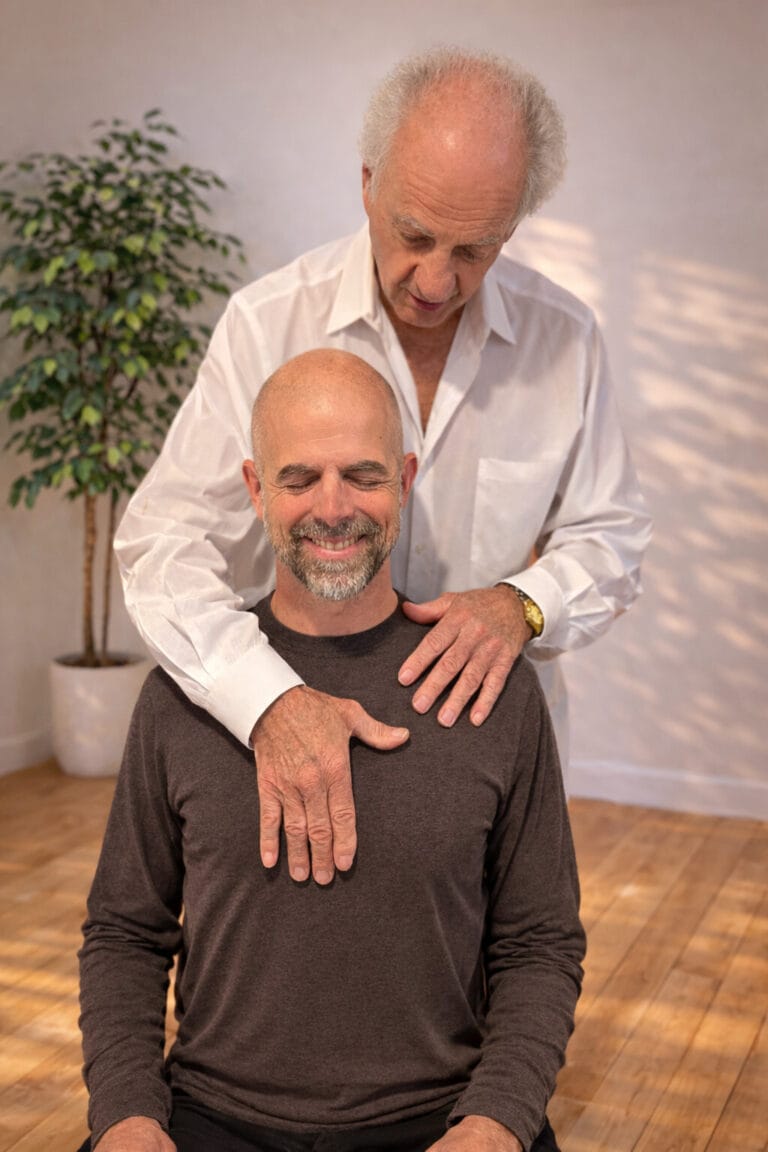
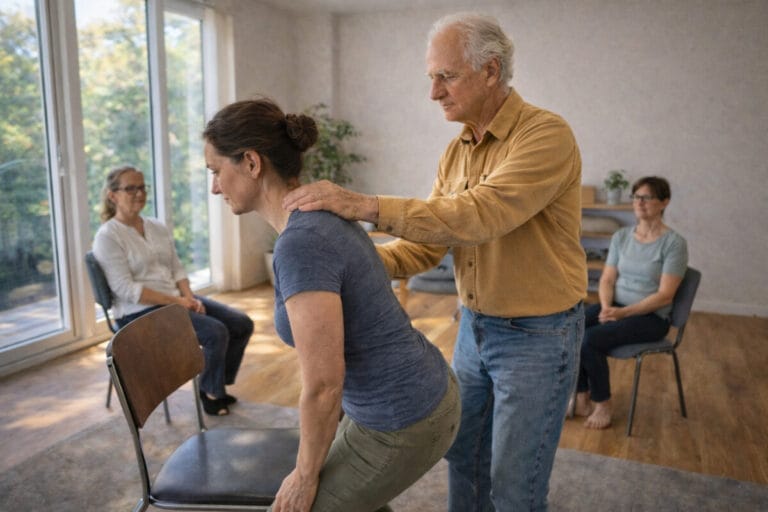
In this class, Tommy Thompson invited trainees into a surprising experience: that your hands are not separate from your heart, your head, or your breath. Through the quiet practice of Triadic Resonance, a gentle inner rhythm, touch becomes communication—not manipulation, but direction.
On April 16, 2025, in Boston, Massachusetts, USA, Tommy Thompson led a class in the Alexander Technique teacher training course that redefined how we think about touch, rhythm, and presence. The class wasn’t about fixing posture or correcting habits. It was a direct experience of how perception reshapes the body—and how the hands, when emptied, can guide the entire system toward clarity.
This class was not a demonstration. It was a transmission.
Key Objectives of the Class:
- To experience Triadic Resonance as a gateway into deep sensory awareness and physiological quiet
- To explore how directional, non-forcing touch supports release and coordination
- To cultivate empty hands—not passive, but available, attuned, and responsive
This blog series is based on Tommy Thompson’s Alexander Technique classes. Each post follows the flow and insights of the class to expand both self-awareness and practical consciousness applicable to everyday life.
New here?
If you’re new to the Alexander Technique, you can start with the resources below.
Alexander Technique Class Flow at a Glance
1. The Opening Question
❝ Can a rhythm in your hand liberate your spine—and quiet your mind? ❞
This class wasn’t about anatomy or correcting posture. It was about something quieter and more radical: that a simple inner rhythm in the hand could transform the whole self.
Triadic Resonance—a soft “one, two, three”—wasn’t just coordination. It became a gateway to presence—a shift from doing to sensing. Tommy didn’t ask this question aloud, but it echoed through every gesture, every breath, every pause.
Here, the Alexander Technique showed up not as method, but as moment-to-moment discovery—how rhythm, timing, and contact reshape movement from within.
Tommy’s Word
“As you say ‘one,’ two begins to move. When you say ‘two,’ three begins to move—especially three. There it is: one, two, three. Keep doing it. By the third or fourth, you’re in it. You’re moving through here, freeing through here. That’s very quiet. It’s meditation.”
➤ This wasn’t just counting—it was coordination through perception. Triadic Resonance helps us stop trying to direct and instead invites the system to respond. Tommy used rhythm not to control, but to awaken awareness.
The moment you practice this rhythm, you stop doing—and start noticing. That’s where the technique begins.
2. Core Learnings from This Class
In this moment from Tommy Thompson’s class, trainees explore Triadic Resonance and how the hands awaken kinesthetic awareness.
Watch how subtle changes in perception allow the organism to reorganize naturally.
Stop Fixing Posture—Awaken Your Sixth Sense Instead | Alexander Technique
Class 62 · April 16, 2025 · Boston, MA
Core Concepts
- The hands are part of your nervous system
Tommy didn’t treat hands as tools. He saw them as extensions of the brain—and, in some traditions, of the heart. The less tension in the hands, the more clearly they perceive. An empty hand is a sensitive hand. - Triadic Resonance is an internal rhythm, not a count
It’s not about saying “one, two, three”—it’s about sensing. As you feel the rhythm, the body begins to release. First a little. Then deeper. The fingers soften. The mind settles. Movement happens without effort. - Emptying clears the way for sensation
If the hand still holds a cup, a door, or yesterday’s gesture, it can’t fully sense what’s here. Tommy would say, “The coffee cup from 15 minutes ago? It’s gone.” Letting go is what allows real contact. - Touch is a form of speaking
Real touch doesn’t act—it suggests. With direction, not force. A quiet, tactile conversation. Even in stillness, the hand transmits. “You’re not doing,” Tommy said. “You’re offering.” - Sensitivity isn’t something you build—it’s what you uncover
“You already have sensory awareness,” Tommy said. “What you develop is heightened sensitivity.” Triadic Resonance doesn’t give you something new. It takes away what blocks it. - The hands think and feel
Alexander said, “My brain is in my hands.” Tommy lived that. He taught us to use our hands with the same clarity and intention we give our head and neck.
Five Key Messages
- “Empty hands feel more.”
Let go of what just happened. Real presence begins when nothing’s being held. - “One, two, three isn’t counting—it’s opening.”
Triadic Resonance activates subtle movement and reorders attention from the inside out. - “Touch offers—it doesn’t impose.”
Good hands don’t do. They invite. - “Your hands are your intelligence.”
They don’t just follow thought—they are thought. And they feel, too. - “Everyday life is your practice.”
Pause before walking. Do Triadic Resonance before cooking. Read standing, stop, reset. These aren’t habits—they’re sensory resets.
Essential Terms
Intention to Empty
Letting go is active, not passive. You choose to release what’s no longer needed—and that’s what allows sensation.
Triadic Resonance
A rhythmic sensing through three points in the palm—“one, two, three.” This releases the carpal bones, letting sensation travel through the arms into the back and neck. The neck frees, the spine lengthens. Not a technique, but a state of embodied awareness.
Empty Palm
A hand free of tension, memory, and leftover effort. Available. Receptive. Clear.
Directional Touch
Contact that leads without force. A suggestion, not a manipulation.
Heightened Sensory Awareness
You don’t build it—you uncover it. Sensitivity increases as interference fades.
Hands as Brain/Heart
Hands don’t just move from thought—they are how we think and feel. They speak for the nervous system.
3. Tommy’s Insight
In Tommy’s words during class, there are not only the core principles of the Alexander Technique, but also practical wisdom that can be applied directly to daily life. His words go beyond simple advice about movement and prompt us to deeply consider how we choose to exist.“If you work with your hands in the same way you work with your head and your neck, then you have very special hands. Hands whose palms are emptier—empty of what you usually hold on to.”
→ When the hands move in harmony with the head and neck, they stop acting independently and begin to participate in integrated direction.
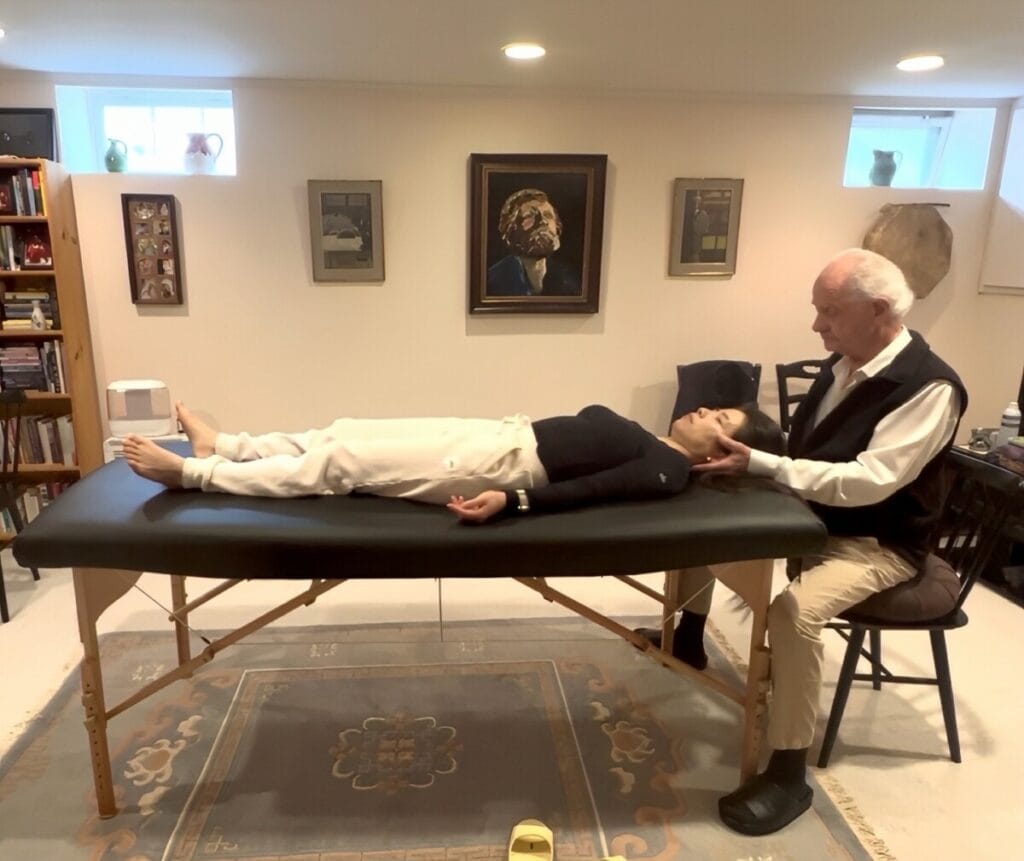
“You have fingers that lengthen out from the carpal bones, extending from the palms. Your whole hand becomes softer, more communicative. When I place my hands on you… most people don’t do it this way. I’m communicating directly with your muscle tissue.”
→ Touch is not about pressure—it’s about structural invitation, allowing muscle to respond rather than resist.
“I’m just suggesting—you’re working with your head and your neck through your hands, because in some traditions, your hands belong to your heart. Even Alexander said, ‘My brain is in my hands,’ and it’s true.”
→ The hands carry the intelligence of the whole system—they don’t instruct, they reveal.
“The thing about triadic resonance—it just makes your hands more sensitive. It’s another way of developing sensitivity in your hands.”
→ Triadic resonance is a practice of refinement—tuning the hands to receive, not impose.
“If you do triadic resonance, you will free your neck. And what are you freeing it from? From overly contracted tissue. If the neck isn’t overly contracted, the tissue will lengthen, and your head will move away from the body.”
→ Sensory rhythm releases unnecessary effort, letting the natural organization of the head-neck relationship emerge.
“If I let my neck be free, I come forward, and it goes up. Forward and up. That lengthens and widens the tissue in my back. So you could do either one.”
→ Forward and up is not a direction you push into—it’s a response the body gives when freedom leads.
“You don’t develop sensory awareness. You have sensory awareness. You develop heightened sensitive awareness.”
→ The work is not about gaining something new, but deepening attention to what’s already living in the system.
“Empty—meaning I’m not holding on to what happened 15 minutes ago. All the things I picked up—let go—they’re not in my hand anymore. They may be in my brain, but they’re not ready to act. The coffee cup I picked up—gone. The faucet I turned off—not there. The garbage I emptied—not there.”
→ Emptiness in the hand is the condition that allows present-time contact—it’s what makes direction possible.
“That’s one meaning. But the things you enjoy—like cooking, walking, reading—you can explore those. Yes, read while standing for an hour. Then stop. Read for half an hour, stop, do triadic resonance, then continue reading. Or give direction, then continue. That is an inhibited moment. A withholding—a continuing to define yourself without definition.”
→ Everyday actions become transformative when you interrupt them with presence—choosing not to continue automatically, but consciously.
4. Practical Tips for Everyday Life
What’s the Goal?
To carry Triadic Resonance into everyday moments—not as a technique, but as a way of being.
As Tommy often reminded us, the work doesn’t stop at the table. **It’s how you pick up a cup, turn a page, or pause between each step. The goal isn’t to do better, but to become more awake while doing.
How to Practice
1. After putting something down, pause to empty your hand.
Whether it’s your phone, a cup, or a doorknob—after you let go, don’t rush to the next thing. Take a moment to feel if your hand is truly empty—not just physically, but intentionally.
2. After one action, don’t immediately start the next.
When you close a book or finish a task, resist the urge to jump ahead. Pause in the in-between space. That’s where awareness begins to return.
3. Insert a small pause into repetitive movements.
As you walk, cook, or work, let yourself stop—just for a second. That tiny interruption invites you out of autopilot and into a state of noticing.
What You’ll Notice
- Actions begin to feel lighter and more fluid as your system stops bracing and starts responding.
- You’ll notice transitions—not just tasks—because awareness lingers between moments.
- The mind softens. The body follows.
- Doing fades, and presence leads.
These aren’t techniques. These are not techniques—they are interruptions to habitual living—invitations to return to yourself again and again. As Tommy said, “That is… an inhibited moment.”
5. Closing the Class
Key Takeaways
This class didn’t teach us how to do something with our hands. It taught us how to stop doing with them. Through Triadic Resonance, we weren’t adding anything new.
We were learning how to meet the moment without effort.
The hand, when empty, becomes a place of awareness.
And when the hand quiets, the whole self listens.
Core Insights
Tommy didn’t treat touch as a skill to refine, but as a mirror of presence. The hands weren’t separate from the spine, or the heart, or the head. They were the body’s way of thinking.
He reminded us that awareness doesn’t sit in the brain—it spreads. It spreads into the hand, into the breath, into the space between you and the person in front of you.
Presence, here, is not found. It’s returned to—through rhythm, contact, and the refusal to rush.
A Final Invitation
Before you touch, pause.
Before you speak, pause.
Before you continue, pause.
Let your hand empty.
Let the moment come to you.
You don’t need to direct.
You need to receive.
As Tommy said,
“Let presence do the naming.”
6. One Key Practice
Let your hand pause between moments.
Choose a small transition—like closing a book or opening a door.
Pause before the action.
Notice your hand: is it acting already, or ready to receive?
Let the hand rest—quiet, not limp.
Feel the stillness before motion.
It’s not empty—it holds potential.
You’re not pushing. You’re allowing something to come.
And when you do, your whole self may respond differently.
7. Three Questions to Ask Yourself
These aren’t reflections. They’re re-entries—into now.
- Is my hand still holding what I last touched?
- Am I already doing before I begin?
- Can I feel the space between one and two?
Don’t answer. Just pause.
Let each question bring you back—not to know, but to notice.
8. For Those Who Wish to Learn More
Recommended Book
Teaching by Hand, Learning by Heart – Bruce Fertman
This book explores the power of touch, the intelligence of the hands, and presence in action—all central to Tommy’s class. Fertman’s writing reflects a deep understanding of inhibition, sensory attention, and non-doing, not as techniques, but as lived experience.
If you resonated with the idea of “empty hands” and letting the hand listen before it moves, this book is a companion.
Not instructional—but transformational.
Official Website of Tommy Thompson
www.easeofbeing.com
This is the official website personally managed by Tommy Thompson, offering a wide range of resources and programs to deepen your understanding and practice of the Alexander Technique:
- Private session reservations and inquiries
- Workshop and seminar schedules
- Overview of international teacher training programs
- Essays and articles on the Alexander Technique
9. Next Class Sneak Peek
What happens when you move—without direction?
Not without motion or effort, but without the quiet presence that begins in the back.
In Class 63, Tommy guides us to notice what interrupts Direction:
habit, urgency, even the intention to help.
We’ll explore how movement shifts when Direction is missing—
and how the body can reorganize without doing more.
“You don’t start with the hands.
You start with Direction.”
10. Join the Alexander Technique Journey
Did this class leave a small resonance within you? Feel free to quietly hold it in your heart or share it in just a sentence or two. The comments are always open. Your one simple word may leave a gentle ripple in this ongoing journey.The journey of Resonance Flow continues across social media as well. Let’s continue this journey together.
 YouTube
 Instagram
 Threads
 Facebook