Withholding Definition: The Secret to Movement You’ve Never Tried | Tommy Thompson Class 58
❝ What if not knowing how to move is the only way to move differently? ❞
You reach.
You sit.
You stand.
You speak.
Already, the doing has begun.
Before you even realize it, your body is following a definition you didn’t choose—a plan written by habit, identity, and time.
But what if you didn’t define it this time?
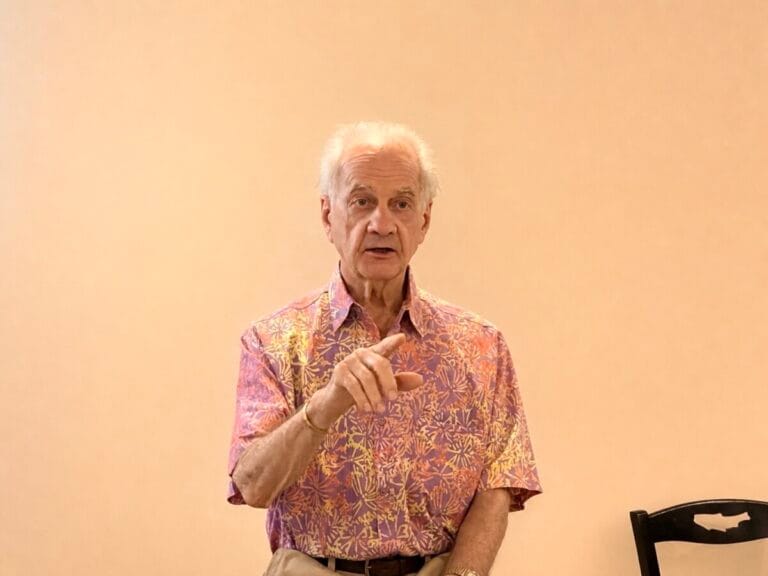
On April 8, 2005, in Boston, Massachusetts, Tommy Thompson led a class in the Alexander Technique teacher training course where no one was asked to “do” anything. Instead, he invited the trainees to pause—completely—and withhold defining what they were about to do.
Not as a mental strategy. Not as a trick of the will. But as a deep sensory practice—a way to interrupt the automatic and let something else move instead.
To withhold is to not define accomplishing what I’ve been asked to do in the way that I’m accustomed to. That lets all of the sensory perceptions function without habituation.
Withholding definition isn’t about hesitation. It’s about refusing to reach for the past before the present arrives.
It’s how you stop rehearsing who you think you are.
It’s how you begin—again—for real.
Withholding definition.
Not to delay action.
But to reclaim the power to truly begin.
This blog series is based on Tommy Thompson’s Alexander Technique classes. Each post follows the flow and insights of the class to expand both self-awareness and practical consciousness applicable to everyday life.
New here?
If you’re new to the Alexander Technique, you can start with the resources below.
Alexander Technique Class Flow at a Glance

1. The Opening Question
❝ Can you move without knowing how? ❞
This class didn’t begin with instruction. It began with a pause.
That pause was everything. It wasn’t about relaxing, stopping, or waiting for someone to tell you what to do. It was about withholding definition—not deciding ahead of time how you think this movement, this breath, or this moment should go.
Because that’s where most people live: in the definition.
In how they’ve learned to sit.
In how they’ve always walked.
In how they believe they should respond.
As Tommy often reminded the trainees, the moment you withhold defining what comes next, something shifts. Not just in the muscles—but in the way you exist in time, in space, and in relation.
“Ask them to withhold defining how they think they should do what you just demonstrated… and let the movement come.”
→ This is not about form. It’s about letting the self emerge before the habit takes over.
It’s in that moment of not-knowing—not performing, not predicting—that the Alexander Technique becomes something more than a method. It becomes a way of undoing the urgency to get it right, and remembering how to be here without pre-definition.
2. Core Learnings from This Class
In this moment from Tommy Thompson’s class, trainees explore the Primary Directions as a shift from effort to thought.
Watch how giving direction allows the organism to lengthen, widen, and move with greater ease.
Discover the Primary Directions | Alexander Technique
Class 58 · April 8, 2025 · Boston, MA
Core Concepts
- Withholding definition is not hesitation. It is a disciplined pause that reclaims the unknown.
In this Alexander Technique class, Tommy didn’t tell the trainees how to move better. He asked them to stop knowing how. - Habit is faster than awareness. But it’s not wiser.
The body often moves before the person realizes movement has begun. Withholding definition creates a moment where awareness gets to go first. - Movement identity is usually inherited—not chosen.
We walk, sit, and speak the way we learned to, not the way our body now needs to. Withholding that prior “how” lets the body find its own intelligence again. - Doing relies on fast-twitch muscle fibers; being opens through slow-twitch.
Alexander Technique isn’t about force or form—it’s about the neuromuscular permission to respond differently. - Withholding definition restores timing.
Most actions occur as if time is real, pressing, and linear. But in Tommy’s teaching, you can only move from the present if you stop defining it with the past.
Five Key Messages
- The impulse to define is the impulse to control.
But when you suspend that impulse, a new form of listening begins. - Presence isn’t created—it’s revealed when you stop trying to get it right.
- Letting go of how you think it should go is the beginning of all intelligent movement.
- You don’t need to know what to do. You need to feel what’s already happening.
- Withholding definition allows your sensory intelligence to lead the way.
Essential Terms
- Withholding Definition
The conscious act of suspending the impulse to define how a movement, reaction, or identity should happen. It interrupts habitual doing and allows the body’s innate sensory intelligence to surface. - Movement Identity
The ingrained way a person expresses their learned self through movement. In Tommy’s work, this identity is not fixed—it can be softened, suspended, or replaced by something more immediate when definition is withheld. - Kinesthetic Intelligence
The body’s ability to feel itself in action. This intelligence isn’t added—it’s recovered when patterned responses are paused and awareness precedes movement. - Pre-Movement Awareness
The subtle moment before movement begins. A window of possibility where habitual doing hasn’t yet taken over, and presence can initiate the action. - Fast-Twitch vs. Slow-Twitch
Fast-twitch fibers support habitual, reactive, outcome-driven doing. Slow-twitch fibers support sustained, sensory-informed being. Tommy often used this distinction to map the internal shift from effort to receptivity. - Time Suspension
A felt experience of stepping outside of chronological pressure. When time isn’t being defined, the present isn’t a transition—it’s a place. And from that place, new movement becomes possible.
3. Tommy’s Insight
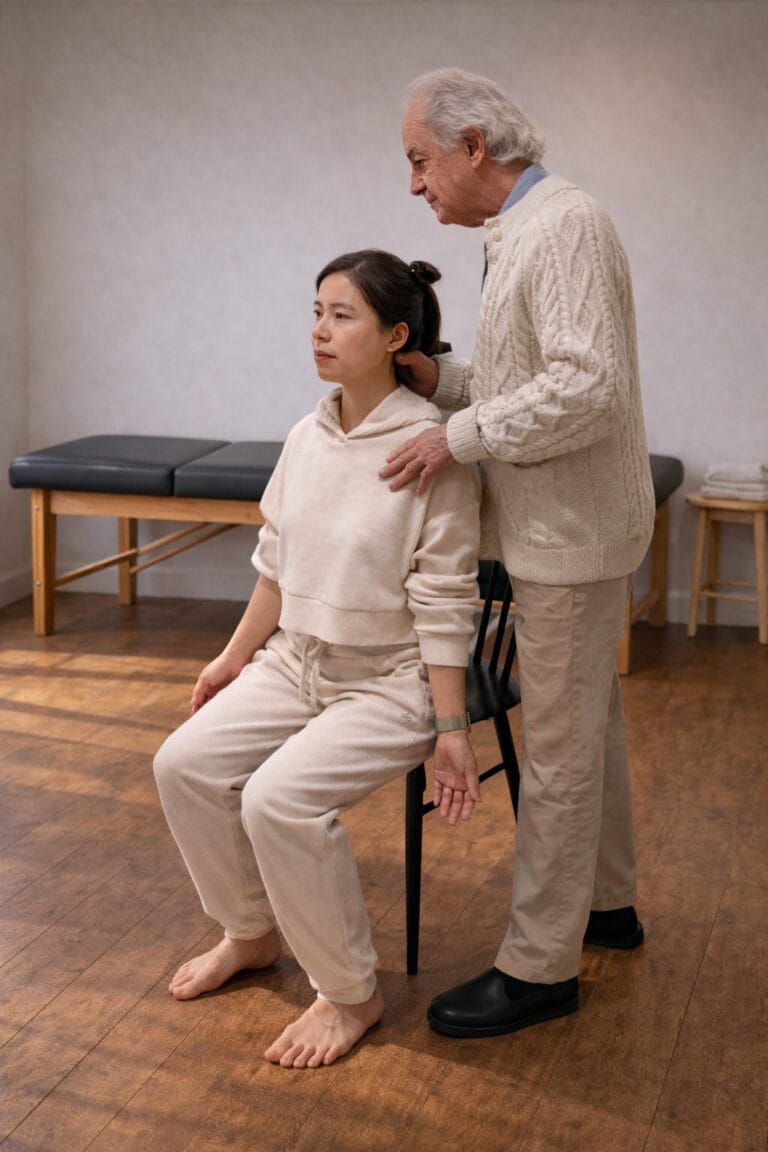
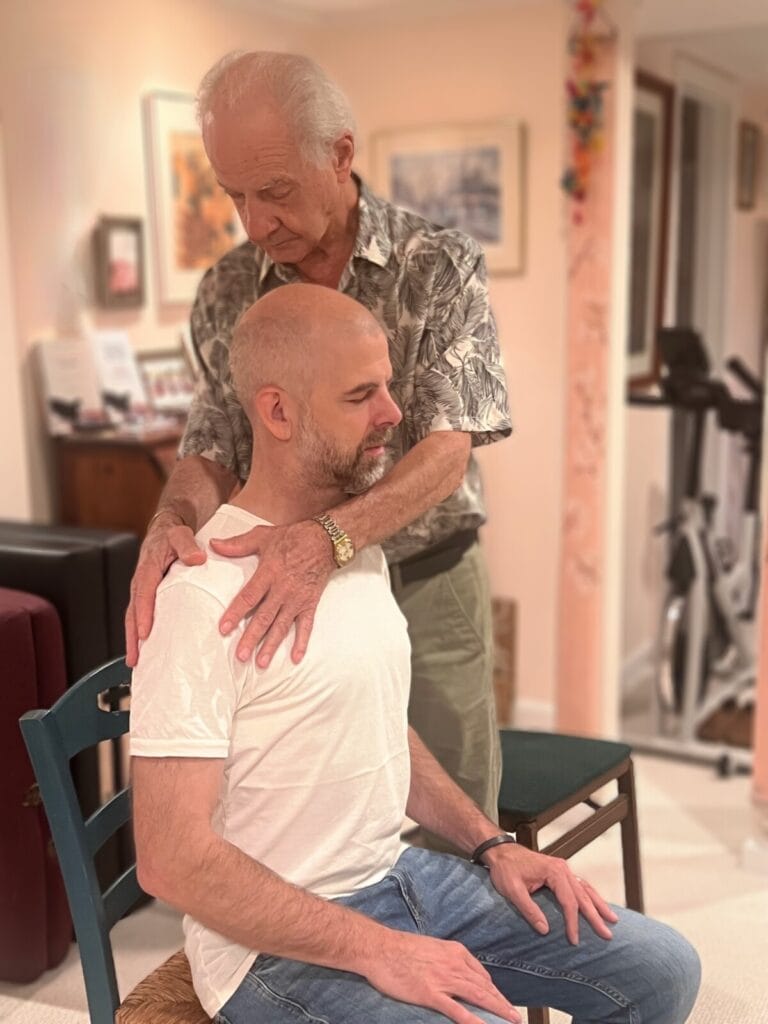
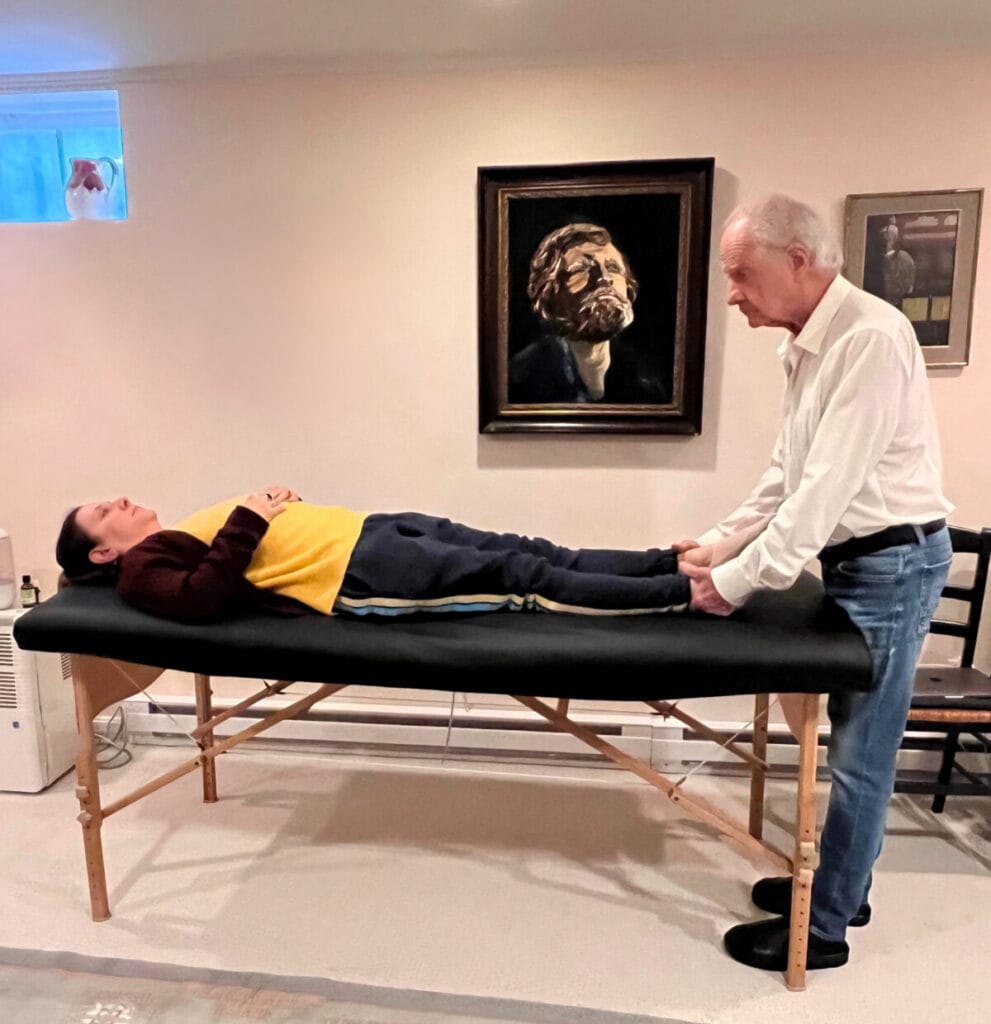
In Tommy’s words during class, there are not only the core principles of the Alexander Technique, but also practical wisdom that can be applied directly to daily life. His words go beyond simple advice about movement and prompt us to deeply consider how we choose to exist.“In the lesson, you would want that person to feel completely received. So it’s a sensitive lesson. That’s very sensitive. And so that’s that.”
→ When the student feels fully received, the nervous system stops bracing. This opens the first space where definition can be withheld and presence can begin.
“When you work with anyone—when they engage in an activity that looks a lot like they’re doing something—they’re using a specific muscle fiber, which is the ‘doing’ fiber. It’s the fast-twitch fiber, as opposed to the slow-twitch fiber. Both fast- and slow-twitch fibers exist in most muscle groups together.”
→ Doing is familiar, fast, and pre-patterned—driven by the body’s urgency to get it done. But being uses a slower, sensing muscle memory that doesn’t rush ahead of perception.
“The organism—the cellular structure, the wisdom of the body—knows exactly what should be emphasized and what should not be emphasized. But most of the human race train themselves to use their fast-twitch fiber—it’s a strength fiber. So it lets you exert what you think is the amount of tension necessary to accomplish the task. But you’re overdoing—mostly.”
→ The body has its own wisdom. But when habit replaces listening, we impose tension where none is needed—and override what the body already knows how to do.
“The more you are in your own ‘being’ phase while you work with someone, the more they pick it up.”
→ Being is contagious. When you embody it, the other person doesn’t copy your technique—they resonate with your state.
“At that moment, just ask him to withhold defining how he thinks he should do what you want him to do, and let the movement come. That’s letting them explore the being.”
→ Don’t direct their doing. Interrupt their knowing. And in the pause that follows, let the body move without instruction.
“Now withhold defining how you think you should do this.”
→ This one sentence breaks the loop. It disarms the habitual self long enough for something more truthful to surface.
4. Practical Tips for Everyday Life
What’s the Goal?
To let withholding definition move beyond theory and into your day. Not as a technique, but as a way of living—through your breath, your words, your reach. The goal is simple: pause before the habit takes over.
How to Practice
1. Before You Stand Up
Don’t plan your way out of the chair. Just pause.
→ Feel your weight. Sense the floor. Let movement begin without deciding how.
→ Try this once today. Do nothing—until something moves you.
2. In a Conversation, Hold the Reply
Someone speaks. You feel the reflex to respond.
→ Wait. Let the silence stretch. Let your response come from sensing, not strategy.
→ Even a two-second pause can shift the whole exchange.
3. Reaching for Anything
Before you move—notice the impulse.
→ Don’t send the hand. Let the hand find.
→ One reach, done this way, can change your sense of timing all day.
What You’ll Notice
- Your pace slows—but you miss less.
- You interrupt autopilot and move with more presence.
- Small moments feel real again—like you’re inside them.
- You’re not correcting yourself. You’re allowing something deeper to lead.
5. Closing the Class
Key Takeaways
- Withholding definition isn’t hesitation. It’s access.
- The body knows more than the habit does.
- When you don’t rush to be who you think you are, something else moves you.
Core Insights
Tommy didn’t ask the trainees to try harder.
He asked them to stop rehearsing.
To wait.
To listen.
To let the movement come—not from habit, but from sensing.
“To withhold is to not define accomplishing what I’ve been asked to do in the way that I’m accustomed to.”
This is not a method.
It’s a way of meeting the moment before the doing begins.
It’s where movement starts to tell the truth.
A Final Invitation
Before the next thing you do—pause.
Not to freeze. Not to figure it out.
Just pause.
Let the definition fall away.
Let sensing arise.
And move from there.
Not fixed. Not prepared. Just present.
6. One Key Practice
Before you move—pause
Not to plan.
Not to prepare.
Just long enough not to know how
Let go of how you think it should go.
Don’t define it.
Don’t fix it.
Let the movement come.
That pause—tiny, quiet, almost nothing—is where your being begins.
7. Three Questions to Ask Yourself
What am I about to define—before I even notice?
The urge to define often arrives before awareness does.
Pause and ask: am I already deciding—about the task, the timing, or myself—before I’ve sensed anything at all?
2. Can I withhold defining how this should go?
Can I pause the inner script just long enough not to follow it?
Not fix or judge—just allow space, and let the unknown have a say.
3. What moves if I don’t define the movement?
Before I act, can I rest in the space before doing?
Withholding isn’t stopping—it’s inviting the movement to find itself, through sensation, not habit.
8. For Those Who Wish to Learn More
Recommended Book
Touching Presence – Tommy Thompson
This isn’t a book of techniques. It’s a book of remembering. Drawing from with over 50 years of teaching the Alexander Technique, Tommy invites us to sense rather than define, to receive rather than correct.
Withholding definition becomes a lived experience in these pages—not as theory, but through real teaching moments and personal stories. It’s not about how to stand or sit. It’s about what happens when we stop trying to “get it right” and simply return to being.
Touching Presence is where presence becomes touchable—and we begin to meet ourselves again.
Official Website of Tommy Thompson
www.easeofbeing.com
This is the official website personally managed by Tommy Thompson, offering a wide range of resources and programs to deepen your understanding and practice of the Alexander Technique:
- Private session reservations and inquiries
- Workshop and seminar schedules
- Overview of international teacher training programs
- Essays and articles on the Alexander Technique
9. Next Class Sneak Peek
If you’ve ever wondered what truly holds you up—not just physically, but in your choices, direction, and sense of self—
Class 59 will challenge what you think support really means.
In the next class, Tommy guides trainees to explore support not as something to find or build—but as something to stop interfering with.
What if your being itself is the foundation you’ve been overriding?
Rather than learning to “hold yourself up,”
you’ll begin to sense how the system supports you when you let go of doing too much.
In Class 59, we’ll explore:
- The nature of self-regulation in movement
- How thinking affects coordination and support
- The power of stopping before doing
10. Join the Alexander Technique Journey
Did this class leave a small resonance within you? Feel free to quietly hold it in your heart or share it in just a sentence or two. The comments are always open. Your one simple word may leave a gentle ripple in this ongoing journey.The journey of Resonance Flow continues across social media as well. Let’s continue this journey together.
 YouTube
 Instagram
 Threads
 Facebook