Use Is Self: How We Move Is Who We Are | Tommy Thompson Class 44
❝ What if the way you sit, breathe, or reach for something isn’t just movement — but a window into your identity? ❞
What if the smallest gesture — tuning your instrument, turning your head, placing your hand — already revealed who you are?
In the Alexander Technique, and in the deeply relational work of Tommy Thompson, this question is not philosophical fluff. It is practical, observable, and transformational. The body doesn’t lie. Use is self — and every moment of movement is a mirror.
On March 5th, 2025, in Boston, Massachusetts, USA, Tommy Thompson led Class 44 of his Alexander Technique teacher training course. But what unfolded wasn’t a class in the conventional sense. There was no lecture. No right way to sit or move. Instead, there was listening, contact, presence — and a moment shared.
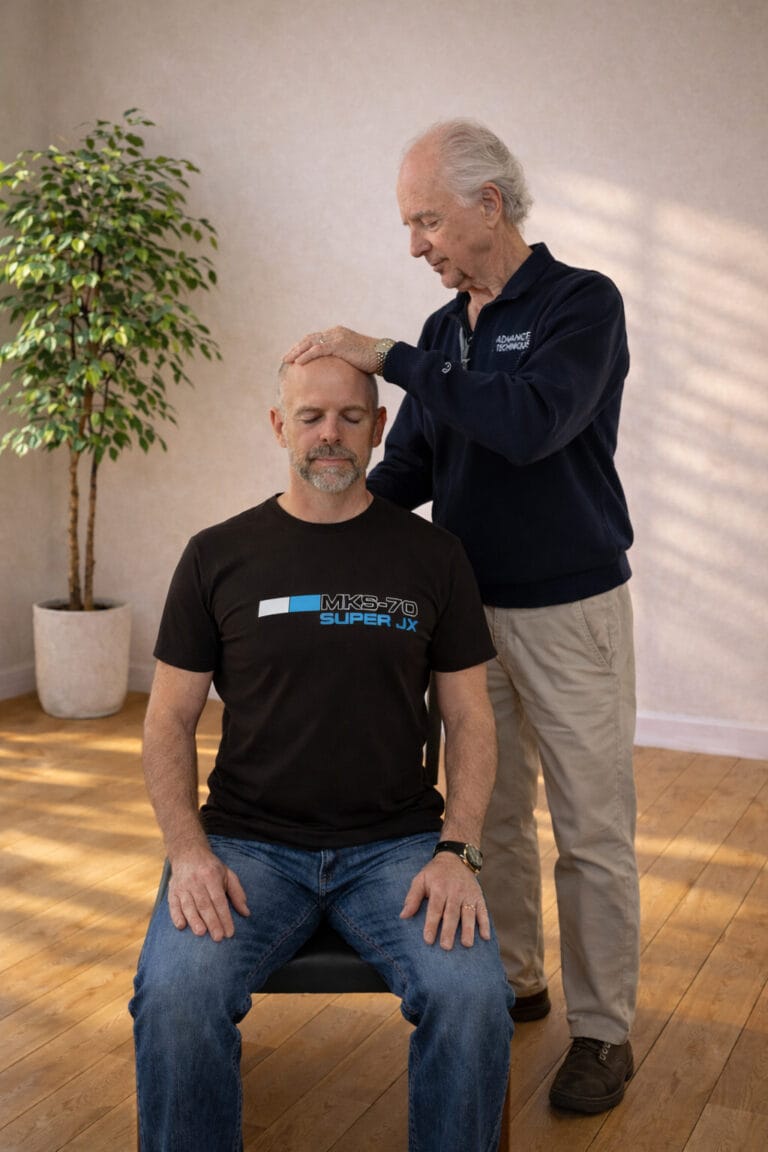
Tommy didn’t teach by showing what to fix. He taught by entering the trainee’s action as it was unfolding — gently, attentively, appreciatively. This was not correction. It was a soft interruption, offered at the exact point where identity becomes action.
In Tommy’s room, the aim isn’t to improve the body — it’s to meet the person in motion.
Key Objectives of the Class:
- To explore how use expresses identity, not just function
- To understand soft interruption as a principle for embodied change
- To discover how tuning is not preparation, but a revelation of identity.
This blog series is based on Tommy Thompson’s Alexander Technique classes. Each post follows the flow and insights of the class to expand both self-awareness and practical consciousness applicable to everyday life.
New here?
If you’re new to the Alexander Technique, you can start with the resources below.
Alexander Technique Class Flow at a Glance

1. The Opening Question
❝ What if how you use yourself in the smallest action is already revealing who you are? ❞
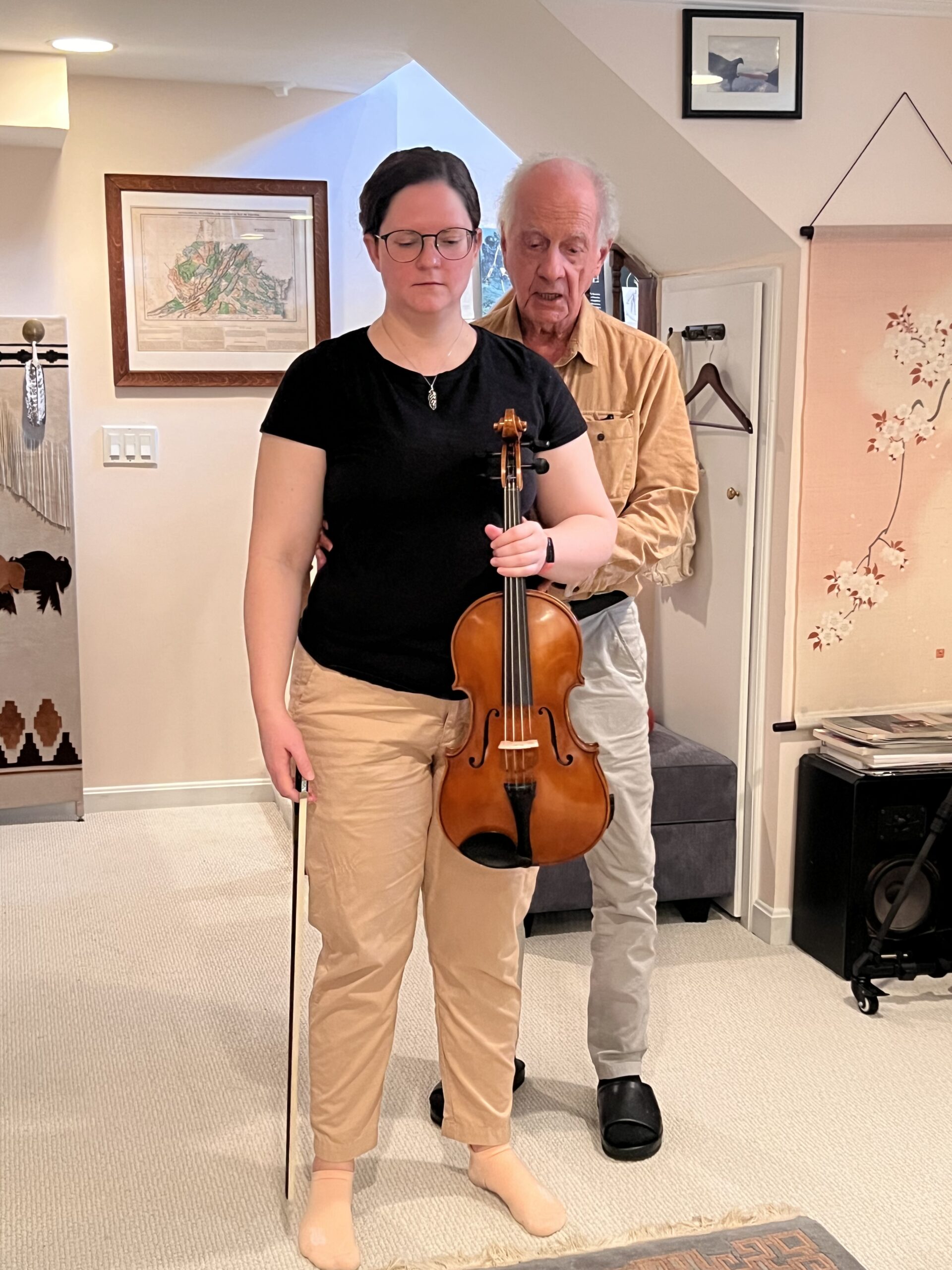
When a musician tunes their instrument, they’re not just aligning pitches — they’re expressing the pattern of their use. Their posture, breath, attention — none of it is separate from the sound they produce.That moment of tuning isn’t technical. It’s an expression of self — a lived reflection of how you use yourself in relationship.
This is the heart of Tommy Thompson’s work in the Alexander Technique: the way we use ourselves — in gesture, in thought, in contact — is who we are. Use is self. There is no ‘self’ outside of relationship, outside of movement.
In Class 44, Tommy doesn’t begin by correcting posture or giving instructions. He begins by listening — to the person’s presence, their way of doing. He enters the moment with them, and from inside that moment, a soft interruption happens. Not a stop. Not a fix. Just enough shift to open something new.
Change, Tommy teaches, doesn’t begin before the action. It begins within it. And that insight changes everything.
We usually imagine that we prepare first, then act — or that we need to correct ourselves after we’ve acted poorly. But in this approach to the Alexander Technique, the moment is already here. The opportunity for transformation is always here — in the act, not after it.
Tommy’s Word
“It’s not a moment before. This is for everybody. I mean, it is a moment before in common understanding. But in this understanding, certainly my understanding, it’s the moment within. A moment is a movement. That’s right, a moment is a movement. It’s catching yourself during the moment where you usually do what you usually do — but it’s not before. You enter the moment. You don’t define the moment. You enter it.”
Tommy doesn’t offer a method for fixing the body. He offers a way of entering relationship with the person in motion — with their breath, their timing, their sense of self. To enter someone’s use while they are in it — tuning, walking, lifting, speaking — is to join their identity, not change it from the outside.
And in that joining, a choice appears — not to do better, but to do differently: gently, consciously, from within.
2. Core Learnings from This Class
In this moment from Tommy Thompson’s class, trainees explore how use shapes expression—even in live performance.
Watch how one touch allows sound, movement, and coordination to reorganize together.
Instrument Performance Transformed by One Touch | Alexander TechniqueClass 44 · Boston, MA
Core Concepts
- Use is not technique — it is identity.
How we move, speak, or reach isn’t just functional — it’s how we exist in the world. Use is Self means the way we engage with life is who we are. - Change doesn’t happen before or after the action — it happens inside the moment.
You don’t step away from doing in order to transform. You enter the action itself with awareness — and that’s where something new can happen. - A soft interruption can reveal a new possibility.
Instead of correcting or stopping someone, Tommy joins their movement and shifts the pattern gently. Not through force — but through presence and appreciation. - The teacher doesn’t fix — they meet.
Touch isn’t used to control. It’s used to sense, to listen, to relate. The teacher is not outside the student. They are with them, in the act. - Freedom isn’t something to achieve — it’s something to allow.
The Alexander Technique isn’t about doing less — it’s about stopping what was never truly yours to begin with.
Five Key Messages
- Use shapes sound
How someone tunes their instrument shapes the quality of their sound — because their use becomes their music. - Change happens in the moment of doing
Change doesn’t happen before you act, or after it’s over — it happens right in the midst of the doing itself. - Soft interruption opens space
A soft touch or moment of awareness interrupts just enough to invite something new. - Let yourself be moved
When the teacher lets themselves be moved by the student’s music or presence, it creates appreciation — not correction. - Use is relationship
The way we use ourselves — in movement, contact, and timing — is how we relate, moment to moment.
Essential Terms
- Use is Self
In Tommy’s words, there is no separate “self” outside of how we relate. When you hold an instrument, touch someone, or speak — that’s you. That’s your use. Identity is not a fixed object — it’s a way of engaging. How you move is who you are. - Soft Interruption
Change doesn’t come from stopping someone. It comes from joining them in action — lightly, precisely, respectfully. A soft interruption doesn’t oppose the habit. It simply invites an alternative inside the doing. - Moment Within
Not the moment before action, but the moment while acting — when you’re mid-motion, mid-thought, mid-pattern. That’s where real change happens. “A moment is a movement,” Tommy says — and that’s the space you enter. - Relational Use
Your body isn’t acting alone. Your spine responds to the presence of another. Your breath listens. In Tommy’s work, use is never isolated — it’s always shaped by contact, attention, and appreciation. We are made to move in relationship. - Undoing
Most people do too much. But the Alexander Technique isn’t about doing less — it’s about not doing what was never necessary. When you undo, you’re not collapsing. You’re freeing the self to respond.

3. Tommy’s Insights
In Tommy’s words during class, there are not only the core principles of the Alexander Technique, but also practical wisdom that can be applied directly to daily life. His words go beyond simple advice about movement and prompt us to deeply consider how we choose to exist.“When a musician tunes their instrument, there’s a quality of use that controls the tuning. Then, when they begin to play, they follow the pattern of use shaped by how they tuned. If you catch the musician in that moment and work with them, they’ll change that pattern—and carry it into their playing.”
→ Catching someone during tuning can shift their entire playing pattern.
“If this were a first lesson, you are freeing the neck to lengthen so the head can move away from the body—either forward and up, depending on the person, or as needed. The spine lengthens and the back widens with the breath.”
→ Release in the body sets the foundation for natural, expressive movement.
“You have to be able to explain how. Where and how much you touched—your quality of touch was just enough. It should be light enough to stimulate the muscle tissue to lengthen, rather than to shorten and contract.”
→ A precise and gentle touch invites lengthening, not resistance.
“Alexander work is an interruption. It’s a soft interruption. I’ve used that phrase a lot. A soft interruption. If I said, ‘No, don’t do it,’ that’s a hard interruption. But if I change the quality of the person’s use while they are holding, then it’s different.”
→ True change comes through gentle redirection — not through force.
“You’re going to let yourself be moved by the presence of the music. Let yourself be moved by the experience the person is having. If the teacher lets themselves be moved—appreciation—that feeds into the student and lets them know that they’re being appreciated, not criticized.”
→ Being moved by the student creates space for mutual growth.
“It’s not a moment before. It may seem like that in common understanding, but in this work, it’s the moment within. A moment is a movement. It’s catching yourself in the moment when you’re doing what you usually do.”
→ Awareness must emerge within the moment, not merely precede it.
“The first thing I do is, I touch who the person is, and then I listen to the person’s quality of response to what I’m doing. I immediately listen to the response to sitting here like this. I sense the person listening to me. Now that means I have their attention, not their curiosity.”
→ Real contact begins by tuning into someone’s response, not just their posture.
“That’s you. When you put your hands on someone—and if I truly believe that myself is my relationship to you—I don’t do to you. That’s ‘I.’ Your self is revealed in how you pick something up—that’s who you are. When you hold someone’s hand—that’s your self. Use is self. It’s a beautiful way of relating to another person.”
→ How we use ourselves is how we relate; there is no self apart from relationship.
4. Practical Tips for Everyday Life
What’s the Goal?
To notice how you use yourself — not by trying harder, but by paying attention to what’s already happening. This isn’t about fixing posture or improving form. It’s about discovering that every small action reflects who you are, and that you can shift — right in the moment — without force.
When approached with the Alexander Technique, everyday life becomes your practice room. Use is Self isn’t a concept. It’s something you can feel, live, and choose.
How to Practice
Here are three real-world ways to begin:
- Reaching for your cup? Don’t rush.
Just pause for a beat. Sense your neck, your breath, your contact with the chair. What changes when you don’t push forward, but let the movement emerge? - Getting up from a chair? Let your breath lead.
Don’t “get up.” Let yourself be moved. Let your spine lengthen with your exhale.
Try it once — just to feel the difference. - Touch like it means something.
Your violin. Your phone. Someone’s arm. Let the touch be light and listening. Touch is not technique — it’s presence.
These aren’t exercises. They’re choices you make — in the moment, as yourself.
What You’ll Notice
You won’t look different. But you might:
- stop bracing in small, unnoticed movements
- feel more integrated, grounded, and less rushed
- catch the moment your habit begins — and let it pass
- realize you’ve been doing more than needed, more often than you knew
Change doesn’t need effort. It just needs presence — inside the doing. And in that presence, you meet your use. You meet yourself.

5. Closing the Class
Key Takeaways
- Use is not a technique — it is identity.
Everything you do — from tuning your instrument to standing up — reveals how you use yourself. And that use, in turn, expresses who you are. - The moment of change is already here.
You don’t have to wait, prepare, or fix yourself first. The opportunity is alive inside the movement you’re already making. - Real teaching happens through relationship.
Tommy doesn’t adjust from the outside. He joins the other person — with rhythm, with presence, with care. And in that joining, a new pattern of use begins to emerge.
Core Insights
- A soft interruption is stronger than correction.
Change isn’t imposed. It’s offered — like a breath that opens the body from within. - Touch is not manipulation. It’s listening.
When you place your hand, you’re not applying a technique. You’re entering someone’s experience and inviting a different kind of coordination. - A moment is a movement.
Real change doesn’t live in preparation. It lives in the act itself — in your next breath, your next reach, your next step.
A Final Invitation
What would happen if, just once today, you caught yourself in the middle of an automatic moment — and made a different choice?
Not a better one. Something softer. Something that lets you breathe.
This is what the Alexander Technique becomes in Tommy’s hands:
Not a system of posture rules — but a practice of presence. A way of meeting yourself again and again, not before you move,
but inside the movement itself.
Use is Self. And that means: Every breath, every step, every reach — is a chance to become more fully yourself.

6. One Key Practice
Catch yourself in the middle. Not before. Not after.
Don’t try to prepare. Don’t try to fix it later. Just notice the moment while it’s happening — the instant you’re reaching, speaking, lifting, holding. That’s where the pattern lives. That’s where you live. And that’s where you can shift.
Not by doing more. Not by doing better. But by letting something soften, right inside the doing. This is the heart of the Alexander Technique as Tommy teaches it: You don’t change yourself by effort. You change by entering the moment of use — and allowing a new direction to appear. Use is Self. So meet yourself there.
7. Three Questions to Ask Yourself
1. What do I notice about myself, right in the middle of doing this — without trying to change anything?
Not before. Not after. In the exact moment you’re moving — what’s happening in your neck, your breath, your jaw, your spine? Can you sense it without doing anything about it?
2. Am I letting myself be moved — or am I pushing through my own pattern?
Whether you’re walking, tuning, lifting or speaking — are your muscles allowing movement, or are they bracing to complete the task?
3. Can I meet myself in this moment — and offer a soft interruption, not to stop, but to shift?
When the familiar pattern arises, can I stay with it — and invite something lighter? Can I redirect by appreciation, not effort?
8. For Those Who Wish to Learn More
Recommended Books
- Touching Presence by Tommy Thompson
A collection of distilled teachings from over 50 years of Alexander Technique work, this book reflects the very language, rhythm, and presence of Tommy’s live classes. From “Use is Self” to “a soft interruption,” every phrase in this book echoes what he teaches in person. For anyone moved by Class 44, this is not just a supplement — it’s a continuation. Reading it feels like being in the room with him. - Thinking Aloud by Walter Carrington
A rich collection of daily class talks by one of the most respected second-generation Alexander teachers. Carrington explores the subtle inner work of use, presence, and inhibition — often emphasizing the same “non-doing” and moment-to-moment awareness that Tommy builds on. For readers wanting to ground Tommy’s insights in a wider teaching lineage, this book offers clarity, gentleness, and timeless wisdom.
Official Website of Tommy Thompson
www.easeofbeing.com
This is the official website personally managed by Tommy Thompson, offering a wide range of resources and programs to deepen your understanding and practice of the Alexander Technique:
- Private session reservations and inquiries
- Workshop and seminar schedules
- Overview of international teacher training programs
- Essays and articles on the Alexander Technique
9. Next Class Sneak Peek
What if the very thing you’re doing to find support… is what’s keeping you from it?
In the next class, Tommy invites us into a radical shift in attention—from managing the body to discovering the support that’s already there.
We’ll move beyond posture, technique, or “doing it right,” and into a felt experience of how relationship itself can be the ground of coordination.
In this next class, you’ll explore:
- What it means to receive support instead of create it
- How to recognize the role of slow-twitch fibers in sustainable movement
- Why stillness is not absence, but readiness
- And how Relational Support shifts the way we move, think, and relate
The next class is not about getting it right. It’s about getting out of the way—so your body can remember what it already knows.
10. Join the Alexander Technique Journey
Did this class leave a small resonance within you? Feel free to quietly hold it in your heart or share it in just a sentence or two. The comments are always open. Your one simple word may leave a gentle ripple in this ongoing journey.The journey of Resonance Flow continues across social media as well. Let’s continue this journey together.
 YouTube
 Instagram
 Threads
 Facebook