Reliable Information: Why Change Doesn’t Come From Effort | Tommy Thompson Class 88
❝ If trying harder hasn’t changed anything, could the information you trust be wrong? ❞
What if effort isn’t the problem?
What if the very thing you rely on most—how it feels—is quietly misleading you?
In this work, change does not begin with fixing, correcting, or trying harder. It begins with learning to distinguish what is actually happening from what merely feels familiar. When that distinction becomes clear, the work shifts away from effort and toward awareness.
When reliable information replaces effort, coordination reorganizes on its own.
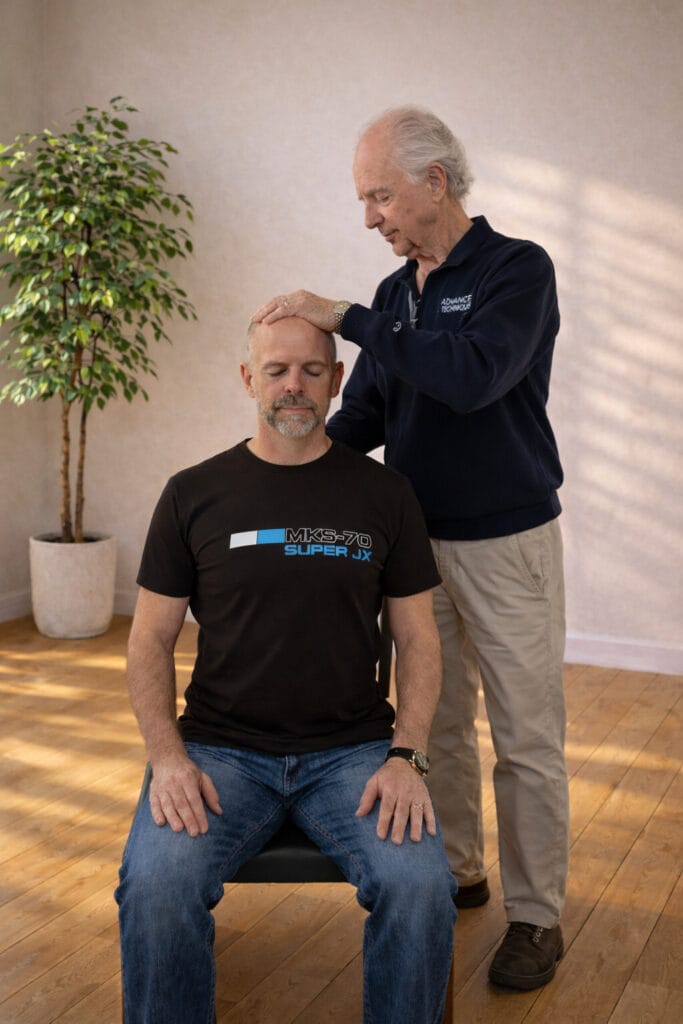
On October 30, 2025, in Boston, Massachusetts, USA, Tommy Thompson led a class in the Alexander Technique teacher training course. From the very beginning, he set the tone of the work: effort is rarely missing. More often, it is the source of interference.
This class was not about posture or control. It was about recognizing false sensory cues, understanding how misdirected perception sustains habitual patterns, and discovering how less interference allows natural coordination to emerge without force.
Key Objectives of the Class:
- To understand why reliable information, not effort, is the foundation of change
- To recognize how sensory misjudgment quietly maintains habits
- To experience how reduced interference restores natural coordination
This blog series is based on Tommy Thompson’s Alexander Technique classes. Each post follows the flow and insights of the class to expand both self-awareness and practical consciousness applicable to everyday life.
New here?
If you’re new to the Alexander Technique, you can start with the resources below.
Alexander Technique Class Flow at a Glance
1. The Opening Question
❝ If effort isn’t missing, what exactly is interfering? ❞
This question immediately shifts the trainee’s attention.
When change doesn’t happen, the habitual response is to try harder. But in this class, Tommy redirects the work away from effort and toward Interference.
In the Alexander Technique, progress does not come from adding something new. It begins when a trainee learns to notice what is already getting in the way.
The work changes the moment attention moves from fixing to noticing.
This reframes the entire class. The focus moves from improvement to observation, from correction to clarity.
If effort has been present all along, then the real question becomes: what kind of information has been guiding that effort? When trainees begin to question the reliability of what they feel, a different kind of learning becomes possible.
Change depends not on effort, but on Reliable information.
Tommy’s Word
“They give you reliable information, so the understanding of the Technique is that you need reliable information, as opposed to false information, if you’re going to make a change.”
→ This single statement defines the direction of the class. Tommy is not asking trainees to work harder, but to recognize that change depends on the quality of information guiding their actions. Effort is not missing; clarity is.
2. Core Learnings from This Class
Core Concepts
This class was not about technique, correction, or improvement.
It was about orientation.
Again and again, Tommy brought trainees back to one question:
Are you trying to make something happen, or are you noticing what is already happening?
In the Alexander Technique, learning begins when attention shifts away from doing and toward recognizing Interference. That shift alone changes the nature of the work.
Change does not come from adding effort, but from seeing what effort is already doing.
Rather than trying to improve themselves, trainees were asked to observe how effort was already being applied—and whether it was necessary. When effort is guided by Reliable information, the body reorganizes without force.
Three ideas shaped the direction of this class:
- Change begins with perception, not performance.
What matters is not what you do, but how you are using yourself while doing it. - Effort becomes problematic when it is guided by unreliable sensory feedback.
In that case, effort increases Interference instead of reducing it. - The organism does not need correction.
When Interference is reduced, coordination reorganizes itself.
These ideas were not offered as theory. They were tested repeatedly through observation, hands-on work, and moment-to-moment self-checking.
Five Key Messages
- Trying harder does not produce change.
The class consistently redirected trainees away from effort and toward recognizing Interference. - Familiar sensations are not reliable guides.
What feels right is often what sustains Interference. - Interference gathers in predictable places.
Especially in the relationship between the head, neck, and upper spine. - Teaching is not about fixing.
It is about revealing Interference clearly enough that it no longer needs to be maintained. - Learning is directional, not instantaneous.
When action is guided by Reliable information, change unfolds over time.
Learning happens when direction is clear, not when effort is increased.
These messages functioned as reference points rather than advice. Trainees were encouraged to return to them repeatedly as a way of orienting themselves during the work.
Essential Terms
The vocabulary used in this class shaped how trainees listened and evaluated their experience.
- Reliable information
Information that reveals what is actually happening, rather than confirming what feels familiar. - Interference
Habitual patterns of effort, tension, or reaction that prevent natural coordination. - Sensory misjudgment
The tendency to trust familiar sensations even when they do not reflect actual use. - Use
The overall manner in which a person organizes themselves in activity, not a position or posture. - Coordination
The natural outcome that emerges when Interference is reduced, rather than something to be achieved.
When trainees can recognize Reliable information and Interference in their own experience, the work stops being conceptual and becomes practical.
At that point, the class is no longer about understanding the Alexander Technique.
It becomes about applying it, moment by moment.
3. Tommy’s Insights
In Tommy’s words during class, there are not only the core principles of the Alexander Technique, but also practical wisdom that can be applied directly to daily life. His words go beyond simple advice about movement and prompt us to deeply consider how we choose to exist.They (kinesthetic cues) give you reliable information, so the understanding of the Technique is that you need reliable information, as opposed to false information, if you’re going to make a change.
➤ In the Alexander Technique, transformation begins when sensory feedback replaces habitual belief, allowing action to be guided by what is actually happening rather than what merely feels familiar.
Remember that Alexander made his discoveries looking in a mirror, primarily so he could see the discrepancy—what he called his misdirected senses.
➤ The mirror revealed the gap between intention and action, establishing sensory misjudgment—not posture—as the central problem Alexander sought to address.
Now I listen as you start coming up. I listen to what’s in the way, and what’s in the way is down here. That’s true of almost everybody, because if you are misusing your trapezius and your sternocleidomastoid, your head will go forward, whether you want it to or not.
And when it goes forward, this is where it collects—around the fifth, sixth, and seventh vertebrae. So, inevitably, everyone must release here.
➤ Habitual misuse consistently concentrates interference in the lower cervical spine, making release at this level a functional necessity rather than an individual variation.
If you’re letting yourself exist in the path of least resistance, you’re closer to the way you’re designed to function.
➤ Efficient coordination emerges not through control, but through allowing the organism to organize itself according to its inherent biological intelligence.
If you just have a sense of the presence of your coccyx area, you will come up.
You will come up.
Growing a tail and thinking of it going along like a dinosaur—it actually works.
➤ This expression is not an instruction to rely on imagination, but a metaphor explaining how vertical organization is naturally restored through awareness of the base of the spine. The image of growing a tail helps stop attempts to manipulate the body and supports sensing an integrated upward direction.
4. Practical Tips for Everyday Life
What’s the Goal?
The goal is not to fix yourself or perform better.
The goal is to recognize Interference early enough that you don’t have to fight it.
In this class, Tommy emphasized that the Alexander Technique is learned in ordinary moments. Standing up, reaching, beginning to speak—this is where the work lives.
The aim is not improvement, but orientation.
When trainees stay oriented toward Reliable information, daily life becomes the practice.
How to Practice
- Pause at the start of an action.
When you stand, reach, or begin to speak, pause briefly. Not to fix anything—just to notice how you are organizing yourself. - Ask one clear question.
Is this action guided by effort, or by Reliable information?
Let the question interrupt the habit without correcting it. - Allow the interruption to work.
If you notice tightening or rushing, don’t change it.
Noticing is the practice. Over time, this reduces Interference without force.
What You’ll Notice
At first, very little seems to change. That’s expected.
Then actions begin to feel less compressed. Movement takes less effort. You stop bracing without trying to.
Coordination improves not because you worked on it, but because you stopped interfering with it.
You may also notice changes beyond movement—pausing instead of rushing, responding instead of reacting.
This is not something you add to your life. It changes how you meet whatever is already there.
That is the Alexander Technique showing up in daily life, guided by Reliable information, not habit.
5. Closing the Class
Key Takeaways
As the class came to a close, Tommy did not summarize techniques.
He returned trainees to orientation.
Effort, he reminded them, is rarely missing. What is usually missing is clarity about what is actually happening.
Change begins when effort is no longer asked to solve a problem it created.
This class was not about adding new skills. It was about allowing unnecessary effort to fall away once it was clearly seen.
Core Insights
One insight shaped the entire class. When trainees stay oriented toward Reliable information, the system reorganizes without force.
Tommy emphasized that this is not a mental exercise. Change does not come from thinking differently, but from no longer sustaining Interference.
The body does not need instruction. It needs space to stop being interrupted.
When direction is clear, progress is no longer something to pursue. It emerges on its own.
A Final Invitation
Tommy closed the class with an invitation rather than an instruction.
To pause.
To notice.
To question what feels familiar.
Not to fix anything, but to remain available to Reliable information as life unfolds.
This work is not about becoming better. It is about becoming less in the way.
That was how the class ended—not with answers, but with a direction trainees could return to in daily life.
6. One Key Practice
This class offered many insights, but one practice stood at the center.
Before you act, pause just long enough to notice what is already happening.
Not to fix it.
Not to improve it.
Just to recognize whether action is coming from habit or from Reliable information.
This pause is not a technique. It is an interruption.
When that interruption is present, Interference loses momentum and coordination has space to reorganize.
Nothing to add.
Just one clear moment before action.
7. Three Questions to Ask Yourself
These questions are not for analysis.
They return you to the present, the way Tommy does in class.
- What am I doing with myself right now?
Not the task, but the manner of use. - Am I responding, or reacting from habit?
This reveals whether choice is present. - What happens if I don’t interfere?
Something to notice, not to answer.
Returned to regularly—standing, speaking, deciding—these questions quietly change how you meet movement and learning.
This is how the Alexander Technique becomes lived, not practiced.
8. For Those Who Wish to Learn More
The Universal Constant in Living – F. M. Alexander
This book takes Alexander’s central discovery to its deepest conclusion: when sensory judgment is misdirected, we interfere with our own coordination—and then mistake that interference for “normal.” Read alongside this class, it clarifies why Reliable information matters, how misdirection becomes Interference, and why change emerges when we stop sustaining what feels familiar.
Return to it slowly. Not to collect ideas, but to refine the standard by which you recognize interference in yourself—moment by moment.
9. Next Class Sneak Peek
In the next class, the inquiry continues—not by adding a new concept, but by pressing the same question further into lived experience.
The focus turns toward what happens when we stop defining change too quickly—when improvement, relief, or clarity are no longer taken as proof that something has truly shifted.
Rather than asking how to create change, the work begins to ask how meaning, identity, and interpretation quietly take over, and what becomes possible when they are momentarily set aside.
It is a deeper exploration of the same challenge opened here:
What allows change to remain alive once we stop naming it?
10. Join the Alexander Technique Journey
Did this class leave a small resonance within you? Feel free to quietly hold it in your heart or share it in just a sentence or two. The comments are always open. Your one simple word may leave a gentle ripple in this ongoing journey.The journey of Resonance Flow continues across social media as well. Let’s continue this journey together.
 YouTube
 Instagram
 Threads
 Facebook