Use Yourself: What If the Way You Move Reveals Who You Are? | Tommy Thompson Class 28
❝ What does it really mean to use yourself? ❞
We often think of posture as something to fix — shoulders back, chin up, stand tall. But what if posture isn’t the point? What if it’s merely a symptom of how you relate to yourself — in thought, in movement, in identity?
That question isn’t about how you look — it’s about how you live. And in this class, that’s exactly what we explored: how the way you move reveals the way you relate to being yourself.
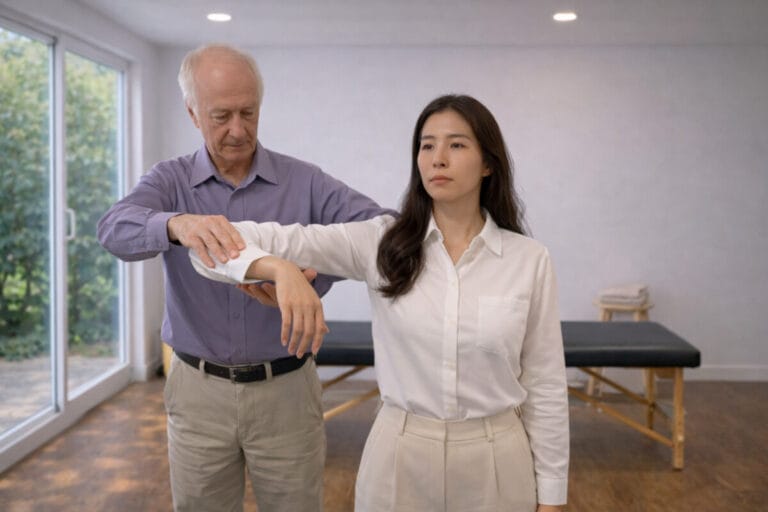
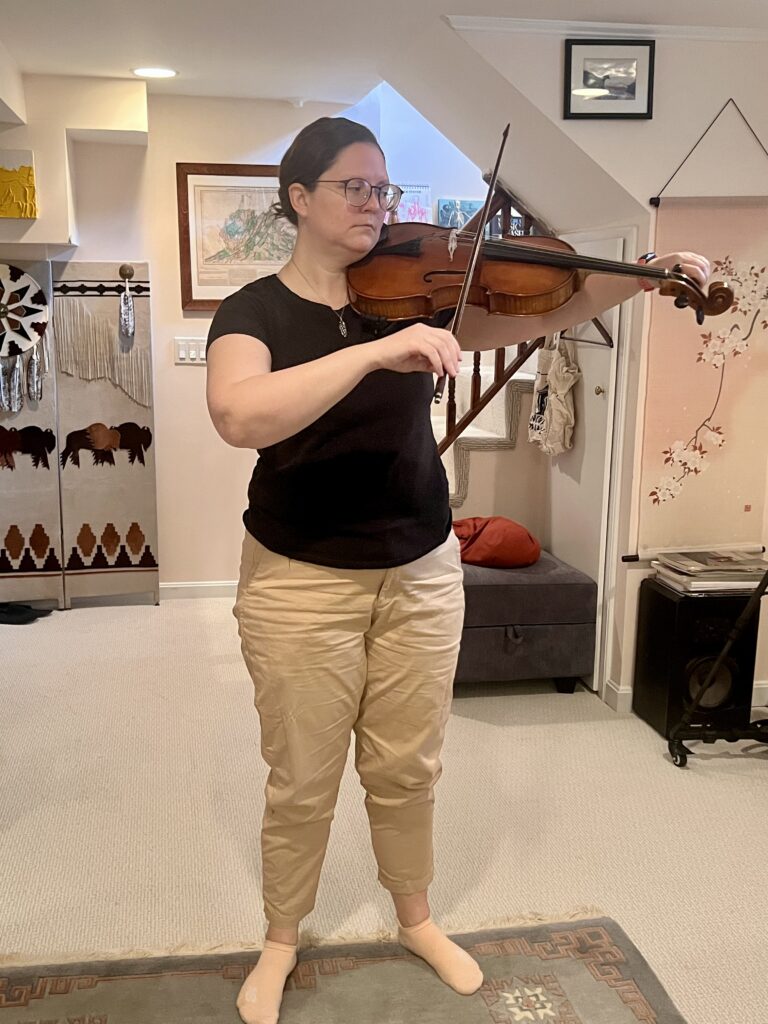
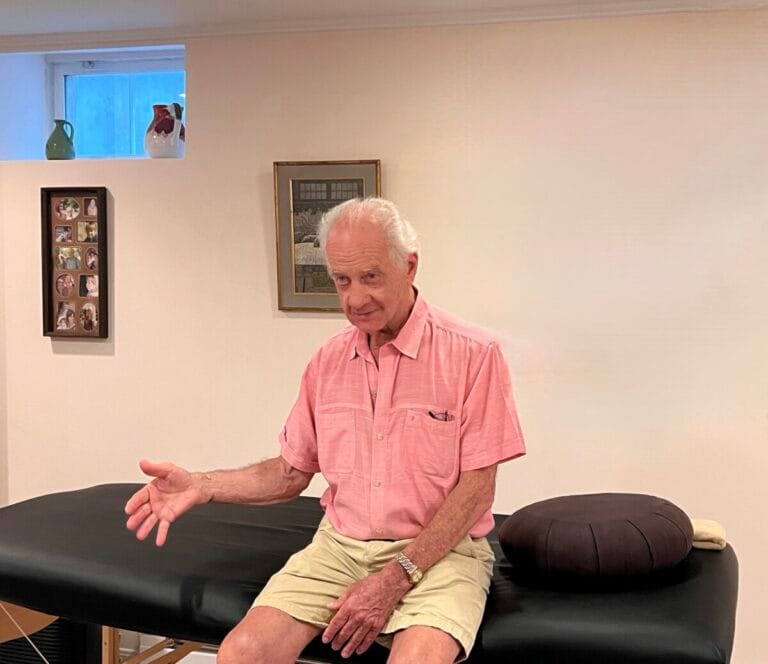
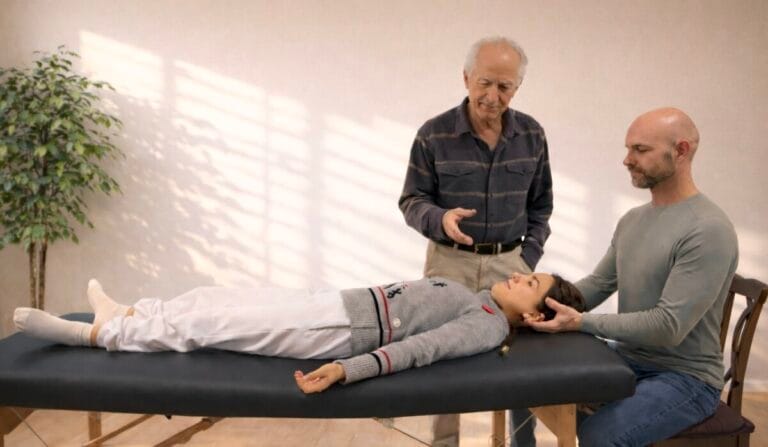
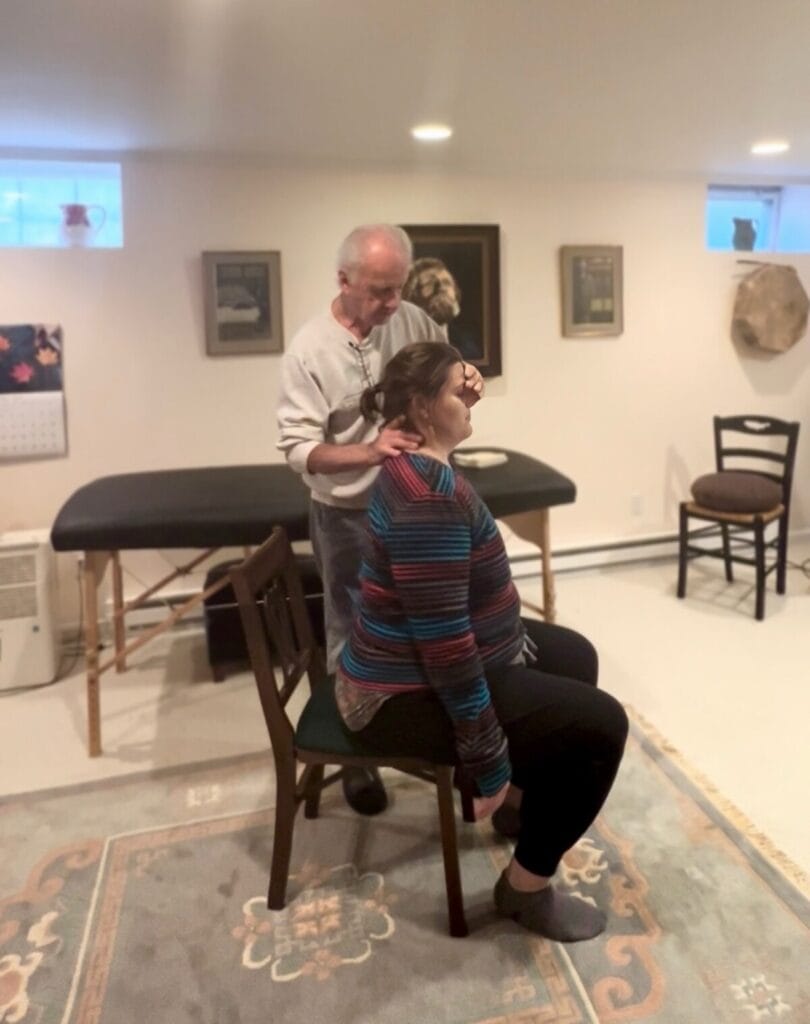
On November 19, 2024, in Boston, Massachusetts, USA, Tommy Thompson led a class in the Alexander Technique teacher training course that didn’t just teach movement — it reframed what it means to be a person in motion. It wasn’t about exercises. It wasn’t about hands-on chair work. It was about presence, and more precisely, the use of self — that deep, habitual pattern through which you meet gravity, time, and your own history.
This wasn’t a class you attended. It was a class you entered.
Key Objectives of the Class:
- To clarify the distinction between use and use of self — not as technique, but as identity.
- To restore a felt sense of poise, not as a posture, but as a state of being.
- To understand that habitual movement patterns are not mechanical, but psychological and emotional expressions of the self.
This blog series is based on Tommy Thompson’s Alexander Technique classes. Each post follows the flow and insights of the class to expand both self-awareness and practical consciousness applicable to everyday life.
New here?
If you’re new to the Alexander Technique, you can start with the resources below.
Alexander Technique Class Flow at a Glance
1. The Opening Question
❝What if you’re not just fixing your posture — you’re reorganizing who you believe you are?❞
This isn’t about standing up straighter. This is about realizing that the way you move is the way you exist.
How you stand, sit, or turn your head — those aren’t just motions; they’re expressions of your identity. They’re the residue of unconscious choices, lived over time, and layered into your nervous system.
In this class, we didn’t begin with movement. We began with recognition: the idea that tension is not only mechanical, but personal.
What if releasing tension means letting go of who you thought you had to be?
That’s the invitation at the heart of the Alexander Technique: not to change yourself by force, but to meet yourself differently.
And that shift — subtle, quiet, and profound — begins when we start exploring our use of self.
Tommy’s Word
“Use of self is overriding self because use is your habituation that’s tied in very closely with your identity.”
In other words, you’re not just adjusting how you sit or walk. You’re entering the realm of how you’ve been organized by years of unconscious choices. What you do with your body is inseparable from how you perceive yourself — and that’s why working with the use of self means stepping into the very shape of your being.
2. Core Learnings from This Class
Core Concepts
- Use of Self is a way of being
It’s not just a physical technique, but a way of perceiving, regulating, and living as oneself.
It’s a process of relearning how to relate to yourself through movement. - Posture is a result, not a goal
Posture isn’t something to “fix.” It’s a symptom of how you are using yourself.
More important than posture itself is recognizing the patterns and habits that produce it. - Presence begins with stopping
Presence isn’t about adding something—it awakens through the choice not to act.
The brief pause between movements is a gateway to conscious living.
Five Key Messages
- Movement reveals who you are
→ The way you unconsciously repeat certain actions reflects how you’ve become who you are. - Habits are identity rooted in the nervous system
→ It’s not just about correcting posture—it’s about reshaping patterns linked to identity. - Movement is not something to fix, but to listen to
→ Change begins not by fixing problems, but by tuning in to what’s happening now in your senses. - Presence comes from subtraction, not addition
→ When you stop trying to do more, natural coordination becomes possible. - How you use your body reflects how you relate to yourself
→ Use of self is a relationship with yourself—and it’s one you can choose, in every moment.
Essential Terms
- Use of Self
Movement reflects how you relate to yourself. What matters more than how you sit or walk is your awareness of how you’re “using” yourself in doing it.
Tommy describes this as working with being, not just with technique. - Overriding Identity
If unconscious habits have shaped who you are, then the moment you become aware of your “use,” you step into a broader space of choice.
Tami says, “use is overriding self”—a practice of moving beyond the habitual self. - Belonging Through Movement
A baby lifting its head, forming the spinal curve, and learning to stand stems from an instinctive desire to exist and connect.
Movement isn’t just physical action—it’s the body’s gesture of wanting to belong in the world. - Not-Doing
Not fixing, not moving, just pausing.
In that pause, habits stop—and space opens for presence to emerge.
This isn’t powerlessness—it’s the restoration of choice. - Patterned Self
Repetitive movement is not just muscle memory—it’s a piece of your identity.
Posture isn’t merely a physical outcome; it’s a response etched into the body by how you live. - Living Awareness
Tommy emphasizes embodied, living awareness over mechanical correction.
When body and mind are connected, you’re not just a moving being—you become someone who can choose to move.
3. Tommy’s Insights
In Tommy’s words during class, there are not only the core principles of the Alexander Technique, but also practical wisdom that can be applied directly to daily life. His words go beyond simple advice about movement and prompt us to deeply consider how we choose to exist.“Use of Self is not just about how you use your body but about your relationship with yourself.”
→ How you move is a mirror of how you relate to your own presence, moment by moment.
“Use of Self is not just about using the body but a process of focusing on oneself. Use without self-awareness is incomplete.”
→ Without conscious attention, movement is just habit repeating itself without choice.
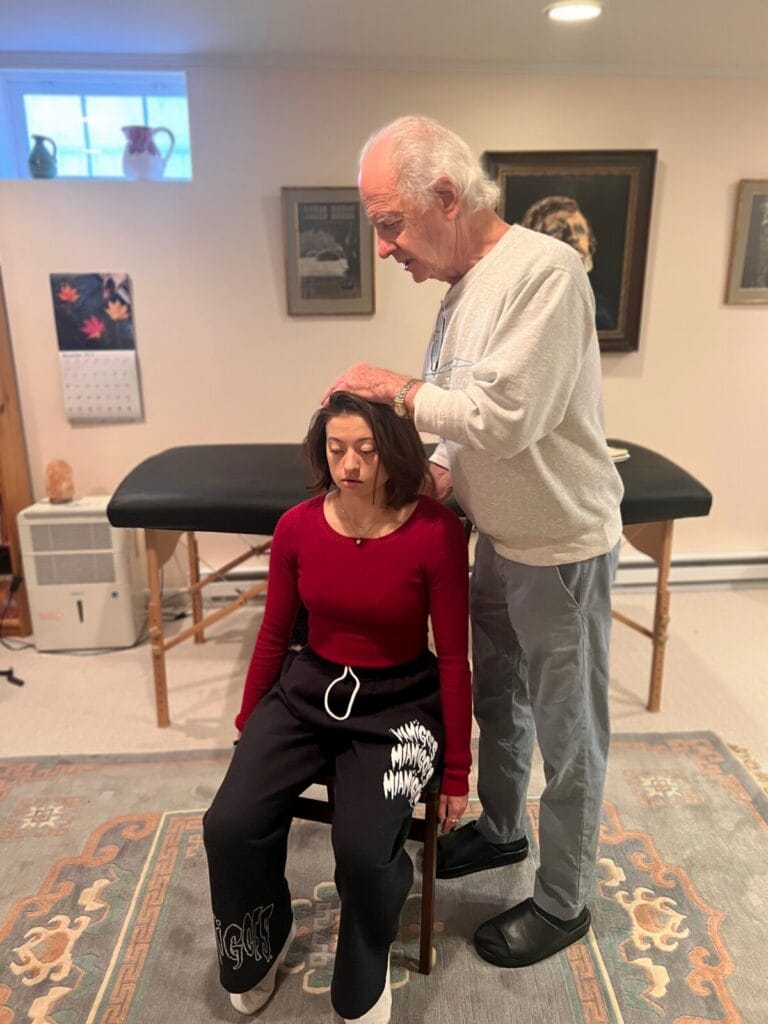
“When working with someone, they should not think it is just about chair or table work. The goal is to help them understand how they are using themselves.”
→ The practice isn’t about forms—it’s about revealing how identity lives in action.
“Poise involves both length and width, but over time, we lose this balance and develop maladaptive movement patterns. The goal is to restore what was lost.”
→ Natural coordination is not something we invent—it’s something we remember and reawaken.
“The first major hurdle a baby overcomes is rolling over, which develops their ability to move beyond that. The trapezius plays a key role, allowing quadrupedal movement and functioning as a single muscle during this phase.”
→ Early movement patterns shape lifelong postural logic, and the trapezius is a primal connector.
“When a child first lifts their head, the desire is unconscious, rooted in an instinctive need to belong. This movement creates the first spinal curve, led by the trapezius, with the rest of the spinal curves forming naturally. These curves are essential for maintaining posture throughout life.”
→ Belonging begins as a gesture of upward seeking, setting the architecture for uprightness.
“Guided Movement involves leading a person while helping them explore the possibility of not repeating unconscious habitual behaviors.”
→ Transformation happens not through correction, but through inviting attention into what’s usually automatic.
“The core principle of the Alexander Technique is not just about ‘use’ but about ‘self.’ This process is about discovering who you are and what possibilities exist, rather than defining yourself by unconscious habitual patterns.”
→ The Technique is not self-improvement—it’s self-discovery through the body’s lived intelligence.
4. Practical Tips for Everyday Lifepractical-tips
What’s the Goal?
To reclaim Presence in everyday movement, so your use of self isn’t ruled by habit but guided by conscious coordination.
This means: moving through life not on autopilot, but as an active, aware participant in how you walk, reach, sit, and speak.
The Alexander Technique gives you the structure to begin this shift—gently, but powerfully.
How to Practice
1. Pause at Thresholds
- Whenever you’re about to go through a doorway, stop for 2 seconds.
- Let your feet notice the floor, your breath return, and your spine lengthen.
- Then continue with just a little less rush.
2. Soften Before You Stand
- Before getting up from a chair, place your attention in your neck, jaw, and ribs.
- Ask silently: “Can I release tension here before I move?”
- Let your weight shift without strain or anticipation, then rise.
3. Look with Your Whole Spine
- When you turn to look at someone or something, include your hips and ribs, not just your neck.
- Let the movement ripple through your torso, as if your whole spine is curious—not just your eyes.
What You’ll Notice
- You’ll begin to sense familiar tensions trying to hijack each action — and find a moment of pause before reacting.
- Movements will feel simpler, lighter, less forced — as if your body is no longer resisting itself.
- Most powerfully, you may begin to sense that you’re not only doing — you’re directing.
5. Closing the Class
Key Takeaways
- The Alexander Technique is not a method for fixing posture — it’s a way of reclaiming how you meet the moment through your whole self.
- In Tommy’s words, use isn’t separate from identity — what you do and how you do it shapes who you believe you are.
- Change doesn’t happen through force. It begins by recognizing the moment before habit acts — the space where presence becomes possible.
Core Insights
Presence isn’t something to “add” on top of what you’re already doing.
It returns when you stop doing what’s not needed.
The use of self is a live conversation between your awareness and your body — not once-and-for-all, but moment-to-moment.
This is the work — not performance, but participation. Not correction, but contact. Not posture, but presence.
“There’s a person in there,” Tommy reminds us.
It’s not about movement alone — it’s about who’s being moved.
A Final Invitation
So as you leave this class, don’t try to “remember” what you learned.
Instead, forget just enough to notice what’s already alive — in your breath, in your spine, in the space between impulse and action.
Let presence return, not as a task to complete, but as something you can recognize, again and again.
This isn’t the end of practice.
It’s the beginning of remembering how to stop — and listen — before you move.
6. One Key Practice
Stop before you move.
That’s it.
Before you reach, stand, speak, or even think about fixing something— pause. Let the desire to act rise — without rushing in to meet it.
Just a beat of stillness.
In that moment, you’re no longer inside your habit. You’re at the edge of choice.
And that’s where the Alexander Technique begins.
7. Three Questions to Ask Yourself
- What is moving me right now?
→ Is it habit? Intention? Hurry?
Pause long enough to notice what’s already happening — not to change it, not to fix it, but to meet it. - Am I willing to not do — just for a moment?
→ Not fix. Not improve. Just not do.
This is where a different coordination becomes possible — where Presence enters before behavior. - Can I include more of myself in this moment?
→ The back of your ribs, the soles of your feet, the space behind your eyes —
what shifts when your awareness includes more than just the task?
8. For Those Who Wish to Learn More
Recommended Book
How You Stand, How You Move, How You Live – Missy Vineyard
If Tommy’s class revealed how movement and identity are inseparable, this book shows you how that awareness can grow — step by step, and system by system.
Vineyard blends Alexander Technique with neuroscience and psychology to explore how changing use of self transforms how you live, not just how you move.
She writes with clarity and depth, helping you experience the Technique not as correction, but as a shift in how you relate to yourself.
It’s more than a guide — it’s a path back to conscious coordination.
Official Website of Tommy Thompson
www.easeofbeing.com
This is the official website personally managed by Tommy Thompson, offering a wide range of resources and programs to deepen your understanding and practice of the Alexander Technique:
- Private session reservations and inquiries
- Workshop and seminar schedules
- Overview of international teacher training programs
- Essays and articles on the Alexander Technique
9. Next Class Sneak Peek
Next time, we explore a deeper question:
What are you truly doing when you move — and who is doing it?
This session continues the shift from doing to sensing, from correction to clarity.
We’ll look at how the Alexander Technique reorients movement from habit to awareness.
In Class 29, we’ll explore:
- ‘Use’ vs. ‘Use of Self’ – How movement patterns shape identity
- Chair Work & Table Work – Releasing effort, cultivating presence
- Poise & Neural Pathways – Rediscovering your natural coordination
- Guided Movement – Interrupting habit with conscious direction
The following content will be added subsequently.
10. Join the Alexander Technique Journey
Did this class leave a small resonance within you? Feel free to quietly hold it in your heart or share it in just a sentence or two. The comments are always open. Your one simple word may leave a gentle ripple in this ongoing journey.The journey of Resonance Flow continues across social media as well. Let’s continue this journey together.
 YouTube
 Instagram
 Threads
 Facebook