Use of Self: What Most People Miss About the Alexander Technique | Tommy Thompson Class 55
❝ What if the tension you’re trying to fix… is actually the way you’ve been trying to fix yourself? ❞
You think it’s your posture. But maybe it’s your perception. You think the solution is a better technique. But maybe it’s the moment you’re skipping over—the moment where you are.
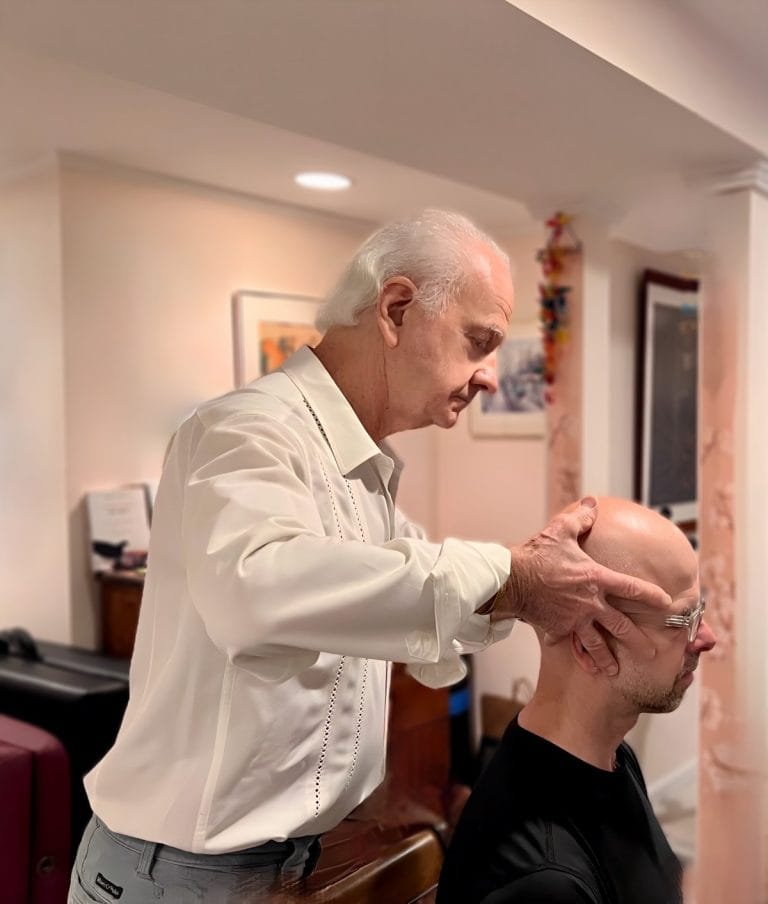
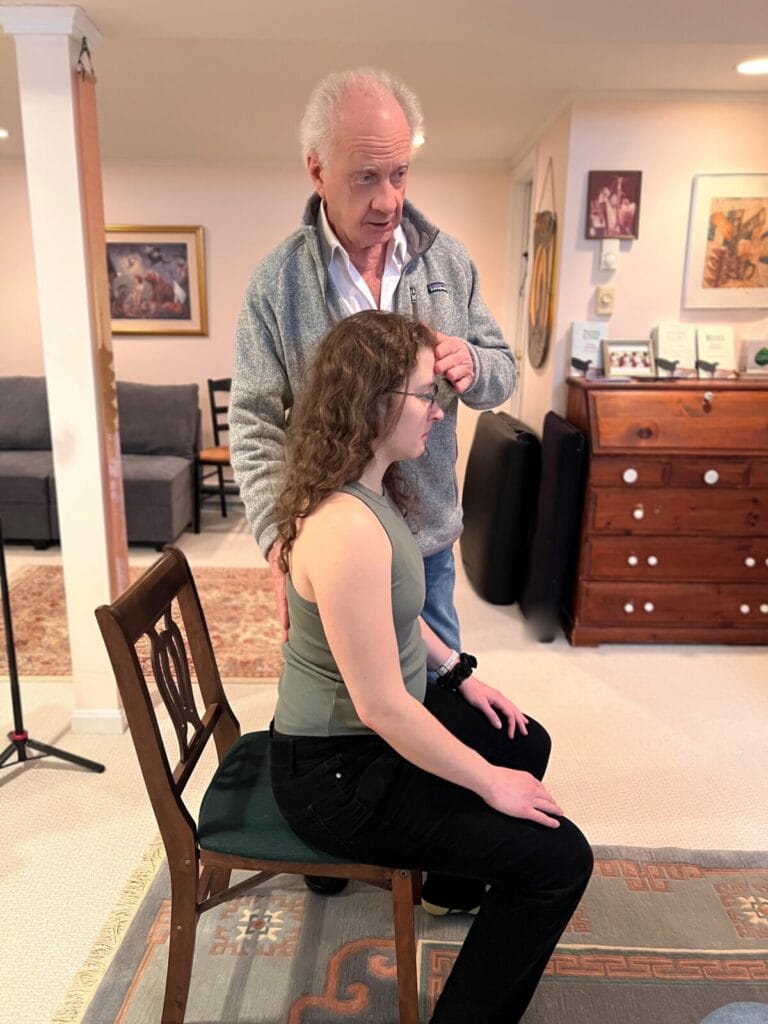
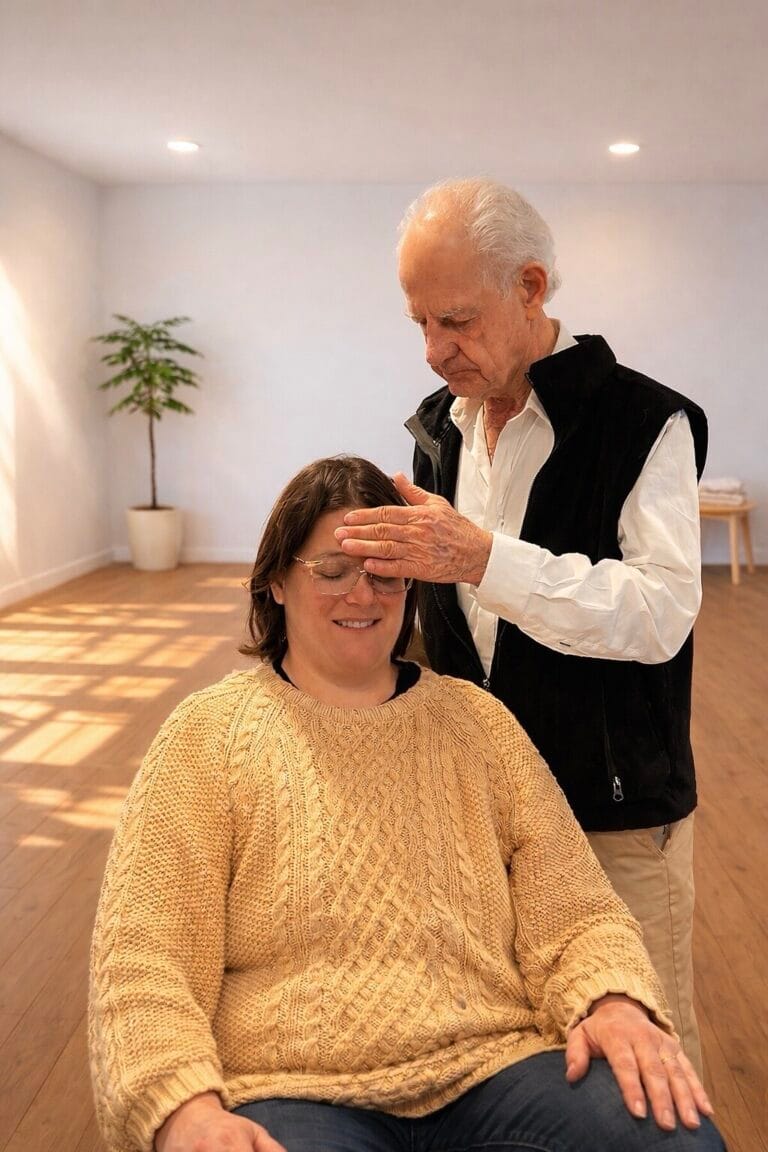
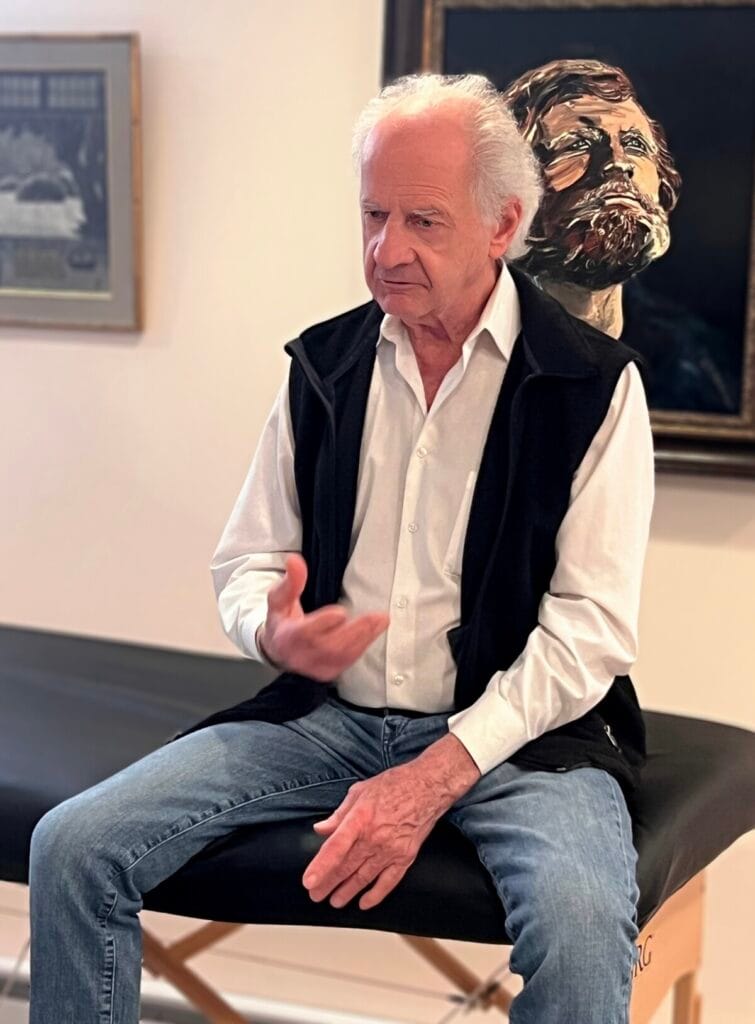
In this class, Tommy Thompson didn’t teach us how to correct someone. He showed us how to meet someone. And not just with hands. With eyes. With attention. With the courage to stop and let the person appear.
Because in the Alexander Technique, nothing begins until the use of self becomes conscious. That doesn’t mean controlling it. It means not abandoning it. That means teaching doesn’t start when your hands land on someone—it starts when you see them, and more importantly, when you see you.
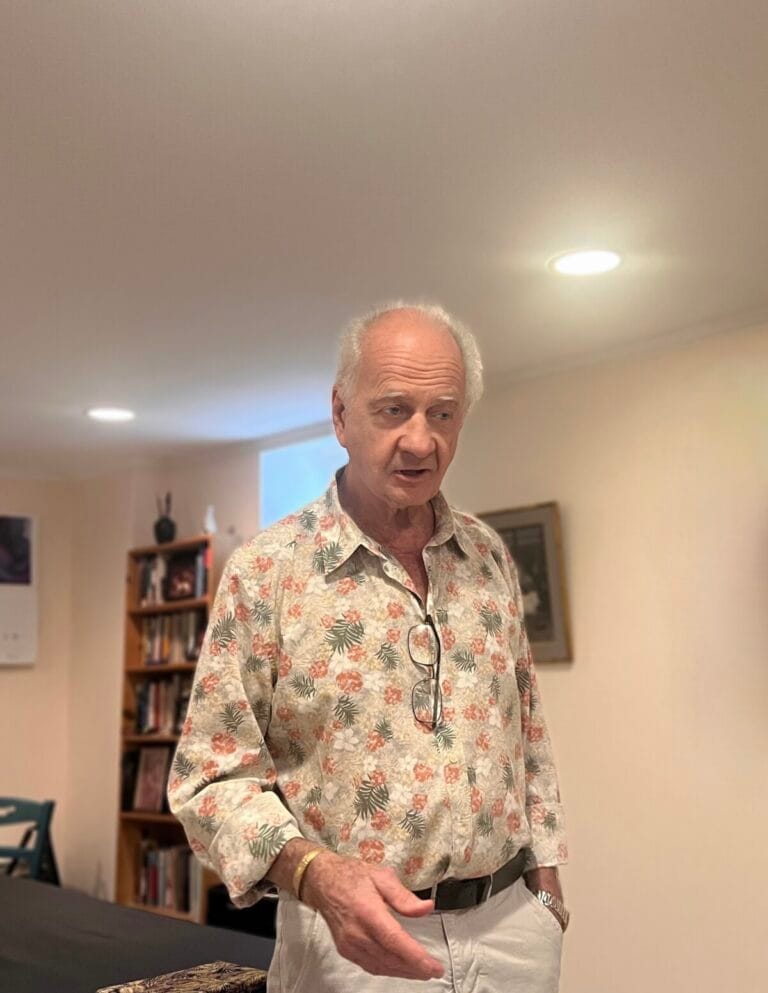
On April 1, 2025, in Boston, Massachusetts, USA, Tommy Thompson led a class in the Alexander Technique teacher training course that reminded everyone in the room: the person in front of you doesn’t need to be adjusted. They need to be met.
Key Objectives of the Class:
- Reimagine the Alexander Technique as a moment-to-moment practice of relationship, not correction
- Explore how use of self influences not just posture, but nervous system regulation and personal identity
- Practice presence as the primary method of teaching—not instruction, not intervention, but attention
This blog series is based on Tommy Thompson’s Alexander Technique classes. Each post follows the flow and insights of the class to expand both self-awareness and practical consciousness applicable to everyday life.
New here?
If you’re new to the Alexander Technique, you can start with the resources below.
Alexander Technique Class Flow at a Glance
1. The Opening Question
❝ If you’re not bringing yourself… what are you bringing? ❞
That’s where the class began—not with anatomy, not with hands-on table work, but with a question.
Because in this room, “use of self” isn’t a technical term. It’s the entire frame. It’s not just how you move—it’s who you are in the moment you move. It’s not just how you speak—it’s who is speaking. If your hands touch a trainee, but you haven’t arrived yet, then what exactly are they feeling? That’s the question Tommy posed. And not rhetorically.
Teaching, in the Alexander Technique, begins before the hands touch. It begins with who you’re being—and that means every lesson starts by asking:
What is my use right now?
And: Am I here? Or am I trying to perform the idea of being here?
This is what makes this work so radical. It doesn’t ask you to fix anything. It asks you to stop long enough to realize what you’re actually using to meet the moment. That’s the hinge where transformation happens—not from pressure or persuasion, but from presence.
Tommy’s Word
“So am I bringing use or self, or use of self to this?”
→ This question is not theoretical—it’s practical. It clarifies how you’re engaging: with technique? with ego? Or with honest awareness of your own condition in the moment.
Tommy didn’t offer answers. He made space for the question to become an anchor in the room. The more we stayed with it, the more clearly we could see: you can’t meet another person with tools. You meet them with who you are. And that’s where teaching begins.
2. Core Learnings from This Class
Core Concepts
- Start from where the person is
Teaching begins not with an idea or an outcome, but with the actual moment the person is in—emotionally, physically, and neurologically. Any attempt to guide or shape before truly meeting them risks missing what matters most. - Use of self determines the quality of contact
The way the teacher uses themselves—how they stand, think, sense, and feel—shapes everything. It isn’t about technique layered on top. It’s about presence from within. - Touch is not for fixing
The hands are not mechanical tools. They are sensory organs of attention. Their purpose is to connect, not to correct. - Presence precedes method
Listening, sensing, and allowing the moment to unfold will always guide the work better than any preset procedure or scripted instruction. - Safety begins in the nervous system
Working with use is working with the body’s implicit patterns of fear, holding, and habit. Change only happens when the person feels met, not managed.
Five Key Messages
- Let yourself be moved before you move them.
→ Empathy is not an add-on—it’s the entry point. - You are not creating them. You’re taking away the noise so they can find themselves. → This work is not about adding. It’s about removing interference.
- Teaching starts with seeing. Touch is a continuation of attention.
→ Hands don’t initiate the work—they continue what your presence has already begun. - If you miss this moment, you’ve missed the whole person.
→ The moment of truth never happens twice. - The use of self is what creates the environment in the room.
→ How you are becomes what they feel.
Essential Terms
Use of self
How a person engages their body, attention, and intention as a unified whole. It includes physical habits, emotional tone, perceptual filters, and response patterns—all happening in motion.
→ This isn’t something you do—it’s how you are, while doing anything.
Inhibition
The conscious ability to pause before reacting.
Not suppression, but the creation of space in which choice becomes possible.
→ Tommy’s “Don’t miss the moment” is inhibition in action.
Primary control
The dynamic, living relationship between the head, neck, and back that organizes the body’s coordination. Not a fixed position, but a condition of readiness that supports functional freedom.
→ This is the ground floor of physical presence.
Direction
A thought-based invitation that encourages the body to respond with natural coordination.
It is not a command, but a gentle cue toward openness.
→ What matters is not the words, but how the body opens into the invitation.
Presence
A state of undivided attention in which the teacher is available to themselves and to the trainee.
Teaching begins before instruction—it begins with being here.
→ “I am now present myself” is the shift from reacting to relating.
Touch
Not intervention, but contact. Not to fix, but to feel. Touch is sensory listening through the hands—respectful, attuned, and responsive.
→ “Place your hands on that given moment in their life.”
Tommy’s Insight
In Tommy’s words during class, there are not only the core principles of the Alexander Technique, but also practical wisdom that can be applied directly to daily life. His words go beyond simple advice about movement and prompt us to deeply consider how we choose to exist.→ Clarifies whether you’re engaging technique, identity, or their intersection.
→ Emotional receptivity is a prerequisite for meaningful touch.
→ Touch must meet the person in the now—not in theory or habit.
→ Somatic change is neurophysiological, not just mechanical.
→ The deepest function of teaching is to reconnect people with their truest selves.
→ The work is subtractive, removing interference so identity can emerge.
→ Tommy sees true change as beginning with fully being here. Fear arises when you’ve left yourself, and the only path back is presence.
→ Expansion happens when unnecessary effort is released, not when imposed.
4. Practical Tips for Everyday Life
What’s the Goal?
To shift from automatic doing to being available.
You’re not here to fix yourself. You’re here to notice how you’re using yourself—before anything begins. Most moments don’t need correction.
They need attention.
How to Practice
1. Pause before rising from a chair.
Don’t adjust. Don’t plan. Just pause and ask, “How am I using myself right now?”
Let your head lead with quiet direction, not effort.
2. Put your phone down with care.
Feel your shoulders and breath as you move.
Place the phone as if you’re placing your hand on someone’s shoulder—attentive, not mechanical.
Touch is a way of meeting.
3. Let someone finish speaking—fully.
Don’t prepare your reply. Stay present. Keep breathing. Let their words land. This is where presence begins.
What You’ll Notice
Time stretches.
Your neck lets go.
Breath becomes easier.
People soften.
You’re no longer performing presence—
you are here.
5. Closing the Class
Key Takeaways
The work doesn’t start with correction. It begins with presence—a teacher’s willingness to meet the person exactly where they are. Not to fix. Not to lead. But to recognize. To meet the self not as an idea, but as it lives in this moment.
In the Alexander Technique, change happens not by force, but by removing what’s in the way. And what’s in the way is usually: the idea that we’re not already here.
Core Insights
This is not about imposing form—it’s about letting support be felt. You’re not working on a spine or adjusting a shoulder. You are supporting someone in remembering who they are.
That’s why presence matters. It’s not passive—it’s a radical act of contact. You listen with your hands, and your whole system says: “I’m here. With you. As you are.”
This work doesn’t just touch the nervous system. It reaches identity. Muscles change—because something deeper shifts: what the person believes they are allowed to feel, express, inhabit. You are teaching them to inhabit themselves again.
A Final Invitation
The gift is not in getting it right. It’s in being willing to be with what is—without leaving. And in that moment, the person may surprise you. They may surprise themselves. And the breath you both take together? That’s the moment you meet the self. And it doesn’t come twice.
6. One Key Practice
Let yourself be moved—before you move
That’s it.
Before adjusting your posture.
Before speaking.
Before stepping forward.
Can you feel where you are—without leaving it?
Can you allow movement to begin not from decision, but from attention?
This isn’t a performance.
It’s not something you do right.
It’s the moment you stop trying to get it right—
and begin to notice what’s already moving in you.
Don’t direct your body. Listen to it.
Don’t lead the moment. Let it show you where to go.
That’s the use of self. And it begins now.
7. Three Questions to Ask Yourself
1. Am I trying to get it right—or am I willing to be with what’s here?
Notice if you’re chasing a correct version of yourself.
Inhibition begins the moment you allow what’s present to matter more than what you hope to become.
2. Can I feel what’s supporting me—without trying to control it?
Pause. Feel the chair, the floor, your breath.
Let support be something you receive, not something you manage.
3. Is my attention with my action—or with what I want to get from it?
Where is your awareness living?
In the doing? In the outcome? Or in the space between now and what’s next?
Movement isn’t what you do. It’s what you attend to.
8. For Those Who Wish to Learn More
Recommended Book
The Use of the Self – F. M. Alexander
This book doesn’t give you steps. It gives you a way to see yourself differently. F. M. Alexander tells the story of how he stood in front of a mirror—watching, not correcting. He didn’t try to stand up straight. He looked. He paused. And he began to notice what was moving him—before he moved.
That’s how inhibition was born. Not from trying harder, but from paying better attention. Direction, too, wasn’t something added. It was something uncovered—already present beneath his habits.
Presence doesn’t arrive. It’s revealed. And that’s the invitation of this book: You don’t need to improve yourself. You need to notice how you’re using yourself. That’s where everything changes.
Official Website of Tommy Thompson
www.easeofbeing.com
This is the official website personally managed by Tommy Thompson, offering a wide range of resources and programs to deepen your understanding and practice of the Alexander Technique:
- Private session reservations and inquiries
- Workshop and seminar schedules
- Overview of international teacher training programs
- Essays and articles on the Alexander Technique
9. Next Class Sneak Peek
What if the most intelligent movement begins before you move?
In the next class, we’ll step into the space where motion hasn’t begun, and hasn’t ended. It’s neither stillness nor action. It’s something in between—a quiet aliveness at the center of experience.
Tommy called it “the still point of support.” Ari called it “the still point of flow.” They were seeing the same thing—the awareness before movement.
It’s the pause your body already knows.
The breath before it enters.
The moment before you speak.
The space before contact begins.
Presence is born there.
And in Class 56, we don’t just explore it—we learn how to live in it.
In Class 56, we explore:
- How to perceive movement before it begins
- What it means to support without doing
- How stillness becomes relational
You may already be closer to it than you think.
10. Join the Alexander Technique Journey
Did this class leave a small resonance within you? Feel free to quietly hold it in your heart or share it in just a sentence or two. The comments are always open. Your one simple word may leave a gentle ripple in this ongoing journey.The journey of Resonance Flow continues across social media as well. Let’s continue this journey together.
 YouTube
 Instagram
 Threads
 Facebook