A Sensory Way of Being: Triadic Resonance and Touch | Tommy Thompson Class 11
❝ How can touch and Triadic Resonance enable integration between body and mind? ❞
We often separate the movement of the body from the state of the inner self. Yet our gaze, tone of voice, and the use of our hands are not mere functions—they are expressions of our way of being. Touch is not simply a technique for managing the body. It is the very manner in which we meet ourselves and others.
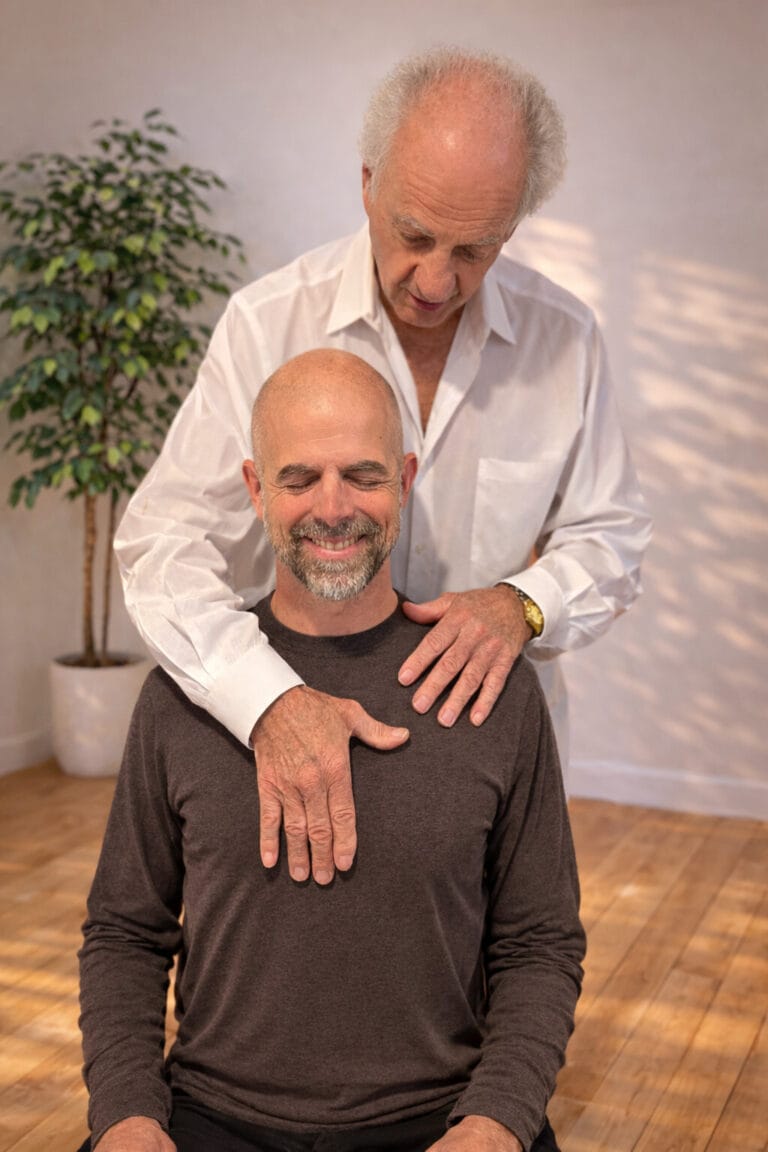
Triadic Resonance offers a structure to practice this kind of presence. The conscious coordination of eyes, voice, and hands helps re-pattern the body while restoring a sense of emotional safety and connection.
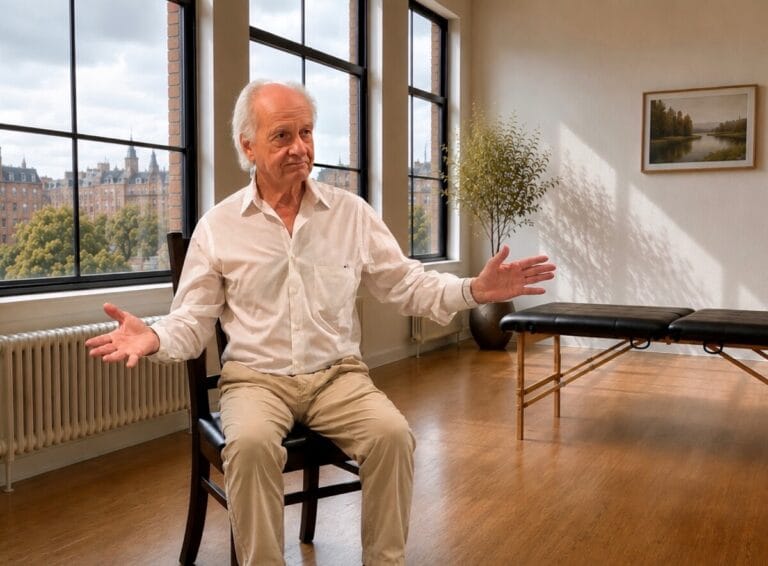
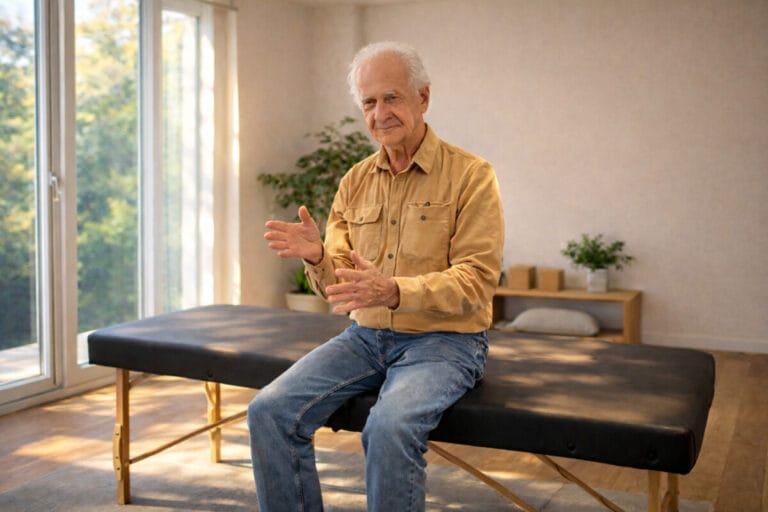
On October 9, 2024, in Boston, Massachusetts, USA, Tommy Thompson led a class that explored new possibilities for integrating the body and mind—through the principles of Triadic Resonance and touch.
Class Objectives:
- Understand the relationship between postural set and movement
- Use kinesthetic perception to release unnecessary tension
- Restore emotional connection and physical freedom through Triadic Resonance and touch
In the previous class, we explored the “still point of support”—a foundational pause from which presence and alignment arise.Read Class 9 → Still Point of Support
This blog series is based on Tommy Thompson’s Alexander Technique classes. Each post follows the flow and insights of the class to expand both self-awareness and practical consciousness applicable to everyday life.
New here?
If you’re new to the Alexander Technique, you can start with the resources below.
Alexander Technique Class Flow at a Glance
1. The Opening Question
“How are you touching people right now?”
With your eyes? Your voice? Or your fingertips?
The act of “touching,” as we often perceive it, actually begins with the eyes. Tone of voice, gaze, body tension, and spatial distance—these are all forms of contact, and they are equally ways in which we relate to ourselves.
Tommy Thompson says:
“Touch, touch, touch. Everything is a form of touch.”
To him, touch is not merely a physical gesture—it is a way of being. It is how we exist, relate, and perceive, all integrated into a single action. He continues:
“We touch first with the eyes. We approach with the voice. We complete with the fingertips.”
In other words, how we look, speak, and make contact reflects our Use of the Self—a concept that fundamentally shapes the quality of our lives. Touch is the point where all these elements meet, offering a window into the architecture of our awareness.
Each of us has a unique postural set—a fixed pattern in how we carry ourselves. From voice and gaze to movements and muscular tension, we move through life repeating these patterns, often without awareness. These unconscious habits can restrict both physical and emotional flow.
This class addresses exactly that.
By becoming aware of these habitual patterns, and learning to reorganize our use through the flowing sequence of eyes–voice–fingertips, we begin the process of reconnecting to ourselves.
And that exploration begins with one question:
How am I touching? And what is touching me?
2. Core Learnings from This Class
At the heart of this class is Triadic Resonance and Touch—a principle that shows how presence, contact, and direction can flow as one coordinated event.
Core Concepts
Postural Set and Use of the Self
Every movement and thought is preceded by a postural set—a fixed, unconscious physical pattern. Recognizing and refining this set is key to improving the quality and efficiency of how we use ourselves.
On the other hand, if these habitual postural patterns go unrecognized, they can lead to unnecessary muscular tension and inefficient movement.
For instance, someone who frequently uses a smartphone may develop a habitual forward head posture, resulting in chronic tension in the neck and shoulders.
By becoming aware of and consciously re-coordinating these patterns, we can begin to restore a more natural, integrated sense of movement and alignment.
Key Takeaways
- Every movement begins with a postural set.
- Unconscious patterns tend to reinforce habitual tension.
- Conscious coordination transforms the quality of self-use.
Kinesthetic Perception
Kinesthetic perception refers to the ability to sense and recognize one’s own posture and movement patterns. In the Alexander Technique, this awareness becomes a central tool for reshaping one’s use of the self and restoring movement that aligns with the body’s natural design.
Particularly important is the cultivation of awareness around areas of habitual tension. Learning to notice and gently release this tension enhances one’s sensory foundation for self-awareness. Over time, this refined perception allows for the softening of fixed patterns and the emergence of greater freedom, balance, and coherence in one’s movement and presence.
The Role of Touch and Voice
- Touch
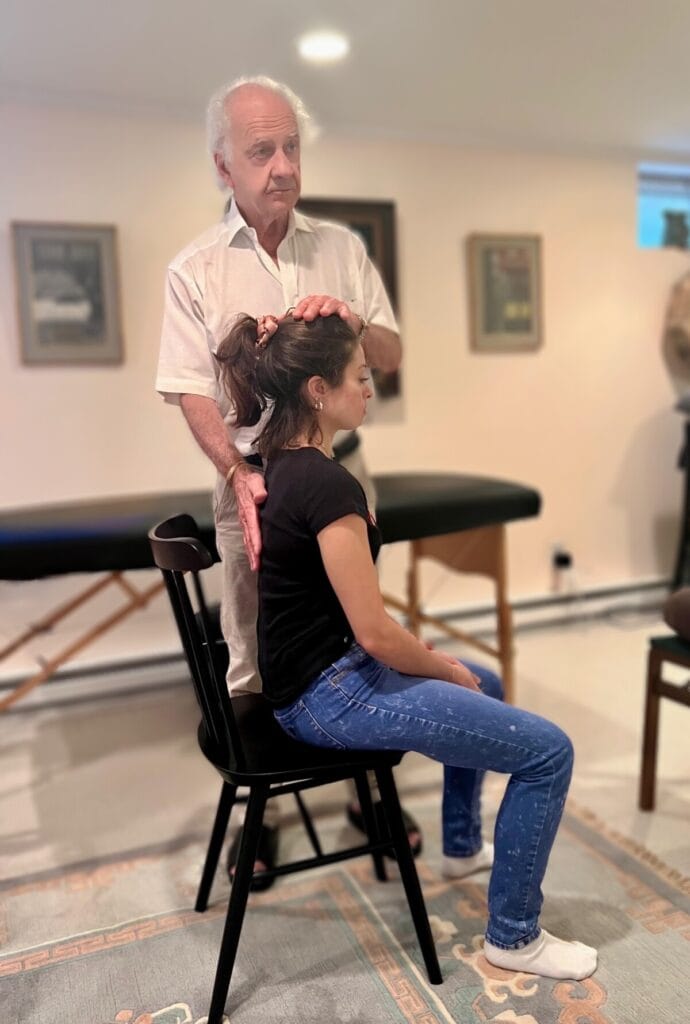
Touch, in this context, goes beyond mere physical contact. It serves as a sensory means of coordination—helping to release muscular tension and support the body’s return to its natural alignment. Even a light, intentional pressure can help tissues regain their length and shift the responsiveness of movement. - First Touch: Eyes
The eyes are the first point of contact. A nonjudgmental gaze activates mirror neurons, fostering a sense of trust and safety. This kind of visual touch allows others to feel accepted as they are and builds resilience. - Second Touch: Voice
The voice, through tone and vibration, conveys emotional presence. A warm, receptive voice fosters calm and connection. The essential quality of voice is authenticity.
The Importance of Triadic Resonance
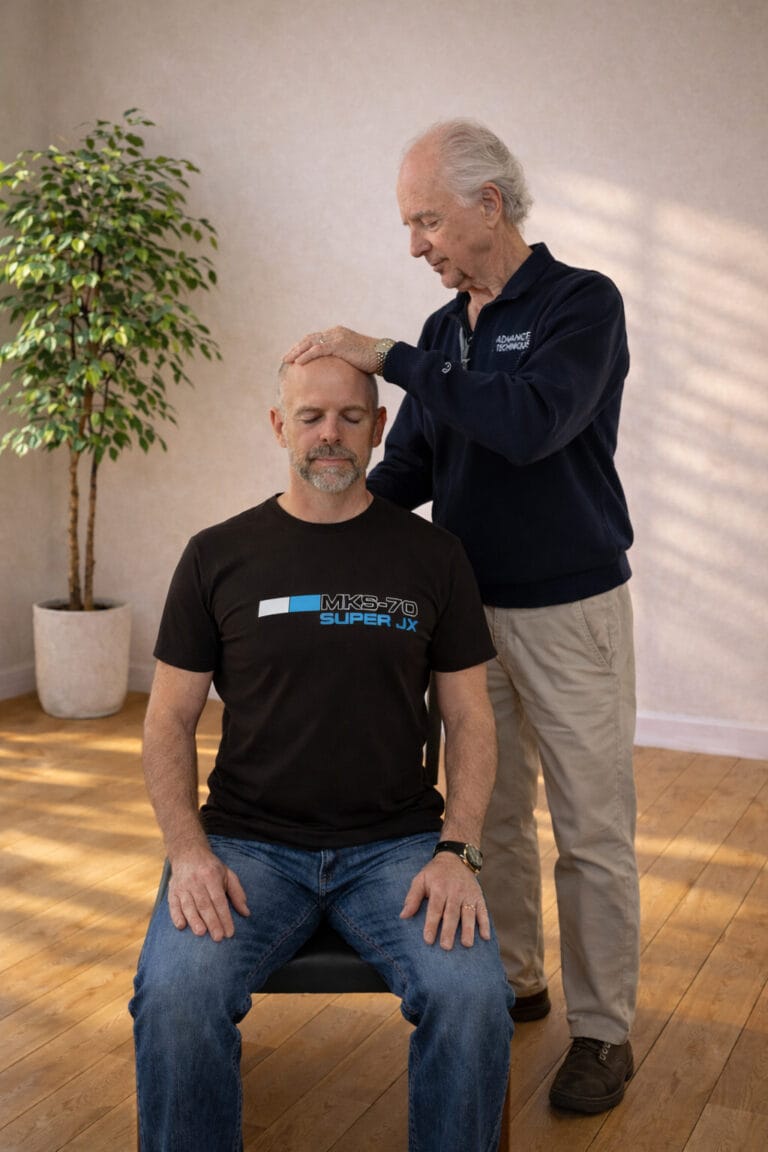
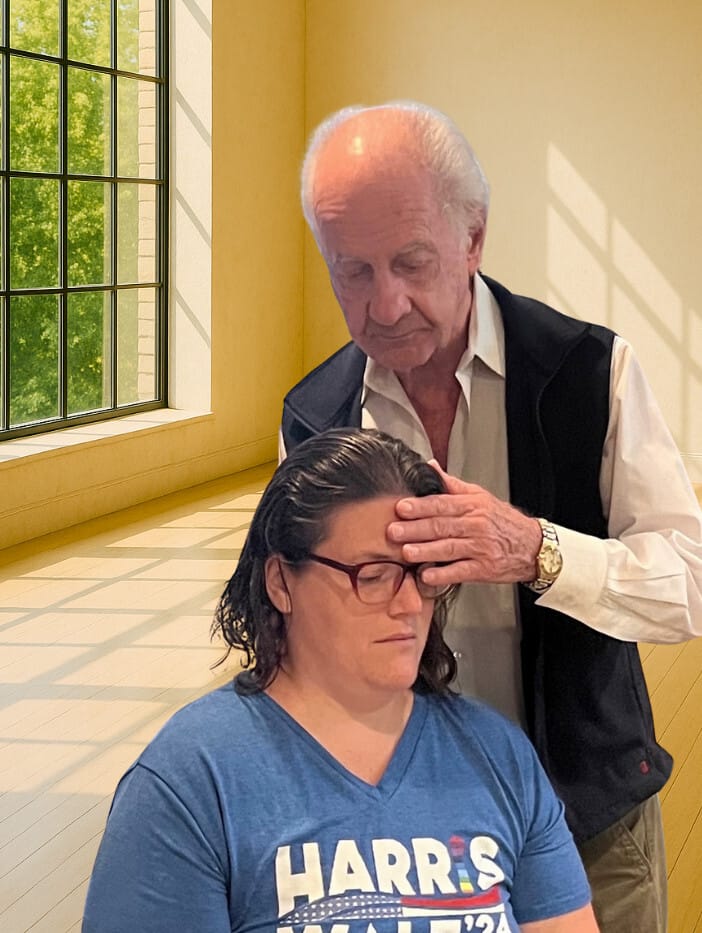
Triadic Resonance is Tommy Thompson’s signature approach—an integrative process that finely tunes the relationship between the hands, neck, and head. This sensory coordination supports the release of unnecessary tension and restores alignment grounded in embodied awareness.
- It helps soften the Palmar Reflex, encouraging more liberated and responsive use of the hands.
- It promotes the release of oxytocin, enhancing emotional safety and interpersonal connection.
- With consistent practice, it refines one’s sensory accuracy and transforms the quality of touch at a foundational level.
Triadic Resonance is not merely a corrective technique for posture—it is a felt process of reuniting the whole self through sensation.
Five Key Messages
- All movement begins with unconscious postural sets.
The moment we become aware of these pre-existing patterns, our use of the self begins to shift. - The quality of self-use is rooted in kinesthetic perception.
Simply noticing where tension lives in the body opens the door to meaningful change. - The eyes and voice are forms of nonverbal touch that shape relationship.
The way we look at and speak to others invites trust and connection. - Touch is not merely physical contact.
It is a refined interaction that can re-pattern emotional tone and ways of being. - Triadic Resonance is a key practice for re-coordinating self-use through the senses.
It’s not about adjusting movement alone, but about restoring balance in how we inhabit ourselves.
Essential Terms
- Postural Set
An unconscious pattern of physical organization that precedes or accompanies every thought and action.
It influences balance, coordination, and alignment. By becoming aware of it and gently re-patterning it, we allow for more efficient and natural use of the body. - Kinesthetic Perception
The sensory capacity to perceive one’s postural habits and movement tendencies.
This awareness enables individuals to identify tension patterns and return to movement that is more in harmony with the body’s original design. - Triadic Resonance
A signature integrative approach developed by Tommy Thompson that coordinates the relationship between the hands, neck, and head. It supports the release of excess muscular tension, the restoration of alignment, and the cultivation of embodied presence. The practice also helps soften the Palmar Reflex and encourages the release of oxytocin, fostering deeper emotional connection. - Palmar Reflex
An unconscious gripping response of the hand that limits freedom and subtlety in touch. Through Triadic Resonance work, this reflex can be eased, allowing the hands to move with greater ease and sensitivity. - Compassionate Touch
A form of contact that receives the other without judgment.
It activates mirror neurons, nurtures trust and safety, and supports emotional resilience.
3. Tommy’s Insights
In Tommy’s words during class, there are not only the core principles of the Alexander Technique, but also practical wisdom that can be applied directly to daily life. His words go beyond simple advice about movement and prompt us to deeply consider how we choose to exist.“Everybody has a postural set that precedes and accompanies their movements and thoughts.”
A “postural set” refers to the unconscious, habitual patterns of muscular tension and alignment that underlie how we move, speak, and even think. Recognizing this set is the first step in reclaiming more conscious and constructive use of the self.
“You either use yourself in accord with the way you’re designed to function, or you don’t.”
There is no neutral zone. We are always using ourselves—either in harmony with the body’s natural design, or in ways that work against it. The Alexander Technique helps bring that use back into alignment.
“What you’re doing is applying just enough pressure, a very light pressure, to stimulate length in tissues that are probably shortened due to use.”
Touch in this context is not about manipulation or force, but subtle encouragement. This light contact invites the body to release unnecessary contraction and reclaim its innate length and openness.
“The first touch is your eyes. When you see the person and judge them, you’re using yourself inappropriately.”
How we look at others reflects our inner use. Judging through our gaze creates tension—not only in ourselves but also in how we are perceived. True connection begins with how we see.
“When you look at a person, you see not just that they are not using themselves well, but also that they are missing the possibility of using themselves more in alignment with their original design.”
This shifts the focus from correction to potential. Instead of labeling someone’s use as wrong, we are invited to recognize their unrealized capacity—to see what they could be aligned with, not just what they currently are.
“When you see them, rather than just look at them, something shifts—because being seen and accepted for who you are fosters resilience.”
This emphasizes the power of presence. True seeing—not just observing—creates a relational field of acceptance. It’s this experience of being fully perceived that supports emotional strength and trust.
“Another touch is your voice. You can touch someone with your voice. When listening to a voice, you need to hear what is truly being conveyed—whether the voice is appropriate and whether it is accepting.”
The voice functions as a form of non-physical touch. Its tone, rhythm, and intention carry emotional resonance. Whether or not that resonance offers safety, warmth, and acceptance is up to how consciously we speak.
“Touch, touch, touch. Everything is a form of touch.”
This expands the definition of touch beyond the physical. In Tommy’s view, touch includes eye contact, vocal tone, attention, and presence. It is the primary mode through which we relate, affect, and connect.
4. Practical Tips for Everyday Life
What’s the Goal?
- To cultivate the habit of using eye contact, voice, and touch as a means of connection rather than judgment.
- To restore alignment in self-use, ease emotional tension, and improve the quality of relationships.
How to Practice
- Touch Through the Eyes
- In conversation, notice any automatic tendency to judge the person you’re looking at.
- Quietly ask yourself, “Am I truly seeing this person as they are?”
- Practicing a compassionate gaze—even with yourself in the mirror—can shift how presence is offered and received.
- Touch Through the Voice
- Before speaking, allow for a brief pause.
- Instead of pressing your voice outward, slow down and speak with warmth and clarity.
- Begin with simple phrases like “Are you okay?” or “Thank you,” and let sincerity be felt in your tone.
- Touch Through the Hands
- When placing your hand on someone or offering support, let it be gentle and intentional.
- Place your own hand on your shoulder or hand and explore what it’s like to offer that same sense of care to yourself.
- During tasks like resting your hands on a table, notice the sensation of the surface and allow your hands to be supported—without effort.
What You’ll Notice
- A softened gaze and tone can create greater ease and receptivity in others.
- As the quality of touch changes, physical tension may release and sensory awareness can deepen.
- Shifts in self-use will begin to influence not only your posture, but your emotional tone and relationships.
5. Closing the Class
As we reflect on what shifted today, it becomes clear that Triadic Resonance and Touch isn’t a method—it’s a reorientation toward how we relate.
Key Takeaways
In this class, we explored Postural Set, Kinesthetic Perception, and how touch, voice, and gaze shape the quality of our use of the self. These are not just movement tools—they form the basis of an embodied practice that integrates mind and body.
This process of fine sensory tuning and connected awareness is not simply a method of correcting posture. It is a way of living that elevates the overall quality of experience.
Core Insights
- Touch and voice are languages of connection.
Before we speak, we make contact with our gaze. Through the vibration of voice, we transmit emotional cues. These subtle, nonverbal touches are what establish trust and ease in relationship. - Kinesthetic awareness is the compass of self-use.
When we can sense where we are holding tension or effort unnecessarily, we gain the power to shift into more refined movement and relational presence.
A Final Invitation
- No grand or dramatic change is necessary.
Just once today, try softening your gaze and bringing more ease into your voice.
That small act of awareness can be the very beginning of realigning your use of the self. - Self-inquiry is also a reconfiguration of relationship.
The Alexander Technique is not about training the body alone—
it’s about retraining your entire way of being.
Through it, we gain access to more refined perception, more authentic contact, and deeper connection.
6. One Key Practice
Experience the shift in relationship through your gaze and your voice
- Today, pause for just 1–2 extra seconds to meet someone’s gaze before speaking.
– Internally, hold the intention to receive them without judgment—just as they are. - Bring mindful attention to your voice.
– Speak a little more slowly, clearly, and warmly, allowing your tone to carry sincere presence. - After the interaction, reflect on any shifts you noticed.
– How did the quality of your gaze or voice influence the atmosphere or the connection?
This simple practice can gently transform both your relationships and your self-awareness.
7. Three Questions to Ask Yourself
- What is my current postural set?
Notice any habitual patterns of tension or posture you may be carrying unconsciously. Today, begin simply by becoming aware of them. - Have I ever engaged with someone while consciously attending to my gaze and voice?
Recall how that moment felt—for you and for the other person. Could you return to that way of relating? - When have I experienced harmony between body and mind?
Remember the sensations that were present in that moment. How might you invite that same balance back into your daily life?
8. For Those Who Wish to Learn More
Recommended Books
Body Learning – Michael J. Gelb
A widely recommended introduction to the Alexander Technique, this book clearly explains key ideas like postural set, kinesthetic awareness, and the quality of touch, with plenty of practical, everyday examples.
Indirect Procedures: A Musician’s Guide to the Alexander Technique – Pedro de Alcantara
Though written for musicians, this book offers rich insight into the Alexander Technique for all readers. It covers subtle sensory coordination, self-awareness, nonjudgmental touch, breath, and alignment—not just in performance, but in daily movement. A valuable resource for understanding applied sensory integration, including practices like Triadic Resonance.
Official Website of Tommy Thompson
www.easeofbeing.com
This is the official website personally managed by Tommy Thompson, offering a wide range of resources and programs to deepen your understanding and practice of the Alexander Technique:
- Private session reservations and inquiries
- Workshop and seminar schedules
- Overview of international teacher training programs
- Essays and articles on the Alexander Technique
9. Next Class Sneak Peek
In the next class, we’ll explore advanced hands-on techniques that deepen the integration of body and mind.
We’ll focus on three key practices:
- Exploring wave-like movement to cultivate embodied integration
- Discovering new freedom by pausing fixed self-definitions
- Practicing everyday tools to release tension and restore natural flow
This is not just about learning movement—it’s an invitation to re-coordinate your entire approach to use, through the interplay of touch, perception, and intention. That sensory realignment continues in the next class.
10. Join the Alexander Technique Journey
Did this class leave a small resonance within you? Feel free to quietly hold it in your heart or share it in just a sentence or two. The comments are always open. Your one simple word may leave a gentle ripple in this ongoing journey.The journey of Resonance Flow continues across social media as well. Let’s continue this journey together.
 YouTube
 Instagram
 Threads
 Facebook