What If Fixing Isn’t the Problem? Understanding That Changes Everything | Tommy Thompson Class 75
❝ What does it really mean to understand how you move — not just fix your posture, but study the way you live inside your body? ❞
Most people show up to the Alexander Technique expecting to be corrected. Better posture. Less pain. A sense of being realigned.
But this work was never about fixing you.
It’s about how you understand what you’re doing — and stop doing it.
Because what changes you isn’t force. It’s attention. What reorganizes you isn’t effort — it’s direction.
You’re not here to get worked on. You’re here to learn how to listen to your own coordination.
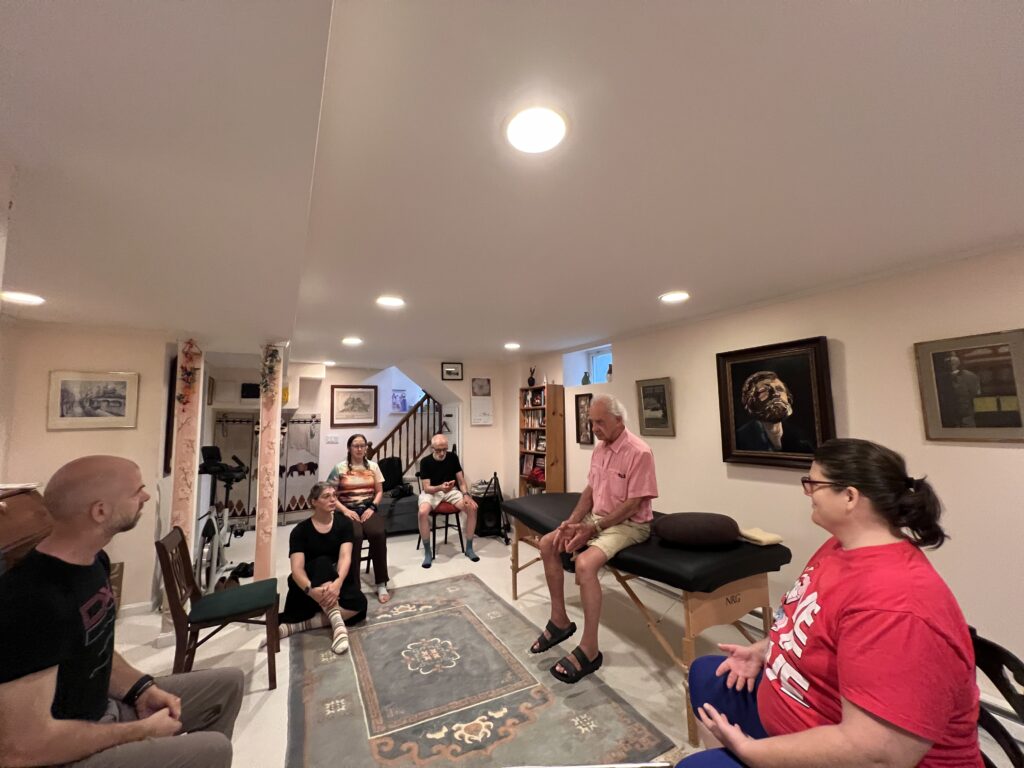
On September 16, 2025, in Boston, Massachusetts, Tommy Thompson led a class in the Alexander Technique teacher training course that asked one simple thing:
Don’t try to change. Notice how you relate to change.
It wasn’t a class about “doing it right.”
It was a space to explore how understanding shifts everything — how the way we move, relate, and teach begins with presence.
Key Objectives of the Class:
- Reframe Alexander Technique as a study of movement identity, not just a corrective method
- Emphasize how direction, attention, and inhibition allow change to emerge
- Redefine teaching as a practice of offering understanding, not solutions
This blog series is based on Tommy Thompson’s Alexander Technique classes. Each post follows the flow and insights of the class to expand both self-awareness and practical consciousness applicable to everyday life.
New here?
If you’re new to the Alexander Technique, you can start with the resources below.
Alexander Technique Class Flow at a Glance
1. The Opening Question
❝ If you don’t understand how you’re using yourself — how can you ever teach someone else to stop reinforcing their own habits? ❞
That’s how Tommy opened the class — not with instruction, but with a question that cut through assumption.
The room didn’t go quiet. It went present.
Understanding isn’t something you “get.” It’s not a fact. It’s not insight you give.
It’s what happens when you notice differently — when you stop trying to fix and start including yourself in what’s happening.
In this Alexander Technique class, Tommy shifted the lens: from posture to perception, from control to use.
The trainee isn’t there to be helped — but to study their pattern of use, their identity, and how they meet the moment.
Tommy’s Word
“This is about you and your life, your identity, your pattern of use, all of this that we talk about over and over. And so you’re more likely to guide the person into seeing it as something that’s useful to them — something they learn how to accomplish — rather than lying on the table and going to sleep while you’re working.”
➤ This wasn’t a technique to apply. It was a process to live.
If your own use isn’t part of the teaching, you’re not teaching — you’re performing.
So the first move wasn’t hands-on.
It was the question:
“Are you aware of what you’re bringing into the space?”
2. Core Learnings from This Class
What if pain isn’t something to fix?
In this moment from the Alexander Technique teacher training course in Boston, Tommy Thompson explores a question every teacher eventually faces: how do we respond when someone lives with chronic pain. Some pain responds to changes in use and coordination, but nerve pain or structural injury may require medical understanding beyond the scope of this work.
Rather than replacing medicine, the Alexander Technique often works best in cooperation with it.
When Pain Isn’t Something to Fix | Alexander Technique and Chronic Pain
75 · September 16, 2025 · Boston, MA
Core Concepts
- Alexander Technique is not a treatment — it’s a study.
➤ We’re not here to fix people. We’re here to study how we respond, how we move, how we interfere. - Understanding begins with including yourself.
➤ If you’re not present in your own use, your direction has no depth. You cannot offer what you don’t live. - Direction replaces effort.
➤ You don’t need to do more — you need to allow differently. The spine doesn’t lengthen by force. It responds to attention. - Change is not correction — it’s coordination.
➤ You’re not adjusting someone’s posture. You’re engaging in a process that restores freedom of choice in movement. - Teaching is the gift of your own understanding.
➤ The most powerful thing a teacher offers is not a solution — it’s presence. Your direction, not your opinion.
Five Key Messages
- Don’t work on someone — work with them.
➤ You’re not the expert on their body. You’re an invitation to notice. - Your pattern of use is your identity in motion.
➤ The way you sit, speak, listen — it’s all part of your habitual self-expression. - Direction is not a command — it’s a conversation.
➤ Inhibition makes space for new coordination. It’s not telling the body what to do. It’s asking it what’s needed. - Understanding grows from sensation, not theory.
➤ No amount of explanation replaces the clarity of one quiet moment of release. - The more you let go of doing, the more intelligence emerges.
➤ As you reduce interference, a kind of whole-body wellness naturally arises — not imposed, but revealed.
Essential Terms
- Understanding:
The act of perceiving from within, rather than explaining from above.
As Tommy says, it’s not insight you pass down — it’s a lived clarity you offer.
The gift of your understanding is not a conclusion, but an invitation to awareness. - Use:
How you organize yourself in motion and stillness — physically, mentally, emotionally.
It’s not about correcting how you stand, but noticing how you relate to movement.
In the Alexander Technique, use is your whole way of being in action. - Direction:
A continuous, conscious invitation to release interference and allow natural coordination.
Not a command — a subtle cue. As Tommy models, “You don’t do direction. You let it happen.” - Pattern of use:
The habitual, often unconscious ways you hold, react, think, and move — rooted in your identity.
Tommy sees this not as something to fix, but to study: “Your identity, your pattern of use — this is what you bring into the room.” - Teacher’s use:
The teacher’s own presence, clarity, and coordination in the moment of teaching.
Tommy constantly reminds us: you are the work. If your own neck isn’t free, your words won’t matter.
3. Tommy’s Insights
In Tommy’s words during class, there are not only the core principles of the Alexander Technique, but also practical wisdom that can be applied directly to daily life. His words go beyond simple advice about movement and prompt us to deeply consider how we choose to exist.1. “This is about you and your life, your identity, your pattern of use, all of this that we talk about over and over. And so you’re more likely to guide the person into seeing it as something that’s useful to them — something they learn how to accomplish — rather than lying on the table and going to sleep while you’re working.”
2. “Being a teacher is sharing what you learn. I call it the gift of your understanding. All you can do is give a person the gift of your understanding of the nature of this work, as it relates to how you live your life, and include this work as part of your life. That’s the best you can do.”
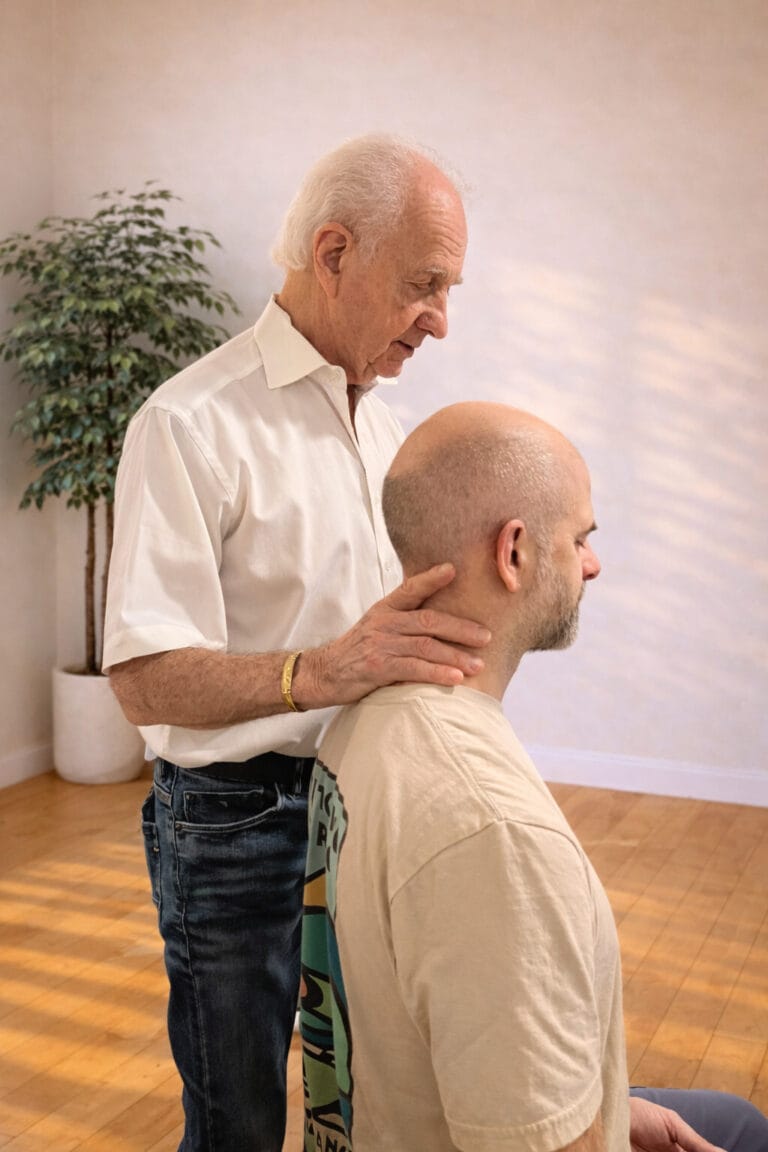
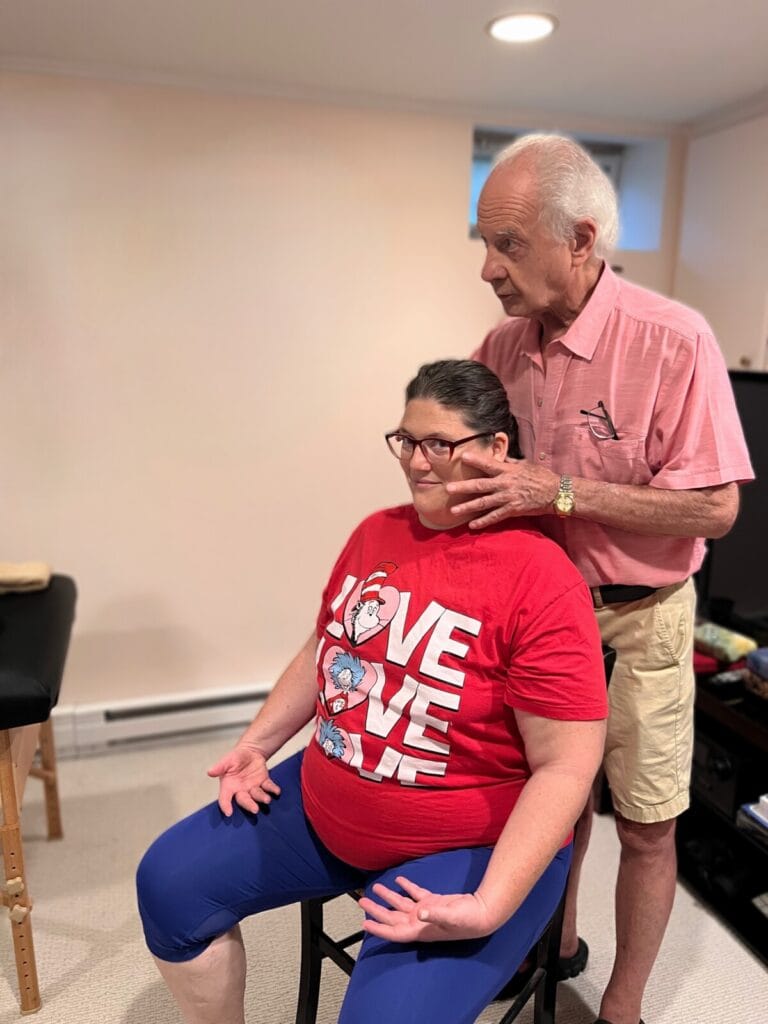
3. “So it begins with you letting your own neck be free to lengthen. The neck includes all this area here — the trapezius and sternocleidomastoid — being free to lengthen. They’re not doing it — they’re just letting it be free.”
4. “You can sit there for a while, keep going through the directions, going through what you feel through the hand. Then, if you come forward from the hip sockets, you’re widening out like that. You have a minute to bring the table towards you, or his head towards you — it’s just a sense. That will lengthen right there. Then go back and forth. Just play with that. And every now and then ask me, ‘What’s he sensing?’”
5. “I don’t see it as an alternative to medicine — it’s complementary.”
6. “My advice is: carefully pick the time that you choose to offer to help someone. It’s often effective if you survey the environment, because you might catch them at the moment they’re reinforcing their habituation. So survey the territory before you commit yourself to help.”
4. Practical Tips for Everyday Life
What’s the Goal?
To shift from fixing your body to understanding how you’re using it — not with judgment, but with attention.
This is what Tommy calls the foundation of teaching: learning to include yourself in the moment.
The Alexander Technique isn’t about exercises. It lives in your walk, your breath, your glance, your pause.
How to Practice
1. Start your day by noticing your neck — without fixing it.
As you rise from bed, remind yourself:
“I’m not doing it — I’m letting it be free.”
Let that quiet direction guide your first movements.
2. Notice how you approach a chair.
Instead of bracing or collapsing, pause. Let the knees move forward, the head up, the back widen.
That’s the Alexander Technique — not doing more, just allowing better.
3. Don’t offer help unless you’re aware of the timing.
Before stepping in, ask:
“Am I offering from understanding, or from habit?”
This kind of pause is where wellness begins — with choice, not correction.
What You’ll Notice
You’ll feel less tense, yes — but more importantly, less automatic.
You won’t be “doing posture” — you’ll be living presence.
And here’s the surprise:
You didn’t fix yourself.
You just stopped interfering with who you already are.
5. Closing the Class
Key Takeaways
This class wasn’t about posture. It wasn’t even about movement.
It was about how you relate to yourself in the act of moving — and how that relationship becomes the teaching.
We weren’t told what to do. We were shown how to pay attention.Not with answers. But with presence.
Tommy didn’t teach us to teach. He taught us to be available for understanding — through our own use, our own clarity, our own pause.
Core Insights
- Understanding is shared through presence, not explanation.
- Direction doesn’t fix — it creates space.
- Being a teacher begins with being in contact — with yourself.
What we practiced was not a method.
It was a way of coming back to ourselves.
Through attention, through non-doing, through the simple act of noticing,
we found the intelligence that’s already there — just waiting for space to move.
A Final Invitation
If you walk away from this class remembering anything, let it be this:
You’re not here to fix others.
You are here to include yourself — and offer the gift of your understanding.
That’s the work.
That’s the Alexander Technique.
And it begins again every time you stop, notice, and direct.
6. One Key Practice
Allow your neck to be free — before anything else
Don’t stretch it.
Don’t lift it.
Just notice if you’re holding, and allow it to not hold.
That’s all.
Every time you stand, sit, reach, speak — let that be the first direction.
It’s not posture.
It’s a moment of presence.
Tommy’s voice echoes here:
“They’re not doing it — they’re just letting it be free to lengthen.”
This is the beginning of understanding.
And it begins now.
7. Three Questions to Ask Yourself
- What are you doing right now — that you don’t know you’re doing?
Don’t fix it. Just notice.
Are you pulling down? Holding your breath?
The Alexander Technique begins when attention returns. - Can you include yourself while helping someone else?
Are you still in your own direction — or are you “doing” at them?
Tommy reminds us:
“If your own use isn’t alive in the moment, you’re not really teaching.” - Are you offering from habit — or from understanding?
This is where wellness begins:
Not in action, but in the moment you ask:
“What is actually needed right now — from me, through me?”
These questions aren’t for judgment.
They’re for presence.
Noticing is the work.
That’s the practice.
8. For Those Who Wish to Learn More
Recommended Book
How You Stand, How You Move, How You Live – by Missy Vineyard
This book doesn’t just explain the Alexander Technique — it embodies the same way Tommy teaches: with presence, clarity, and respect for what’s already happening.
Missy Vineyard writes like someone in the room with you,
not telling you what to fix, but guiding you to feel what you’re doing.
She explores movement, habit, and identity through real-life stories and quiet, grounded insight.
You’ll find reflections on teacher use, timing, self-inclusion, and even when not to help — all core to Tommy’s class.
“Change comes not from doing, but from noticing — from understanding how you interfere, and choosing to stop.”
This isn’t just a book about movement.
It’s about how you live — and how to live with awareness.
Official Website of Tommy Thompson
www.easeofbeing.com
This is the official website personally managed by Tommy Thompson, offering a wide range of resources and programs to deepen your understanding and practice of the Alexander Technique:
- Private session reservations and inquiries
- Workshop and seminar schedules
- Overview of international teacher training programs
- Essays and articles on the Alexander Technique
9. Next Class Sneak Peek
10. Join the Alexander Technique Journey
Did this class leave a small resonance within you? Feel free to quietly hold it in your heart or share it in just a sentence or two. The comments are always open. Your one simple word may leave a gentle ripple in this ongoing journey.The journey of Resonance Flow continues across social media as well. Let’s continue this journey together.
 YouTube
 Instagram
 Threads
 Facebook