Why Your Movement Feels Off: The Direction You’re Missing | Tommy Thompson Class 63
❝ What happens when you move… without direction? ❞
Not without motion. Not without effort.
But without direction—that subtle organizing force beneath every gesture and breath.
In the Alexander Technique, Direction isn’t a command. It’s a presence.
It begins in the back, not in the hands. And when it’s there, the body reorganizes itself—without trying.
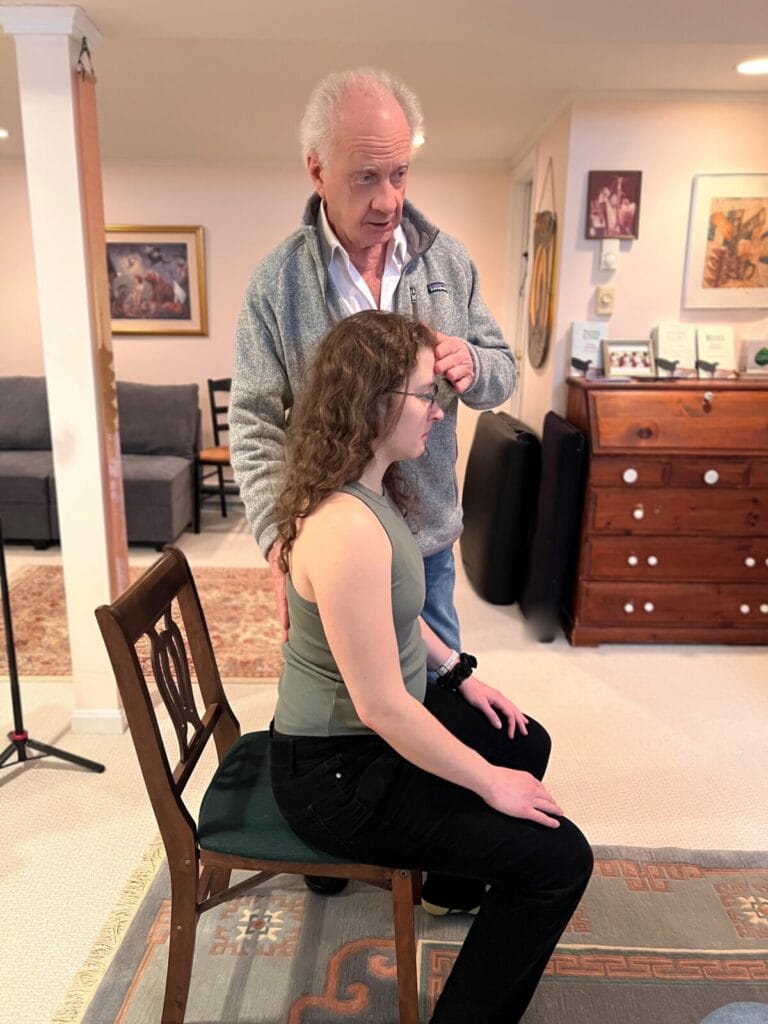
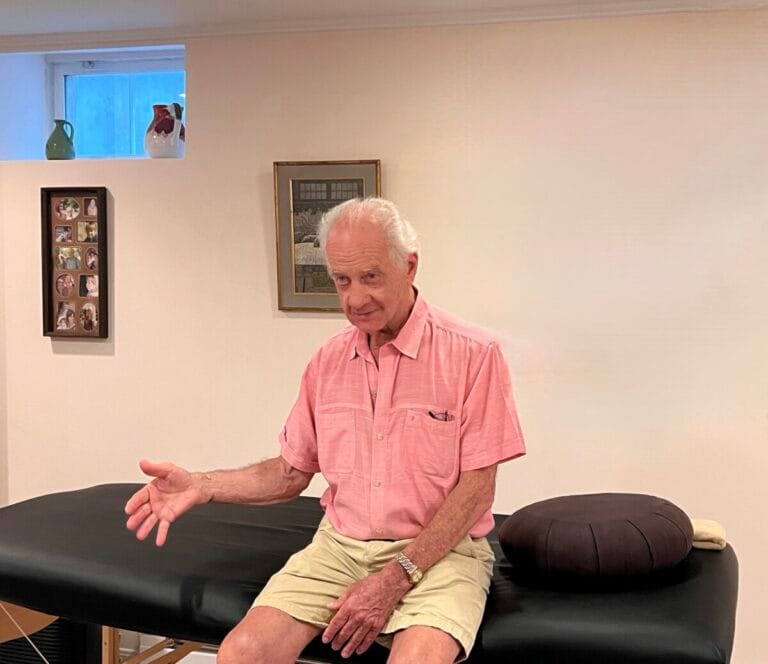
On April 17, 2025, in Boston, Massachusetts, USA, Tommy Thompson led a class in the Alexander Technique teacher training course.
But instead of teaching a technique, he invited us to undo what interrupts direction—habits, urgency, even intention.
“You don’t start with the hands.
You start with direction. Everything follows.”
This class wasn’t about touch. It was about how Direction makes movement meaningful—and how presence begins long before action.
This blog series is based on Tommy Thompson’s Alexander Technique classes. Each post follows the flow and insights of the class to expand both self-awareness and practical consciousness applicable to everyday life.
New here?
If you’re new to the Alexander Technique, you can start with the resources below.
Alexander Technique Class Flow at a Glance
1. The Opening Question
❝ What if your hands aren’t the ones doing the touching? ❞
We often believe that our hands initiate contact—that movement starts at the fingers.
But in the Alexander Technique, and especially in Tommy Thompson’s work, this assumption is quietly dismantled.
What if your hands are simply expressing something deeper?
What if they’re not initiating touch—but following direction that begins in the back, in the breath, in your very presence?
This class turned that question inside out. It showed that coordination doesn’t begin where we feel it. It begins where we’re often least aware: in the way we organize our attention before we move.
Tommy’s Word
“The hands really belong to the back muscles through the arms. They belong to the back muscles.”
Tommy wasn’t speaking metaphorically. He meant it literally.
The hand is not a tool separate from the self—it is a channel of direction. And direction, as he taught, starts from the spine and breath—not from will, not from effort.
When we stop trying to touch and instead allow direction to reach outward, the hand becomes responsive.
It listens. It expresses. It doesn’t perform.
This shift changes everything—not just how we move, but how we connect.
2. Core Learnings from This Class
Core Concepts
Direction begins before movement
In the Alexander Technique, direction isn’t added on top of movement—it creates movement. It’s the silent cue that initiates coordination before a single muscle engages.
The back organizes, the hands express
As Tommy said: “The hands belong to the back.” When direction originates in the spine, the hands stop acting independently—and start communicating clarity.
Emptying the palm creates meaningful contact
A clenched palm holds history. An empty palm offers connection. To free the hand, you must release what you’ve been holding—physically, neurologically, emotionally.
Triadic Resonance resets the system
The rhythmic “one, two, three…” isn’t a counting exercise. It’s a directional cycle that allows the nervous system to reorganize without force.
Presence comes from non-interference
You don’t build presence—you remove what blocks it. When direction is clear, presence happens on its own.
Back lengthening and widening is living architecture
This isn’t posture. It’s a breathing, dynamic space that supports everything—especially intention.
Five Key Messages
Direction makes movement possible
It’s the seed, not the ornament. Every action begins with how you intend.
Hands don’t initiate—they reflect
Touch becomes meaningful when the back is part of the communication.
Letting go is literal
The palm, when emptied, stops repeating. It listens instead.
Triadic Resonance isn’t doing—it’s timing
It lets your system realign through rhythm, not effort.
Presence needs space
That space comes when you stop interfering. Direction fills the rest.
Essential Terms
Direction
The silent, embodied intention that organizes action from within—never applied, always allowed.
Triadic Resonance
A three-phase rhythmic cue (1-2-3) that reorients attention, resets timing, and restores coordination.
Hands belong to the back
The hand doesn’t lead. It follows the spine’s intention. Contact begins in the torso—not the fingertips.
Emptying the palm
A physical and emotional reset. To touch without history is to offer presence, not pressure.
Presence
A state that emerges when there’s nothing to prove and nothing to fix. Direction makes room for it.
Back lengthening and widening
The living expansion of the spine and torso in all directions. It’s how structure becomes support.
3. Tommy’s Insight
In Tommy’s words during class, there are not only the core principles of the Alexander Technique, but also practical wisdom that can be applied directly to daily life. His words go beyond simple advice about movement and prompt us to deeply consider how we choose to exist.“Alexander had to restore neuromuscular integrity to the body. You’re working primarily with the reflexive aspect of the head, neck, and specific muscle groups, and his directions were ‘let the neck be free,’ the purpose of which was to lengthen rather than shorten. If your neck muscles shorten, it prevents the back from lengthening, and the head cannot release away from the body.”
→ This reveals that true postural change happens through reflex integrity, not muscular effort.
“Letting the neck be free—where do you let the neck be free? You free the neck from the muscle tissue so that it’s not contracted, not short. The nerve fiber within the muscle provides proper electrical current—neurons. So, that being said, you let your neck be free, the purpose of which is to allow it to lengthen, so the head moves away from the body, forward and up.”
→ Tommy underscores that directional freedom begins in the neuromuscular interface—not by releasing tension, but by restoring function.
“‘Forward and up’ is: as the neck lengthens, the head moves forward and up, the torso drops back and down. Back and down, forward and up.”
→ This spatial relationship is not just biomechanical—it’s a directional template for whole-body coordination.
“When you place your hands out—at first, the hands are so utilitarian that you don’t have a sense of it, but the hands really belong to the back muscles through the arms. They belong to the back muscles. Most muscles in the back are supportive, right? And so this—coupled with back lengthening and widening—changes the role of the hands.”
→ The hands are redefined here not as tools of will, but as extensions of spinal direction and support.
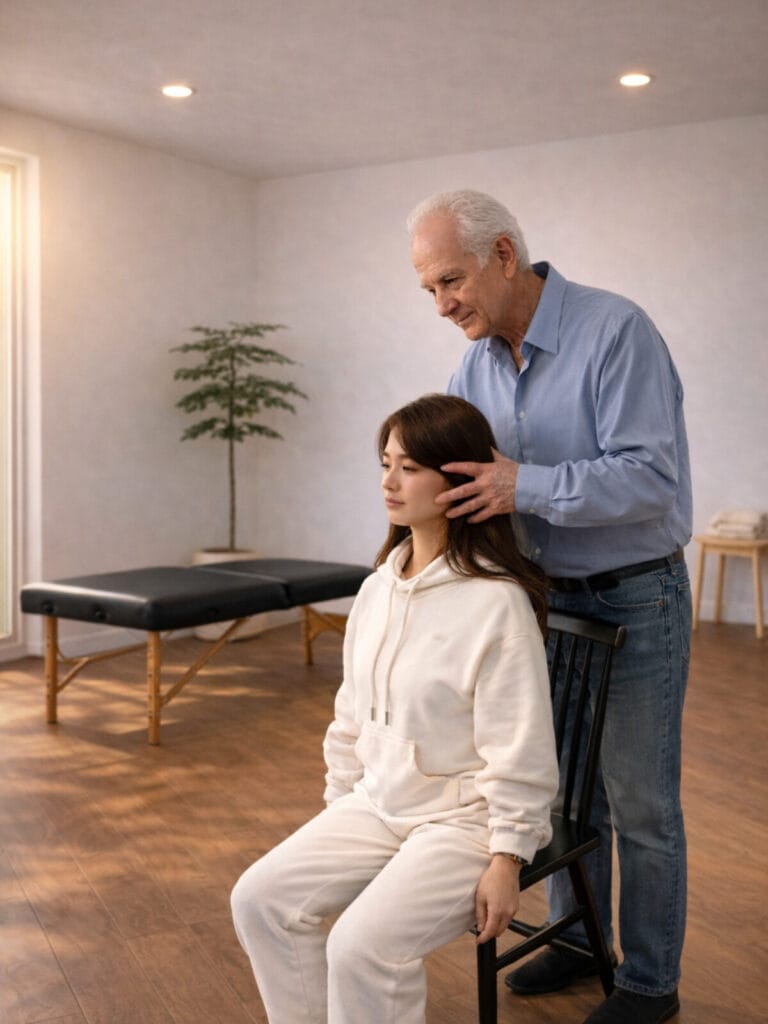
“When you’re moving with your hands and making contact with anything or anyone, you tend to focus on the contact. But the Alexander work is asking you to focus on where the contact is being controlled from—which is the back. The back, all the way down through the spine. Every muscle in your back, all the way up into the back of your skull, and even this portion in the front—way up.”
→ Contact is meaningful only when the system knows where it originates, and in this case, it’s always the back.
“If I do the Triadic Resonance—one… two… three… one, two, three… I’ll go slowly. One morphs into two, morphs into three… back to one, two, three… That is taking me back enough—it’s taking me from here all the way up to here. It’s just a completely different way than the regular, traditional, elementary way. Totally different. And it works.”
→ Triadic Resonance isn’t technique—it’s a timing structure that lets the body rediscover integrated sequencing.
“As the palm begins to open, there’s an emptiness in the palm. The emptiness is metaphorical, and the metaphor would be: empty from everything you’ve ever held. Which is impossible—but you want to empty it from what you’ve been holding before you put your hands on someone.”
→ The practice of emptying the palm clears historical interference, making space for honest, present contact.
“If you truly do free the hands, the palms empty. The palms natural. You’re also opening the neural circuit, neuronal circuit for loving, compassion, and understanding. Most people just never touch like this. The quality of being touched with love makes a big difference. Big difference.”
→ When the hands are truly free, they transmit more than movement—they carry relational presence and emotional intelligence.
4. Practical Tips for Everyday Life
What’s the Goal?
To move from direction, not reflex. Instead of letting habit lead, the practice is to let the back organize movement. The goal isn’t to do more—it’s to allow more.
How to Practice
1. Think of your back before contact
Before picking something up or reaching out to someone, bring your attention to your back—not your hands.
Imagine the movement starting from the expansion of your back, with your hands simply following that direction.
This mental shift alone can change how your body responds.
2. Feel and release hand tension when lifting objects
When you lift a cup or grip a bag, notice any unnecessary tension in your fingers or palm.
Then gently let it go and try the same action again—softer, slower, easier.
You’ll notice a shift in tone and quality.
3. Empty the palm before every touch
Before opening a door or shaking a hand, pause and sense what you might be “carrying” in your palm. Let go of any impulse to do or control. Let your hand open from your back—not by trying, but by allowing.
What You’ll Notice
You’ll feel less pressure, more breath.
Movement slows slightly—but becomes clearer.
Contact feels lighter, but deeper.
And your back is quietly present, even in the smallest action.
5. Closing the Class
Key Takeaways
This class wasn’t about adjusting posture or perfecting form.
It was about stepping out of the way—so Direction could lead. When that happens, coordination doesn’t need correction.It reorganizes from within.
Core Insights
Tommy didn’t teach techniques. He taught trainees to listen with their backs, not reach with their hands. He reminded us that the spine isn’t a structure to hold up—it’s an instrument of attention. And when attention is quiet enough, Direction becomes audible.
He said it plainly:
“If you truly free the hands, the palms empty.”
Not emptiness as absence.
Emptiness as readiness.
That’s where Presence begins.
A Final Invitation
The Alexander Technique isn’t a method to master—it’s a habit to unlearn.
Each moment offers a choice: to fall into reaction, or to let Direction speak first.
And the practice is simple:
Do less. Feel more. Let the back begin.
6. One Key Practice
Before you move—wait
Don’t fix. Don’t prepare.
Let the back begin.
Let Direction rise quietly.
Let the hands follow.
Even half a second is enough.
That pause isn’t a gap—it’s the moment the whole system reorganizes.
7. Three Questions to Ask Yourself
1. Where is this movement starting from—really?
Is it coming from your hand? Or is your back quietly organizing it before you even notice?
2. Am I allowing direction, or am I already doing something?
Can you feel the difference between letting something happen and trying to make it happen?
3. Is my palm holding something I don’t need right now?
Before you touch, before you respond—can you empty the hand, and see what remains?
8. For Those Who Wish to Learn More
Recommended Book
Alfred’s Legacy – Edited by Jane Rubin and Cathy Madden
This essay collection explores how modern Alexander teachers carry forward F. M. Alexander’s work—philosophically and practically.
It reveals how concepts like direction, presence, and non-interference evolve across generations.
If this class led you to question where movement begins or how contact becomes meaningful, this book deepens that inquiry.
You won’t find fixed answers—but you’ll find teachers asking the same questions in new ways.
It’s not Tommy’s voice, but it speaks to the same source:
awareness before action, direction before movement.
Official Website of Tommy Thompson
www.easeofbeing.com
This is the official website personally managed by Tommy Thompson, offering a wide range of resources and programs to deepen your understanding and practice of the Alexander Technique:
- Private session reservations and inquiries
- Workshop and seminar schedules
- Overview of international teacher training programs
- Essays and articles on the Alexander Technique
9. Next Class Sneak Peek
What if encounter doesn’t wait for pause?
What if it arrives while you’re still reacting—before you even notice?
In Class 64, we enter that exact moment:
not after the pattern ends, but while it’s happening.
This isn’t about stopping habit.
It’s about meeting yourself as it moves,
and discovering that encounter is still possible—right there.
We’ll explore how support changes perception,
how use and awareness happen in motion,
and how change begins before you’re ready.
In Class 64, we’ll explore:
How to let encounter arise even when habit moves first.
10. Join the Alexander Technique Journey
Did this class leave a small resonance within you? Feel free to quietly hold it in your heart or share it in just a sentence or two. The comments are always open. Your one simple word may leave a gentle ripple in this ongoing journey.The journey of Resonance Flow continues across social media as well. Let’s continue this journey together.
 YouTube
 Instagram
 Threads
 Facebook