Seeing What You’ve Never Seen: When Perception Finally Breaks Free From Memory | Tommy Thompson Class 81
❝ What if seeing in the Alexander Technique is not about looking harder, but about receiving what is actually here—free from memory, judgment, and personal narrative? ❞
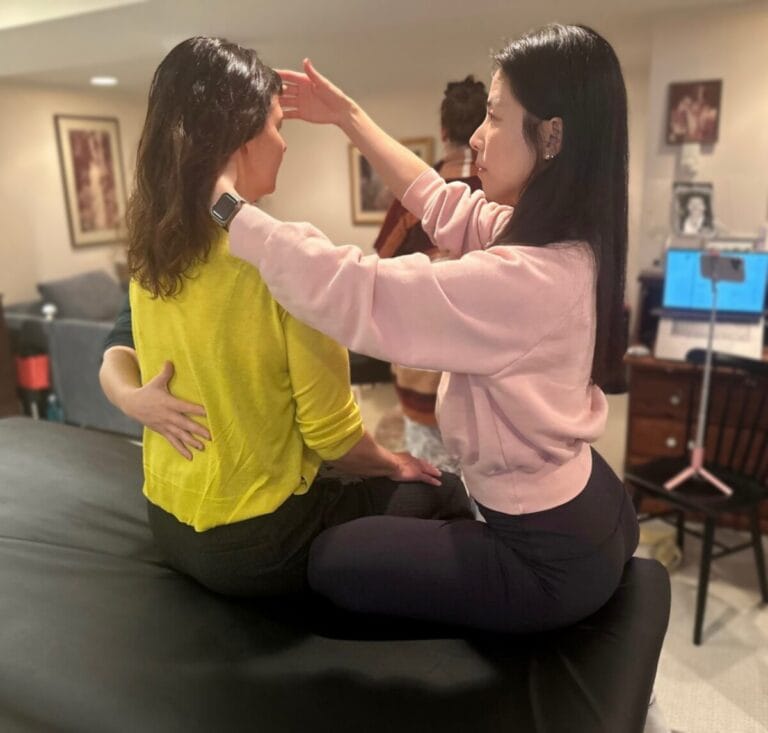
In this class, Tommy Thompson invited us into a profound shift: moving from looking—a perception filtered through memory, expectation, and habitual definition—to seeing, a meeting with another human being in the present moment.
This shift reshapes how we teach, how we touch, and how we relate; it changes the nervous system’s availability, the depth of connection, and the possibility for real change.
On October 15, 2025, in Boston, Massachusetts, USA, Tommy led Class 81 of the Alexander Technique teacher training course, guiding trainees to explore the essence of seeing—a sensory, relational, whole-person form of awareness that opens only when we release the impulse to define.
Key Objectives of the Class:
- To distinguish looking (memory-based) from seeing (present-based) in hands-on and observational work
- To explore receiving as the gateway to relational perception and whole-sensory awareness
- To sense the personal narrative reflected in the face and echoed throughout the body’s use
- To develop the ability to work with students in the midst of activity, appreciating rather than correcting
This blog series is based on Tommy Thompson’s Alexander Technique classes. Each post follows the flow and insights of the class to expand both self-awareness and practical consciousness applicable to everyday life.
New here?
If you’re new to the Alexander Technique, you can start with the resources below.
Alexander Technique Class Flow at a Glance

1. The Opening Question
❝ What if seeing in the Alexander Technique is the moment your entire history of a person—every memory, every assumption, every trace of personal narrative—dies… and what remains is the living being who has been here all along, waiting for you to receive them? ❞
Seeing, in this deeper sense, is not an amplification of looking but a transformation of perception itself. This question opens Class 81 by challenging the perceptual habits through which we interpret others and ourselves, inviting us into a field where definition dissolves and presence becomes possible.
Tommy’s Word
“When I started just receiving and not looking—because looking is based on memory—and seeing, I think, is more present. We’re exploring the difference between looking and seeing, with looking being born of memory and seeing being based in the present.”
Reflection
Tommy’s words point us toward a radical shift: letting the past fall away so our senses can meet what is actually here. In the Alexander Technique, this is the ground of all meaningful contact—an unguarded state where receiving becomes the gateway to accurate perception, relational presence, and the possibility of real change.
2. Core Learnings from This Class
Core Concepts
- Looking vs. Seeing
Looking filters another person through memory and habit, whereas seeing arises only when those filters fall away and the present becomes available. This shift changes the entire quality of encounter. - Receiving as Perception
True perception begins not with effort but with receiving—allowing someone to appear without the weight of interpretation or correction. - Whole-Sensory Presence
When attention softens, the senses widen into a unified field in which touch, sight, and spatial awareness work together rather than separately. - Activity as Identity
Meeting someone in the midst of what they are doing reveals who they are in that very moment; appreciation—not intervention—creates the space for reorganization. - Relationship as Human Design
Coordination expresses itself within relationship—to ground, to air, to task, and to one another—making relational awareness fundamental in the work.
Five Key Messages
- Perception becomes accurate the moment memory stops defining what you expect to see.
- Receiving opens the person; judgment closes the system.
- Hands-on begins with the whole sensory field, not with the hands themselves.
- Identity is revealed through activity, not outside of it.
- **Connection is reciprocal; sensing the whole person invites them to sense you in return.
Essential Terms
- Looking
Perception shaped by memory, expectation, or habit; a past-based interpretation. - Seeing
Present-centered perception emerging when definition drops and receiving begins. - Receiving
A non-interfering state in which the other person is allowed to show themselves as they are. - Personal Narrative
The internal story expressed subtly through face, posture, and use. - Whole-Sensory Presence
An expanded perceptual field in which multiple senses function together rather than hierarchically. - Activity Work
Guiding someone within the action they are performing, allowing coordination to reorganize from within their own movement.
3. Tommy’s Insights
In Tommy’s words during class, there are not only the core principles of the Alexander Technique, but also practical wisdom that can be applied directly to daily life. His words go beyond simple advice about movement and prompt us to deeply consider how we choose to exist.“When I started just receiving and not looking—because looking is based on memory—and seeing, I think, is more present. We’re exploring the difference between looking and seeing, with looking being born of memory and seeing being based in the present.”
➤ Receiving suspends the overlay of memory, allowing the nervous system to meet the person as they are—an essential shift from habitual interpretation to present-tense perception in the Alexander Technique.
“If you look at a person and define them as bad use or misuse, maladaptive use—they feel it on some level. But if you want to see them, you’ve got to receive them. It takes practice to look at somebody without defining them, and sometimes it’s almost impossible. But people do. They are valuable—not everybody—”
➤ Withholding definition releases the teacher from judgment, creating the relational safety in which real change—self-generated, organismic change—becomes possible.
“What I want to practice today is seeing, and looking, and exploring the difference between looking at someone and putting your hands on and making changes in their neuromuscular-skeletal self—while also drifting off. And then you’re sensing, and more of your senses are available to you—not just touch. That’s how we’re designed to function. We move into a given environment with all senses working—not just one. For most people, the predominant one is the visual.”
➤ Drifting widens perceptual bandwidth, enabling hands-on contact that emerges from whole-sensory presence rather than technique-driven manipulation.
“When you’re really, really present with them, you’re seeing more of who they are in that given moment. And when you look at the face, you’re really reading their personal narrative—their sense of who they are for themselves. And then you see the rest of the body reflecting that.”
➤ Presence reveals the lived identity shaping a person’s use, allowing the teacher to witness the unity of self and coordination instead of isolating symptoms or mechanics.
“As you drift away, you’re using much more of your senses—especially the visual sense. And because we are visual with people, you suddenly begin to look, to sense more deeply. When you sense more of the whole person, on some ephemeral level, they probably sense the same in you, and you establish a deeper connection.”
➤ Deep sensing invites a reciprocal field of awareness, where teacher and student co-regulate through subtle shifts in attention, resonance, and organismic trust.
“The work is about interrelationship. We can’t exist out of relationship. You can try—you can hide in a cave, grow your hair, your fingernails—but you exist in relationship to the air. You can’t exist out of relationship. So we’re talking about how to make use of the integrity and beauty of our design.”
➤ Coordination unfolds only within relational conditions; the Alexander Technique leverages this truth by restoring the innate harmony between self, environment, and action.
“Some people only do table work—because they can’t work with a person in activity. But you catch the person in the midst of what they do. That’s it. Lying down is easy. But when you catch the person, all you have to do is appreciate them in that activity. You’re guiding them—not trying to change them—into a deeper level of being in the activity they’re doing.”
➤ Real teaching meets the student in their lived coordination, offering appreciation rather than correction so that change arises from within activity, not from imposed technique.
“When they asked, What are you really touching?—the first chapter of my book, a single page—When you touch someone, you’re touching their beauty. Not because they’re pretty or handsome, but because you have the opportunity to touch a person in the midst of them exploring who they are, given what they’re doing.”
➤ Touch in this work is an ethical encounter—an invitation into the student’s inherent wholeness as they rediscover their capacity for coordinated, meaningful action.
“That’s what we’re doing—we’re discovering who we are, given what we’re doing. And you’re discovering who—and we—and that’s why you need a collaborative training course where everybody’s success is your success, and your success is everyone else’s success.”
➤ The Alexander Technique becomes transformative when practiced collectively, where each person’s discovery amplifies the learning field and reveals identity through action.
4. Practical Tips for Everyday Life
What’s the Goal?
To shift from memory-driven looking to a quieter, receptive attention that lets the present moment reveal itself. When you stop defining, coordination reorganizes on its own, bringing ease, accuracy, and relational clarity into daily life.
How to Practice
- When you first see someone
Pause the immediate naming or evaluating. Let the impulse to define soften. Receive the person as if you’ve never seen them before. This simple shift opens the field for more truthful perception. - In conversation
Notice when your mind begins preparing a response. Instead, allow the other person’s words, tone, and presence to arrive without filtering. You’re not analyzing—you’re receiving. - During any simple activity
Making coffee, washing dishes, writing an email—let the activity show you who you are in that moment. Appreciate the doer rather than fixing the doing. This is where change begins.
What You’ll Notice
A broader and calmer awareness, lighter movement, less internal pressure to judge or perform, and a clearer sense of connection with tasks and people. Everyday life begins to feel more coordinated because you’re meeting it as it is, not as memory insists it should be.
5. Closing the Class
Key Takeaways
- When definition drops, perception becomes real.
Letting go of looking through memory is the threshold to accurate seeing. - Receiving opens the relational field.
In that openness, both teacher and student reorganize from within. - Activity reveals identity.
Who we are shows itself in what we are doing—not outside it. - Connection is mutual.
When you sense the whole person, they sense you in return.
Core Insights
- The Alexander work unfolds only in relationship—to task, to environment, to one another.
- Appreciation is more transformative than correction because it invites the organism to trust itself.
- Perception, not technique, is what actually redirects coordination.
A Final Invitation
The more you loosen the grip of memory and allow the present moment to reach you, the more your coordination, breath, and presence begin to harmonize on their own.
Let seeing—not effort—guide you. Bring this into your conversations, your movements, your quiet moments. Life becomes clearer when you receive what is already here.
6. One Key Practice
Pause before you look at anyone, and receive them without naming or remembering
This single second redirects your system from habitual interpretation to present-tense perception, allowing true seeing to replace memory-based looking.
7. Three Questions to Ask Yourself
- What shifts in me when I meet someone without defining them?
A question that brings awareness to the subtle bodily and attentional changes triggered by withholding definition. - Can I sense the whole person before my memory fills in the story?
A prompt that moves you toward wide, whole-sensory presence—seeing rather than interpreting. - Where, in today’s smallest actions, can I receive first and act second?
A daily-life bridge that pulls this work into ordinary movements, conversations, and interactions.
8. For Those Who Wish to Learn More
Recommended Book
- Touching Presence – Tommy Thompson
This book explores how touch, attention, and relationship become pathways to genuine change, echoing the themes of receiving, seeing beyond memory, and meeting a person in the midst of what they are doing. It deepens the ideas from this class by showing how ethical, non-instrumental contact can reveal the inherent beauty and coordination already present in each person.
Official Website of Tommy Thompson
www.easeofbeing.com
This is the official website personally managed by Tommy Thompson, offering a wide range of resources and programs to deepen your understanding and practice of the Alexander Technique:
- Private session reservations and inquiries
- Workshop and seminar schedules
- Overview of international teacher training programs
- Essays and articles on the Alexander Technique
9. Next Class Sneak Peek
Beneath every decision we make, there is a quieter story: the organism reacting before we know it, the self tightening before we feel it, the body answering before the mind arrives.
The next class turns toward this hidden sequence—toward the moment where habit overtakes awareness and the possibility of a different life depends on noticing what begins in us first.
In Class 82, we’ll explore:
how Conscious Choice appears only when reactivity softens and perception returns.
10. Join the Alexander Technique Journey
Did this class leave a small resonance within you? Feel free to quietly hold it in your heart or share it in just a sentence or two. The comments are always open. Your one simple word may leave a gentle ripple in this ongoing journey.The journey of Resonance Flow continues across social media as well. Let’s continue this journey together.
 YouTube
 Instagram
 Threads
 Facebook