Are You Missing the Power of Relational Support? | Tommy Thompson Class 45
❝ What if the very effort to control your body is what’s keeping you from the support that’s already there? ❞
We spend years trying to fix ourselves—adjusting posture, perfecting movement, managing our pain. But what if real support isn’t something we do, but something we allow?
What if your body already knows how to support you—and it’s not waiting for correction, but for relationship?
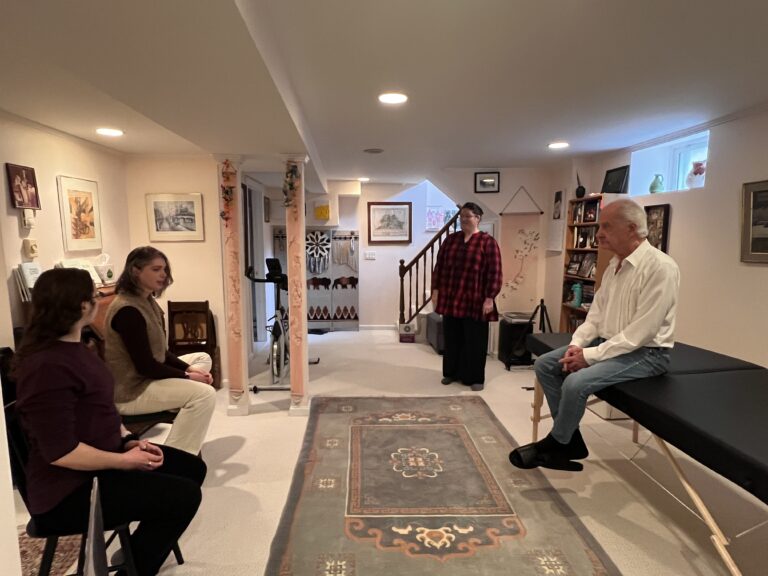
On March 6, 2025, in Boston, Massachusetts, USA, Tommy Thompson led a revelatory class in the Alexander Technique teacher training course.
In this class, trainees didn’t just learn how to align or move better. They were invited to listen, to let go, and to discover that support is not personal strength—it’s relational intelligence.
This was a class about Relational Support—the kind that emerges not from willpower, but from contact, perception, and presence.
Key Objectives of the Class:
- To restore support through the body’s slow twitch fibers, not through force or correction
- To explore kinesthetic perception as a gateway to embodied awareness
- To experience how the Alexander Technique becomes transformation—not in isolation, but in relationship
This blog series is based on Tommy Thompson’s Alexander Technique classes. Each post follows the flow and insights of the class to expand both self-awareness and practical consciousness applicable to everyday life.
New here?
If you’re new to the Alexander Technique, you can start with the resources below.
Alexander Technique Class Flow at a Glance
1. The Opening Question
❝ If there is no self outside of relationship—then where, and how, do you meet yourself? ❞
This class began not with movement, but with a question. A question that unravels the very assumptions we carry into the Alexander Technique—about identity, effort, and what it means to change.
We often come to the work thinking the goal is to fix the body, improve posture, or regain control. But what if the starting point is not control, but contact? Not effort, but relationship?
What if the self is not a solitary entity, but something emergent—revealed in the act of listening, sensing, and being with another?
This is the heart of Relational Support. You don’t create support. You remember it, in contact. You don’t build the self. You find it—in the field between you and another, between stillness and movement, between sensing and being sensed.
Tommy’s Word
“There was no self, right? The only self you have is in relationship. You can’t experience yourself outside of relationship.”
“You find yourself in that relationship.”
Integrative Commentary
Tommy’s words invite us to shift the foundation of the Alexander Technique from self-monitoring to self-meeting—not through the mirror of memory, but through the immediacy of contact.
In this class, the body becomes a site of relational intelligence. It listens. It responds. It reorganizes not because it’s told what to do, but because it’s given a space to feel safe, seen, and supported.
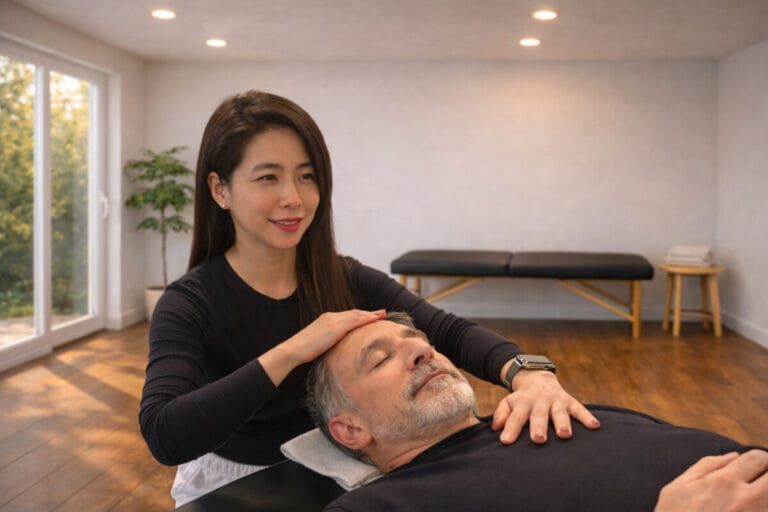
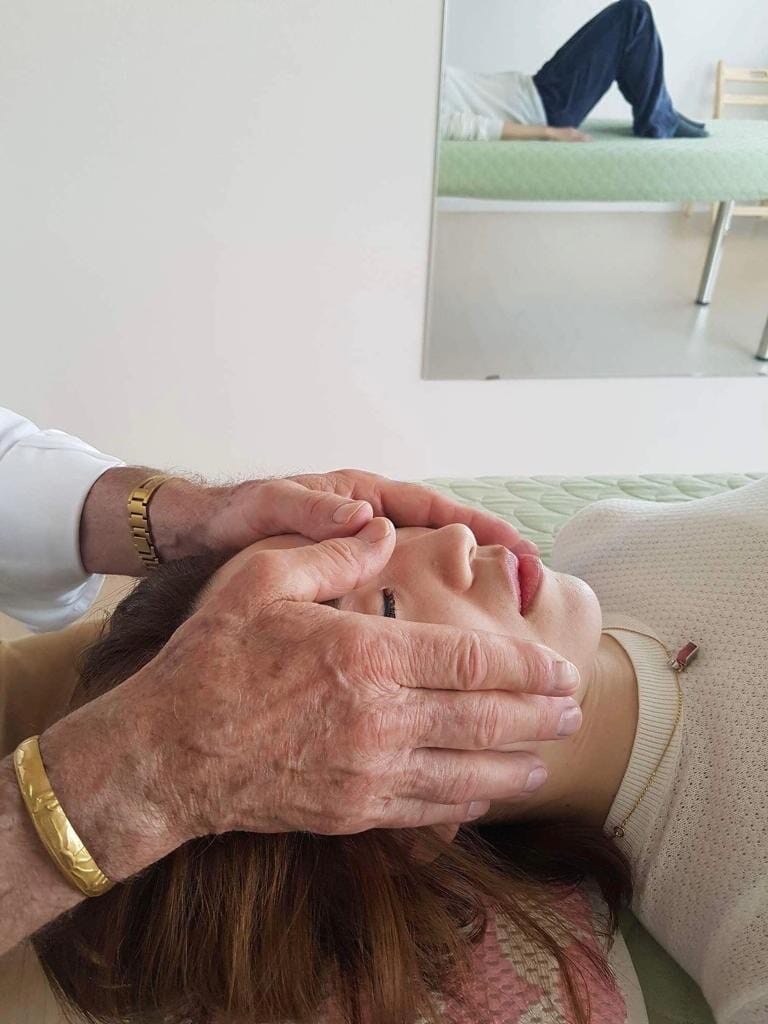
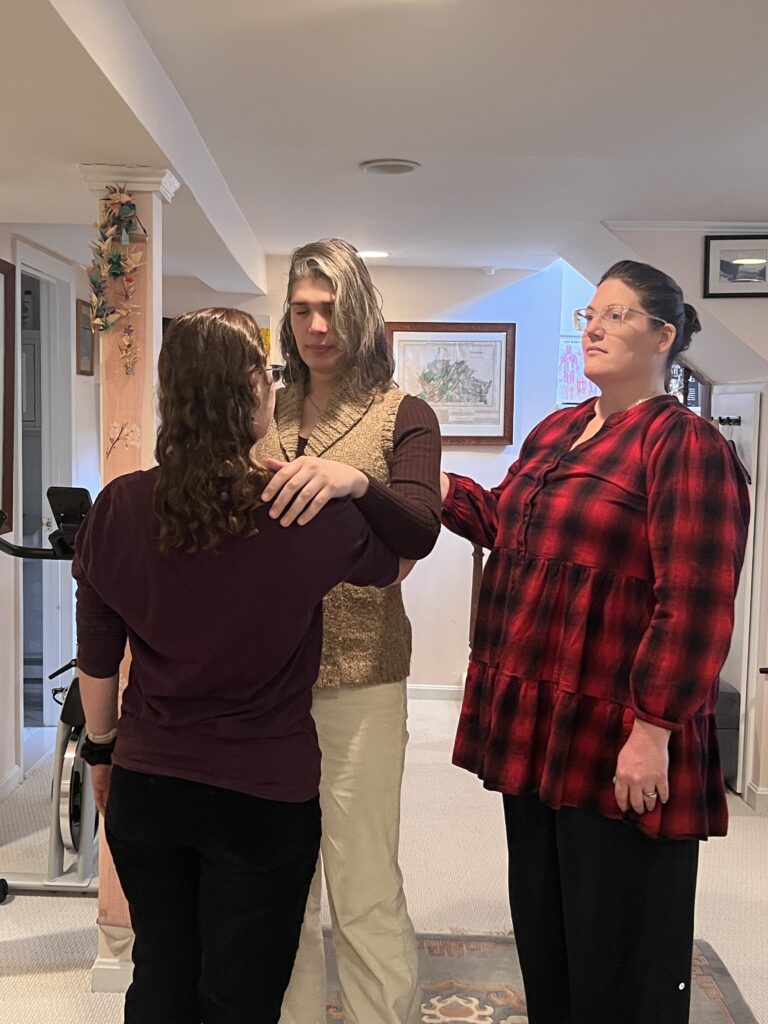
When you approach a trainee not to fix, but to listen; when you put your hands not to direct, but to perceive—the nervous system responds with its own coherence. The work stops being technical. It becomes relational.
And in that space, something subtle and profound happens. You don’t just support someone. You meet them. And in doing so—you meet yourself.
2. Core Learnings from This Class
Core Concepts
- Relational Support emerges, it is not applied.
In this Alexander Technique class, we didn’t seek to fix the body—we practiced getting out of its way. Support came not from muscle or will, but from letting the body reconnect through relationship. - The self is relational, not individual.
Identity was not found in posture or introspection, but in the quality of connection—to gravity, to another, to one’s own perception. - The nervous system needs space, not commands.
Tommy taught us that trusting the nervous system allows a kind of coordination no technique can force. This is the very heart of Relational Support.
Five Key Messages
- You find yourself in the relationship.
Transformation happens not in isolation, but through contact and perception. You see yourself most clearly when someone else is really there. - The body already knows how to support you.
Your task is not to command it, but to listen to it, and stop interrupting what it’s already trying to do. - Kinesthetic awareness leads before cognition.
The Alexander Technique works through sensing, not thinking. It’s not about knowing the right position—it’s about feeling what’s true now. - Stop managing, start meeting.
The nervous system doesn’t need you to direct it. It needs you to relate to it. That’s where Relational Support begins. - The Still Point of Support is where everything resets.
This is the moment where habit pauses, perception sharpens, and presence returns. It is not static—it’s alive.
Essential Terms
- Relational Support
A foundational principle in this class and the Alexander Technique: support arises not in isolation, but through connection—to gravity, to touch, to attention. It is quiet, intelligent, and always available when we stop overriding it. - The Still Point of Support
A phrase frequently used by Tommy Thompson, adapted from a line in T.S. Eliot’s poetry. It refers to a moment of poised neutrality—a space where there is neither forcing nor holding, only a felt sense of being supported without doing the support. In Tommy’s teaching, it marks the shift from effort to trust: a readiness in stillness, where the nervous system is free to organize itself through contact and perception. It’s not a technique—it’s a lived, relational experience. - Kinesthetic Sense
The sense that tells us not only what we’re doing, but how we’re doing it. It’s the body’s internal perception system—subtle, precise, and always active. - Slow Twitch Fiber
These foundational support fibers sustain posture and breath. Unlike fast twitch fibers, they do not fatigue quickly and are essential to quiet presence. Most people have lost conscious connection to them. - Use-of-Self
Central to the Alexander Technique, this term describes how a person organizes themselves in activity. It includes body, mind, awareness, and the way one enters relationship.
3. Tommy’s Insights
In Tommy’s words during class, there are not only the core principles of the Alexander Technique, but also practical wisdom that can be applied directly to daily life. His words go beyond simple advice about movement and prompt us to deeply consider how we choose to exist.“Table work engages what I call the fiber of being—a type of slow twitch fiber that supports you, not a strength fiber. The doing aspect of us is rapid, so we tend to lose that fiber and overcompensate. Table work helps restore unconscious commitment to that support, so when you get up and move, you feel more grounded.”
Table work helps the body reconnect with its natural support, moving away from muscular effort toward easier, more coordinated movement.
“The body is supporting the quality of your thoughts, your feelings, and your perceptions of life, and your overall sense of being. It all becomes habituated. Sometimes it works, sometimes it doesn’t. Most of the time, it creates solutions.”
The body shapes how we think and feel, often through unconscious patterns.
“The kinesthetic sense is really going to give you information about where you are, given what you’re doing, and how you’re involved in what you’re doing. That’s kind of essential when we talk about use-of-self.”
Kinesthetic awareness is central in the Alexander Technique. It tells us not just what we’re doing, but how we’re doing it—moment to moment.
“You find yourself in that relationship, whatever you’re doing. What you want is—when we put hands on someone—they experience more of a relationship, and therefore experience more of themselves. That’s where you want to go. You don’t want to go the way the Alexander world tells you—focusing on the head and neck all the time.”
Awareness grows through contact. Touch isn’t correction—it’s a way to help someone meet themselves.
“What if you let your neck be free? And what does that mean? It means you’ve given yourself over to your nervous system, rather than telling the nervous system what to do. The nervous system is always working—it’s keeping you from falling right now, it’s keeping you alive, keeping your heart beating, your digestion going—doing all of that.”
Letting go is about trust, not collapse. Your system already knows how to support you.
“If I start to put my hands on someone, it’s valuable for me to take a moment and let my neck be free, which means I don’t ask the nervous system to do what I normally do. I let it be free to link in—and it’s not like I’m doing it. I’m just getting out of the way and letting the nervous system do what it’s designed to do, because it’s probably reading me better than I’m reading myself right now.”
A free neck lets you listen better. You’re not controlling—you’re allowing.
“If you’re really exchanging mirror neurons, if you’re really seeing the person—not looking at them based on memory—you may see someone you’ve never truly seen before. That’s what I talk about in what I call the ‘self-portrait exercise’.”
Mirroring reveals what memory can’t. You see the real person, right now.
“The individual is responding to you. Take advantage of their response and amplify it by going deeper. Go past the wave and into the ocean. Go past the habit into their support. Go through the tissue, because most of us live in support—it’s just that habituation pulls us out of it. Now—find the still point, where there’s neither coming nor going.”
Real change starts with subtle responses that lead us back to support and stillness.
4. Practical Tips for Everyday Life
What’s the Goal?
To move through daily life with less effort and more presence—by trusting the body’s built-in intelligence instead of managing it. To practice Relational Support not as a technique, but as a way of being—moment to moment, movement to movement.
This isn’t about posture. It’s about feeling how you’re being held, even when you’re doing nothing to hold yourself.
How to Practice
- Pause before movement.
Before you stand, lift, or reach—pause. Let yourself arrive. Let the nervous system catch up.
Ask softly: Where am I beginning from?
Give space, and the body speaks. - Let the support come to you.
Don’t push down into the chair. Don’t hold yourself up. Instead, imagine support is already there—beneath you, around you, within you. Let the slow twitch fibers wake up on their own.
As Tommy would say: “Don’t go up. Don’t go down. Let the support come to you.” - Feel the space between you and what you’re with.
You’re not separate from your tasks.
When you wash dishes, feel the sink. When you speak, sense the air between you and the listener.
That’s where Relational Support lives—in the in-between.
Support doesn’t arrive from inside or outside. It arrives in relationship.
What You’ll Notice
- A quiet sense of being coordinated—without trying to “get it right”
- Less strain, more responsiveness, especially during transitions
- A return to the Still Point of support, even in motion
- The feeling—not of pushing through the day—but of being gently met by it
5. Closing the Class
Key Takeaways
Support is not a strategy. It’s what remains when you stop trying. The Alexander Technique isn’t about posture—it’s about perception, presence, and permission. You don’t move through life alone; you move in relationship. Most of us live in support—it’s just that habituation pulls us out of it.
Core Insights
What Tommy offered us in this class was not instruction—it was permission. Permission to stop correcting, to stop managing, and to start listening. Support, he reminded us, is not something we apply. It’s what we rediscover when we stop interfering. You don’t become more coordinated by controlling yourself. You become more present by getting out of your own way. The nervous system already knows how to organize you. Your job is to allow it to do so.
“You find yourself in that relationship. The only self you have is in relationship.” That’s not just philosophy—it’s physiological. As you stop managing and begin to sense again, your breath softens, your spine lifts, your thoughts clarify. The body remembers how to support you—because it never truly forgot. The habit simply overrode it.
This class wasn’t about doing the Alexander Technique. It was about experiencing it—through contact, through space, through being seen and felt. Relational Support is not a concept. It is a lived experience that begins the moment we choose not to direct but to relate.
A Final Invitation
Find someone you trust. Place your hands on their head—not to fix them, but to feel them. Stay. Don’t do anything. Let the contact reveal something neither of you could access alone. Then pause. “Find the still point—right now. There is a still point—yeah—where there’s neither coming nor going.” That is the Still Point of support. It is not a place of passivity. It is a moment of readiness, a silence that listens, a space where relationship becomes presence. And that’s where the work truly begins.
6. One Key Practice
Stop. Sense. Relate. That’s it. That’s the practice.
Before you move, pause—even for half a second. Let your attention drop into your body. Let your body drop into gravity. Let gravity carry your attention into the present.
Don’t try to fix your posture. Don’t manage your breath. Don’t lift your head. Instead, ask: Where is the support already happening?
You’re not making it happen. You’re letting yourself remember it. And when you do—you find yourself in that relationship.
This is the essence of the Alexander Technique. This is Relational Support. And it begins—not with effort—but with a moment of attention.
7. Three Questions to Ask Yourself
These are not questions for your intellect. They are invitations for your attention. Ask them not to answer—but to feel what shifts as you listen.
- Where is my support coming from—right now?
Don’t think. Sense. Is it coming from effort, or from contact with the ground, the chair, the air? Let the body tell you. - Am I doing more than I need to?
In this moment, in this movement, in this thought—what would happen if I did 10% less? - What is the quality of my contact with the world?
Whether it’s the floor beneath your feet, the object in your hands, or the person across from you— are you holding it… or are you meeting it?
These questions are not tools to fix yourself.
They’re reminders that Relational Support is always available, the moment you stop organizing and start listening.
This is the Alexander Technique in action:
A practice of asking, feeling, and returning—again and again—to what’s already true.
8. For Those Who Wish to Learn More
Recommended Books
Touching Presence – Tommy Thompson
This is Tommy’s own articulation of the ideas you’ve encountered in class. Through short reflections, personal narratives, and precise descriptions of embodied experience, Tommy shares how presence is not a mental stance—but a felt, relational condition.
→ A powerful companion to this course, this book expands on the core principle of Relational Support and makes it real, lived, and transferable.
The Alexander Technique: A Skill for Life – Pedro de Alcantara
One of the most widely respected modern introductions to the Alexander Technique, this book is both accessible and philosophically rich. De Alcantara explains the principles of use, inhibition, and support in ways that connect with musicians, performers, and everyday movers alike.
→ A well-rounded resource that helps you ground your experience from this class in practical, anatomical, and creative understanding.
Official Website of Tommy Thompson
www.easeofbeing.com
This is the official website personally managed by Tommy Thompson, offering a wide range of resources and programs to deepen your understanding and practice of the Alexander Technique:
- Private session reservations and inquiries
- Workshop and seminar schedules
- Overview of international teacher training programs
- Essays and articles on the Alexander Technique
9. Next Class Sneak Peek
The following content will be added subsequently.
What if the very way you define yourself is the reason your body feels stuck?
In Class 46, Tommy invites us to explore how our movement identity is not just shaped by habit—but by hidden definitions we’ve carried for years. Through the lens of the Alexander Technique, he shows how every familiar tension isn’t just muscular—it’s narrative. And every pattern we override opens a door back to freedom.
Next time, we’ll dive into the silent ways we “hold ourselves together” in order to survive—and how letting go isn’t collapse, but intelligence.
You don’t need to fix your posture. You need to interrupt the story that made you hold it that way.
Join us for a class that redefines movement not as function, but as a return to self, design, and wellness.
10. Join the Alexander Technique Journey
Did this class leave a small resonance within you? Feel free to quietly hold it in your heart or share it in just a sentence or two. The comments are always open. Your one simple word may leave a gentle ripple in this ongoing journey.The journey of Resonance Flow continues across social media as well. Let’s continue this journey together.
 YouTube
 Instagram
 Threads
 Facebook