How Touch Reveals Who You Really Are | Embodied Identity in Tommy Thompson Class 33
❝What does your spine remember that your mind forgot?❞
You move all day—reaching, turning, tensing your neck.
But what if those movements are more than habit?
What if they reveal how you’ve learned to exist?
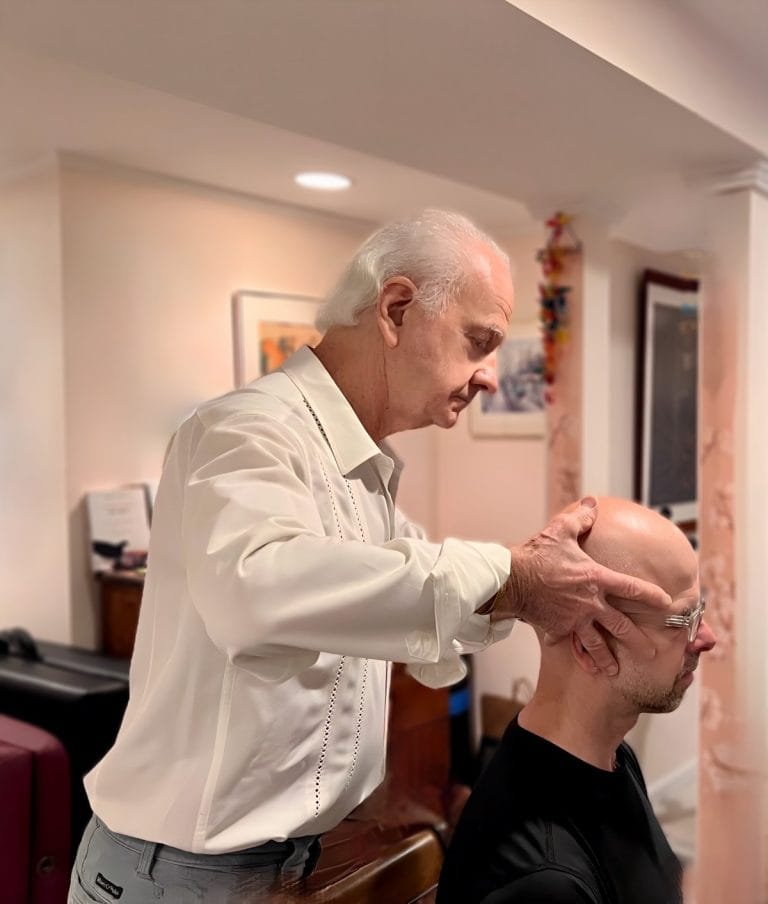
On December 10, 2024, in Boston, Massachusetts, USA, Tommy Thompson led a class in the Alexander Technique teacher training course that invited trainees to pause—not to fix movement, but to meet themselves through it.
This wasn’t posture work. It was identity work through the body.
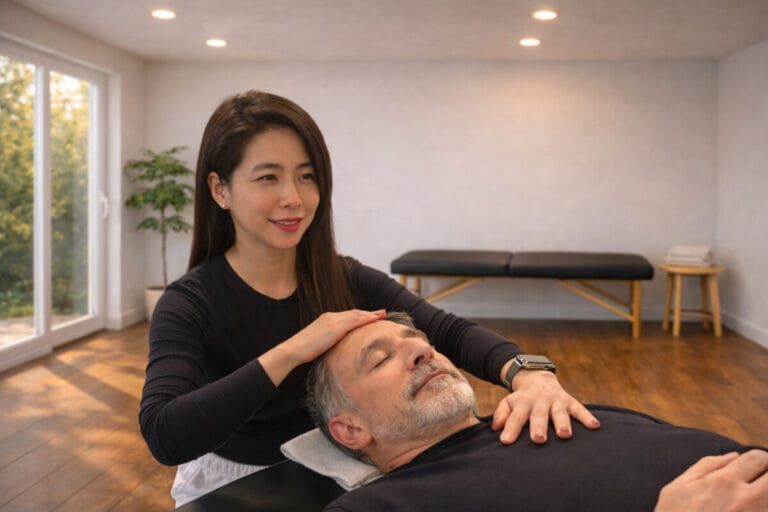
Through table work, guided touch, and observation, the class explored Embodied Identity—how movement patterns mirror the self we’ve built, and how sensation helps us reorganize it.
Not by doing more. But by noticing differently.
Key Objectives of the Class:
- To explore how movement expresses Embodied Identity
- To recognize identity-based patterns and release them through sensation
- To practice Alexander Technique as a pathway to presence and wellness
- To create a safe space where change can happen, not be forced
This blog series is based on Tommy Thompson’s Alexander Technique classes. Each post follows the flow and insights of the class to expand both self-awareness and practical consciousness applicable to everyday life.
New here?
If you’re new to the Alexander Technique, you can start with the resources below.
Alexander Technique Class Flow at a Glance
1. The Opening Question
❝How much of your movement belongs to you—and how much is just survival?❞
We think we move freely. But often, we’re replaying patterns we didn’t choose.
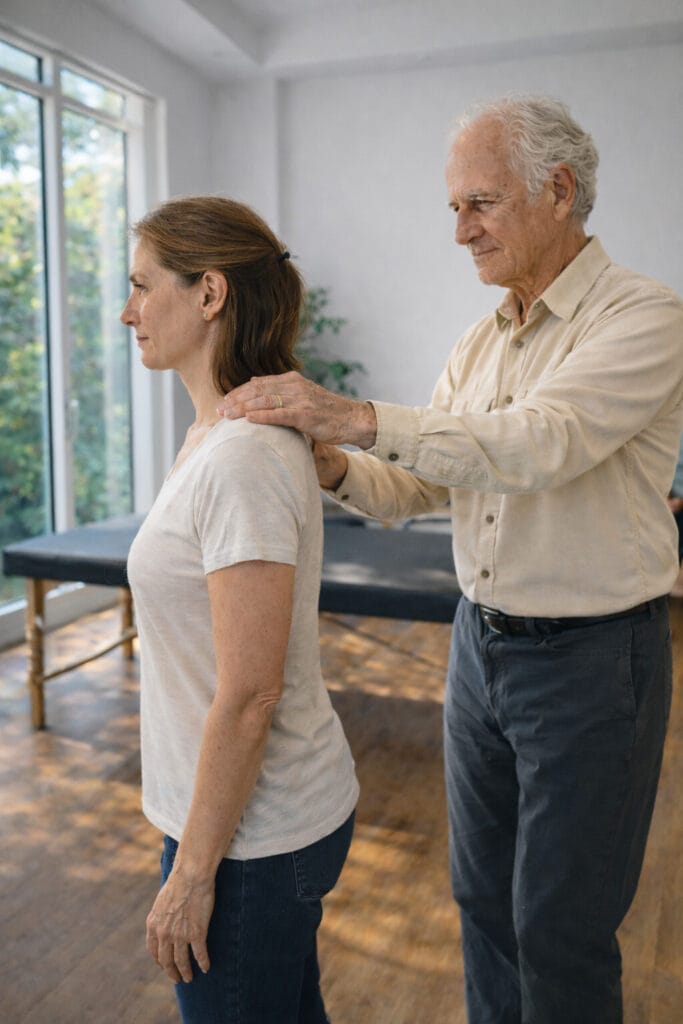
In this class, Tommy asked trainees not to move differently—but to notice who is moving.
To feel how posture, timing, and tension reflect old beliefs about who they are.
That’s the heart of Embodied Identity:
Movement isn’t just action—it’s history, strategy, and self-concept.
Tommy’s Word
“You’re going to ask them to let go of habitual behavior patterns—patterns tied to their identity.”
→ The aim isn’t better movement. It’s truer presence.
“You’re not just meeting a person—you’re preparing to introduce them to a new relationship with themselves.”
That’s what the Alexander Technique offers:
A way to stop fixing and start feeling who’s really there—beneath the habit.
2. Core Learnings from This Class
Core Concepts
- Movement reveals identity
Every gesture, pause, and coordination pattern isn’t just functional—it reflects a deeper Embodied Identity. In this class, trainees explored how movement becomes a mirror for the self we’ve constructed over time. - Change begins with sensation
You can’t think your way into new movement. You must feel your way into it. Sensory experience—not explanation—is how the Alexander Technique reorganizes the body-mind connection. - Presence makes safety possible
The goal isn’t to improve behavior. It’s to create a state where the body doesn’t need to defend itself. In that safety, change doesn’t need to be pushed—it can emerge.
Five Key Messages
- Let go of trying to change—let yourself be noticed.
Transformation doesn’t begin with effort. It begins with attention. - You don’t move muscles. You move beliefs.
Patterns of coordination are shaped not just by anatomy, but by identity. - Touch carries direction more than words ever can.
In the Alexander Technique, the hands speak what the nervous system can trust. - Slowness isn’t delay. It’s depth.
Moving slowly reveals options that speed hides. - The teacher’s freedom becomes the student’s permission.
“Your state of being is your teaching.” – Tommy
Essential Terms
- Embodied Identity
The internalized pattern of how you move based on who you believe you are. This class focused on making these patterns visible—not to correct them, but to allow them to reorganize through awareness and presence. - Habitual Patterning
Movement that repeats not because it’s efficient, but because it’s familiar. As Tommy said, “You’re going to ask them to let go of habitual behavior patterns—patterns tied to their identity.” Letting go begins with noticing, not fixing. - Kinesthesis
The sensory awareness that lets you feel how your body moves in the environment. In Tommy’s words, it helps you know where you are as you move—not through sight, but through sensation. - Proprioception
The internal sense that gives you orientation within your own body. It’s how you know your arm is raised, even with your eyes closed. Tommy reminded us, “It’s the only sense that tells you where you are in your own body.” - Direction Through the Hand
Movement flows through intention. When guiding another person, your hands communicate what your body believes. Tommy said, “If you have in mind the direction you want her to go, that will come through your hand.” - Relational Safety
Change can only happen when the body feels safe enough to let go. That safety doesn’t come from technique—it comes from tone, timing, and touch. “They’re just looking for safety. And they might not even realize that’s what they’re looking for.”
3. Tommy’s Insight
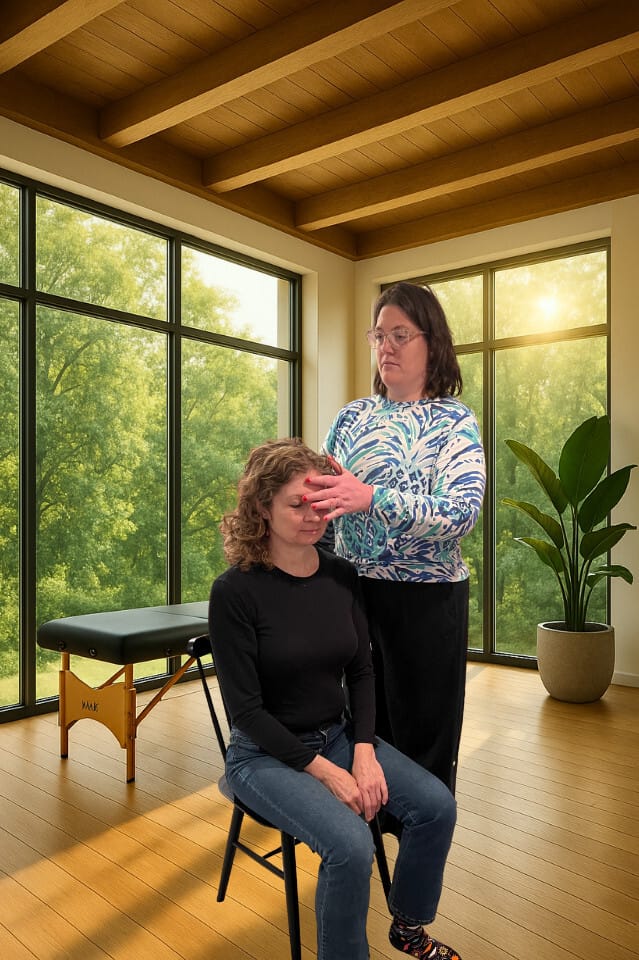
In Tommy’s words during class, there are not only the core principles of the Alexander Technique, but also practical wisdom that can be applied directly to daily life. His words go beyond simple advice about movement and prompt us to deeply consider how we choose to exist.→ You’re not just meeting a person—you’re preparing to guide them toward a new self-awareness.
→ Beneath their words or goals is a basic need to feel safe enough to change.
→ You’re inviting them to release deeply ingrained habits that feel like part of who they are.
→ Change is only possible if it feels safe and embodied—not forced or theoretical.
→ This sense helps people reconnect with their physical presence and movement in real time.
→ It gives you internal orientation—essential for awareness without needing visual input.
→ Real teaching happens in timing—when they’re ready to listen, not when you’re ready to speak.
→ Your touch reflects your inner clarity; your own freedom affects how clearly you guide others.
4. Practical Tips for Everyday Life
What’s the Goal?
To bring the Alexander Technique into everyday actions—not as correction, but as awareness in motion. Each moment becomes a chance to meet yourself differently.
How to Practice
1. Pause Before You Reach
Before grabbing your phone or turning a handle, pause. Let the action wait.
Notice: Are you rushing, bracing, holding breath?
2. Let Your Hand Speak Less
Gently place your hand on someone’s shoulder.
No helping—just notice.
What intention is in your touch?
3. Listen With a Free Neck
During conversation, notice your neck.
No adjustment—just allow softness as you listen.
What You’ll Notice
Small shifts reveal deeper patterns. You may find that every movement expresses something you weren’t aware you were saying. And when you soften, pause, or feel clearly, a truer version of you moves forward.
5. Closing the Class
Key Takeaways
This wasn’t a class about doing better. It was a class about becoming available to yourself—through sensation, through stillness, through contact.
Tommy didn’t ask trainees to move differently.
He asked them to notice the self that’s doing the moving. Because only when you see it—can it begin to shift.
Core Insights
- Movement is identity in motion.
What we repeat is not just habit, but history. - Safety is the foundation of all change.
A nervous system that feels supported can let go. - Presence isn’t taught—it’s given space.
The less you try, the more you arrive.
A Final Invitation
You don’t need to improve. You need to be noticed.
Tommy’s class offered something rare:
A place where nothing had to be fixed, and everything was allowed to unfold.
So next time you reach, speak, touch, or listen—pause. Let sensation speak before instruction.
Let the moment organize you, not the other way around.
Let presence do the naming.
6. One Key Practice
Let the movement wait
Before you act—pause.
Before you speak—breathe.
Before you touch—listen.
That pause isn’t hesitation.
It’s space.
As Tommy said,
“You’re not pausing the movement. You’re pausing the story behind it.”
Even a breath of stillness can shift how you move.
Try it before something familiar—reaching, turning, responding.
7. Three Questions to Ask Yourself
These questions aren’t for analysis. They’re for sensing—again and again, inside your day.
- Where in your body are you working harder than needed?
→ Let your attention go there—no fixing, just noticing. - When you speak or touch, what’s your intention doing?
→ Is it pushing, proving, or offering? - Can you be here without improving anything?
→ Let the moment show you who is present when effort drops.
8. For Those Who Wish to Learn More
Recommended Books
Body Learning – Michael Gelb
This book doesn’t just explain the Alexander Technique—it brings it alive. Gelb invites you to learn not by fixing, but by noticing. Through clear language and lived examples, he shows how movement mirrors identity and how subtle shifts in awareness spark real change.
If this class opened your attention to how you move or relate, this book continues that journey. It’s more than theory—it’s an invitation to stay in dialogue with your own sensation, presence, and transformation.
Official Website of Tommy Thompson
www.easeofbeing.com
This is the official website personally managed by Tommy Thompson, offering a wide range of resources and programs to deepen your understanding and practice of the Alexander Technique:
- Private session reservations and inquiries
- Workshop and seminar schedules
- Overview of international teacher training programs
- Essays and articles on the Alexander Technique
9. Next Class Sneak Peek
“When we touch someone, what are we really touching?”
In the next class, we’ll explore how touch shapes the nervous system—not just physically, but emotionally and relationally.
We’ll ask: How does intentional contact shift patterns? Why do some hands say more than words?
Through hands-on Alexander Technique work, you’ll experience how presence in touch releases tension and restores awareness.
This isn’t just technique—it’s a return to the body as a place of listening, relationship, and quiet change.
10. Join the Alexander Technique Journey
Did this class leave a small resonance within you? Feel free to quietly hold it in your heart or share it in just a sentence or two. The comments are always open. Your one simple word may leave a gentle ripple in this ongoing journey.The journey of Resonance Flow continues across social media as well. Let’s continue this journey together.
 YouTube
 Instagram
 Threads
 Facebook