
Rewriting Habit Through the Power of Touch and Connection | Tommy Thompson Class 10
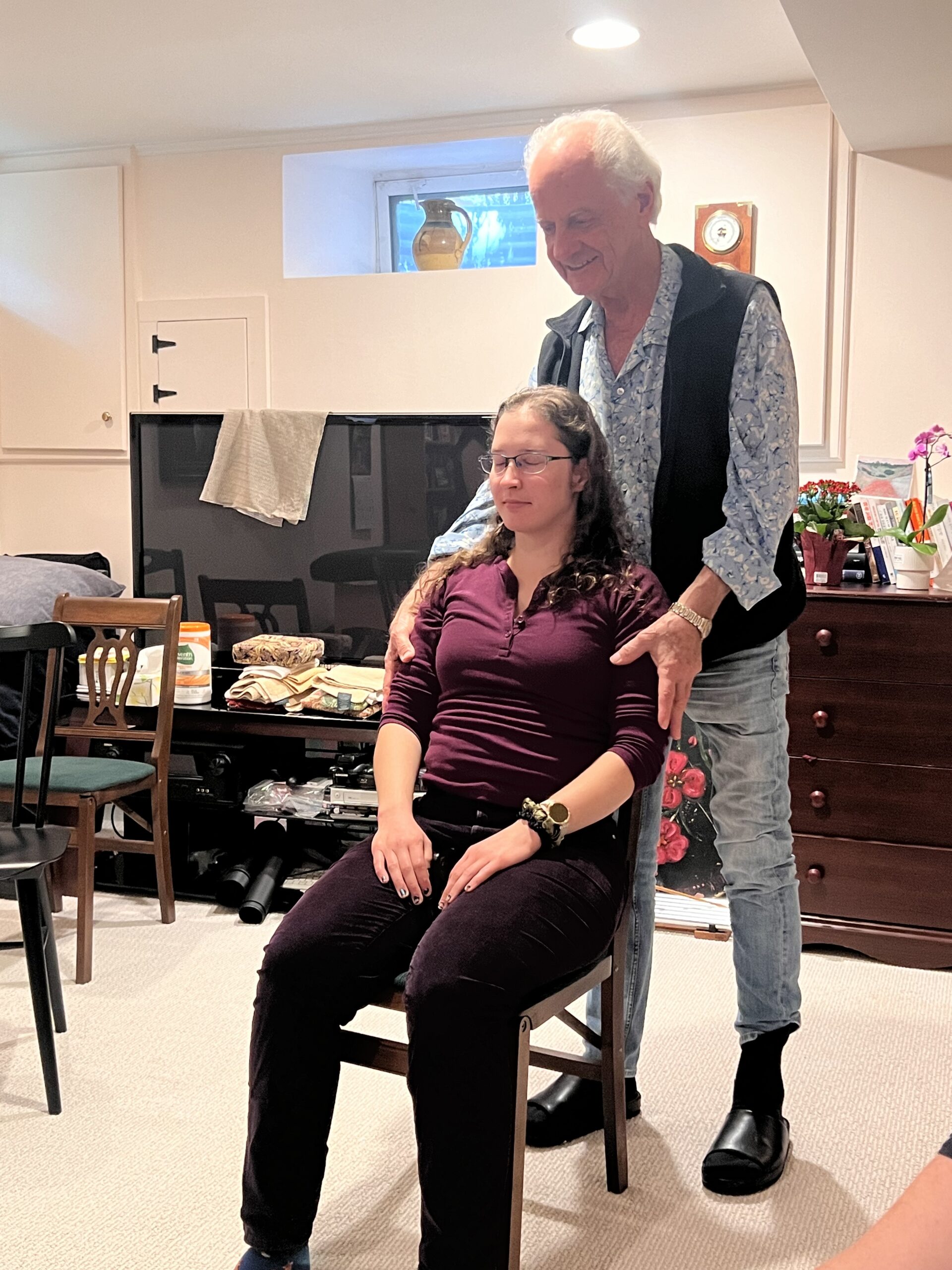
❝ Can you believe that someone’s gaze and touch could change your stress, posture, and emotional responses❞
Touch is far more than physical contact. It begins with the eyes, flows through the voice, and culminates in a sensory connection at the fingertips. Through the Alexander Technique, this connection becomes a lens to reexamine how we use ourselves—and ultimately, how we relate to the world around us. That shift leads directly to greater clarity in movement, relationships, and daily life.
On October 8, 2024, in Boston, Massachusetts, USA, Tommy Thompson led a class on the essence of touch and connection. More than a session on posture or mechanics, this class was an experiential inquiry into how habitual patterns can be interrupted and re-patterned through embodied awareness.
Key Objectives of the Class:
- Opening the doorway of sensory awareness through which touch and connection begin, using eye contact and voice as primary tools
- Inhibiting repetitive habits and realigning with a new mode of Self-Use
- Cultivating deep trust by honoring the inherent design of both people and objects
- Experiencing firsthand how touch can shift physical, emotional, and sensory states
This blog series is based on Tommy Thompson’s Alexander Technique classes, with each post following the flow and insights of the class to expand both self-awareness and practical consciousness applicable to everyday life.
New here?
If you’re new to the Alexander Technique, you can start with the resources below.
This blog series is based on Tommy Thompson’s Alexander Technique classes. Each post follows the flow and insights of the class to expand both self-awareness and practical consciousness applicable to everyday life.
New here?
If you’re new to the Alexander Technique, you can start with the resources below.
Alexander Technique Class Flow at a Glance
1. The Opening Question
❝ Touch is not just physical contact—how can it become a deeper connection through sight and sensation? ❞
“Touch begins the moment you look at someone. The eyes are our first tool of connection.”
— Tommy Thompson
The moment we look at someone, connection has already begun. Eye contact is the most immediate and intuitive form of touch, carrying with it sensory cues and nonverbal resonance that register before any words are spoken.
Tommy defines touch not as a mechanical act, but as a relational gesture. When mirror neurons are activated through eye contact, we begin to read and respond to another person’s tension, emotional state, and intention—often without conscious awareness.
This neurophysiological basis makes touch a powerful way to inhibit habitual reactions and open the door to more conscious choices and a new mode of Self-Use. Ultimately, touch doesn’t reside in the hands alone—it’s an experience that reorganizes how we relate to others through sight and sensation.
2. Core Learnings from This Class
Core Concepts
- Touch is fundamentally a sensory relationship
It is not mere contact—it begins with sight and extends through voice, hearing, and tactile perception. This multi-sensory connection becomes a channel through which we can reconfigure how we relate to others. - Eye Contact and Mirror Neurons
Eye contact activates mirror neurons, sparking unconscious interaction. Through this, emotional resonance and physical responsiveness arise, deepening relational presence. - Inhibition of Habit and Realignment of Self-Use
Touch creates a moment of interruption—a pause that allows us to stop automatic responses and open a space for conscious choice. This becomes a pathway to a renewed mode of Self-Use. - The Sensory Attitude of Respect
Choosing to honor the design of people and objects changes the quality of touch. With that respect comes deeper trust and authentic connection. - Touching and Being Touched
Touch is never one-sided. As we reach out, we must also remain open to being reached. In that mutual space, true connection unfolds. - Integration of Sensory, Emotional, and Mental Layers
Touch engages not only sensory awareness, but also emotional regulation and psychological responsiveness, making it an integrative experience that fosters whole-person transformation.
Five Key Messages
- Touch and connection are not mere contact—they are expressions of empathy and respect.
- Inhibition is not a break but a doorway to new connection.
- The depth of our relationships begins with the quality of our sensory attention.
- Self-Use influences not just how we move, but how we express emotion.
- True touch begins with a respect for the design of the other.
Essential Terms
- Use of Self
How one engages the mind and body in movement, expression, and presence. This is a foundational principle in the Alexander Technique. - Mirror Neurons
Brain cells that reflect the feelings and actions of others. They provide the neurological basis for connection through sight and touch. - Inhibition
The conscious choice to pause before reacting automatically. Inhibition creates space for change and deeper awareness. - Touch and Be Touched
Touch is a reciprocal experience—one in which we not only reach out, but also remain open to being reached. - Alignment
A state of physical balance and internal harmony. Good alignment allows for movement that is efficient and expressive. - Connection
Connection is formed through sight, voice, and sensation—it is the essence of how we relate. Through sensory exchange, that connection deepens and becomes more embodied. - Design Respect
It is an attitude of honoring the unique structure and integrity of both people and objects. Such respect elevates the quality of touch and lays the foundation for trust.
3. Tommy’s Insights
In Tommy’s words during class, there are not only the core principles of the Alexander Technique, but also practical wisdom that can be applied directly to daily life. His words go beyond simple advice about movement and prompt us to deeply consider how we choose to exist.“Touch begins the moment you look at a person—because to look is already to touch with your sight”
Sight is the beginning of touch and the first point of connection. It initiates unconscious interaction through nonverbal resonance.
“The use of self begins with your sight as you look at the face of the person and you exchange mirror neurons, and you’re aware that you’re exchanging mirror neurons.”
Eye contact stimulates mirror neurons. Through this exchange, we perceive the other’s state and regulate our own responses. It is a vital foundation of Self-Use.
“The way that you’re using yourself in your body will reflect itself in your facial expression. The way that you’re expressing yourself in your facial expression will reveal itself in your body.”
The way we use our bodies is mirrored in the face, which then communicates itself through full-body expression. These nonverbal signals deeply impact how we connect.
“Eyes—you touch with your eyes. Hands—you touch with your hands. But before you touch with your hands, you have touched with your eyes. You’ve touched with your voice. Then, at some point, you place your hands. You also touch with your understanding of the work.”
Eye contact, voice, and then hands form a seamless sequence of connection. When this flow is in harmony, touch becomes truthful rather than distorted.
“The next part of the touch is visual, voice, hearing—you’re listening to them—or the five senses. You’re touched by the presence of their being.”
Engaging all the senses in touch creates emotional and sensory resonance. This process shows how touch deepens relationship and presence.
“The touch is to reconnect them with what is beneath and within—not really beneath, but within—their habituation. You’re breaking the habit of being themselves.”
Touch reconnects others to what lies within their habitual patterns, opening the possibility of a new alignment. It becomes a means for rediscovery and reorganization.
“Touch and be touched. And it’s to let yourself be touched while you’re touching something or someone else.”
Touch is not a one-way action—it’s reciprocal. As you reach out, you must also remain open to being reached. This deepens the authenticity of the connection.
4. Practical Tips for Everyday Life
1. Sensory Connection with a Meaningful Object
What’s the Goal?
To restore the subtlety of your senses and rekindle the ability to be fully present in the moment.
How to Practice
Choose one object you use often—something familiar, like a cup, pen, or book. Feel its texture, temperature, and shape with your fingertips. Then gently close your eyes. The key is to experience the familiar as if it were unfamiliar.
What You’ll Notice
Your senses will reawaken, and the everyday will begin to feel new. You may notice a deepened sense of self-awareness and an expanded sensitivity to connection.
2. Opening Trust through Eye Contact and Voice
What’s the Goal?
To restore your capacity to open a space of trust before any physical touch occurs.
How to Practice
Before beginning a conversation, take a brief moment to quietly meet the other person’s gaze. Then, greet them in a soft and genuine voice.
Example: “How was your day?”
Feel the pace, tone, and emotional quality of your words as you speak with sincerity.
What You’ll Notice
You’ll begin to experience deeper connection even without physical contact. You may discover that eye contact and voice alone are enough to initiate true relational presence.
3. Connection That Begins at Your Fingertips
What’s the Goal?
To shift from unconscious touch to touch as a conscious expression of relationship.
How to Practice
As you touch a person or object, notice the pressure, direction, and speed of the contact. Observe what you feel and how you feel it. Let your touch carry intention and attention.
What You’ll Notice
Touch will no longer be habitual, but a deliberate choice. Trust and sincerity will come through more clearly—and you’ll find that connection often begins right at your fingertips.
5. Closing the Class
Key Takeaways
Touch is not merely physical contact—it is a process that begins with the eyes and expands through voice and sensation. Through this process, we can reorganize habitual patterns and use touch as a tool to open new possibilities.
Core Insights
- Touch and connection are interactive experiences that involve both sensory and emotional exchange.
Connection deepens when it is reciprocal, not one-sided. - Unconscious neural mechanisms, like mirror neurons, play a vital role in deepening relationship. Eye contact activates these systems and lays a neurological foundation for trust and empathy.
- A respectful attitude toward the design of both people and objects allows for deeper trust. Touch begins with recognizing and honoring the structure and presence of the other.
A Final Invitation
Touch is not simply an act performed with the hands. It is a current of connection that begins with your gaze, your voice, and your inner state.
Today, see if you can approach touch not as a mechanical gesture, but as an exchange of sensation and emotion—one that opens the door to trust and new possibilities.
6. One Key Practice
Begin with your eyes before you reach with your hands.
In any conversation throughout your day, take a moment to meet the other person’s gaze. Acknowledge their presence, then greet them with a voice that carries genuine intention.
Example: Even in a brief exchange with a colleague or family member, start by making eye contact and speak slowly, with care. This simple practice can open the door to deeper trust and connection.
7. Three Questions to Ask Yourself
- Is my touch creating true connection?
Consider how your touch supports trust and emotional resonance in your interactions. - What steps am I taking to move beyond habitual reactions?
Reflect on the ways you are pausing and making new choices rather than repeating old patterns. - How can I apply the idea of “touch and be touched” in my daily relationships?
Explore how this reciprocal sensitivity might transform the way you relate to others.
8. For Those Who Wish to Learn More
Recommended Books
- The Use of the Self – F.M. Alexander
Written by F.M. Alexander, the founder of the Alexander Technique, this seminal work distills insights from his own lived experience.
It explores—in clear, direct language—the core principles of self-use and inhibition, and how they shape both the body and consciousness. - Body Learning: An Introduction to the Alexander Technique – Michael J. Gelb
A clear and accessible guide for applying Alexander principles in daily life. Particularly relevant to this class’s themes of sensory awareness, alignment, and embodied connection.
Official Website of Tommy Thompson
www.easeofbeing.com
This is the official website personally managed by Tommy Thompson, offering a wide range of resources and programs to deepen your understanding and practice of the Alexander Technique:
- Private session reservations and inquiries
- Workshop and seminar schedules
- Overview of international teacher training programs
- Essays and articles on the Alexander Technique
9. Next Class Sneak Peek
In the next class, we’ll explore deeper harmony between body and mind through touch and triadic resonance.
What will we explore?
- How to release tension and create emotional ease through touch and voice
- Techniques for undoing fixed postural patterns and restoring natural, fluid movement
- Using triadic resonance to enhance emotional attunement in relationships
What changes can you expect?
- A broader capacity for conscious self-use applied in everyday situations
- Deeper insight into self-awareness and connection through the integration of touch and voice
When your body and mind begin to respond as one, touch becomes another language. Join us in the next class to unlock its full potential.
10. Join the Alexander Technique Journey
Did this class leave a small resonance within you? Feel free to quietly hold it in your heart or share it in just a sentence or two. The comments are always open. Your one simple word may leave a gentle ripple in this ongoing journey.The journey of Resonance Flow continues across social media as well. Let’s continue this journey together.
 YouTube
 Instagram
 Threads
 Facebook