The Still Point of Support and the Face–Body Connection | Tommy Thompson Class 09
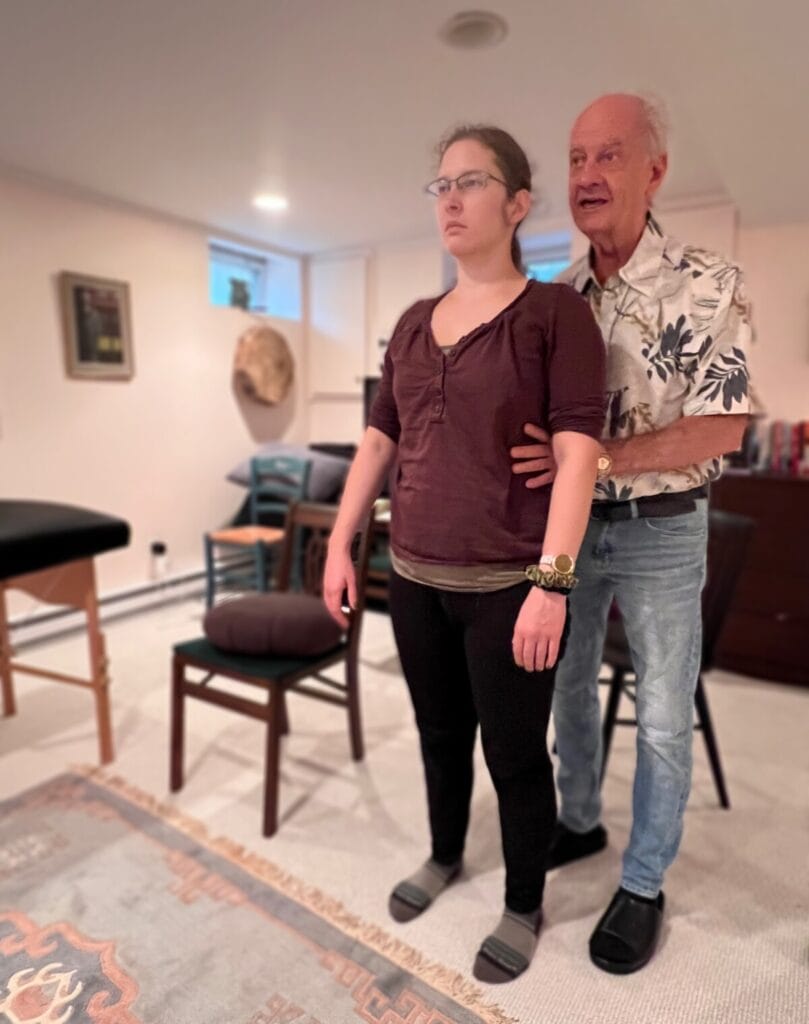
❝ What is your face saying right now? And how is your body continuing that story? ❞
Without us even realizing it, the face and body continuously reflect each other, revealing our inner state to the outside world.
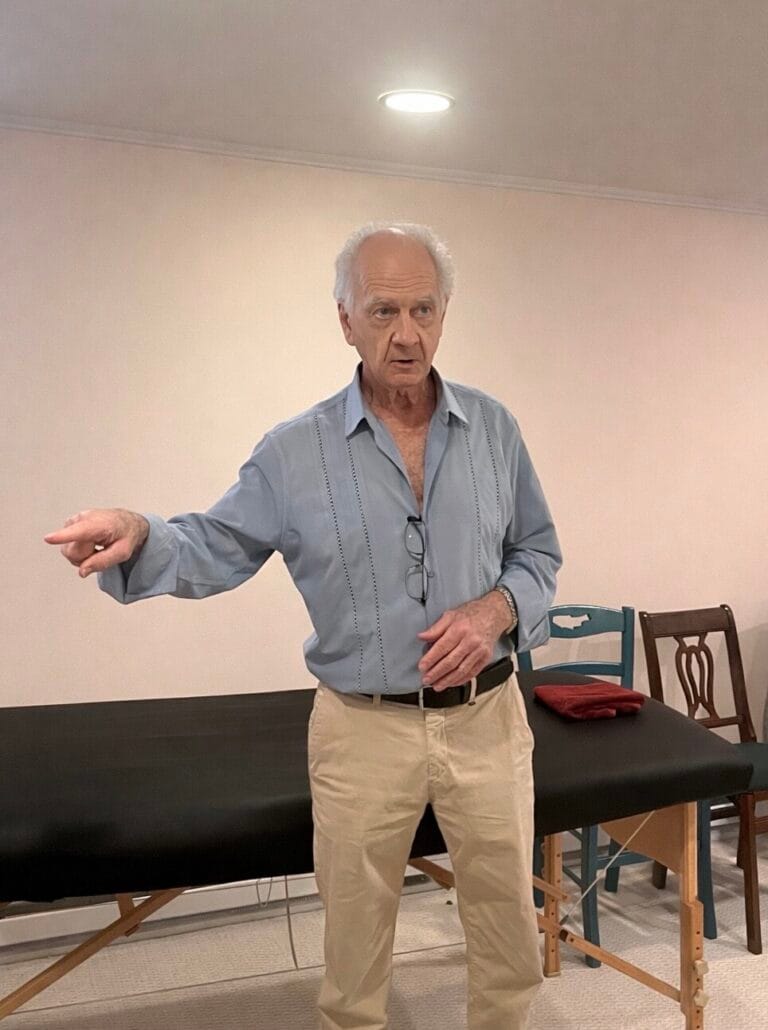
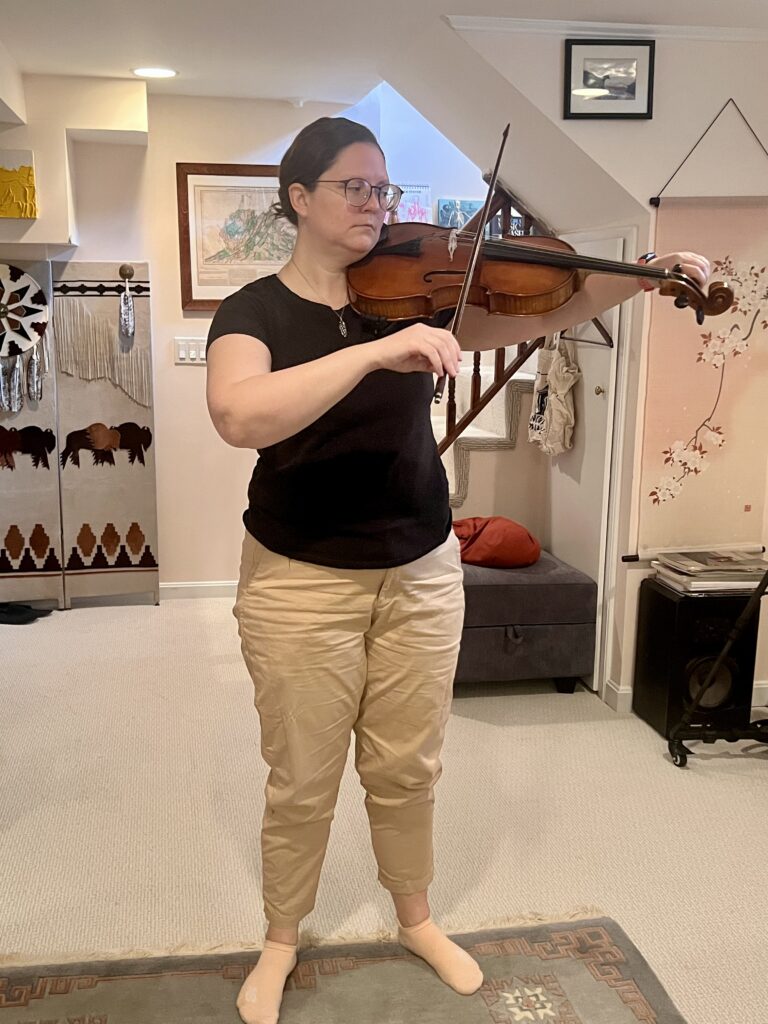
On October 3, 2024, in Boston, Massachusetts, USA, a class led by Tommy Thompson explored two foundational themes: the relationship between the face and body, and the concept of the Still Point of Support— offering a deep inquiry into the integration of physical and emotional awareness.
The Core Objectives of This Class
Grounded in these themes, this class was structured around three central aims:
- Understanding the Integrated Relationship Between the Face and Body
– Focused on exploring how the face and body reflect each other and how our inner states are expressed outwardly. - Discovering the Still Point of Support
– Practiced how to find a centered still point that supports physical and emotional balance, and how to experience the natural harmony between movement and stillness. - Emotional Expression and Habitual Pattern Shift
– Learned practical ways to release suppressed emotions and shift fixed patterns in the body and face.
This blog series follows the insights and flow of Tommy Thompson’s Alexander Technique classes, each session expanding practical awareness and inviting readers to apply these embodied principles in their lives.
New to this series?
If you’re just beginning your journey with the Alexander Technique, start here:
This blog series is based on Tommy Thompson’s Alexander Technique classes. Each post follows the flow and insights of the class to expand both self-awareness and practical consciousness applicable to everyday life.
New here?
If you’re new to the Alexander Technique, you can start with the resources below.
Alexander Technique Class Flow at a Glance
1. The Opening Question
❝ If we understand the relationship between the face and body, can we better read our inner state? ❞
We often perceive facial expression and bodily movement as separate. But in truth, these two realms are deeply interconnected—constantly reflecting one another in subtle and profound ways.
Tommy’s Words
“Facial expression is reflected in the body, and the body is reflected in the face. They mirror each other.”
— Tommy Thompson
This simple yet powerful statement holds a profound insight. The face and body are not merely connected physically; they function as a living mirror—mutually reflecting our physical and emotional state.
- The face and body continuously read and respond to each other. This interplay deeply shapes our habits, emotional expression, and patterns of movement.
- Repeated physical and emotional habits create fixed patterns in the face and body. But with awareness and attention, those patterns can shift.
- Most importantly, the “Still Point of Support” offers an internal center of calm—a place from which movement and stillness can coexist in balance and ease.
2. Core Learnings from This Class
Core Concepts
- The Reflective Relationship Between the Face and Body
The face and body function as an integrated system. Subtle expressions on the face are mirrored by the body’s overall tension and posture, while habitual patterns in the body are visibly reflected in the face. Recognizing this interplay is the first step toward perceiving our emotional and physical states with greater nuance. - The Still Point of Support
This is not a static or passive state. It refers to an internal point of equilibrium that remains centered even amidst movement. Stillness and motion do not oppose one another—they coexist harmoniously through this point. That momentary sensation—like everything settling as you take a breath— is the Still Point of Support, a deep and embodied calm that can be felt even in motion. - Habits and Physical Expression
Repeated actions and emotional reactions create unconscious patterns in the body and face. Over time, these become ingrained, restricting our freedom of movement and expression. hrough conscious observation and practice, however, these patterns can be softened and released, leading to new ease and openness. - The Natural Flow of Emotional Expression
True freedom comes not from suppression, but from allowing emotions to move naturally.
Joy, sorrow, anger, love—all emotions, when expressed without inhibition, restore our body’s natural rhythm. When emotions are repressed, the body accumulates tension, and movement becomes increasingly rigid. - The Nature of Support
True support doesn’t come from external circumstances. It arises from deep within the body—through the Still Point of Support, where a sense of inner stability and connection is self-sourced. From this place, emotional expression becomes free, physical expansion becomes possible, and one’s whole being moves toward an integrated state of presence.
Five Key Messages
- The face and body constantly reflect each other.
- The still point can be found even within movement.
- Suppressed emotions gradually harden the face and body.
- Freeing the face brings release to the inner self.
- True support arises from within, not from the outside.
Essential Terms
- The Still Point of Support
A state of internal balance where motion and stillness integrate. The body and mind feel equally grounded and centered.
- Icon of Creation
The face represents our capacity for creation and expression—it is where our inner world meets the outer one.
- Limbic System
The part of the brain responsible for processing emotion. It serves as a bridge between body sensation and emotional response. - Physical Habits
Unconscious patterns formed by repeated movements and postures. These can be recognized and changed through mindful awareness.
- Emotional Release
The process of safely expressing repressed emotions, which helps dissolve physical tension and emotional constriction.
3. Tommy’s Insights
In Tommy’s words during class, there are not only the core principles of the Alexander Technique, but also practical wisdom that can be applied directly to daily life. His words go beyond simple advice about movement and prompt us to deeply consider how we choose to exist.“Trying to sense how the facial expression is reflected in the body—and then how the body is reflected in the face—because they mirror each other.”
This highlights the bidirectional connection between our facial expressions and physical posture.
“Habit becomes ingrained in the body. Over time, you change your facial expressions less and less. The expression sets. And then you grow that way—in your body, and in your face.”
Long-standing habits shape both the body and the face, gradually fixing our expressions.
“The face is the icon of creation. I love that phrase. It really is.”
The face embodies our capacity for self-expression and creative identity.
“You can go back to your face and sense it. When you change your facial expression, it means you’re withholding the act of defining yourself in that moment—in the way that forms the expression. I think that’s a kind of inhibition.”
Releasing fixed expressions can interrupt the tendency to overdefine the self.
“The body moves from still point to still point. The still point is a point of support. There’s a still point in the river too—yes, really. You’re seeking that stillness. You have to find it yourself, within yourself. That’s it right there. No front, no back, no time—only constant motion. It cannot exist without motion.”
True support is found in the moving stillness we discover within ourselves.
“If you try to hold back crying—don’t. Let yourself feel happiness. Let yourself feel sadness. It’s how the body expresses what we’re all hardwired to experience.”
Honoring natural emotions keeps the body’s expressive flow alive.
“When someone feels supported, it becomes easier to express what needs to be expressed. But without that sense of support, we hold back. Again—the body is your support system.”
Feeling supported—internally or externally—frees up authentic expression.
“So the main thing is: support, support, support. Everything you did—whether it was a session, a lesson, or just a moment—was an act of caring.”
Support is the foundation of presence, growth, and compassionate interaction.
4. Practical Tips for Everyday Life
What’s the Goal
- Recognize the reflective relationship between the face and body.
- Begin gently unraveling fixed expressions and physical habits.
- Discover the Still Point of Support and restore physical and emotional balance.
How to Practice
- Mirror Observation
Stand in front of a mirror and calmly observe your facial expressions and posture. Notice how your expression might create tension or change in the body. - Facial Expression Experiment
Try smiling or frowning, and observe how each shift affects the physical sensations in your body. - Finding the Still Point
In a relaxed position, gently move your body and notice the moment you feel most stable and supported. That is your Still Point of Support. - Brief Daily Awareness
At least once a day, during stillness or motion, take a moment to sense the connection between face and body and recall your inner stillness.
What You’ll Notice
- Tension in the face and body gradually softens, and natural movement is restored.
- Suppressed emotions begin to flow more freely through your expressions and body.
- You experience, through direct sensation, the integration of face and body.
- A deeper sense of calm and inner stability becomes more accessible.
- Long-held patterns of tension and inhibition begin to unwind.
5. Closing the Class
Key Takeaways
The face and body constantly mirror one another, revealing our physical and emotional state. The Still Point of Support is where movement and stillness coexist in harmony. From this inner center, we gain stability and emotional equilibrium.
Core Insights
Practicing the Alexander Technique helps release repressed emotions and dissolve ingrained physical habits in the face and body.
This is not just a method of movement but a pathway to transforming how we inhabit our lives from within.
A Final Invitation
From this moment forward, start observing how your face and body are connected.
The small moments of awareness offered by the Alexander Technique can awaken your still point and begin to transform your way of being.
A single breath, a single expression, can begin to rewrite your story.
6. One Key Practice | Exploring the Still Point of Support
Take a few moments today to explore your own Still Point of Support through this simple practice. Follow the steps slowly and attentively:
- While Sitting
Sit down and gently notice when your body begins to feel naturally supported by the chair.
Sense the alignment of your head, spine, and pelvis as they softly connect.
In that moment, take a deep breath in, exhale smoothly, and bring awareness to your inner stillness. - While Walking
Walk slowly and bring your attention to the sensation of your feet meeting the ground. Track the movement of your center from your feet through to your head, sensing how your still point remains quietly present even as you move. - In Everyday Moments
Whether standing, moving, or pausing for a moment, gently return your awareness to the quiet center within. Even a brief connection to that inner calm can bring a surprising depth of steadiness to your body and mind.
A small practice can lead to profound transformation. The more frequently you recognize your still point, the more softly your face, body, and inner self awaken.
7. Three Questions to Ask Yourself
- How do you feel your facial expression mirrors the tension, posture, or movement of your body?
- Have you ever noticed the Still Point of Support during everyday movements?
If so, recall what your body and mind felt like in that moment. - Are there emotions you tend to suppress or avoid expressing?
Consider how those feelings may have left traces in your physical body.
Your body and mind are always working to restore their natural balance. Sometimes, a single moment of awareness is enough to begin the shift.
8. For Those Who Wish to Learn More
Recommended Books
- The Thinking Body – Mabel Ellsworth Todd
→ It is a classic that explores the connection between the face, body, emotion, and movement from both philosophical and anatomical perspectives, offering deep insight into how we think and express emotion through the body. - How You Stand, How You Move, How You Live – Missy Vineyard
→ It offers practical exercises for recognizing and transforming physical habits and emotional patterns, serving as a useful guide for applying the concept of the “Still Point of Support” in everyday life.
Official Website of Tommy Thompson
www.easeofbeing.com
This is the official website personally managed by Tommy Thompson, offering a wide range of resources and programs to deepen your understanding and practice of the Alexander Technique:
- Private session reservations and inquiries
- Workshop and seminar schedules
- Overview of international teacher training programs
- Essays and articles on the Alexander Technique
9. Next Class Sneak Peek
What will we explore in the next class?
In the upcoming class, we’ll focus on how to inhibit habitual patterns and realign ourselves with new awareness. Through specific touch and inhibition techniques, we’ll explore tangible ways to interrupt automatic responses and open the door to fresh possibilities in both body and mind.
We’ll also deepen our work with hands-on practice. Using gaze, voice, and the subtle contact of fingertips, we’ll learn to build trust with others and experience a richer sense of sensory connection. This kind of connection goes beyond technique—it transforms how we relate, how we engage, and how we express ourselves in everyday life.
What changes can you expect?
- A renewed sense of alignment in body and mind
You’ll begin to unwind long-held habits and rediscover a freer, more stable way of moving and being. - Expanded self-awareness
Through the practice of touch and inhibition, you’ll gradually open new insights into the essential questions of “Who am I?” and “How do I wish to exist?”
10. Join the Alexander Technique Journey
Did this class leave a small resonance within you? Feel free to quietly hold it in your heart or share it in just a sentence or two. The comments are always open. Your one simple word may leave a gentle ripple in this ongoing journey.The journey of Resonance Flow continues across social media as well. Let’s continue this journey together.
 YouTube
 Instagram
 Threads
 Facebook