Withholding Definition: Why Change Feels Real—but Doesn’t Last | Tommy Thompson Class 89
❝ Have you actually changed—or have you simply learned how to feel different for a while? ❞
Many people come to the Alexander Technique because something hurts, feels tight, or no longer works the way it used to. And often, something does change—less pain, more ease, a sense of relief.
But relief is not freedom.
Feeling different is not the same as being free to change.
Without honestly encountering yourself in your own life—again and again—what looks like change can quietly become another habit. A rearrangement. A temporary improvement that never quite reaches the way you live.
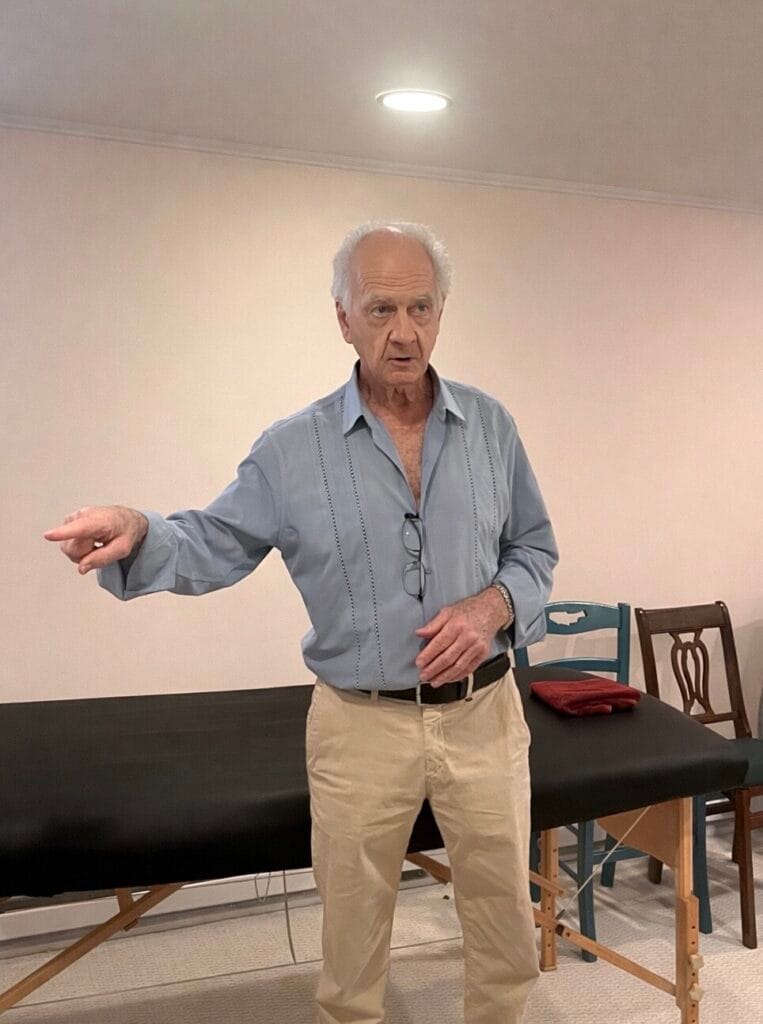
On November 4, 2025, in Boston, Massachusetts, Tommy Thompson led Class 89 of the Alexander Technique teacher training course. The work that day did not promise transformation. Instead, it asked a more demanding question:
What is actually changing—and what is only shifting its appearance?
The class moved beyond technique alone, into the relationship between use, identity, and the personal narrative we inhabit. It questioned whether change comes from doing something better—or from meeting the patterns that keep pulling us back to the same place.
Real change begins when you are willing to run up against yourself.
Key Objectives of the Class:
- To examine why change can feel real without becoming embodied or lasting
- To explore the lived relationship between use of self and personal narrative
- To observe how neuromuscular organization reflects identity over time
- To introduce Freedom to Change as an experiential and ethical inquiry
This blog series is based on Tommy Thompson’s Alexander Technique classes. Each post follows the flow and insights of the class to expand both self-awareness and practical consciousness applicable to everyday life.
New here?
If you’re new to the Alexander Technique, you can start with the resources below.
Alexander Technique Class Flow at a Glance
1. The Opening Question
❝ If change were real, why does your life keep pulling you back into the same patterns? ❞
When change doesn’t last, the reflex is almost always the same: try harder. More effort. Better intention. Cleaner technique.
But this class began with a different assumption. The problem is rarely insufficient effort. It is interference—already present, already active, often unnoticed.
What appears as physical limitation may be habit.
What feels like resistance may be identity.
And what we call progress may simply be the organism reorganizing itself just enough to feel better—without actually changing.
The question was not how to improve, but what is already shaping the response before choice appears.
Tommy’s Word
“The Alexander Technique can give a person the illusion of change without substantial change.”
This was not a criticism of the work, but a warning about how it is used. If change is measured only by relief or comfort, it may never survive the demands of real life.
What makes change real is not addition, correction, or effort—but encounter.
Real change begins when you are willing to meet yourself exactly as you are.
That question set the tone for the entire class. The work ahead would not aim at better results, but at recognizing where habit, perception, and identity quietly take over—long before movement begins.
2. Core Learnings from This Class
Core Concepts
- Change is not the same as improvement
Feeling better can happen without altering how you live. This class clarified the difference between temporary relief and change that can withstand real-life demands. - Use of self and personal narrative coexist as one organism
Neuromuscular patterns and personal story are inseparable, yet in practice they can be distinguished. A teacher learns to sense when narrative interferes—and when habit is embedded in tissue itself. - Effort often conceals what needs to be seen
Trying harder may create movement, but it can also obscure interference. Change does not begin by adding effort, but by recognizing what is already shaping response. - Encounter precedes freedom
Without directly meeting oneself as one is, change remains conceptual. Freedom emerges only through encounter, not correction.
Five Key Messages
- Change that does not last was never free.
- Relief can occur without reorganization.
- Habit operates before conscious choice.
- Encounter is more powerful than correction.
- Freedom to Change arises through awareness, not effort.
Essential Terms
- Use of Self
The way you are using yourself in living—the coordination of thought, perception, posture, and response as it actually unfolds in life. - Personal Narrative
The story through which identity, meaning, and expectation shape response before awareness intervenes. - Interference
What is already operating before choice appears—habitual effort, misdirected intention, or identity-driven response that limits freedom without being noticed. - Encounter
Meeting yourself as you are, without correction or justification. The moment habit becomes visible and the possibility of change first appears. - Freedom to Change
The capacity to respond without being compelled by habit, identity, or narrative—arising through encounter, not effort or correction.
3. Tommy’s Insights
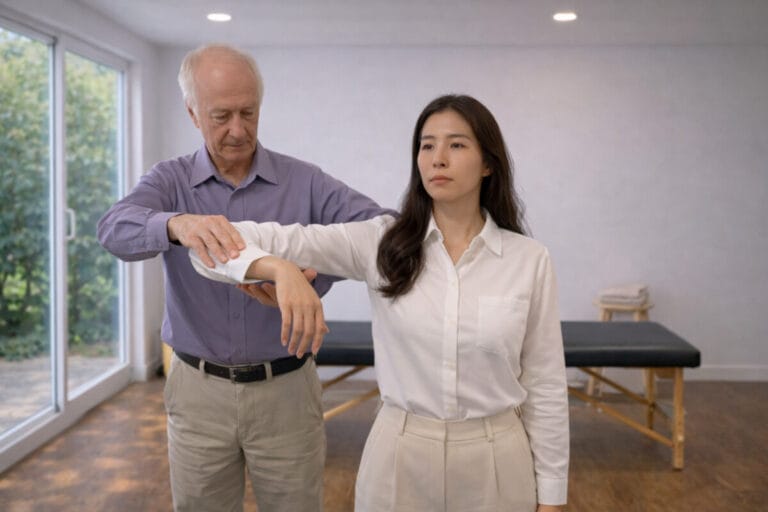
In Tommy’s words during class, there are not only the core principles of the Alexander Technique, but also practical wisdom that can be applied directly to daily life. His words go beyond simple advice about movement and prompt us to deeply consider how we choose to exist.1. I think the Alexander Technique can give a person the illusion of change without substantial change. You have to run up against yourself in your life to really change. You have to encounter yourself: Is this really me? However you answer that question—to really change—and I think the work can give you that, depending on how you interpret the functionality of the work, how it actually works.
➤ This statement names the fundamental risk of the work: confusing altered perception or temporary relief with genuine, lived transformation.
2. They both do the same thing but for different reasons, in different ways. The same thing happens for personal narrative and use of self. Can you really distinguish and put your hands on a person—whether it’s the personal narrative that’s presenting it, or whether it’s the neuromuscular self that’s presenting? That was the case in that moment.
➤ Real change is forged not in controlled conditions but in everyday moments where habitual reactions are exposed.
3. You just let go of the personal narrative and gave yourself up to what I’m doing—which is giving you kinesthetic cues to change or allow a change to take place in your neuromuscular self.
➤ This insight interrupts identification with habit and invites direct self-recognition prior to action.
4. Your neuromuscular self is your personal narrative as well. I mean, you don’t really separate them. But when you work with a person, you can distinguish when it’s the personal narrative that’s in the way, and when it’s the actual configuration of the muscle tissue that’s in the way.
➤ Similar outcomes can arise from radically different processes, making discernment of means as important as results.
5. We get to the point where we go: Is my response to what’s going on really what I want to be doing? And the way to get out of it is not to continue to do it—not because you want to solve a problem, but because you want to know whether or not that’s the case.
➤ Narrative identity and embodied coordination often appear fused, even though they operate through distinct mechanisms.
6. Does it change my experience of what I’m going through if I withhold defining myself in the way that I’m doing right now?
➤ Hands-on work can bypass story and explanation, offering direct sensory information that permits reorganization.
7. Take a moment to really question: Let me alter the way that I’m using myself to think about what I’m doing. And I’m going to let my neck be free to lengthen so that the head moves away from the body, forward and upward, as it needs to—given where I am and what I’m doing. I’ve got to let that happen and change me. And I know that my spine will maintain, and I know that my back will widen as I breathe.
➤ Inhibition is enacted, opening a pause in which choice becomes possible.
8. When is it personal narrative that’s determining the outcome of the project, and when is it the use? There’s always a combination. Always a combination. Personal narrative is what creates the necessity for observing your use. It really is.
➤ Our stories about who we are make conscious observation of use essential rather than optional.
4. Practical Tips for Everyday Life
What’s the Goal?
The aim of this class is not to move better or feel more comfortable.
The aim is to recover choice before action begins.
Rather than correcting behavior, the work invites a pause—long enough to notice what is already shaping response.
Freedom to Change begins by seeing, not fixing.
How to Practice
- Pause before you move
Before standing up, reaching, or speaking, allow a brief pause.
Not to adjust anything—but to notice what is already organizing your response. - Ask about use, not outcome
While walking, cooking, or working, shift the question from “Am I doing this well?” to
“How am I using myself right now?” - Do not define discomfort too quickly
When tension or discomfort appears, resist the urge to label it as a problem.
Let it remain information. This is often where Encounter begins.
What You’ll Notice
Change may not feel dramatic.
But gradually, you may notice less urgency, more availability, and moments where a different response becomes possible.
This is not improvement added on top of habit.
It is change emerging within life itself.
5. Closing the Class
Key Takeaways
- Change that feels real may still leave life unchanged.
- Relief is not a reliable measure of freedom.
- What interferes often operates before choice appears.
- Encounter, not effort, opens the possibility of change.
Core Insights
This class clarified that the Alexander Technique does not create change by adding something new.
It reveals change by exposing what is already shaping response.
Change becomes real when habit is met without justification.
Not corrected. Not improved. Simply seen.
Freedom, in this sense, is not a state you achieve.
It is a moment-to-moment capacity to respond without being compelled by identity or narrative.
A Final Invitation
Take this work back into your life—not as a method, but as a question.
Before you act.
Before you decide.
Before you move.
Ask whether you are responding freely—or being quietly pulled by something familiar.
And let that question do the work.
6. One Key Practice
Before you act today, take ten seconds to pause.
Before you stand up.
Before you speak.
Before you reach for something.
Not to correct posture.
Not to relax.
Not to prepare.
Simply notice what is already organizing your response—your thought, your intention, your sense of urgency.
Allow that awareness to be present before you move.
Let the pause do the work.
7. Three Questions to Ask Yourself
- What is already happening in me before I act?
- Am I responding freely—or repeating something familiar?
- If I pause right now, does my experience shift?
These questions are not meant to be answered once.
They are meant to be returned to—quietly, repeatedly—inside ordinary moments.
That is how this work enters your life as a whole.
8. For Those Who Wish to Learn More
Recommended Book
Touching Presence – Tommy Thompson
This book reflects the central inquiry of Class 89: why change can feel real without becoming lived. Rather than offering methods or solutions, it explores Withholding Definition as an ethical and perceptual practice—meeting oneself without correction, interpretation, or narrative. Through this lens, change is revealed not as improvement, but as freedom emerging from encounter.
Official Website of Tommy Thompson
www.easeofbeing.com
This is the official website personally managed by Tommy Thompson, offering a wide range of resources and programs to deepen your understanding and practice of the Alexander Technique:
- Private session reservations and inquiries
- Workshop and seminar schedules
- Overview of international teacher training programs
- Essays and articles on the Alexander Technique
9. Next Class Sneak Peek
In Class 90, we’ll stay with a question that quietly underlies all hands-on work: what happens when attention itself becomes unstable, divided, or habitual?
Rather than refining technique, the class will turn toward how attention is organized, lost, or prematurely directed—and how this shapes coordination before movement even begins.
In Class 90, we’ll explore:
how the quality of attention determines whether change is allowed—or interfered with.
10. Join the Alexander Technique Journey
Did this class leave a small resonance within you? Feel free to quietly hold it in your heart or share it in just a sentence or two. The comments are always open. Your one simple word may leave a gentle ripple in this ongoing journey.The journey of Resonance Flow continues across social media as well. Let’s continue this journey together.
 YouTube
 Instagram
 Threads
 Facebook