Relational Attunement: Why People Change When They No Longer Feel Defended | Tommy Thompson Class 111
❝ What if the person in front of you does not need correction, but needs to feel genuinely met? ❞
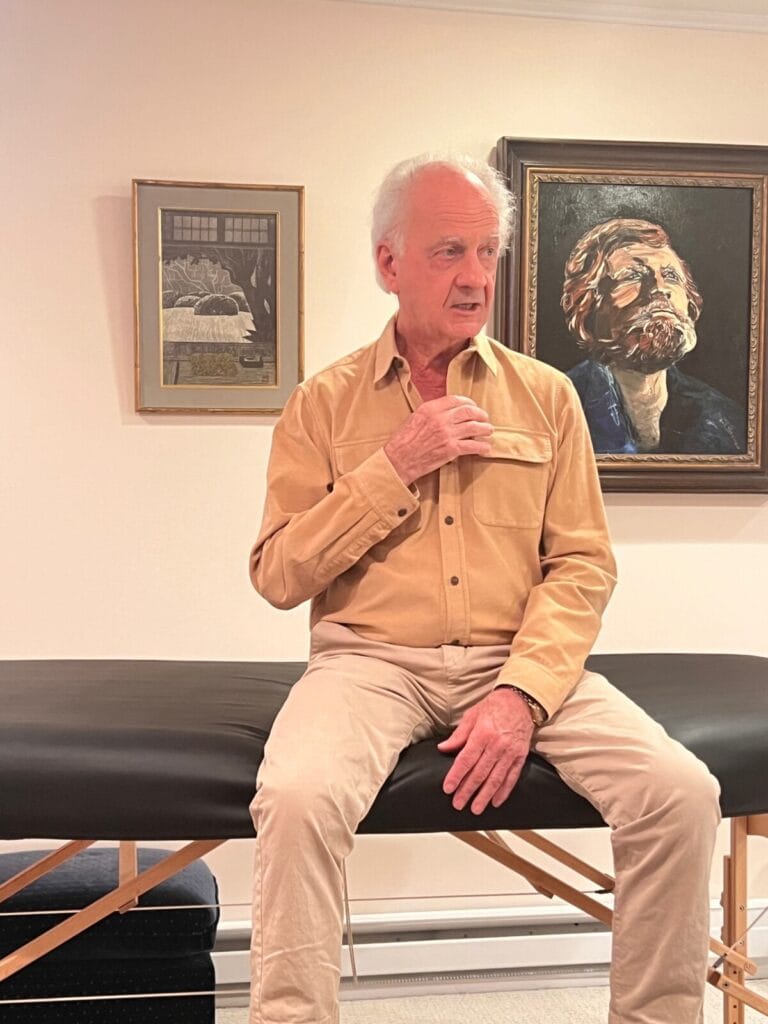
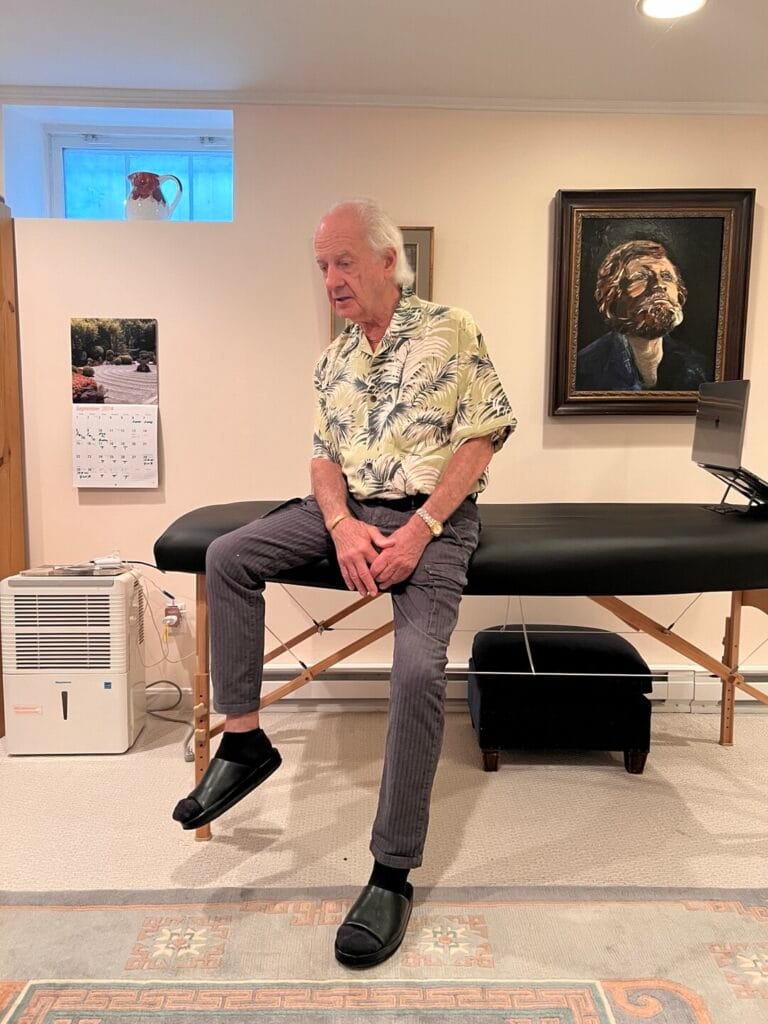
People often come to the Alexander Technique hoping to improve posture, reduce pain, breathe more freely, or move with greater ease. But on May 5, 2026, in Boston, Massachusetts, USA, Tommy Thompson led a class in the Alexander Technique teacher training course that explored something far deeper.
Again and again, Tommy returned to one essential principle: you do not simply apply a teaching onto another person. You listen. You observe. You sense what the person is already revealing through their breathing, muscular response, hesitation, and way of protecting themselves. And from there, you “take the cue.”
Throughout the class, relational attunement emerged as the foundation of the work itself. From hands-on guidance to Whispered “Ah” and discussions of the vagus nerve, the lesson revealed that meaningful change does not happen through force or imposition.
The Alexander Technique is not fundamentally about controlling another person. It is about creating the conditions in which the organism can begin to reorganize naturally.
Key Objectives of the Class:
- To explore how relational attunement transforms teaching in the Alexander Technique.
- To understand why guidance is more powerful than imposition.
- To investigate the relationship between vagal regulation, safety, and coordination.
- To recognize how subtle interruption can restore natural organization and wellness.
This blog series is based on Tommy Thompson’s Alexander Technique classes. Each post follows the flow and insights of the class to expand both self-awareness and practical consciousness applicable to everyday life.
New here?
If you’re new to the Alexander Technique, you can start with the resources below.
Alexander Technique Class Flow at a Glance

1. The Opening Question
❝ Can a person truly change before they feel safe enough to stop protecting themselves? ❞
One of the deepest themes in this class was that coordination cannot be separated from relationship. The nervous system is always responding to the quality of connection surrounding it. When teaching becomes mechanical, people often continue protecting themselves without realizing it. But when there is genuine relational attunement, something begins to soften.
Again and again, Tommy redirected the class away from “doing something to the student” and toward listening more carefully to what the student was already communicating through their breathing, muscular response, and hesitation. The class was not fundamentally about posture or technique. It was about whether the teacher could truly meet the person in front of them.
Tommy’s Word
“So you listen to what they say and how they respond to what you’re suggesting is possible and not possible, or not probable, and you take your cue: ‘What do I say next, based on what they say?’”
Tommy’s words reveal a profoundly different approach to the Alexander Technique. The teacher is not mechanically applying correction. The teacher is listening, sensing, adjusting, and responding moment by moment to the organism in front of them.
This is why relational attunement matters so deeply. Sometimes coordination changes simply because the organism no longer feels it must defend itself.
And when that happens, breathing changes. presence changes. The person begins to respond not from protection, but from a growing sense of safety and possibility.
2. Core Learnings from This Class
Core Concepts
- Relationship changes coordination.
The organism responds differently when a person feels genuinely met rather than corrected. - The teacher must “take the cue.”
In the Alexander Technique, teaching is not mechanically imposed. It continuously adapts to the person in front of you. - Protection shapes habitual behavior.
Many patterns of tension began as forms of self-protection rather than simply “bad posture.” - A soft interruption creates new possibilities.
Subtle guidance can interrupt habitual reactions without force or resistance. - Safety changes responsiveness.
When the organism no longer feels it must defend itself, breathing, tone, and perception begin to reorganize naturally.
Five Key Messages
- Listen before you direct.
- Relational attunement changes the quality of response.
- The organism does not need to be forced into coordination.
- Protection often decreases when safety increases.
- The teacher guides more than controls.
Essential Terms
- Relational Attunement
The ability to sense and respond to another person through presence, listening, timing, touch, and nervous system responsiveness. - Taking the Cue
A central teaching principle in which the teacher responds to what the student is actually revealing moment by moment rather than imposing a fixed method. - Soft Interruption
A subtle interruption of habitual reactions that creates space for new coordination and perception to emerge naturally. - Protection
Habitual tension and behavior patterns that developed as ways of organizing safety and self-preservation. - Guidance Instead of Imposition
Tommy’s approach to teaching, where the teacher guides the organism through relationship and responsiveness rather than mechanically correcting the student.
3. Tommy’s Insights
In Tommy’s words during class, there are not only the core principles of the Alexander Technique, but also practical wisdom that can be applied directly to daily life. His words go beyond simple advice about movement and prompt us to deeply consider how we choose to exist.1. Sometimes the helpful thing when you’re working with the shoulders is to let them know that the direction you’re giving is because the trapezius is designed to do this to support uprightness.
➤ Tommy approaches direction as cooperation with the body’s natural design rather than mechanical correction.
2. When you work with a person, they have little awareness of how they’re using themselves, for the most part. I mean, if you work with a dancer, they’re used to watching themselves do everything in front of a mirror, but they’re not really working necessarily with the habitual patterns of behavior. They usually bring the habitual patterns of behavior to what they watch in the mirror.
➤ The work begins beneath performance — in the unconscious habits shaping self-use.
3. When a person plays music, they rehearse for extended periods of time. During that period — I mean, they really do. Musicians are crazy, and they just rehearse, rehearse, rehearse, rehearse, rehearse. And a dancer will do the same thing. Many people will do that, but they’re not really focusing on using themselves in accord with the way they’re designed to function.
➤ Repetition without awareness often reinforces the very patterns that limit freedom.
4. So you listen to what they say and how they respond to what you’re suggesting is possible and not possible, or not probable, and you take your cue: “What do I say next, based on what they say?”
➤ Teaching emerges through listening, not through imposing predetermined answers.
5. The Alexander Technique itself is a soft interruption. It interrupts what you’re accustomed to, and it enables you to speak, sing, feel, and be from where you are, no matter where you are. Even altering your hand — whatever it may be — an interruption is an interruption. But what the work is truly about, what life can be about, is that you move as you need to move, given what’s going on. You speak. You see all of it well.
➤ Transformation begins through gently interrupting the familiar patterns that organize perception and behavior.
6. What we’re doing is, you’re taking the cue from the relationship that you establish with the person.
If you establish a strong relationship, which is really vagus-nerve-oriented, because it really is very much like Goldilocks — not too hot, not too cold, it’s just right given the circumstance.
When you’re ventral vagal inclined relative to the other aspect of the vagus nerve, the dorsal, it’s not too hot, it’s not too cold, it’s just right for the circumstance.
➤ True teaching arises through relational attunement — a nervous-system-based responsiveness shaped by connection and safety.
7. It’s connecting with the person you’re working with.
➤ For Tommy, the essence of the work is not technique alone, but human connection.
4. Practical Tips for Everyday Life
What’s the Goal?
The goal is not to fix yourself. The goal is to remain connected to yourself and the person in front of you without rushing, tightening, or defending. Through relational attunement, the Alexander Technique becomes part of ordinary life.
How to Practice
During conversation, notice if you begin preparing your response before the other person finishes speaking. Pause briefly and listen with your whole body before responding.
When reaching for your phone, observe whether your neck tightens or your breathing narrows. Allow your head to remain lightly free as your hands move.
In stressful moments, do not immediately try to control yourself. Notice your jaw, shoulders, and breathing, and allow yourself one moment where the organism no longer feels it must defend itself.
What You’ll Notice
You may notice less urgency, easier breathing, and a quieter sense of effort during daily activities. Over time, responses often become less mechanical and more connected, present, and alive.
5. Closing the Class
Key Takeaways
- Relationship changes the quality of coordination.
- The teacher must learn to “take the cue” from the person in front of them.
- Relational attunement allows the organism to respond with less protection and less force.
- The work becomes most effective when guidance replaces imposition.
Core Insights
Tommy’s teaching continually returned to one essential truth: people do not reorganize through control. They reorganize through relationship.
Sometimes change begins simply because a person no longer feels they must defend themselves.
A Final Invitation
As you move through your day, notice how often you try to push yourself or others toward change.
Then pause.
Listen more carefully. Respond a little less quickly. Allow relationship itself to guide the next moment.
And perhaps something in the organism begins to soften naturally.
6. One Key Practice
Before responding to another person, give yourself one quiet moment to listen instead of immediately preparing a reaction.
Let the organism feel that it does not need to defend itself right away.
Then speak from there.
7. Three Questions to Ask Yourself
- Am I truly listening to this person, or only reacting to my own thoughts?
- What happens to my breathing and coordination when I feel safe enough not to defend myself?
- Can I allow relationship to guide my response instead of habit?
8. For Those Who Wish to Learn More
Recommended Books
Touching Presence – Tommy Thompson
This book carries the same living atmosphere as this class. Tommy explores how change emerges not through force or correction, but through presence, relationship, and the ability to truly meet another person.
For readers drawn to relational attunement, the book reflects one of the deepest themes of this class: **the organism changes most naturally when it no longer feels it must defend itself.
Official Website of Tommy Thompson
www.easeofbeing.com
This is the official website personally managed by Tommy Thompson, offering a wide range of resources and programs to deepen your understanding and practice of the Alexander Technique:
- Private session reservations and inquiries
- Workshop and seminar schedules
- Overview of international teacher training programs
- Essays and articles on the Alexander Technique
9. Next Class Sneak Peek
Some patterns seem to happen on their own.
Before a movement begins, before a decision is made, before you are even aware of it, something may already be shaping the way you use yourself.
But what if that moment could be perceived?
Can awareness arrive before habit does?
In Class 112, we’ll explore how habitual patterns shape Use, and how awareness may open the possibility of choice before the pattern takes over.
10. Join the Alexander Technique Journey
Did this class leave a small resonance within you? Feel free to quietly hold it in your heart or share it in just a sentence or two. The comments are always open. Your one simple word may leave a gentle ripple in this ongoing journey.The journey of Resonance Flow continues across social media as well. Let’s continue this journey together.
 YouTube
 Instagram
 Threads
 Facebook