Use: The Alexander Technique Study That Changes How You Live | Tommy Thompson Class 112
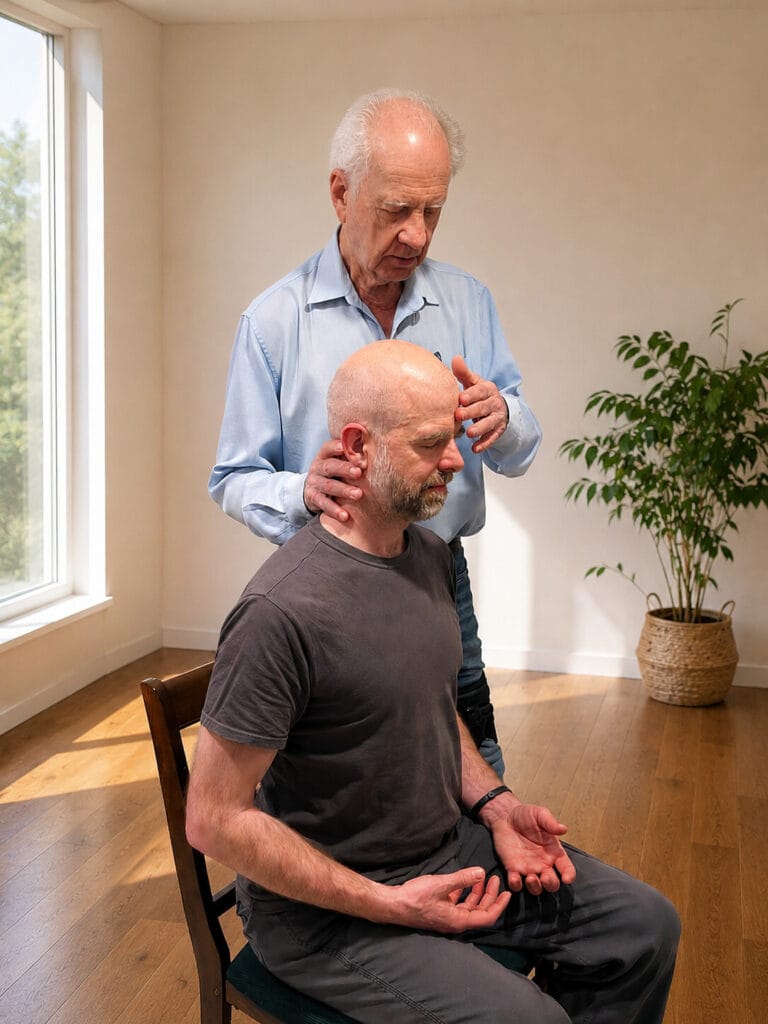
❝ What if the problem isn’t what you’re doing—but the way you’re using yourself while you’re doing it? ❞
Most people try to change their pain, posture, stress, or limitations. But what if these are not the problem itself? What if they are expressions of the way you habitually use yourself?
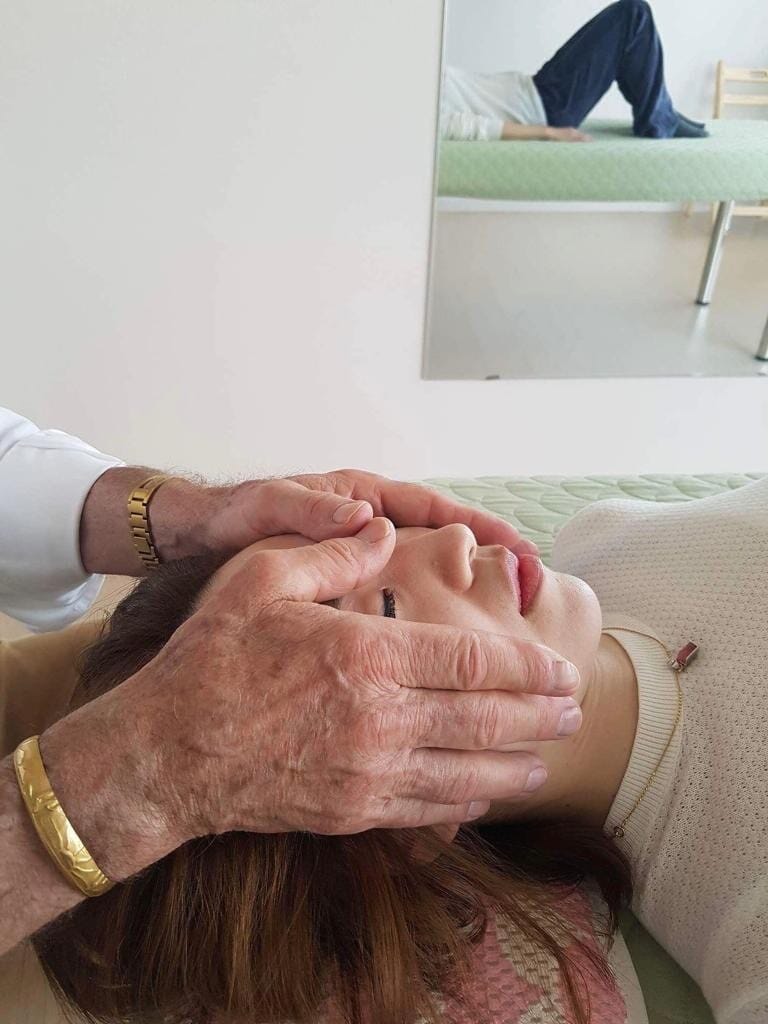
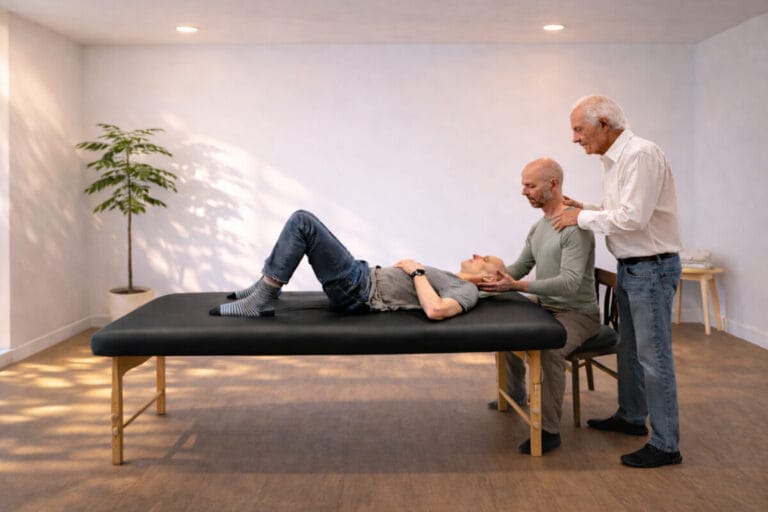
On May 6, 2026, in Boston, Massachusetts, USA, Tommy Thompson led a class in the Alexander Technique teacher training course exploring one of the most fundamental ideas in the work: Use. Rather than focusing on treatment or correction, the class examined how habitual self-use influences the functioning of the whole organism.
Through discussions, chair work, and hands-on exploration, Tommy continually returned to a simple but profound insight:
This is a study of learning how to observe yourself, understand yourself, and change yourself in the midst of living.
As the class unfolded, one question quietly sat beneath every demonstration and experience:
How do I use myself, observe my own use, and change my use in the midst of my use?
Key Objectives of the Class:
- Explore how habitual Use affects the integrity of the whole organism.
- Understand why the Alexander Technique is a study rather than a medical treatment model.
- Develop the kinesthetic sense of perception to recognize unnecessary patterns.
- Discover how listening, non-interference, and the head–neck relationship influence everyday functioning.
This blog series is based on Tommy Thompson’s Alexander Technique classes. Each post follows the flow and insights of the class to expand both self-awareness and practical consciousness applicable to everyday life.
New here?
If you’re new to the Alexander Technique, you can start with the resources below.
Alexander Technique Class Flow at a Glance
1. The Opening Question
❝ How do you change yourself in the midst of living? ❞
Most of us try to change our lives by changing what we do. We pursue better habits, better techniques, better treatments, and better outcomes. Yet the Alexander Technique begins with a different question: What if lasting change depends not on what you do, but on how you use yourself while doing it?
This question sat at the heart of the class. Through discussions of Use, kinesthetic perception, chair work, and hands-on guidance, Tommy invited students to look beyond results and study the patterns that accompany everyday activity. Whether drinking a glass of water, sitting in a chair, standing up, or placing hands on another person, the same inquiry remained: How am I using myself right now?
Rather than offering a method of correction, the Alexander Technique offers a study of awareness in action. It asks us to observe ourselves in the midst of living, recognize habitual patterns, and discover new possibilities for choice, coordination, and freedom.
Tommy’s Word
“This is guiding you into: How do I use myself, observe my own use, and change my use in the midst of my use? So this is a study.”
This statement captures the essence of the class. The work is not about fixing ourselves. It is about learning to observe, understand, and refine our use while participating in life itself. Through that process, change becomes something discovered rather than imposed.
2. Core Learnings from This Class
Core Concepts
- Use shapes the integrity of the whole organism. The way we habitually use ourselves influences our movement, perception, coordination, and overall functioning. Understanding and changing our use is the foundation of this work.
- The Alexander Technique is a study, not a treatment. Rather than fixing symptoms, it guides us into observing ourselves, understanding our patterns, and changing ourselves in the midst of living.
- The head–neck relationship influences the whole self. The relationship of the head to the rest of the organism plays a central role in how movement, balance, and coordination are organized.
- Kinesthetic sense of perception reveals unnecessary patterns. As our kinesthetic sense becomes more refined, we begin to recognize habits that previously operated outside conscious awareness.
- Listening is the foundation of hands-on work. Genuine hands-on guidance begins with listening to movement rather than attempting to manipulate or correct it.
Five Key Messages
- How you use yourself affects how you experience life.
- Awareness is the beginning of change.
- The goal is understanding, not correction.
- Listening reveals what force cannot.
- Freedom emerges when unnecessary habits are no longer reinforced.
Essential Terms
Use
The way you habitually organize yourself in thought, movement, and action. For Tommy, Use is the central subject of study because habitual use affects the integrity of the whole organism.
Study
An ongoing exploration of how to observe yourself, understand yourself, and change yourself while living your life. In the Alexander Technique, learning is more important than treatment.
Kinesthetic Sense of Perception
The ability to sense how you are using yourself. As this sense becomes more refined, previously unconscious patterns become available to awareness and choice.
Head–Neck Relationship
The primary relationship through which the organism organizes movement. Changes here influence the functioning of the whole neuromuscular, skeletal, and fascial system.
Listening
A way of attending rather than doing. For Tommy, hands-on work begins with listening deeply to movement instead of trying to make something happen.
3. Tommy’s Insights
In Tommy’s words during class, there are not only the core principles of the Alexander Technique, but also practical wisdom that can be applied directly to daily life. His words go beyond simple advice about movement and prompt us to deeply consider how we choose to exist.“We’re focusing on use—how the way that you use yourself habitually affects the integrity of the organism.”
➤ Habitual use shapes the functioning, adaptability, and integrity of the whole organism.
“Basically, the simplest explanation is: osteopathy is medical; we are focused on use. And then as you develop in this work, you become more energetic in class, so you can sense a person’s movement before they’re aware they’re moving.”
➤ This work is not primarily medical; it is an exploration of conscious use and perception.
“This is guiding you into: How do I use myself, observe my own use, and change my use in the midst of my use? So this is a study. And much of that study involves the relationship of your head relative to the rest of the organism, because that’s how he discovered how his own head relationship affected his voice. So he created a technique.”
➤ Alexander Technique is a study of observing and changing yourself while living your life.
“It was a demonstration of how the relationship of your head relative to the rest of your organism affects all movement throughout your body. It was more about movement. It wasn’t focusing on spinal function, even though it was—because you can’t change the relationship of the top two vertebrae without affecting the totality of the spine.”
➤ The head–neck relationship serves as an organizing influence for the whole self.
“So the chair was a demonstration of how you use your kinesthetic sense of perception to identify a pattern of behavior that you don’t need, in order to accomplish sitting and standing. And then that carries into all the activities of your life.”
➤ Chair work reveals unnecessary patterns and refines kinesthetic perception.
“I said, ‘Just put your hands on a person and feel the person move. Start listening—really listening—feel this. Listen deeply.’ And it worked so well.”
➤ Real hands-on work begins with listening to movement rather than trying to change it.
“I’m giving you an experience which you can give yourself, but having somebody else do it does heighten the experience of what it’s like not to interfere with head–neck reflexes, which are designed to affect the totality of the neuromuscular, skeletal, and fascial system.”
➤ The goal is not dependence on the teacher, but discovering an experience you can cultivate for yourself.
“To free the neck doesn’t mean you do something—you let it be free to move as it is moving.”
➤ Freedom emerges through non-interference, not through doing.
4. Practical Tips for Everyday Life
What’s the Goal?
The goal is not to improve yourself. The goal is to become aware of how you are using yourself while living your life.
Throughout the class, Tommy returned to the study of Use. Whether drinking water, sitting in a chair, standing up, or placing hands on another person, the invitation remained the same: begin noticing how you are participating in each activity.
The quality of your life is deeply influenced by the quality of your use.
How to Practice
1. Pause Before the Goal
Before sitting, standing, speaking, or reaching, pause for a moment. Notice whether your attention has already rushed ahead to the result.
Ask yourself:
How am I using myself right now?
2. Notice the Pattern
As you move, become curious. Do you pull down, tighten, rush, or abandon yourself in order to achieve the goal?
Don’t try to fix anything. Simply notice the pattern that accompanies the action.
3. Begin Again
When you notice an unnecessary pattern, don’t treat it as a mistake. Pause, allow a moment of fresh attention, and begin again.
Learning happens not because you perform perfectly, but because you become aware of what you are doing.
What You’ll Notice
Over time, ordinary activities begin to feel different. You may notice less effort, greater ease, and a clearer connection between awareness and action.
Real change begins when you learn to observe yourself in the midst of living.
What starts as a study of Use can gradually become a different way of participating in your entire life.
5. Closing the Class
Key Takeaways
- Use influences the integrity of the whole organism.
- The Alexander Technique is a learning process rather than a system of treatment.
- The head–neck relationship plays a central role in how we organize movement and coordination.
- Greater freedom becomes possible when we stop reinforcing unnecessary patterns.
Core Insights
The work is not about changing what you do. It is about changing how you use yourself while doing it.
Throughout the class, Tommy returned to a simple but profound idea: meaningful change begins when we become aware of our Use. Rather than forcing change, we learn to observe ourselves, recognize habitual responses, and discover new possibilities within ordinary activity.
In this sense, the Alexander Technique is not a method of correction. It is a study of how to observe yourself, understand yourself, and change yourself in the midst of living.
A Final Invitation
You do not need a special exercise. You do not need a special moment.
Life itself provides the study.
Every time you sit, stand, reach, speak, touch, or move, you are presented with the same opportunity:
How am I using myself right now?
Not to judge. Not to correct. Simply to notice.
The Alexander Technique begins with that question. And perhaps it never really leaves it.
6. One Key Practice
Choose one ordinary activity today. It might be sitting in a chair, standing up, reaching for a glass of water, or opening a door. Before you begin, pause for a moment and ask:
How am I using myself right now?
Don’t try to change anything or improve anything. Simply notice. Notice where your attention goes. Notice any rushing, tightening, pulling down, or effort that may not be necessary.
Then continue the activity while remaining curious. For a few seconds, allow the activity itself to become a study of Use.
The activity does not need to change. Your awareness of it does.
7. Three Questions to Ask Yourself
- How am I using myself right now? Not what am I doing, but how am I using myself while doing it?
- What pattern is preceding and accompanying this movement? Am I rushing, tightening, pulling down, or responding from habit?
- Can I observe my use without immediately trying to change it? Can I study what is happening before deciding what should happen next?
8. For Those Who Wish to Learn More
Recommended Books
Freedom to Change – Frank Pierce Jones
Few books reflect the spirit of this class more closely than Freedom to Change. Drawing from both scientific research and Alexander Technique practice, Frank Pierce Jones explores how habitual patterns shape the way we use ourselves and how genuine change becomes possible through awareness rather than force.
Like Tommy’s teaching, the book is not centered on correction or treatment. Instead, it explores a deeper question: how can we observe ourselves, understand our patterns, and develop greater freedom in the midst of living? In that sense, it is a powerful companion to the study of Use explored throughout this class.
Official Website of Tommy Thompson
www.easeofbeing.com
This is the official website personally managed by Tommy Thompson, offering a wide range of resources and programs to deepen your understanding and practice of the Alexander Technique:
- Private session reservations and inquiries
- Workshop and seminar schedules
- Overview of international teacher training programs
- Essays and articles on the Alexander Technique
9. Next Class Sneak Peek
We often assume that helping another person means entering their experience. But what if that very impulse causes us to lose the thing that matters most?
The next class explores a question that sits at the heart of teaching, relationship, and human connection: How do we remain fully ourselves while meeting another person?
In Class 113, we’ll explore: Dialogue—not as conversation, but as the art of meeting another person without losing yourself.
10. Join the Alexander Technique Journey
Did this class leave a small resonance within you? Feel free to quietly hold it in your heart or share it in just a sentence or two. The comments are always open. Your one simple word may leave a gentle ripple in this ongoing journey.The journey of Resonance Flow continues across social media as well. Let’s continue this journey together.
 YouTube
 Instagram
 Threads
 Facebook