Into the Tissue: The Missing Link in the Alexander Technique No One Talks About | Tommy Thompson Class 105
❝ What if going into the tissue in the Alexander Technique is not something you do, but something that only happens when you stop interfering? ❞
What if the change you have been trying to create in your body has never responded to effort? What if the moment you try to fix yourself is the very moment you interfere?
In the Alexander Technique, nothing begins with doing. It begins with stopping.
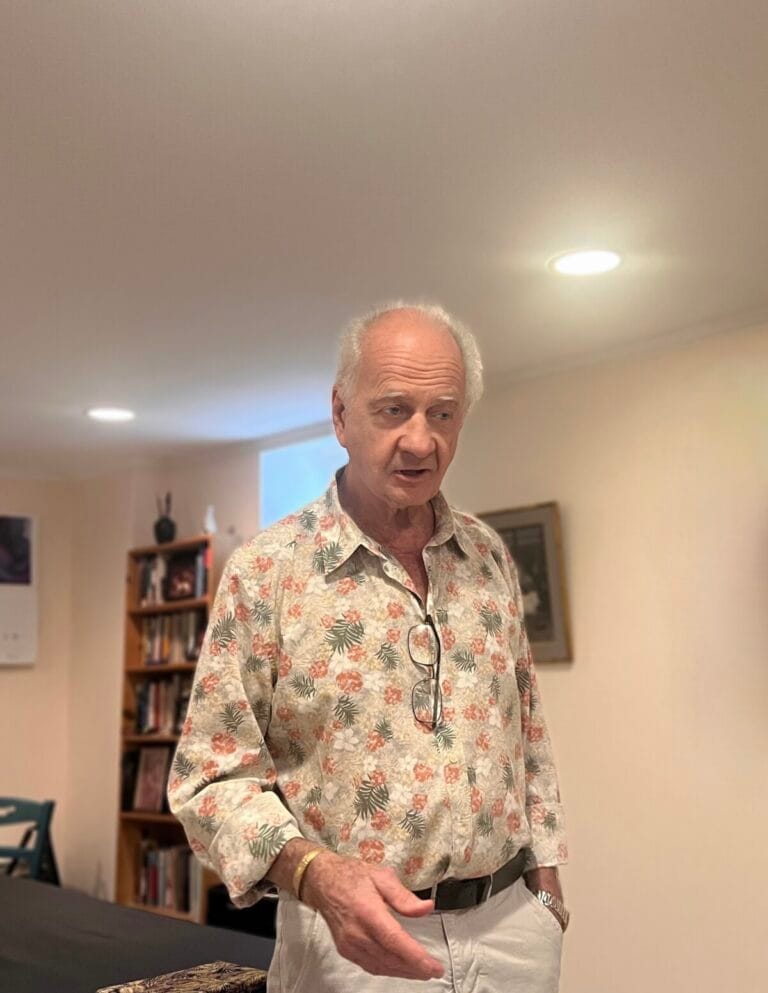
On December 18, 2025, in Boston, Massachusetts, USA, Tommy Thompson led a class in the Alexander Technique teacher training course where this was not explained, but experienced through contact.
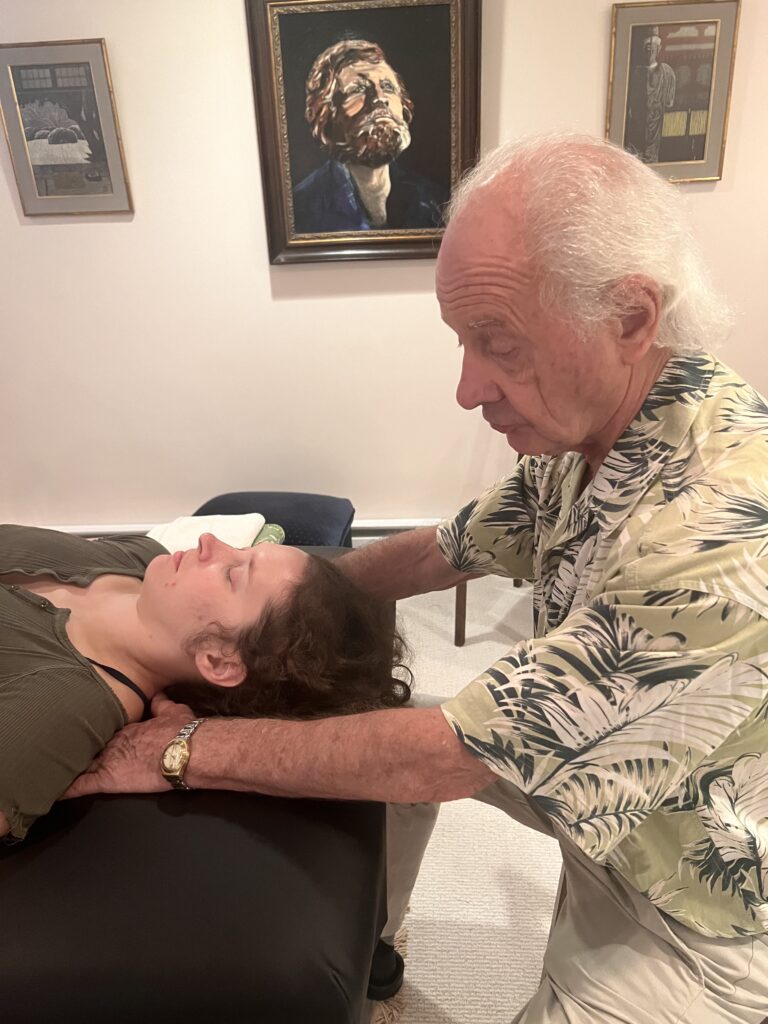
A hand is placed. At first, nothing seems to happen. But the work is not about making something happen. It is about going into the tissue.
The moment you stop trying to change the body is the moment the body begins to change.
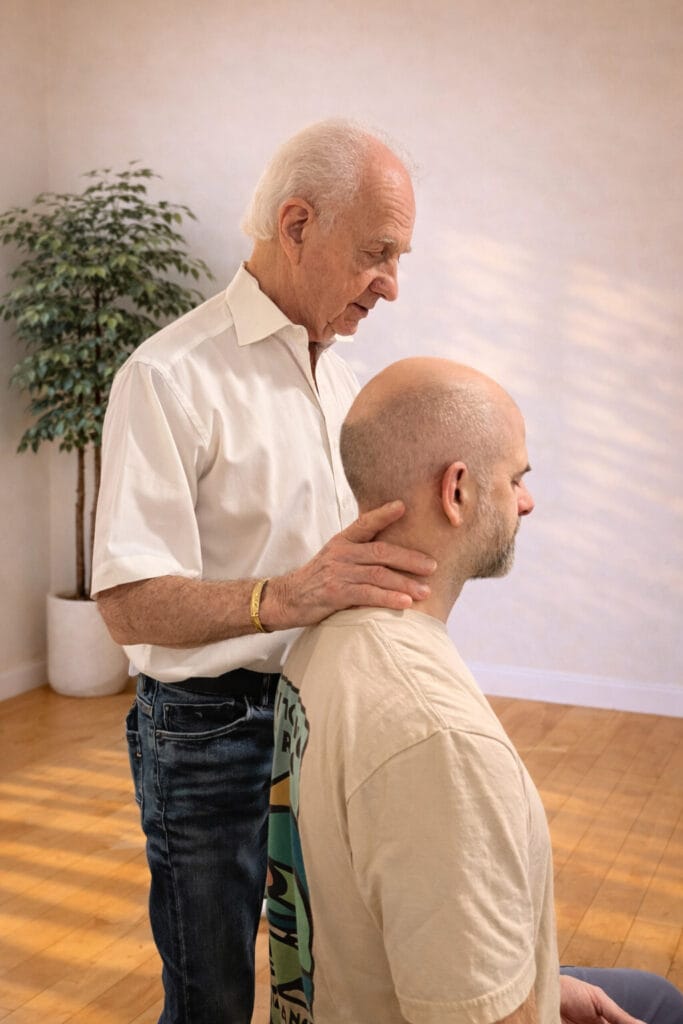
This is not pushing or pressing, but listening. The hands meet the organism, and in that meeting, the tissue begins to lengthen. Not because it is forced, but because it is allowed to respond.
Into the tissue becomes a threshold where nothing is imposed, yet the whole system begins to reorganize. Inspansion deepens, and expansion follows as part of one unified process.
Here, the hands are not doing. They are listening. And in that listening, the organism begins to respond.
Key Objectives of the Class:
- To understand what it means to go into the tissue without force
- To experience how listening contact allows lengthening to emerge
- To recognize the role of the nape (C5–C7) in coordination
- To explore how inspansion and expansion arise as one process
This blog series is based on Tommy Thompson’s Alexander Technique classes. Each post follows the flow and insights of the class to expand both self-awareness and practical consciousness applicable to everyday life.
New here?
If you’re new to the Alexander Technique, you can start with the resources below.
Alexander Technique Class Flow at a Glance
1. The Opening Question
❝ If your hands are already on the body, why does nothing change in the Alexander Technique? ❞
Most people assume that once they make contact, something should happen. They are touching, applying pressure, doing what seems correct, and yet nothing changes. The real question is not whether you are touching, but whether you are actually meeting the organism.
If the body is not met, it does not respond.
In the Alexander Technique, contact without listening is simply pressure, and pressure alone does not invite change. What matters is the quality of attention within the contact. This is where going into the tissue becomes precise. It is not about how deeply you press, but whether you can enter into a relationship in which the body is able to respond.
The organism does not respond to force; it responds to relationship. When that relationship is absent, the system organizes around its existing pattern of use, reinforcing the very habit you are trying to change. This is why Into the Tissue is not a technique, but a moment of meeting, where nothing is imposed and yet something begins to reorganize.
Tommy’s Word
“I have my hand here. I’m not doing anything but listening to how you’re using yourself—that’s it. But as I listen, I know that it can be different. Once I know that, my hand starts moving.”
“I’m not doing anything but listening.”
This is the essence of the work. In the Alexander Technique, the hand does not initiate change; it follows recognition. The practitioner is not trying to fix or impose, but is listening to the consequences of use. From that listening, a different possibility becomes clear, and when that possibility is recognized, the system begins to reorganize from within.
2. Core Learnings from This Class
Core Concepts
- Going into the tissue is not an action of force, but an entry through listening contact. The change does not come from what the hands do, but from how the organism is met.
- The primary restriction often begins at the nape (C5–C7), where habitual contraction organizes the entire pattern of use. When this area is freed, lengthening is not local but global.
- The direction is not up and down, but in and out. What appears as rising is a consequence of entering the tissue and allowing length to emerge.
- The practitioner does not impose change, but recognizes possibility. From that recognition, the hands move, and the system reorganizes from within.
- Inspansion leads to expansion. Depth of contact invites a whole-body response, where lengthening and support arise as one process.
Five Key Messages
- Change does not come from doing more, but from interfering less.
- Contact is only meaningful when it includes listening.
- The body reorganizes when it is met, not when it is corrected.
- Direction is experienced as in and out, not controlled as up and down.
- What you recognize in the organism determines what becomes possible.
Essential Terms
- Into the Tissue
Not a technique, but a moment of meeting. It is the process of entering the organism through listening contact, where nothing is imposed and the tissue is allowed to respond. - Inspansion
A deepening into the tissue that cannot be forced. It emerges as the practitioner listens and enters just enough, allowing the organism to begin reorganizing from within. - Expansion
The natural consequence of inspansion. As the system is met and allowed, length and support emerge without effort. - Nape (C5–C7)
A primary area of habitual contraction that organizes the whole pattern of use. When this area is freed, the entire system begins to change. - Listening (through the hands)
The core of the work. The hands are not doing, but perceiving. Change begins when the practitioner recognizes what is happening, not when they try to make something happen.
3. Tommy’s Insights
In Tommy’s words during class, there are not only the core principles of the Alexander Technique, but also practical wisdom that can be applied directly to daily life. His words go beyond simple advice about movement and prompt us to deeply consider how we choose to exist.You’ve got an opportunity to accomplish what you wish to accomplish, but not at your expense. You can accomplish what you wish to accomplish and use it to train yourself. You stop, you work with yourself, then you go back to work. That’s why I stop you over and over and over—and there we are.
→ Action becomes training for self-use when it is not done at the expense of coordination.
The direction is this: I’m going into your tissue and causing your tissue to lengthen. When it lengthens, you come up and you go in at the same time. You’re going up and you’re going in—there’s no down; there’s in and out. There is no actual down. You’re just going in and out. Even though we use “up” and “down,” we are really going into the Earth—away from the Earth. We are always going.
→ Direction is an ongoing movement of going into and coming out, not a fixed vertical action.
I have my hand here. I’m not doing anything but listening to how you’re using yourself—that’s it. But as I listen to how you’re using yourself, I know that it can be different. Once I know that it can be different, my hand starts moving because it has been doing it for so long.
→ Skilled touch is guided by listening, where change emerges from recognition rather than imposition.
As I feel—as I give just enough pressure to introduce myself to the tissue—and the tissue responds by lengthening, as I feel it lengthening, I add more pressure. It’s minute pressure. I add more pressure, and I go into the muscle tissue more deeply. That’s an inspansion, even though the word doesn’t exist. The movement deeper within the tissue is neither up nor down. It’s into the tissue, in an area of muscle—the trapezius and sternocleidomastoid—that’s designed to take you up this way.
→ Pressure follows the response of the tissue, not the intention of the hand.
It’s so silly what we’re doing—and it’s beautiful what we’re doing—but it really is like knocking on the door, seeing whether or not they’re going to let you in. And then they open the door. You look at each other, and they let you in. Then you step onto the threshold—that level alone—and you add a little bit of pressure. But you know that the reason you’re adding it is to take the person this way. There’s no up or down—there’s in and out. But there really is—and yet we live our lives using the words “up” and “down.” But really, it’s about going in to come out of your habit.
→ Change occurs at the threshold of permission, where entering reorganizes habitual use from within.
You first make contact—you make contact. And when you make contact, this needs to be much freer through here. Over the years, you make just enough contact to cause the muscle tissue—if you anthropomorphize it—to open the door. The muscle tissue will begin to lengthen. As it begins to lengthen, you give a little bit more pressure—but in the way it’s designed to function. So all of this is designed to do this.
→ Functional contact allows lengthening to emerge in accordance with the body’s design rather than force.
It’s me knocking on your front door—you opening the door. If you open the door, I feel a little length—and then I step onto the sill at that liminal moment, and I go a little bit deeper. And then I feel you respond—or I don’t. But if I feel you respond, I stay there, because I know that if I stay there, there will be an inspansion throughout your entire musculature, and that will allow the head to move away from the body—Alexander’s “forward and up” right there.
→ The liminal moment sustains a global response, allowing primary coordination to reassert itself.
You want your hands to belong to your back, so they’re going to do that if your wrists go in toward each other, the elbows go out and down, creating the space through here, and it goes into the back of your head.
→ When the hands are organized from the back, the whole self participates in coordinated direction.
4. Practical Tips for Everyday Life
What’s the Goal?
The goal is not to fix yourself, but to stop interfering with how you are using yourself. In the Alexander Technique, change begins the moment you recognize what you are doing and allow it to be different.
You are not trying to change your body; you are learning to stop disturbing it.
How to Practice
- Before any movement
Pause for a moment. Do not rush into action. Let the movement remain undefined, even briefly, then move. - When you use your hands
Instead of pressing, let your hands make light contact and notice what you feel. Allow the contact to become listening, not effort. - When you feel tension
Do not try to release it. Especially around the nape (C5–C7), stop and notice how you are using yourself. Let the tension change, rather than forcing it to change.
What You’ll Notice
Movement becomes easier, yet more supported. You begin to feel that change is not something you do, but something that happens when you stop interfering. This is where the work extends into your everyday sense of wellness.
5. Closing the Class
Key Takeaways
- Change does not come from force, but from how you meet yourself in action.
- The body reorganizes when it is allowed, not when it is corrected.
- Going into the tissue is not something you do, but something that happens when interference stops.
Core Insights
The work is not about technique, but about relationship. What matters is not how you use your hands, but how you are using yourself as you make contact. When the practitioner stops trying to make something happen and begins to listen, the organism responds in a way that cannot be produced through effort.
Change begins the moment you stop interfering.
Even the smallest contact can lead to a whole-body response, not because of what is done, but because of how it is allowed.
A Final Invitation
Take this into your day. Not as something to do, but as something to notice.
Before you act, pause. Before you fix, recognize. Before you try to change, see if you can remain with yourself as you are.
Stay there, even briefly.
And see what begins to change.
6. One Key Practice
Today, choose one simple moment in your day. When you are about to stand up, reach for your phone, or move your hand, stop. Do not adjust or prepare, and do not try to do it well.
Do not move. Just stay there for a moment.
Notice the impulse to act and allow it to be there without immediately following it. Then let the movement happen and observe whether anything feels different.
7. Three Questions to Ask Yourself
- Right before I move, can I stop, even briefly, instead of rushing into action?
- When I make contact, am I trying to change something, or can I simply listen?
- Can I stay with myself in this moment without trying to fix anything?
8. For Those Who Wish to Learn More
Recommended Books
Freedom to Change – Frank Pierce Jones
This book shows that change in the Alexander Technique begins through awareness, not effort.
Change begins when you recognize what you are doing, not when you try to fix it.
This is the same principle behind going Into the Tissue, where nothing is imposed and the organism is allowed to respond.
Fascia: What It Is and Why It Matters – David Lesondak
This book explains the body as an interconnected system, where small, precise contact can lead to a whole-body response.
The body responds as a whole when it is met, not when it is forced.
This helps clarify what is experienced as Into the Tissue, where contact becomes relational rather than mechanical.
Official Website of Tommy Thompson
www.easeofbeing.com
This is the official website personally managed by Tommy Thompson, offering a wide range of resources and programs to deepen your understanding and practice of the Alexander Technique:
- Private session reservations and inquiries
- Workshop and seminar schedules
- Overview of international teacher training programs
- Essays and articles on the Alexander Technique
9. Next Class Sneak Peek
What if the moment before you move is where everything begins?
In the next class, we look directly at this moment as something you can notice. What you experience as movement may already be the result of something happening beneath awareness.
This is where Inspansion becomes essential—not something you do, but a direction inward, where the organism reorganizes itself. As this deepens, expansion is no longer something you try to create, but something that reveals itself.
In Class 106, we explore how to recognize this moment and how not to interfere with it.
10. Join the Alexander Technique Journey
Did this class leave a small resonance within you? Feel free to quietly hold it in your heart or share it in just a sentence or two. The comments are always open. Your one simple word may leave a gentle ripple in this ongoing journey.The journey of Resonance Flow continues across social media as well. Let’s continue this journey together.
 YouTube
 Instagram
 Threads
 Facebook