Personal Narrative: Why Your Body Keeps Returning to the Same Pattern | Tommy Thompson Class 85
❝ What if the real obstacle to change is not the body, but the story you’ve been living inside without noticing? ❞
In the Alexander Technique, change is often mistaken for better posture or clearer movement. In this class, Tommy Thompson redirects attention earlier—before habits, before explanation, before the urge to fix—toward where experience itself begins to organize.
Working with children makes this visible. A child looks down without collapse, moves without commentary, and responds without instruction—not because of better technique, but because there is not yet a story telling the body how it should behave.
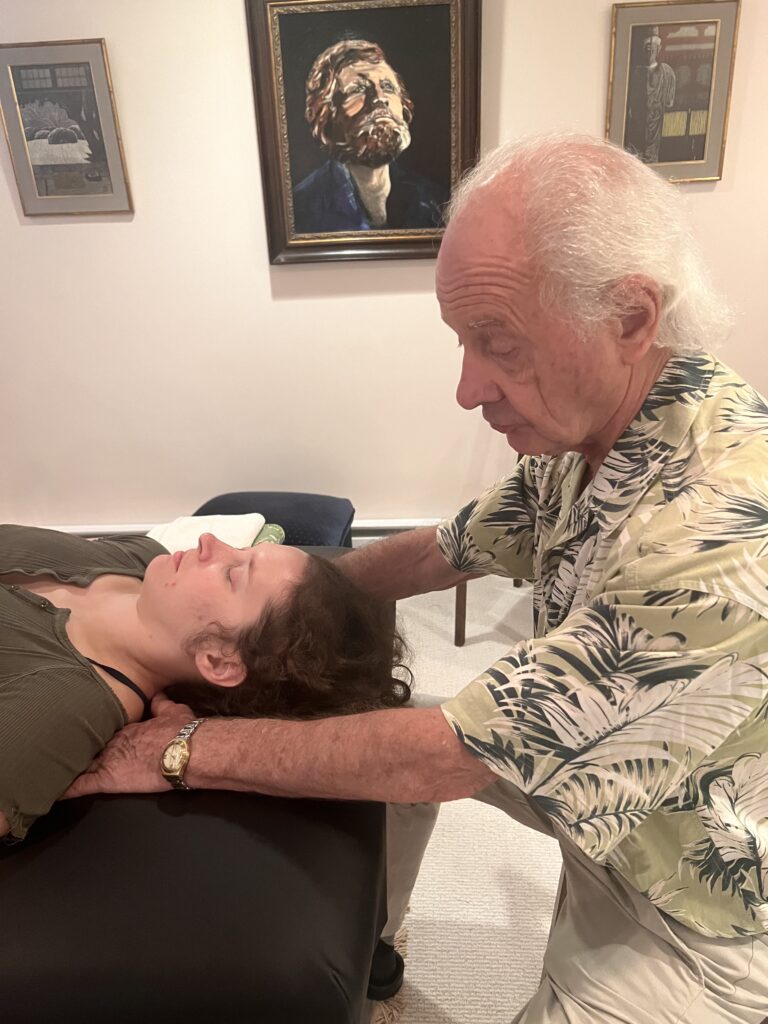
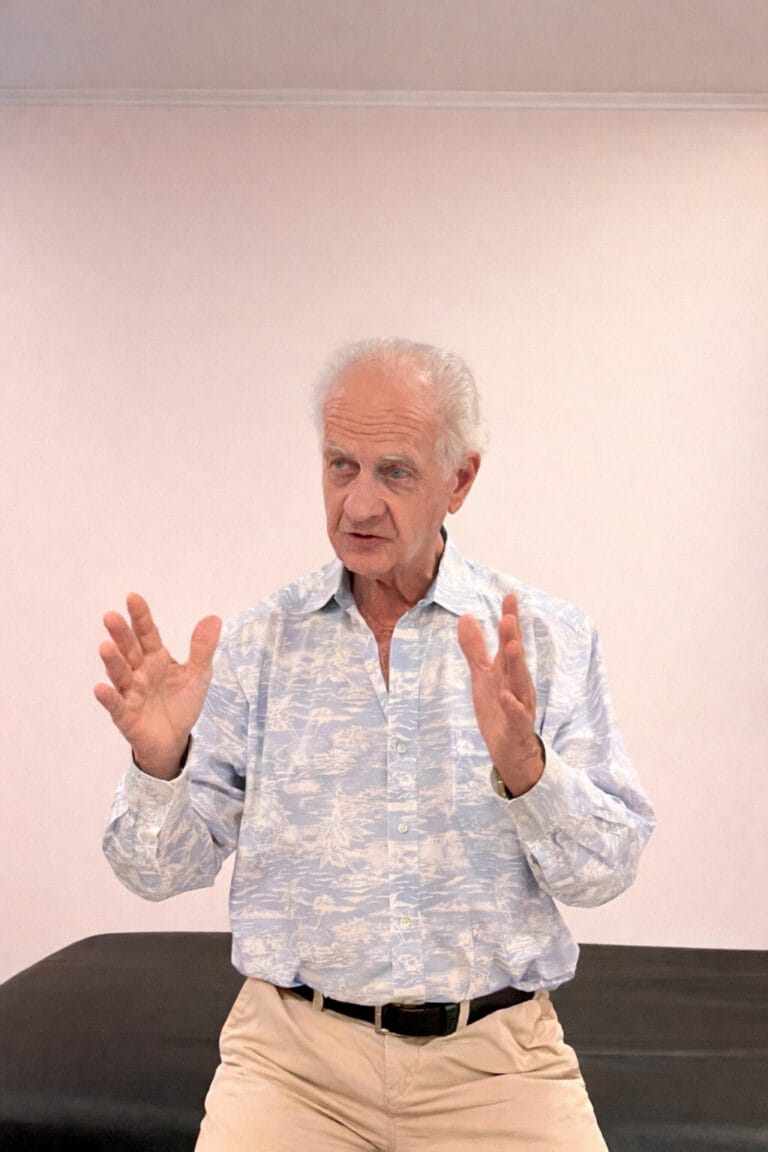
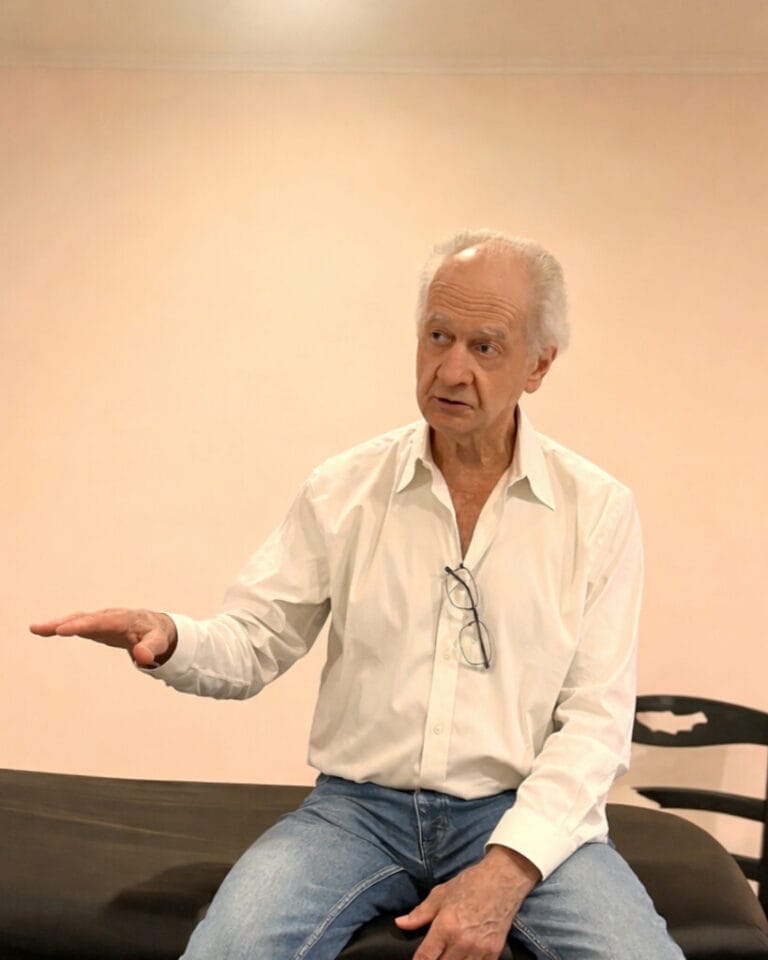
On October 23, 2025, in Boston, Massachusetts, USA, Tommy Thompson led an Alexander Technique teacher training class centered on demonstration rather than instruction. Instead of stating where someone should be, he introduces something subtle enough to be lived. In doing so, the work engages Personal Narrative alongside use, allowing perception to shift without resistance.
Change does not come from correction, but from an experience that quietly reorganizes how one understands oneself in action.
Key Objectives of the Class:
- To understand change as the result of demonstration, not correction
- To explore how personal narrative shapes perception and use
- To experience expansion and inspansion as one integrated event
This blog series is based on Tommy Thompson’s Alexander Technique classes. Each post follows the flow and insights of the class to expand both self-awareness and practical consciousness applicable to everyday life.
New here?
If you’re new to the Alexander Technique, you can start with the resources below.
Alexander Technique Class Flow at a Glance

1. The Opening Question
❝ What happens when change is invited, rather than instructed? ❞
This question frames the entire class. Instead of focusing on how to correct posture or refine technique, the work turns toward how experience reorganizes itself when personal narrative is gently touched rather than confronted. The emphasis is not on telling the body what to do, but on creating conditions where perception can shift on its own.
Tommy’s Word
“You’re working with the child’s personal narrative in addition to the use. And I think that’s really important indeed. I think you can touch the personal narrative by introducing something, rather than flat out saying, ‘This is a statement of where you should be.’”
What Tommy Thompson points to is a fundamental shift in teaching. Instruction assumes compliance; demonstration invites discovery. By introducing an experience rather than a directive, the work reaches beneath habit and explanation, allowing coordination to reorganize without resistance.
Change begins when the story shaping action loosens—just enough for something new to be experienced.
2. Core Learnings from This Class

Core Concepts
- Before patterns appear
Children reveal coordination prior to habit. This pre-pattern state shows how looking, moving, and responding can occur without collapse or commentary—offering a clear reference point for the work. - Personal narrative alongside use
Use is not addressed in isolation. When personal narrative is included, perception can shift without resistance, allowing coordination to reorganize naturally. - Demonstration over instruction
The work does not aim to correct or direct. It introduces an experience precise enough to be felt, not obeyed—leaving something that endures. - Expansion and inspansion as one event
These are not alternating techniques. Held simultaneously, they invite a release of control so the whole system can reorganize as a single event. - Movement as translation
Movement is not local. It translates through the entire body, carrying perception with it—hand, torso, head—moment by moment.
Five Key Messages
- Don’t tell the body what to do—introduce an experience and let it respond.
- What changes you is not the action, but what you experience while it’s happening.
- When control drops, coordination doesn’t collapse—it reorganizes.
- What remains is not instruction, but what the organism remembers.
- The work begins before habit, before explanation, before you decide what it is.
Essential Terms
- Personal Narrative
The implicit story through which experience, perception, and response are organized. In this work, personal narrative is not corrected or challenged, but gently touched, allowing change to emerge without resistance.
- Use
The manner of employing oneself in activity. Use is not addressed in isolation, but understood in relation to personal narrative, perception, and context.
- Demonstration
The act of revealing possibility through lived experience rather than instruction. Demonstration leaves something that can be remembered and integrated, without requiring explanation or compliance.
- Expansion / Inspansion
Simultaneous outward opening and inward availability occurring as a single event. When held together, expansion and inspansion invite a release of control, allowing the whole system to reorganize naturally.
- Translation
The way movement and perception carry through the entire organism as one coordinated event, rather than remaining local or mechanical. Translation reflects how change is distributed through the whole body.
3. Tommy’s Insights
In Tommy’s words during class, there are not only the core principles of the Alexander Technique, but also practical wisdom that can be applied directly to daily life. His words go beyond simple advice about movement and prompt us to deeply consider how we choose to exist.You’re working with the child’s personal narrative in addition to the use. And I think that’s really important indeed. I think you can touch the personal narrative by introducing something, rather than flat out saying, “This is a statement of where you should be.”
➤ The work engages perception at the level where experience is organized, allowing use to change without confrontation or compliance.
I don’t think that little child would have remembered much, if anything, if I had taken the child in and out of a chair—maybe, maybe not. But that’s not the point. No, the point is not to connect with a chair. Work is a demonstration.
➤ What leaves a lasting imprint is not a mechanical action, but an experience that quietly reshapes understanding.
We’re going to be working with expansion and the whole event, and we’re going to be working with inspansion. And we’re working with both of them together, at the same time—so there’s expansion while there’s inspansion. That’s giving up entirely.
➤ When outward opening and inward availability are held simultaneously, control is relinquished and coordination reorganizes as one event.
When the child plays with their cars and their things while their mother is having a lesson, the child is down like this—down like that—looking okay, because the child has yet to acquire patterns of behavior like we all have.
➤ Before habit and narrative solidify, the organism demonstrates a natural capacity for ease, adaptability, and non-collapsing coordination.
4. Practical Tips for Everyday Life
What’s the Goal?
The aim is not to fix posture or control movement, but to create conditions where experience can reorganize itself. When personal narrative is lightly touched rather than corrected, coordination changes without effort.
How to Practice
While sitting or standing
Notice the impulse to adjust or fix. Instead of acting on it, pause. Introduce a small allowance—letting the head orient without deciding where it should be. Avoid correcting; allow perception to lead.
While looking down (reading, washing dishes)
Let the eyes move downward without collapsing the torso. Refrain from telling yourself how to hold your neck or back. Simply notice whether the movement can distribute through the whole body, rather than staying local.
During everyday tasks
When you catch yourself trying to “do it right,” soften that intention. Introduce a moment of curiosity instead of instruction, and notice how use reorganizes as effort drops away.
What You’ll Notice
Less urgency to fix yourself, more clarity without strain. Movements feel quieter and more distributed, transitions smoother, and attention more inclusive. Change shows up not as a new technique, but as greater ease that carries into everything you do.
5. Closing the Class
Key Takeaways
- Change does not need to be imposed; it can be invited through experience.
- Working with personal narrative alongside use allows coordination to reorganize without resistance.
- What endures is not what is explained or corrected, but what is lived.
- Expansion and inspansion function together as one event, not as separate techniques.
Core Insights
This class reframes teaching in the Alexander Technique. Instead of directing outcomes, the teacher creates conditions where perception can shift and the organism can respond intelligently. Demonstration replaces instruction, and experience becomes the agent of change. When control softens, coordination does not collapse—it finds its own order.
A Final Invitation
Tommy Thompson does not ask you to remember positions or rules. He invites you to notice where story enters experience—and to let that story loosen. Bring this approach into how you sit, how you look down, how you move through ordinary moments. Let experience do the work, and see what remains when you stop trying to make change happen.
6. One Key Practice
Choose one ordinary moment today—sitting, standing, or looking down—and let it be your practice.
Pause before you adjust. Introduce a small allowance instead of an instruction. Notice what reorganizes when effort drops.
Ten seconds is enough for experience to speak.
Tommy Thompson often points to this simplicity: when control softens, coordination does not need to be managed—it finds its own order.
7. Three Questions to Ask Yourself
- Where am I trying to make something happen, instead of letting it organize?
- What changes if I pause before I explain, adjust, or decide what this moment is?
- If I stop fixing for ten seconds, what does my experience actually tell me?
These questions aren’t meant to be answered—only noticed, in real time.
8. For Those Who Wish to Learn More
Recommended Book
Touching Presence – Tommy Thompson
This book deepens the central themes of this class: demonstration rather than instruction, working with personal narrative alongside use, and the quality of attention that allows experience to reorganize without force.
What changes us is not what we are told to do, but what we are allowed to experience.
It offers a clear articulation of how a teacher can introduce possibility without defining outcomes, and why what endures is never a technique, but lived experience itself.
Official Website of Tommy Thompson
www.easeofbeing.com
This is the official website personally managed by Tommy Thompson, offering a wide range of resources and programs to deepen your understanding and practice of the Alexander Technique:
- Private session reservations and inquiries
- Workshop and seminar schedules
- Overview of international teacher training programs
- Essays and articles on the Alexander Technique
9. Next Class Sneak Peek
A quieter layer begins to come into view—where perception is shaped before choice, and habit forms before action. The next class turns toward Personal Narrative, revealing how meaning and interpretation subtly guide use without being noticed.
It invites a sharper inquiry: not into what you do, but into the story already shaping the moment.
In Class 85, we’ll explore:
Personal Narrative as the unseen organizer of experience.
10. Join the Alexander Technique Journey
Did this class leave a small resonance within you? Feel free to quietly hold it in your heart or share it in just a sentence or two. The comments are always open. Your one simple word may leave a gentle ripple in this ongoing journey.The journey of Resonance Flow continues across social media as well. Let’s continue this journey together.
 YouTube
 Instagram
 Threads
 Facebook