Withholding Self-Definition: The Hidden Shift in the Alexander Technique | Tommy Thompson Class 95
❝ What if the most important skill in the Alexander Technique is not effort—but Withholding Self-Definition at the very moment you think you know who you are? ❞
Most people come to fix posture or pain. But what if the real shift is not in what you improve, but in what you stop defining?
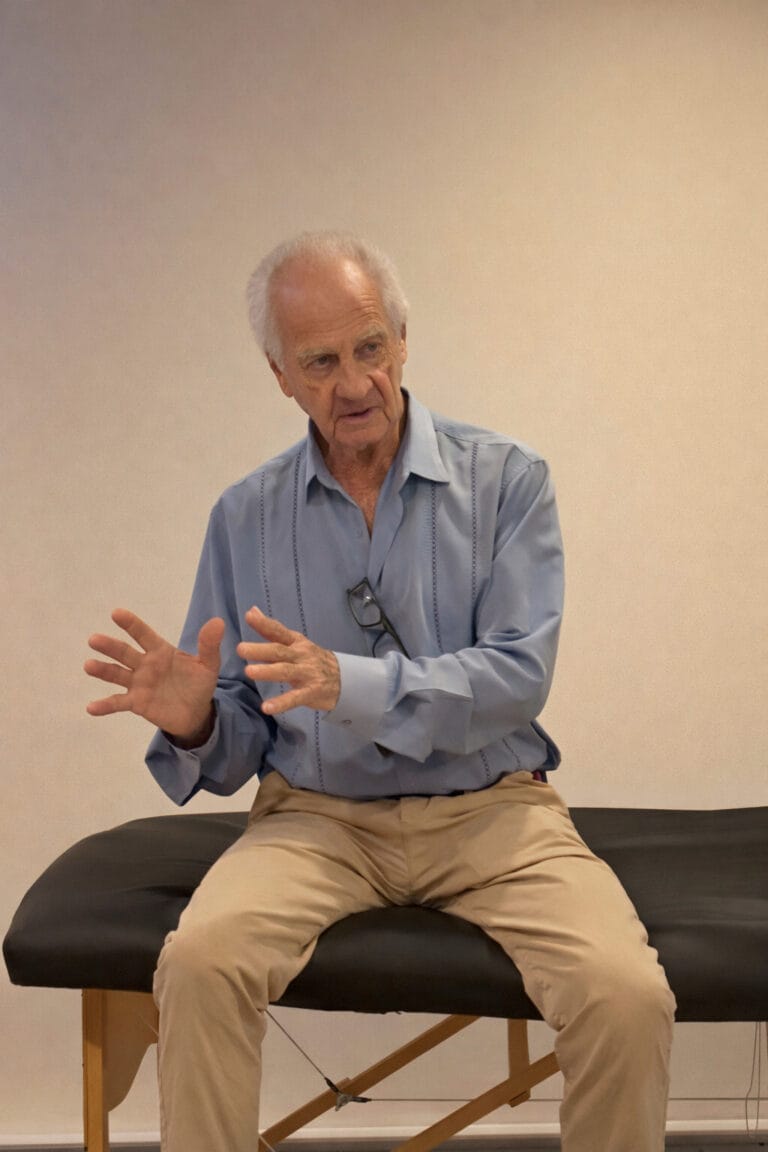
On November 18, 2025, in Boston, Massachusetts, USA, Tommy Thompson asked one essential question in his Alexander Technique teacher training class:
What was the quality of thought behind F. M. Alexander’s discoveries?
When Alexander could no longer trust his kinesthetic perception, he did not push harder. He paused. He withheld.
That pause—Withholding Self-Definition—suspends the habitual story you become while pursuing a goal. The problem is not the goal, but how you use yourself in reaching it.
We move “out there” toward results, as if experience were happening somewhere else. But experience is always here. When intention returns to here, coordination reorganizes. Effort softens. Wellness becomes a condition, not a project.
This class is not about posture correction.
It is about withholding long enough for new information to enter.
Key Objectives of the Class:
- Understand Withholding Self-Definition as the functional heart of the Alexander Technique.
- Clarify “use” as perceptual and relational—not merely physical.
- Explore how intention drifts outward and how returning “here” restores embodied presence.
- Recognize why real teaching emerges from lived experience, not mechanical instruction.
This blog series is based on Tommy Thompson’s Alexander Technique classes. Each post follows the flow and insights of the class to expand both self-awareness and practical consciousness applicable to everyday life.
New here?
If you’re new to the Alexander Technique, you can start with the resources below.
Alexander Technique Class Flow at a Glance

1. The Opening Question
❝ What does it mean to be goal-oriented—and how might that interfere with how you live? ❞
Tommy does not attack goals. He questions the state from which we pursue them.
Most of us assume that effort equals commitment. But in the Alexander Technique, the issue is not whether you have a goal. The issue is how you use yourself while moving toward it.
When pursuit becomes identity, tension follows. When identity is suspended—even briefly—something else becomes possible.
Tommy’s Word
If you have a goal, you need to accomplish the goal—nothing wrong with it. It depends on how you use yourself to accomplish it. But you don’t need the element of work to accomplish the goal in an unending way.
The issue is not the goal. The issue is who you become while moving toward it.
This is where Withholding Self-Definition becomes practical. If you pause before becoming the “achiever,” coordination reorganizes. Effort softens. Action clarifies.
2. Core Learnings from This Class
Core Concepts
- The value of the Alexander Technique lies in the quality of thinking behind discovery.
Tommy shifted attention away from mechanics and toward the state of mind that made discovery possible. - Reflex coordination and personal narrative form one unified pattern.
The cervical–occipital relationship and the story a person lives are inseparable expressions of use. - Real change begins when identity pauses long enough to receive something different.
Without that pause, perception simply reinforces what it already believes.
Five Key Messages
- The problem is not the goal, but who you become while pursuing it.
- You move in the direction of your intention.
- Experience is always happening “here,” not somewhere else.
- Teaching transmits embodiment, not explanation.
- Lasting change requires interruption of automatic self-definition.
Essential Terms
- Inhibition
The conscious interruption of an automatic reaction before it completes, creating space for choice. - Use
The total organization of thought, feeling, and neuromuscular coordination expressed in action. - Personal Narrative
The embodied story through which a person interprets events and shapes habitual response. - Focus of Intention
The tendency to move toward a person, event, or thing “out there,” rather than recognizing that experience is happening “here.” - Withholding Self-Definition
The temporary suspension of habitual identity, allowing new sensory information and reorganization to occur.
3. Tommy’s Insights
In Tommy’s words during class, there are not only the core principles of the Alexander Technique, but also practical wisdom that can be applied directly to daily life. His words go beyond simple advice about movement and prompt us to deeply consider how we choose to exist.4. Practical Tips for Everyday Life
What’s the Goal?
To interrupt the identity you automatically assume in action.
The goal is not relaxation. The goal is not correction. It is to create a space where choice becomes possible.
How to Practice
- Before speaking, pause.
Notice the self you are about to become. - When pursuing a result, sense where you actually are. Experience happens here, not “out there.”
- When emotion rises, do not fix it.
Allow it — but prevent its automatic completion.
This is Inhibition in lived form.
What You’ll Notice
Effort reorganizes into direction.
Reaction slows into response.
Presence replaces urgency.
Change begins the moment you stop insisting on who you are.
5. Closing the Class
Key Takeaways
The issue is not the goal. It is the state from which you pursue it.
When kinesthetic perception cannot be trusted, the tendency is to push harder. But pushing reinforces the definition you are already living inside. Effort then becomes a tightening around identity rather than a clarification of direction.
Freedom begins when you interrupt the definition of yourself in the middle of action.
Core Insights
Discovery was never mechanical correction. It was a shift in the quality of thinking — a moment of withholding before completion.
Withholding Self-Definition does not remove the goal. It suspends the story you become while moving toward it. In that suspension, coordination reorganizes without force.
In that withheld moment, perception reorganizes and a different future becomes possible.
A Final Invitation
Experience is not happening “out there.” It is happening here.
When “there” is projected ahead of you, you move toward it. Yet your experience of moving is always occurring within you. When “there” is allowed to be “here,” intention returns to embodiment instead of projection.
Notice the moment before you become the achiever.
And see what remains when the old definition does not complete itself.
6. One Key Practice
Before any reaction today, pause one second.
That’s it. In that second, notice who you are about to become.
Do not adjust your posture. Do not fix your thinking. Do not calm yourself down.
Simply do not complete the old pattern.
This is lived Inhibition.
One second of withholding can change the entire direction of your day.
Bring it into ambition. Bring it into irritation. Bring it into love.
7. Three Questions to Ask Yourself
Ask these in the middle of action — not after.
- Where is my attention moving right now?
- Am I reacting from a story, or from presence?
- What happens if I do not finish this definition of myself?
These questions are not for reflection. They are for interruption. And interruption is where freedom enters.
8. For Those Who Wish to Learn More
Recommended Book
Touching Presence – Tommy Thompson
This book is written by master Alexander Technique teacher Tommy Thompson and explores how we can stop defining ourselves by habit and belong more fully to the moment. It is filled with insightful reflections and teaching experiences that directly resonate with this class’s focus on pausing identity and creating space for new perception.
Unlike a manual of exercises, this book invites you into the teaching space itself, showing how presence emerges when habitual definitions fall away. It is a compelling source for anyone who wants to deepen their understanding of the class concepts and carry them into daily life.
Official Website of Tommy Thompson
www.easeofbeing.com
This is the official website personally managed by Tommy Thompson, offering a wide range of resources and programs to deepen your understanding and practice of the Alexander Technique:
- Private session reservations and inquiries
- Workshop and seminar schedules
- Overview of international teacher training programs
- Essays and articles on the Alexander Technique
9. Next Class Sneak Peek
In the next class, we begin to ask a more fundamental question:
What truly supports you before you move?
Not posture. Not effort. Not intention.
We will explore what happens when the hand no longer acts alone, but belongs to something larger. When action no longer begins in anticipation, but in organization.
In Class 96, we’ll explore:
Back Support as the origin of coordinated action.
10. Join the Alexander Technique Journey
Did this class leave a small resonance within you? Feel free to quietly hold it in your heart or share it in just a sentence or two. The comments are always open. Your one simple word may leave a gentle ripple in this ongoing journey.The journey of Resonance Flow continues across social media as well. Let’s continue this journey together.
 YouTube
 Instagram
 Threads
 Facebook