Alexander Technique Touch Secrets: Why Back–Before–Hands Changes Everything | Tommy Thompson Class 68
❝ When your hands open in the Alexander Technique touch, are you meeting another person—or meeting yourself in their reflection? ❞
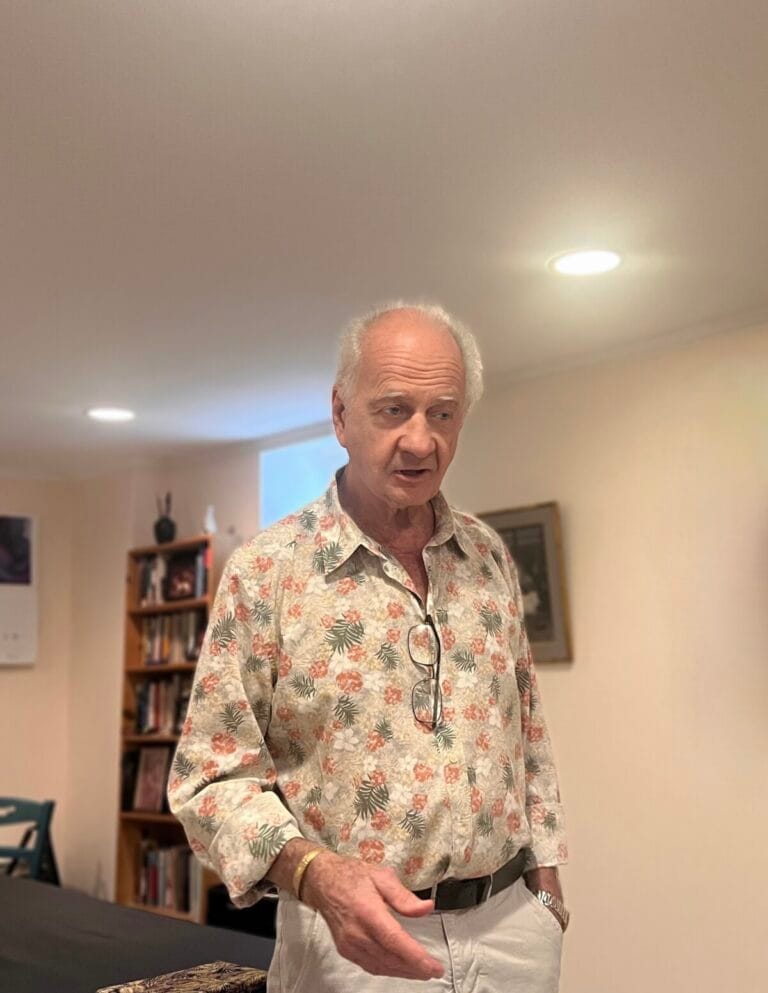
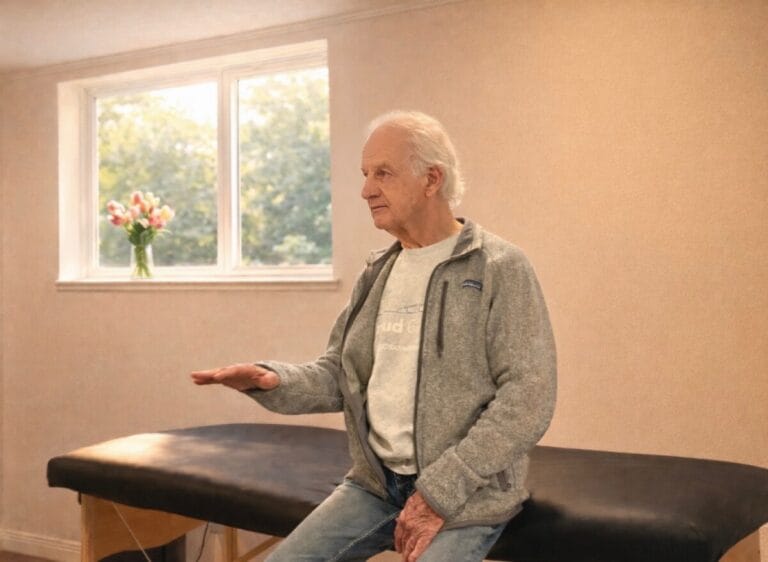
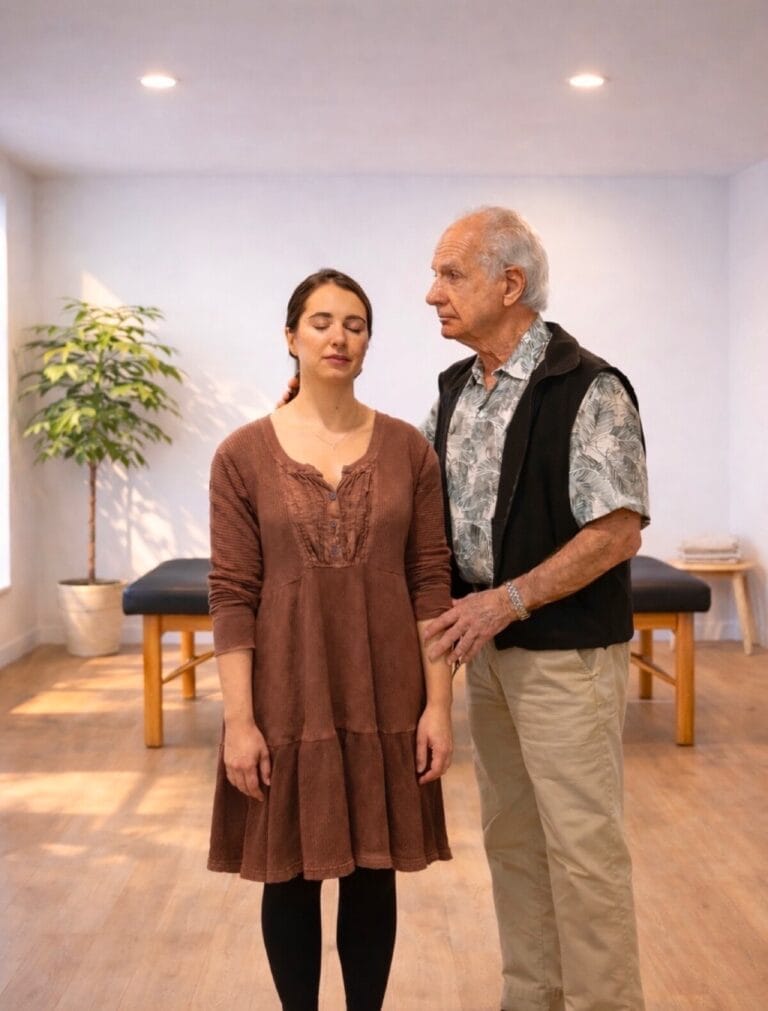
In Tommy’s class, this was never just a poetic image. It was the lived reality of triadic resonance—that moment when your neck is free, your back widens, and your palm releases what it held only seconds ago. On May 1, 2025, in Boston, Massachusetts, USA, Tommy Thompson guided trainees in the Alexander Technique teacher training course to explore touch not as an act of doing, but as an act of allowing. To let something already there come alive. To see the other without judgment, and in doing so, to see yourself more clearly.
Key Objectives of the Class:
- To experience triadic resonance as a living connection between body, mind, and touch.
- To practice inhibition not as stopping, but as allowing what is already supporting you to function fully.
- To explore the mechanical advantage that allows hands to communicate without strain, fostering natural coordination in both self and partner.
This blog series is based on Tommy Thompson’s Alexander Technique classes. Each post follows the flow and insights of the class to expand both self-awareness and practical consciousness applicable to everyday life.
New here?
If you’re new to the Alexander Technique, you can start with the resources below.
Alexander Technique Class Flow at a Glance
1. The Opening Question

❝ In the Alexander Technique touch, if you release what your hands were holding just moments ago, what in you—body, mind, and perception—begins to change? ❞
This is not simply a question about hands. It’s an entry point into seeing yourself differently. In Tommy’s class, letting go was not about abandoning action—it was about allowing something already present to support you. And in that inhibitive moment, you discover that freedom in the hands is inseparable from freedom in the neck, width in the back, and openness in the mind.
Tommy’s Word
“The grasping reflex is a totality—you know, I reach out, make contact, and pull things toward me, whether it’s a person or an object. But the other one is your willingness to open your palm, and again, metaphorically, of all you’ve ever held—which is impossible—but it is letting go, releasing what you previously held on to a few moments ago.”
Tommy isn’t merely talking about the mechanics of the hand. He’s pointing to a whole-body shift: by letting go in the hands, you invite the entire organism to re-coordinate. In triadic resonance, this release becomes a direct communication—a way for both you and the person you touch to step into a new possibility of movement and connection.
2. Core Learnings from This Class
Core Concepts
- Triadic resonance is a whole-self event, not a hand technique.
When the hand opens fully, the release travels beyond the fingers—through the forearm, into the base of the skull, and into the breadth of the back—changing the entire coordination. - Inhibition is the choice to allow, not to stop.
Tommy guided the class to pause, not to freeze, but to make room for what is already supporting them to work on its own. - Quality of touch comes from your back, not from your fingers.
He reminded us that when the back is alive and wide, the hands can speak for the whole self without pressing or shaping. - The 1-2-3 practice in the hands can reorganize breath, vision, and coordination.
Awareness in three key points of the hand subtly changes muscular tone, lifting the chest and reorganizing the head–neck–back relationship. - Touch is a mirror—how you use yourself is what you communicate.
In every moment of contact, the other person receives not just your touch, but the way you are using yourself.
Five Key Messages
- Freedom in the hands is inseparable from freedom in the whole self.
In class, opening the palm was never treated as a local adjustment—it was a whole-body event. - Coordination is not created by effort; it emerges when you stop interfering.
Every improvement came when trainees stopped trying to ‘do’ coordination. - The back gives the hands their clarity.
Without the width and support of the back, the hands lose their depth of communication. - Inhibition is an invitation to let support step forward.
The moment you pause before action is the moment you give natural support a chance to work. - Touch reflects your current use more accurately than your intention.
People can feel how you are in the moment, regardless of what you think you’re conveying.
Essential Terms
- Alexander Technique touch
Conscious, whole-self contact in which your own use—free neck, head forward and up, back wide—remains primary; your hands convey this without pressure or correction. - Triadic resonance
A resonance linking nervous system, structural support, and relational awareness, initiated through an open palm and integrated through the head–neck–back relationship. - Inhibitive moment
A deliberate pause in habitual reaction, allowing natural support and coordination to come forward. - Mechanical advantage
Structurally favorable alignment—semi-flexion, free elbows and wrists—where ease, not effort, determines the effectiveness of movement and contact. - Reflection through touch
The experience of perceiving yourself in the act of touching another, making the contact a shared act of awareness.
3. Tommy’s Insights
In Tommy’s words during class, there are not only the core principles of the Alexander Technique, but also practical wisdom that can be applied directly to daily life. His words go beyond simple advice about movement and prompt us to deeply consider how we choose to exist.“Triadic resonance adds something to what happens to you when you let your neck be free, move away from the body forward and up, which in itself will affect your hands.”
→ Triadic resonance here is not an added technique, but a deepening of the primary directions, amplifying the integration between head, neck, and hand use.
“It opens an awful lot through here, and sends you back into your back, so that when you test someone, you can sense their back, and the teacher can sense the teacher’s back. It’s one of the things that, when they come out of the traditional course, you’re in your back—depending on the person—but I don’t think it gets to the neuroreceptors in your bone, which I think are important.”
→ This describes the subtle yet profound kinesthetic expansion that resonates beyond muscular release into skeletal awareness, a hallmark of refined touch.
“When you communicate with another person with your hands, basically you’re asking them to agree with your perception of life.”
→ Every manual contact carries an unspoken invitation for the other to share your psychophysical reality, making conscious intention critical.
“If there are neuromuscular receptors, neurons in your hands, going directly to the brain for compassion, love, and understanding, there’s got to be a reason for them being there in addition to the grasping reflex.”
→ Tommy Thompson points toward the evolutionary and relational potential of the hands, extending their function far beyond mere manipulation of objects.
“The grasping reflex is a totality—you know, I reach out, make contact, and pull things toward me, whether it’s a person or an object. But the other one is your willingness to open your palm, and again, metaphorically, of all you’ve ever held—which is impossible—but it is letting go, releasing what you previously held on to a few moments ago.”
→ Letting go in this sense is not only physical release, but also the psychophysical readiness to meet each moment without the burden of the last.
“That’s basically what you’re talking about—that you’re designed reflexively. You have no control over those. The control you have is not interfering. How do you not interfere? You let something that’s already there be—and that’s a philosophical statement as well.”
→ This is a concise summation of inhibition: cultivating trust in innate coordination by refraining from habitual interference.
“When you are freeing those areas, your palm does, in fact, open. And when the palm opens, your fingers do extend outward. When all of that happens, it carries directly up the arm all the way into the base of the skull, in the exact same way that freeing the neck does. It doesn’t take away from the value of freeing here first, and freeing here doesn’t take away the value from freeing here.”
→ Tommy Thompson articulates the bidirectional integration between distal release and central alignment, showing that ease in the hands can influence the whole self.
“I need a reference point for inhibition. The reference point for inhibition is a state of mind where you agree with yourself to question your involvement in a given perception, action, or thought. How am I using myself? Well, I probably am using myself in the way that I’m most familiar with, which is habituation. Nothing inherently wrong with that, unless it’s messing up the neuromuscular me that’s designed to be supported. So if you’re going to make a decision, it’s helpful to feel supported. If you don’t feel supported, it’s difficult to make a decision.”
→ This reframes inhibition as a reflective state of mind—an inner pause that makes room for new choices to arise, grounded in the quiet support of the whole self.
“That’s why the inhibitive moment, for Frank, was more important than the directions that were given in the inhibitive moment—because when you don’t behave habitually in the inhibitive moment, given the circumstances of what you’re doing, thinking, or perceiving, you allow space for the nervous system to step inside and do what it is designed to do. If Frank could inhibit long enough, or sufficiently enough, Frank trusted that the organism would provide more space for him to behave differently, and that’s a different way of training.”
→ Tommy identifies inhibition not as an absence of action, but as an active granting of time for the organism to self-organize.
“The hands are not just utilitarian; they are for deep, deep communication. You can change from here—you can change directly with the hands. The reason it works is that it’s part of the design.”
→ This underlines the Alexander principle that the whole self is expressed through touch, making the hands both a diagnostic and transformative medium.
4. Practical Tips for Everyday Life
What’s the Goal?
To let the principles of the Alexander Technique become part of how you live—not as an exercise you “do,” but as the way you move, meet, and decide in every moment.
How to Practice
- Let your back arrive before your hands.
Before you reach—whether for a cup, a door handle, or your phone—pause. Let your awareness drop into the width of your back. Feel your hands emerge from that breadth, carried rather than sent forward. - Pause and notice your breath.
In the middle of your day—whether waiting in line, opening your laptop, or standing at a crosswalk—pause for a moment. Notice your breath without trying to change it. Let your shoulders drop and feel how the ground is already supporting you. - Give one heartbeat before you touch.
As you greet someone, pick up an object, or place your hand on a shoulder, let there be a single heartbeat of stillness. In that moment, allow your support to come forward before the action begins.
What You’ll Notice
- Your movements feel steadier, lighter, and more connected.
- People respond not just to what you do, but to the quality of your presence.
- Small moments of space in the day change how you see, breathe, and choose your next action.
5. Closing the Class
Key Takeaways
This class was not about “learning to use your hands.” It was about discovering how the whole self moves through the hands—and how the hands, in turn, inform the whole self. Every moment of touch became a chance to witness your own use, to choose presence instead of habit.
Core Insights
- The back gives the hands their depth.
- Without the breadth and quiet support of the back, the hands cannot speak for the whole self.
- Inhibition is an act of generosity.
By pausing, you give natural support the chance to step forward, and you offer the same space to the person you’re with. - Triadic resonance is not just a technique—it’s the body’s native conversation.
It’s how your nervous system, structure, and attention meet in movement.
A Final Invitation
This is not a practice you leave in the studio. Let it follow you into the street, the kitchen, the hallway at work.
Feel your back arrive before your hands. Take a single breath before you begin a conversation. Allow a single heartbeat before you act.
The Alexander Technique is not about doing less—it’s about being available for what’s already there.
6. One Key Practice
Let your back arrive before your hands
Wherever you are—reaching for a glass, opening a door, greeting someone—pause for a moment.
Feel the breadth and quiet strength of your back. Allow your hands to emerge from that support, carried rather than pushed.
This single shift changes the tone of every movement, every contact, every decision you make.
7. Three Questions to Ask Yourself
- What is my back doing right now?
Notice its width, its quietness, and whether it is carrying me or I am pushing against it. - Am I allowing support before I move?
Before reaching, speaking, or standing, sense if your support is already there, waiting for you to notice. - What am I showing through my touch?
Every contact—whether with a person or an object—reveals how I am using myself in this moment.
8. For Those Who Wish to Learn More
Freedom to Change – Frank Pierce Jones
Written by one of the most respected researchers and teachers of the Alexander Technique, this book blends practical teaching experience with evidence-based insights. Jones explores how habits limit natural coordination, why inhibition is not about stopping but allowing, and how the head–neck-back– relationship transforms every action.
For those who joined Tommy’s class, this reads like an expanded transcript—deepening the understanding of mechanical advantage, the role of the back in the quality of touch, and the subtle shifts that come from pausing before movement.
It offers both the science and the lived experience behind the Alexander Technique, making it an ideal companion to the principles practiced in our class.
Official Website of Tommy Thompson
www.easeofbeing.com
This is the official website personally managed by Tommy Thompson, offering a wide range of resources and programs to deepen your understanding and practice of the Alexander Technique:
- Private session reservations and inquiries
- Workshop and seminar schedules
- Overview of international teacher training programs
- Essays and articles on the Alexander Technique
9. Next Class Sneak Peek
This was the final class of the 2025 Spring semester, but the Alexander Technique journey continues—our next class will be released soon, bringing fresh insights and practical ways to live its principles every day.
10. Join the Alexander Technique Journey
Did this class leave a small resonance within you? Feel free to quietly hold it in your heart or share it in just a sentence or two. The comments are always open. Your one simple word may leave a gentle ripple in this ongoing journey.The journey of Resonance Flow continues across social media as well. Let’s continue this journey together.
 YouTube
 Instagram
 Threads
 Facebook