What If You’ve Been Getting Support All Wrong? | Tommy Thompson Class 59
❝ What if being supported isn’t something you do, but something you allow? ❞
Most of us live our lives trying to hold ourselves together—shoulders braced, neck tense, thoughts compressed—believing that effort equals strength. But what if that very effort is what interrupts our natural coordination?
What if true support is already present in your system—waiting for you to stop managing and start noticing?
On April 9, 2025, in Boston, Massachusetts, USA, Tommy Thompson led a class in the Alexander Technique teacher training course, inviting trainees into a radical reconsideration of what it means to be upright, responsive, and free. This class was not about improving posture—it was about reclaiming the support that emerges when you’re no longer fighting for control.
Key Objectives of the Class:
- To redefine support as a function of your being, not something to construct or correct
- To experience how the head–neck relationship initiates the coordination of the entire self
- To cultivate moment-to-moment awareness of use through simple actions like sitting and standing
This blog series is based on Tommy Thompson’s Alexander Technique classes. Each post follows the flow and insights of the class to expand both self-awareness and practical consciousness applicable to everyday life.
New here?
If you’re new to the Alexander Technique, you can start with the resources below.
Alexander Technique Class Flow at a Glance

1. The Opening Question
❝ Where does your support come from—before you move, speak, or even decide? ❞
This wasn’t a class about how to fix posture or move more efficiently. It was about something more primary—more internal. Support, in this context, wasn’t defined by muscle engagement or spine alignment. It was about how you relate to yourself before anything happens.
The moment just before movement—before you speak, stand, or even form an intention—is where Alexander Technique truly begins. That’s where your thinking, your body, and your identity meet. And according to Tommy, that’s also where real support becomes available—when you’re no longer interrupting it.
This question reframes everything: not “how do I support myself,” but “what happens when I stop overriding the support that’s already there?”
Tommy’s Word
“You don’t sit down for no reason. You don’t stand. You don’t move. You don’t walk across a room—there’s always a reason. The reason is how the person is thinking. So you’re changing the person’s thinking, and it’s all about being in support.”
→ Tommy isn’t talking about movement as mechanical. He’s talking about it as revealing. Your thoughts don’t just lead to actions—they become the quality of those actions. Which means changing how you move isn’t about trying harder. It’s about releasing into support that begins in thought.
2. Core Learnings from This Class
Core Concepts
- Support begins before movement
In this class, Tommy reminded us that support isn’t something to build—it’s what arises when you stop interfering. It’s what’s left when you’re no longer trying to “hold yourself together.” It’s already built into your being. - Use reveals identity
Your habitual way of organizing yourself—how you sit, reach, respond—isn’t separate from who you think you are. Use is not just movement. It’s expression. It’s history. And when you change your use, you don’t fix yourself—you meet yourself. - The head–neck relationship sets the tone for the whole self
When the neck is free and the head moves forward and up, the spine responds. The ribs respond. Breathing responds. Thought responds. This dynamic isn’t about “getting it right.” It’s about noticing what happens when you let go of what’s in the way.
Five Key Messages
- Support happens when you stop trying to find it.
You don’t build it. You uncover it. - Every action is a trace of how you use yourself.
Movement reveals patterns you might not know you’re living in. - The system is self-regulating—if you let it be.
You don’t have to fix the whole thing. Just stop interfering. - Touch isn’t for correction—it’s for company.
Hands can listen. They don’t have to guide. - You don’t need to add effort—you need to reduce confusion.
More of you doesn’t come from more force—it comes from less interruption.
Essential Terms
- Support
The inherent coordination within the system that emerges when unnecessary effort stops. In Tommy’s language, support is what organizes you before you begin. - Use
The total way a person operates—physically, mentally, emotionally. It’s how you use yourself in action. - Head–Neck Relationship
A foundational coordination that influences the integration and expression of the whole self. It’s where freedom begins. - Inhibition
The act of pausing. Not freezing or holding—but choosing. Waiting instead of reacting. - Thinking in Activity
A process of conscious attention to how your thinking shapes your movement. Not mental chatter, but deep organizing awareness. - Postural Set
A whole-person condition—muscular, perceptual, emotional—that precedes movement. You don’t just “have posture.” You carry it, live in it, and think through it.
3. Tommy’s Insight
In Tommy’s words during class, there are not only the core principles of the Alexander Technique, but also practical wisdom that can be applied directly to daily life. His words go beyond simple advice about movement and prompt us to deeply consider how we choose to exist.“The being aspect of you is your support system. It keeps you in support, given what you’re doing, and it helps you regulate. There’s a self-regulatory thing going on in the system, where you exert just enough effort and energy to concentrate your doing, rather than overdoing it.”
→ Support isn’t added to the system—it’s the intelligent organization that emerges when you’re no longer bracing against yourself.
“You’re going to introduce the idea that you can still achieve what you want—but use yourself in a way that aligns with how the body is designed to support you.”
→ Real success isn’t about pushing harder—it’s about cooperating with the body’s built-in logic for effortless coordination.
“You’re going to free the whole of the muscle tissue in the neck, the purpose of which is to allow the head to move away from the body, to lengthen so that the head goes forward and up.”
→ When the head moves forward and up in relation to the spine, it initiates a whole-body response toward length, ease, and availability.
“What we’re doing is sitting and standing—but understanding why you’re using it. It’s a demonstration of the relationship—how this relationship of your head relative to the rest of you is used when you move.”
→ Every ordinary action becomes a map of how you relate to yourself; when observed clearly, movement reveals organization.
“Postural set can be physical. Postural set can be a thought process. Postural set can be a perception that you live with.”
→ Posture is not just mechanical—it’s a layered expression of your beliefs, habits, and felt-sense of the world.
“So you do have to understand why you’re doing what you’re doing. Why do you go here? Essentially, you are changing a pattern of use that is familiar or habitual—something you feel is you. And it is, no matter how poor or inappropriate that use may be. If you walk around like this, it’s still you. But it’s not the total you. It’s not the you that feels supported enough to speak your own truth.”
→ Changing your use isn’t about abandoning yourself—it’s about reclaiming the part of you that no longer needs to protect, perform, or prove.
“You don’t sit down for no reason. You don’t stand. You don’t move. You don’t walk across a room—there’s always a reason. The reason is how the person is thinking. So you’re changing the person’s thinking, and it’s all about being in support.”
→ Movement begins in thought, and thought shapes the entire field of coordination; change the reason, and the action reorganizes.
“Be with yourself right now. Everybody—both of you said, ‘Be with where you are.’ Just be with where you are. Now you’re letting the support fiber begin to spread throughout both your bodies, because you’re not committed only to doing. You can also wait and listen. Now the slow-twitch fiber is infiltrating both of you.”
→ Stillness is not passive; it’s an active letting-be that invites deeper layers of postural support to awaken.
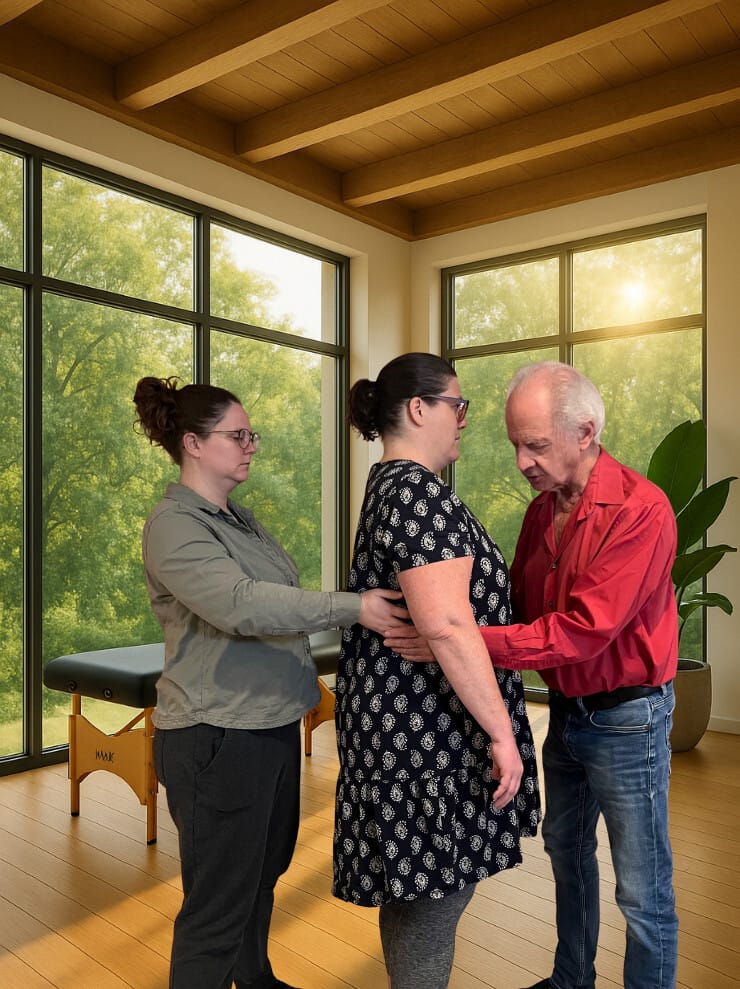
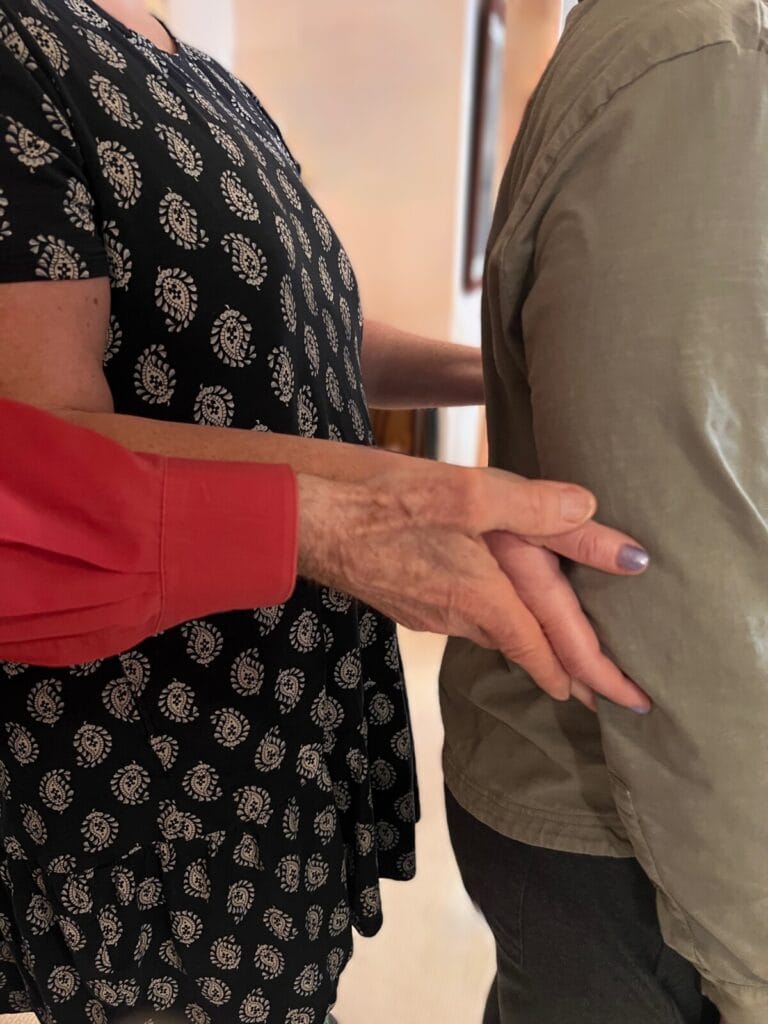
“The hands really have to be empty. Yeah—really empty. And of course, full at the same time. Can’t be manipulative. You’re letting a person experience themselves in ways they don’t usually experience themselves.”
→ Empty hands don’t direct—they invite; they offer space for the other to reorganize from the inside out.
“When I work with you while you’re doing something, I let myself be moved by what you’re doing. I’m not just touching posture—I’m touching your motivation, the why behind the action. So when I put my hands on you, I’m not trying to get you to do a thing—I’m supporting the thing you already want to do. When a child is exploring, you don’t correct them. You touch in a way that says,
‘Go. Explore. I’m with you.’”
→ Authentic guidance in the Alexander Technique means supporting the person’s own intention, not substituting it with yours.
4. Practical Tips for Everyday Life
What’s the Goal?
Not to improve.
Not to perform better.
But to undo the unnecessary—so that coordination and support can begin to return.
You’re not learning how to “do it right.”
You’re learning to notice what’s already working when you stop insisting.
How to Practice
Next time you reach for your phone, pause.
Before you stand up from your chair, wait half a second.
Let your attention land—not on what you’re about to do, but on where you already are.
Don’t fix. Don’t adjust.
Just notice if you’re preparing—bracing, tightening, rushing.
See what happens if you let yourself be supported before the movement begins.
This is not stillness.
This is movement—just one layer earlier than usual.
What You’ll Notice
You may feel a release in your neck.
Your breathing may slow—without trying.
You may begin to notice a wave-like motion rising from your spine,
without needing to “do posture.”
As Tommy would say:
“Let yourself be touched by the moment—before you try to move through it.”
And that moment?
It’s available dozens of times a day,
if you’re willing to let it find you.
5. Closing the Class
Key Takeaways
- Coordination reappears when you stop interfering.
- Support isn’t something you create—it’s what returns when you stop overriding yourself.
- You’re not learning to “do better,” but to undo what disrupts your natural organization.
Core Insights
“The being aspect of you is your support system,” Tommy reminded the class.
It’s not something you activate. It’s something you uncover—when you stop doing too much. The body, when not interfered with, knows how to calibrate itself. There’s a self-regulatory intelligence already working, if we allow it to function.
What you do is never separate from how you’re thinking. That includes how you move, how you speak, how you listen. You don’t sit, stand, or move for no reason—the reason lives in the quality of your thinking. Changing that thinking changes how you use yourself.
Posture, as Tommy showed us, is more than physical. It’s also a mental and perceptual attitude—a postural set you live with and often don’t question. We carry it not only in our spine, but in how we expect ourselves to move, speak, or even belong.
Transformation begins before movement. In the brief space before you act, a new option becomes available—if you’re listening. And in that pause, support can begin to return without being forced.
Tommy often said, “I’m not trying to get you to do a thing—I’m supporting the thing you already want to do.”
His hands didn’t fix. They accompanied. His voice didn’t instruct. It invited. Because this work isn’t about becoming someone new—it’s about uncovering what was never lost, just overridden by habit.
A Final Invitation
Take this work with you—not as a rulebook, but as a lens.
Let support return on its own terms.
Pause before you act. Notice what’s organizing you.
Let your head release forward and up, if it wants to. Let your spine respond. Let yourself be touched by the moment.
Tommy often said, “Go. Explore. I’m with you.”
So—be with yourself.
Not improving. Not fixing.
Just meeting the moment you’re already in.
6. One Key Practice
Let yourself be with where you are—before you try to move, fix, or change
Not to stop yourself.
Not to improve.
But to notice the use that’s already in motion—and choose whether to continue it.
If you pause for even half a second, the system has a chance to self-regulate.
That pause is not absence. It’s possibility.
Tommy would say:
“Be with yourself right now.”
Let that be your first movement.
7. Three Questions to Ask Yourselfthree-questions
1. What are you preparing for right now—even without realizing it?
Notice if your body is already anticipating something. Even before you act, are you bracing, holding, adjusting?
2. Can I allow support to come—before I try to improve anything?
Don’t search for rightness.
Ask instead whether you’re letting what’s already working, work.
3. Am I willing to feel where I actually am—without rushing to the next thing?
This isn’t about stillness.
It’s about presence in motion, before the habit takes over again.
8. For Those Who Wish to Learn More
Recommended Book
Body Learning – by Michael J. Gelb
This is one of the most accessible and respected introductions to the Alexander Technique available.
Gelb not only explains the history and principles of the work, but does so with the kind of clarity that helps you begin to notice your own habits right away.
The book’s central idea—that we can relearn how to use ourselves well by becoming aware of how we interfere—is exactly what Tommy invites his trainees to explore in every class.
It’s not a manual for fixing yourself.
It’s an invitation to rediscover what’s already there—waiting to function when you stop interrupting it.
Official Website of Tommy Thompson
www.easeofbeing.com
This is the official website personally managed by Tommy Thompson, offering a wide range of resources and programs to deepen your understanding and practice of the Alexander Technique:
- Private session reservations and inquiries
- Workshop and seminar schedules
- Overview of international teacher training programs
- Essays and articles on the Alexander Technique
9. Next Class Sneak Peek
What if your hand knew more than your head?
In Class 60, we follow a simple but radical thread:
that your hand isn’t just an instrument—it’s an expression of how you relate to the world.
We’ll explore what Tommy calls “the intelligence of the hand”:
its ability to signal safety, receive contact, and extend intention without effort.
When you stop using your hand to do—and start allowing it to relate—
your entire coordination changes.
Not just in movement, but in meaning.
In Class 60, we’ll explore:
how presence travels through the hand, how safety begins with touch, and how the body reorganizes when nothing is being asked of it.
10. Join the Alexander Technique Journey
Did this class leave a small resonance within you? Feel free to quietly hold it in your heart or share it in just a sentence or two. The comments are always open. Your one simple word may leave a gentle ripple in this ongoing journey.The journey of Resonance Flow continues across social media as well. Let’s continue this journey together.
 YouTube
 Instagram
 Threads
 Facebook