Use Is Who You Think You Are | Tommy Thompson Class 29
❝ What if the way you move is the way you believe you exist? ❞
What if your habits of movement weren’t just about posture or efficiency—but about identity? What if how you sit, reach, or even breathe could reveal how you see yourself in the world? These aren’t just musings. They’re at the very heart of what Tommy Thompson calls “use” in the Alexander Technique.
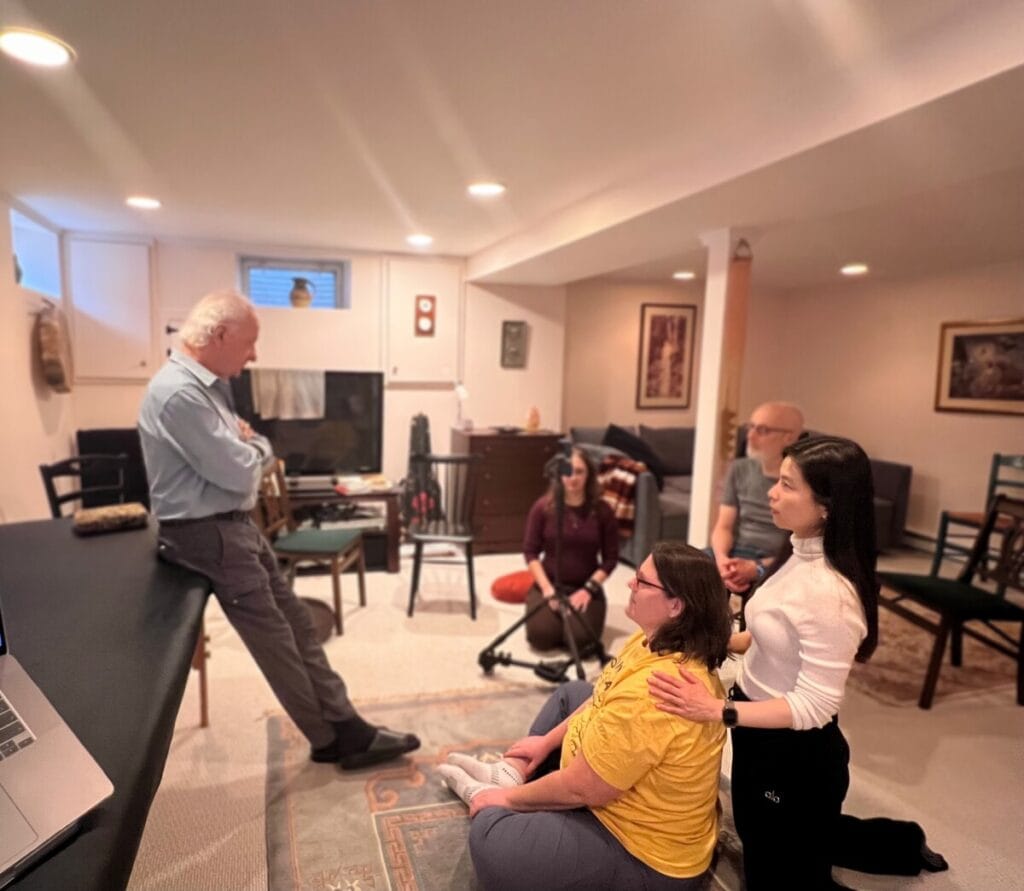
On November 20, 2024, in Boston, Massachusetts, USA, Tommy Thompson led a class in the Alexander Technique teacher training course that pushed each trainee to reconsider the very architecture of self. Not just how they move, but who is moving. Not just what they do, but who they think they are.
This class wasn’t about correcting bad habits. It was about recognizing that the body doesn’t lie. It reveals what you believe, what you avoid, and what you’re ready to change. And that change, Tommy reminded the class, doesn’t begin with doing. It begins with inhibition, direction, and the lived experience of presence.
Key Objectives of the Class:
- To explore how “use” is intertwined with unconscious patterns of identity.
- To practice inhibition as a doorway to new movement choices.
- To experience presence not as a concept, but as a tactile, relational reality.
This blog series is based on Tommy Thompson’s Alexander Technique classes. Each post follows the flow and insights of the class to expand both self-awareness and practical consciousness applicable to everyday life.
New here?
If you’re new to the Alexander Technique, you can start with the resources below.
Alexander Technique Class Flow at a Glance
1. The Opening Question
❝ What if the way you use yourself is the way you learned to survive? ❞
Are you moving freely—or repeating strategies your body once adopted to stay safe, to be accepted, to disappear just enough?
What if how you sit, move, or reach wasn’t just habit—but biography? What if your use is your story, told through bone, breath, and direction?
That’s where this class began. Not with correction, but with recognition. Not with posture, but perception.
Tommy Thompson didn’t ask trainees to fix anything. He asked them to notice—how their bodies still performed old narratives, how every attempt at doing better could be a replay of the same self-image.
Not just what you’re doing, but who you believe you are—through motion.
Tommy’s Word
“Use cannot be separated from the way you acquired your identity. That’s impossible.”
This isn’t philosophy. It’s the foundation. In Tommy’s work, use is identity in motion. Each movement carries the imprint of who you’ve had to be, what you’ve learned to hide, and how you’ve adapted—often without knowing.
That’s why change doesn’t begin with doing. It begins with inhibition—a pause that lets you see: you’re not just freeing your neck. You’re making space for someone new to move.
To change your use is to open the door to a different version of yourself.
In this moment from Tommy Thompson’s class, trainees explore how a simple act like standing can reorganize the whole spine.
The focus is on allowing support rather than creating effort.
Watch how doing less reveals a more coordinated and responsive movement.
Just Standing Up Changed My Whole Spine | Alexander TechniqueClass 29 · November 20, 2024 · Boston, MA
2. Core Learnings from This Class
Core Concepts
- Use is autobiographical.
Tommy reminded the class again and again that how we move reveals how we’ve learned to survive. In the Alexander Technique, use isn’t something we adjust—it’s something we witness. - Inhibition creates the space for choice.
No lasting change happens without a pause. Inhibition isn’t the absence of action—it’s the beginning of awareness. - Direction is not control—it’s invitation.
Trainees were asked not to “do” direction, but to offer it. Direction was treated like a question asked gently to the body, not a command shouted from the mind. As Tommy often said, “Direction is the language of permission.”
Five Key Messages
- You are not adjusting posture—you are addressing identity.
- Use is not what you do—it’s how you relate to doing.
- The nervous system already knows. Interfere less.
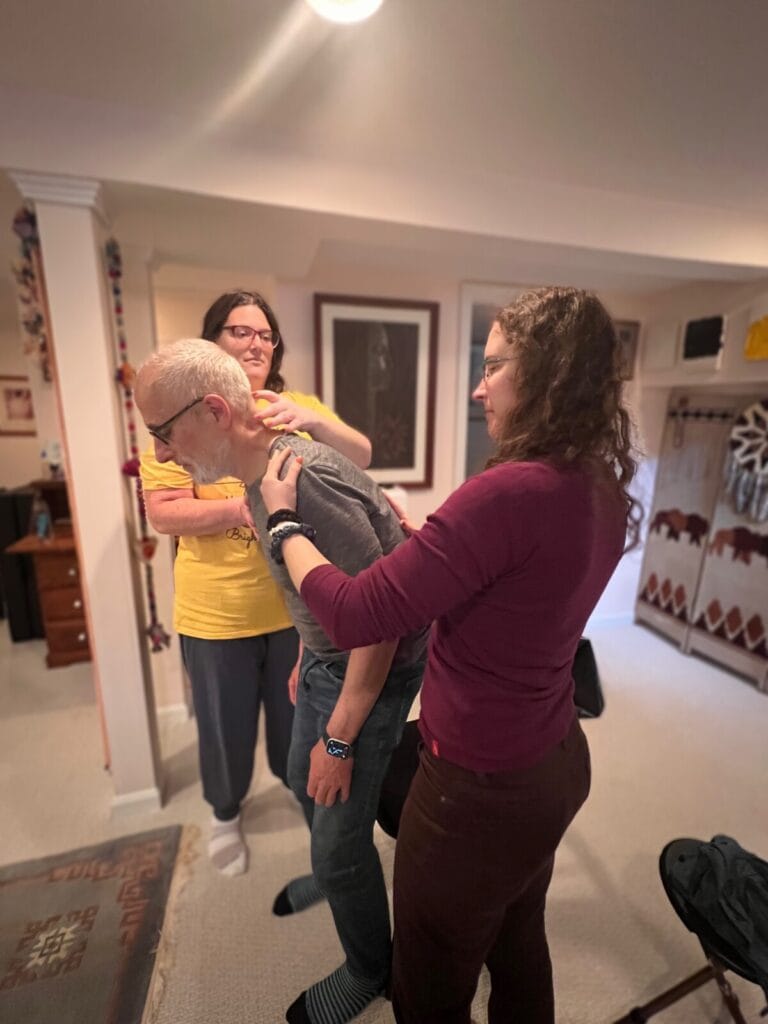
- Touch is transmission. The teacher’s presence is felt through their use.
- Inhibition is where freedom begins. Not from doing, but from stopping.
These aren’t just ideas. They’re embodied. As Tommy said:
“You are not using your body. You are using your idea of who you are.”
Essential Terms
- Use
The integrated pattern of movement, intention, and identity. In Tommy’s class, use wasn’t about posture correction—it was about recognizing the self you keep rehearsing. - Inhibition
A conscious pause before reaction. Not hesitation, but presence. This is the foundation of the Alexander Technique as lived practice. - Direction
The offering of intention to the body. A form of inner suggestion rather than outer force. As Tommy said, “Give direction, then get out of the way.” - Hands-on Guidance
More than technique—it’s presence in contact. The teacher’s use communicates more than correction—it transmits presence. - Neck as System
For Tommy, the neck isn’t just anatomical—it’s relational. It’s where thought becomes direction, and use begins. - Triadic Resonance
Tommy’s unique term for the three-way communication between head, neck, and spine. Not a technique, but a field of listening and allowing.
3. Tommy’s Insights
In Tommy’s words during class, there are not only the core principles of the Alexander Technique, but also practical wisdom that can be applied directly to daily life. His words go beyond simple advice about movement and prompt us to deeply consider how we choose to exist.→ How we use ourselves is inseparable from how we’ve formed our sense of self—a core tenet of both Tommy’s teaching and the Alexander Technique.
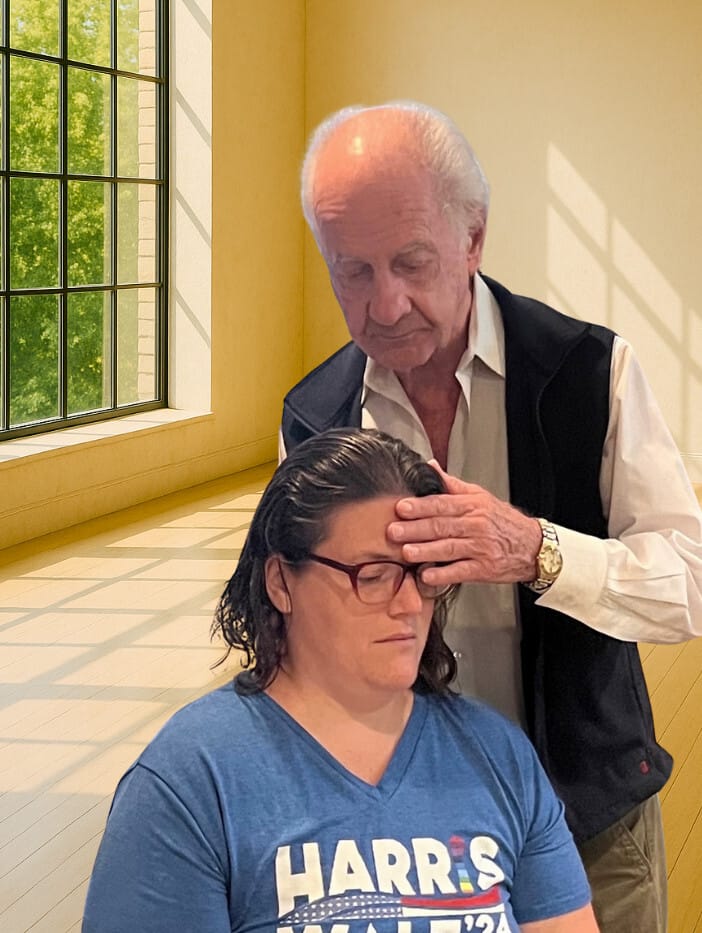
→ In the moment of touch, the teacher’s state of use is directly conveyed to the student—highlighting how presence and self-regulation can be physically transmitted.
→ A broader understanding of the neck invites a fuller sense of release and support, redefining how we engage structure in the Alexander Technique.
→ ‘Use’ shapes our mode of being, but it does not define our selfhood—inviting us to question the deeper narratives behind every gesture.
→ By stepping back, you allow the body to organize itself more intelligently, trusting its innate coordination rather than imposing will.
→ Inhibition gives the nervous system time to offer more coherent and effective movement—emphasizing the Alexander Technique’s respect for natural intelligence.
→ Triadic resonance lets your intention be clearly transmitted, without force or words—revealing a subtle, energetic layer of communication within the technique.
4. Practical Tips for Everyday Life
What’s the Goal?
Not to move “correctly,” but to see how movement reveals the beliefs you live inside. These micro-practices are about creating small interruptions in your default strategies—moments where you don’t do, but let doing emerge.
As Tommy often says,
“You’re not trying to be better. You’re letting what’s already intelligent have room to act.”
How to Practice
1. Putting on a jacket—with a different question
Before slipping your arm in, pause.
Ask: Where do I begin this movement? What’s already tensing?
Let your neck be free, your head move forward and up, and then allow the action.
2. Listening—with your whole back
Before replying to someone, wait one breath.
Let your awareness widen to include the space behind you.
Sense what happens when you don’t rush to be ready, but simply remain present.
3. Reaching—with no collapse
Pause before grabbing your phone, cup, or bag.
Let your arm be carried by your back—not pushed by effort.
Notice if you’re holding your breath or tightening your ribs, and wait for that to shift.
Each of these is not a correction, but an invitation to question who is moving.
What You’ll Notice
At first, the delay may feel odd. But in that pause, you’ll begin to hear something new—a quiet sense of possibility, where tension used to shout.
You might find:
- More length, less pressure
- A moment of clarity before action
- A shift in how you relate—not just move
And perhaps, as Tommy reminds us,
“You’re not trying to get somewhere—you’re trying to get here, with less interference.”
5. Closing the Class
Key Takeaways
This wasn’t a class about movement.
It was a class about what movement remembers—how the body rehearses the person you’ve had to be, even long after that need is gone.
We didn’t learn how to move “better.”
We learned how to interfere less with what already works.
As Tommy said,
“The nervous system doesn’t need your help. It needs your permission.”
When you stop trying to fix yourself, you might notice: there’s nothing broken.
Core Insights
- Use isn’t just what you do. It’s how you live inside your story.
- Inhibition isn’t passive. It’s a radical choice to stop performing an old identity.
- Direction isn’t movement—it’s a relationship to possibility.
As Tommy often reminded the class,
“We’re not changing the body. We’re changing the way the body is being called upon—to participate, not perform.”
A Final Invitation
Don’t carry this work as something to remember.
Carry it as something you can return to—again and again—in life.
In your next breath.
In your next step.
In the pause before you hit send.
In the quiet moment when you meet someone’s eyes.
The Alexander Technique doesn’t ask you to be better.
It asks you to be here—in this body—less edited, more available.
6. One Key Practice
Before you move, ask who is about to move
Then wait.
Let the neck be free.
Let the head lead.
Let the spine follow.
Do less than you think.
And notice what happens when you don’t try to fix it—just let it organize.
Try it the next time you reach for your phone, speak in a meeting, or put on your shoes.
As Tommy said,
“You don’t change by doing better. You change by doing less, and noticing more.”
7. Three Questions to Ask Yourself
- Am I doing this, or is this doing me?
→ A prompt to notice automatic habits and reclaim agency. - What part of me is working harder than it needs to?
→ A way to track subtle over-effort and unnecessary tension. - Where am I beginning from—my habits, or my awareness?
→ A daily checkpoint to return to conscious use.
If you pause with these—not to fix anything, but just to ask—
you might feel something shift before you even move.
These aren’t questions to solve.
They’re questions to move inside of.
8. For Those Who Wish to Learn More
Recommended Books
The Use of the Self – F. M. Alexander
Written by the founder of the Alexander Technique, this book lays the foundation for everything Tommy Thompson teaches.
It’s not a how-to manual—it’s a deep exploration of use, habit, and self-perception.
For anyone drawn to the idea that how you move reveals who you think you are, this book offers the root system of the entire Alexander Technique.
Official Website of Tommy Thompson
www.easeofbeing.com
This is the official website personally managed by Tommy Thompson, offering a wide range of resources and programs to deepen your understanding and practice of the Alexander Technique:
- Private session reservations and inquiries
- Workshop and seminar schedules
- Overview of international teacher training programs
- Essays and articles on the Alexander Technique
9. Next Class Sneak Peek
The next class doesn’t focus on posture correction.
It centers on how we carry ourselves—both physically and internally—when we’re not trying to get it right.
Tommy Thompson leads trainees into the subtler territories of support, release, and relational awareness, where movement becomes less about control and more about communication.
Even a simple shift in how you sit or listen reveals what you expect of yourself—and what you’re willing to let go of.
The next class opens a door: not to better posture, but to a different kind of presence.
In Class 30, we’ll explore:
How everyday movement reflects our beliefs—and how touch and inhibition reveal new options for being.
10. Join the Alexander Technique Journey
Did this class leave a small resonance within you? Feel free to quietly hold it in your heart or share it in just a sentence or two. The comments are always open. Your one simple word may leave a gentle ripple in this ongoing journey.The journey of Resonance Flow continues across social media as well. Let’s continue this journey together.
 YouTube
 Instagram
 Threads
 Facebook