Are You Moving… or Just Repeating a Habit? | Tommy Thompson Class 27

❝ Why do you move the way you do—and who taught your body to move that way? ❞
You sit, you stand, you reach for a cup or walk across a room. It all feels automatic. But is it really? What if every action you repeat—every shift in weight, every way you hold your shoulders or tilt your head—is a reflection of something deeper? A pattern. A story. A habit.
These aren’t just physical habits. They’re movement identities, shaped by years of unexamined repetition. And before you can change them, you have to see them. This is where the Alexander Technique begins—not with trying harder, but with noticing what you usually do, and choosing something else.
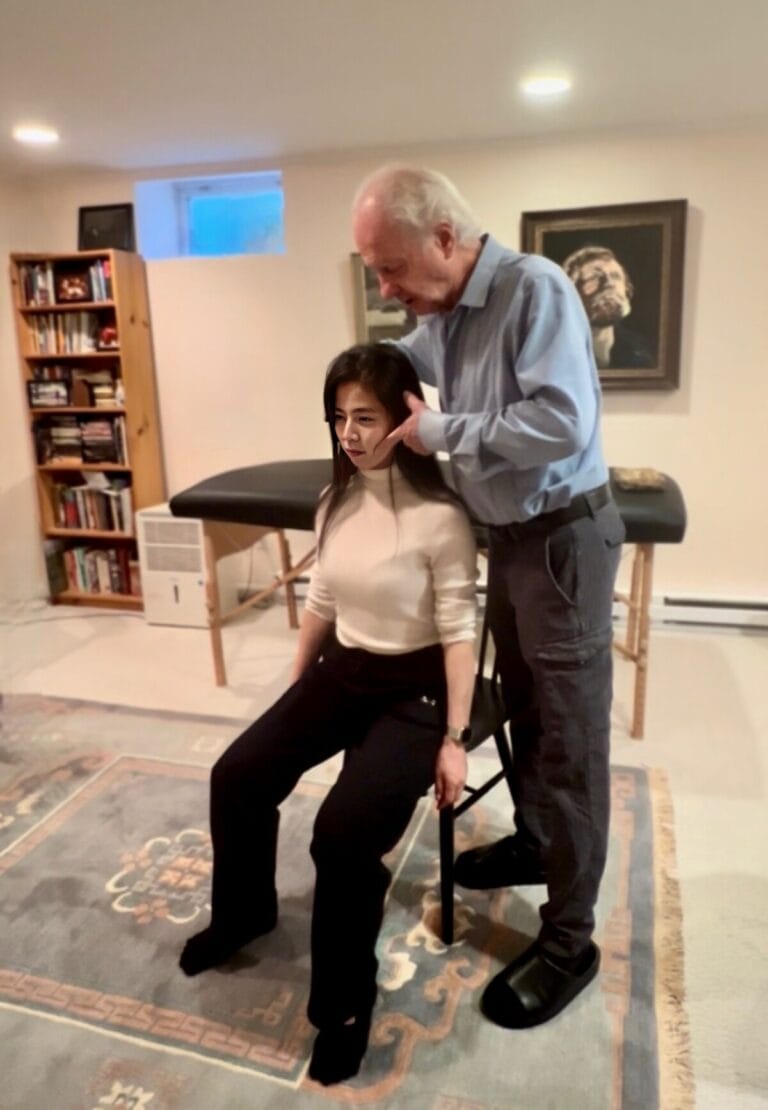
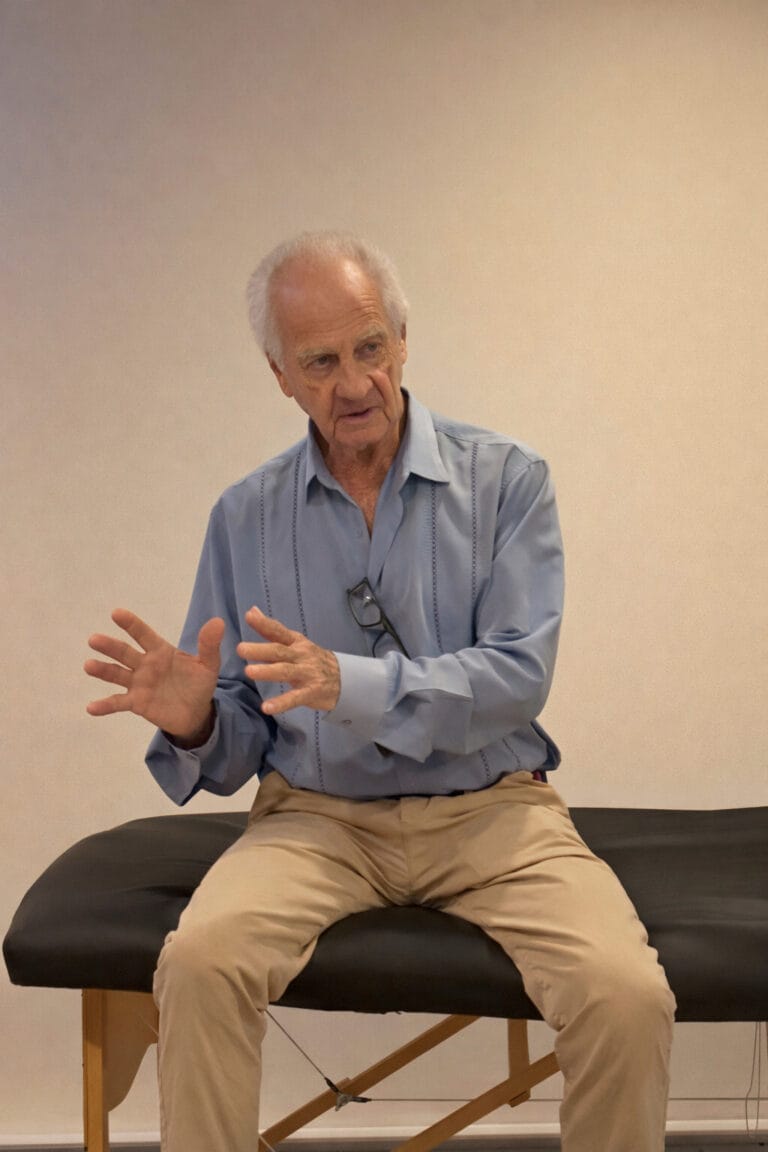
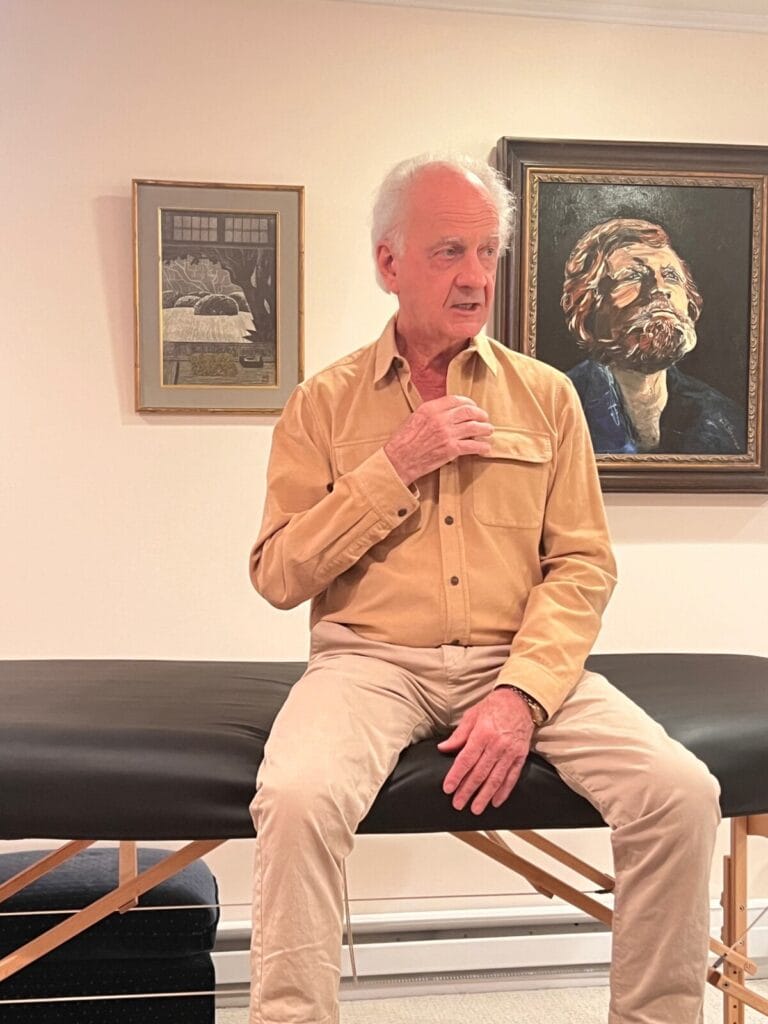
On November 14, 2024, in Boston, Massachusetts, USA, Tommy Thompson led a class in the Alexander Technique teacher training course that confronted this question head-on. His teaching wasn’t about fixing posture or perfecting movements. It was about helping trainees recognize their deeply embedded movement habits, and learning how to interrupt them—with presence, with awareness, and with choice.
Key Objectives of the Class:
- To guide trainees in recognizing unconscious habitual patterns in movement and thought.
- To explore how inhibition opens the space for natural coordination to emerge.
- To show how touch, awareness, and direction support the body’s reflexive capacity to reorganize itself—without force.
This blog series is based on Tommy Thompson’s Alexander Technique classes. Each post follows the flow and insights of the class to expand both self-awareness and practical consciousness applicable to everyday life.
New here?
If you’re new to the Alexander Technique, you can start with the resources below.
Alexander Technique Class Flow at a Glance
1. The Opening Question
❝ What if the way you move isn’t just a physical habit—but a reflection of who you think you are? ❞
What if your slump isn’t just about fatigue—but about how you brace for the world? What if the way you get out of a chair isn’t about muscles—but about memories? In this class, we weren’t correcting movement. We were questioning the identity inside the habit.
The central question of this class wasn’t “How do I move better?”
It was: Why do I move this way at all?
And more importantly: Who is the “I” that keeps moving this way, over and over again?
The Alexander Technique, at its core, invites us to interrupt our automatic patterns—not just to change how we move, but to reconsider who is moving. In Tommy’s words, the work is not about achieving an ideal posture. It’s about recognizing the person behind the posture.
Tommy’s Word
“You ask yourself, Why am I here? You go into your thought process—because it wasn’t just your body that put you here. It was your thoughts, emotions, and overall perception of life that shaped how you move.”
This is not a technical correction. It’s a radical reorientation. Tommy reminds us that every physical habit is shaped by a psychological landscape. How we sit, stand, reach, or walk is never just about the task—it reflects our lived experiences, our emotional conditioning, and the stories we tell ourselves.
That’s why this class doesn’t just ask us to move differently. It asks us to meet the self that made the habit in the first place.
2. Core Learnings from This Class
Core Concepts
- Habit shapes how you move, even when you’re not aware of it.
Most of what we call “posture” is not chosen, but inherited from repetition. These patterns become invisible over time—until you learn to notice them. - Inhibition is the gateway to choice.
You don’t need to know the right movement—you only need to stop the automatic one. The moment you pause, something else becomes available. This is where the work begins. - Presence makes change possible.
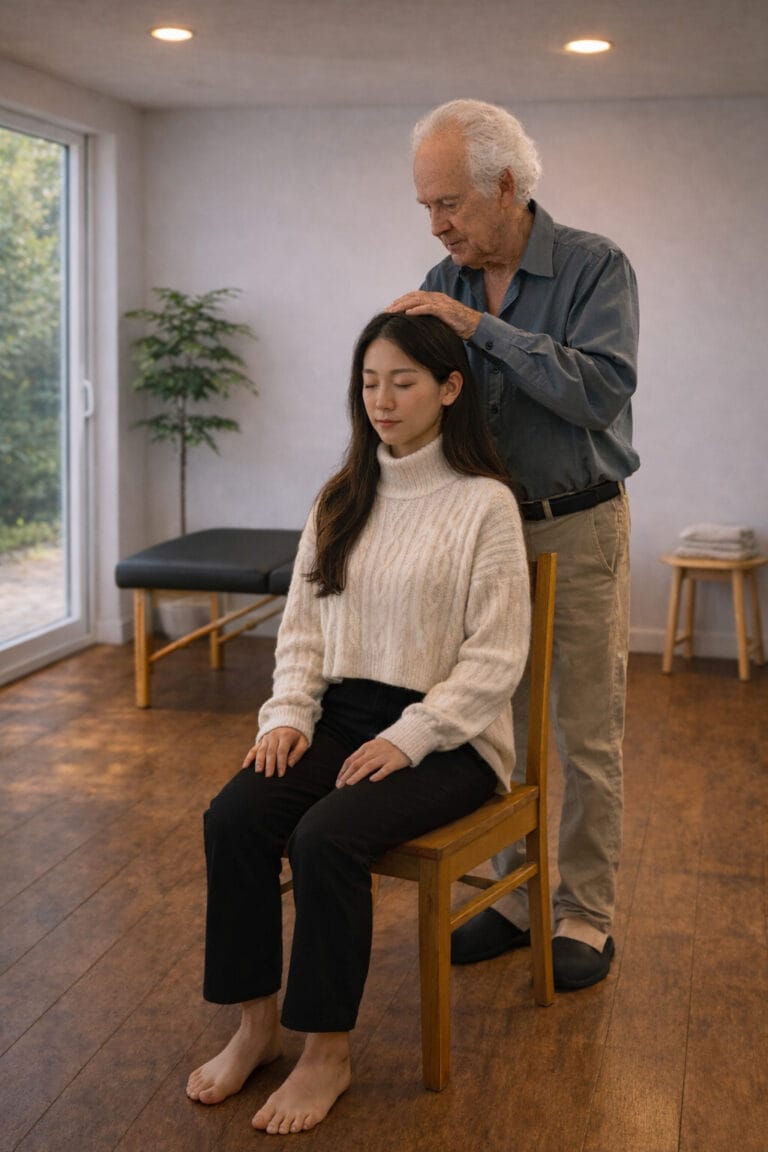
Real transformation doesn’t happen through control or force. It happens in the instant you return to yourself—fully and without judgment. That presence opens the nervous system to reorganize naturally. - Touch can awaken reflexes—not impose movement.
When placed with skill and intention, the hands don’t move the body—they invite the body to wake up to its own support. - Posture is not the goal—it’s the outcome of integration.
As the body begins to reorganize through awareness and inhibition, coordination improves, and posture emerges on its own.
Five Key Messages
- You’re not here to stand up. You’re here to notice what you do before you stand up.
That pre-movement “set” reveals your habit. When you see it, you have a choice. - Good posture is never something you impose.
When you’re integrated, posture happens by itself. Forcing it just adds another layer of tension. - The nervous system already knows how to organize you.
Get out of the way. If you stop doing the habitual, the reflexive will return. - Direction is not about going somewhere—it’s about staying available.
Thinking “up through the spine” isn’t a command to move, but a way to remain awake inside your structure. - You are your awareness in motion.
This work is never just physical. It’s about waking up to how your thoughts shape your body—every second.
Essential Terms
Habit
The way you’ve come to move, think, and react—without even realizing it. Habits aren’t mistakes; they were once strategies to help you cope. But when they stay hidden, they limit you—until you learn to see them clearly and wake up.
Inhibition
Not a stopping, but a refusal to rush into the automatic.
It’s a pause, not passive—but full of potential. That’s where the nervous system begins to offer something new, if you let it.
Direction
A quiet thought that lets the body reorganize itself.
“Up through the spine,” “Let the neck be free”—not to control, but to allow. Tommy reminds us: direction isn’t about doing, it’s about not interfering.
Postural Set
It’s what you’re already doing before you move—your mental, emotional, and physical default. That subtle “set” is the prelude to habit, and seeing it is the beginning of freedom.
“You’re not learning to stand up,” Tommy says. “You’re learning to recognize what comes just before.”
Reflexive Support
Your body knows how to hold you—if you stop trying to hold yourself. When tension drops and muscles lengthen, the reflexes rise up to meet you: the spine lifts, the breath deepens. Tommy doesn’t impose this—he helps you allow it.
Presence
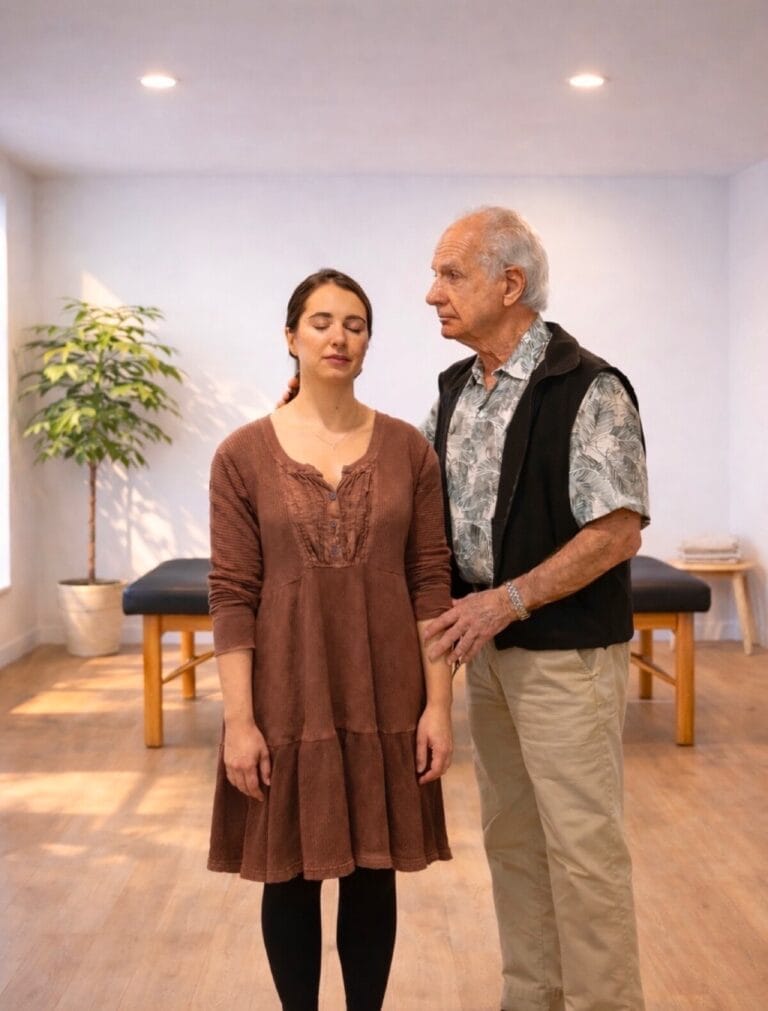
More than focus. More than attention. Presence is your whole self being available—right now, without judgment. When Tommy touches your shoulder, it’s not the body he meets—it’s you.
3. Tommy’s Insights
In Tommy’s words during class, there are not only the core principles of the Alexander Technique, but also practical wisdom that can be applied directly to daily life. His words go beyond simple advice about movement and prompt us to deeply consider how we choose to exist.“If I don’t direct the movement upward through the spine, the student will drop. Watch—if I release that support, they go down. Now, try playing with just this part. They will go down, and you’ll have to figure out how to bring them back up.”
→ Without that upward direction, gravity takes over. She drops—not because she failed, but because the support disappeared. Movement needs length to stay alive.
“You’re using sit-to-stand as a demonstration of the head’s relationship to the rest of the body and how it affects everything. So, it’s just a demonstration—you’re not teaching sit-to-stand in a training session. You’re teaching the person how to inhibit.”
→ This isn’t about teaching someone to stand. It’s about catching the moment before they do—when they usually tighten or rush. You’re teaching them how to stop that. You’re teaching them how to inhibit.
“People associate this work with sitting and standing. They think, ‘You need better posture to sit and stand well.’ But posture is just a byproduct of integration.”
→ You don’t need better posture. You need better coordination. Posture shows up when the whole system starts working together. It’s what follows—not what you chase.
“‘Use of Self’ changed my awareness. I looked at ‘Use of Self’ and was drawn toward ‘Self’—not ‘Use.’ Many people are drawn toward ‘Use,’ not ‘Self.’”
→ Everyone wants to know how to use themselves. But Tommy turns that around. He says: First, ask who you are—then you’ll know what you’re doing.
“The emphasis is on ‘What am I doing?’. I’m not teaching you how to get out of a chair. I’m teaching you how to recognize the habitual patterns that might actually be contributing to the pain you came in with.”
→ Getting out of the chair isn’t the lesson. Seeing the way you always do it—that’s the work. The pain isn’t random. It’s rooted in a pattern.
“If you allow the muscle tissue to lengthen, then it responds reflexively—because it is designed to respond reflexively.”
→ You don’t have to command the body. Just stop getting in the way. The reflexes are already built in—they’re waiting for permission.
“Your thinking loosens the grip of habit. Then, the nervous system takes over and provides a more natural response. And once that happens, you begin to change automatically. That’s why this process matters.”
→ Change doesn’t begin in the body. It begins in thought. Loosen the grip, and the nervous system does the rest—without you forcing it.
4. Practical Tips for Everyday Life
What’s the Goal?
To bring the Alexander Technique out of the practice room and into your kitchen, your subway ride, your Monday morning.
Tommy doesn’t ask you to set aside special time to work on yourself. He asks you to notice what you’re doing while you’re doing it—to let the work show up in the in-between moments.
So what’s the real goal? Not to get better at posture or movement, but to wake up inside the ways you move—and in doing so, become available to move differently.
How to Practice
1. Pause before reaching.
You’re reaching a hundred times a day—for your phone, the fridge door, a light switch.
That tiny moment before you move? That’s where the habit is.
Tommy might say, “Just wait. Let the neck be free. Let the breath move.” Then reach—not with effort, but with availability. That pause is where coordination begins.
2. Let the chair receive you.
Most people collapse into chairs. They prepare, tighten, aim.
Instead, walk toward the chair as if it were an invitation.
Let the neck be free to lengthen, and let the head move forward and up away from the body.
As Tommy teaches, the support is already there—you just have to stop overriding it.
3. Use transitions as reminders.
The doorway becomes the moment. The stand-up from the couch, the turn of the handle—each is a chance.
Not to control. Not to fix. But to remember: I’m here. I’m not rushing.
Tommy often says, “The nervous system loves timing.”
In transitions, you don’t need to add anything—you just stop doing what you always do.
What You’ll Notice
At first, it might seem like nothing.
But slowly, your breath feels less trapped. Movements lose their edge.
Sitting becomes floating. Walking feels less like pushing.
You’re not working harder. You’re doing less—and letting more happen.
And one day, you’ll catch yourself not preparing. Not tensing. Not bracing.
You’ll realize: I didn’t do it the old way.
That’s presence. That’s practice.
And that’s where change begins.
5. Closing the Class
Key Takeaways
This class wasn’t about how to sit better, or how to move more efficiently. It was about how you interfere with yourself without even knowing it. And what becomes possible the moment you stop.
The real work wasn’t in the movement—it was in the noticing.
Every moment became a chance to see the habit, to practice inhibition, to trust reflexive support, and to experience presence as a lived condition, not a concept.
That’s the shape of this practice: not fixing, but allowing.
Core Insights
You are not the habit. You are the one who sees it.
That’s where change begins—not in action, but in awareness.
And that awareness is not a thing you summon. It’s already here—when you stop rushing to the next thing, and let yourself arrive.
Tommy doesn’t teach movement. He teaches how to step aside—and let movement happen. He teaches how to stop getting in your own way.
A Final Invitation
Don’t wait for the perfect moment to apply this work.
Try it when you’re tired. When you’re late. When you’re brushing your teeth. The nervous system doesn’t need ideal conditions—it needs honesty.
So:
Pause.
Let the breath come.
Let the chair receive you.
Let the floor support you.
Let yourself be touched—by your own presence.
Because what’s changing isn’t just your posture.
It’s the way you show up—to the moment, and to yourself.
6. One Key Practice
Wait one breath
That’s it.
Before you move. Before you speak. Before you reach.
Wait. One breath.
Not to correct or prepare, but to notice—and decide if you want to continue.
Tommy doesn’t ask you to change how you move—he asks you to notice it. And that seeing begins… when you wait.
7. Three Questions to Ask Yourself
These aren’t questions to analyze. They’re questions to feel—in the moment—as you’re moving, living, deciding.
Ask quietly:
- What am I about to do—without knowing it?
(This is where the habit hides.) - Am I preparing for the next thing, or am I already here?
(This is how you find presence.) - What would happen if I did a little less right now?
(This is how support returns.)
Tommy doesn’t want you to fix yourself. He wants you to listen to yourself in motion. And these questions help you do just that.
8. For Those Who Wish to Learn More
Recommended Book
The Alexander Technique – Peter Ribeaux
Peter Ribeaux distills over 40 years of teaching into a clear, practice-focused guide. This book speaks directly to the heart of the Alexander Technique: habit, inhibition, and the power of conscious coordination.
If you’ve ever wondered what truly shifts when you pause—or why familiar movement patterns keep returning—this book helps you notice, not fix.
- Habit: Reveals how your automatic responses shape action—and how awareness brings choice.
- Inhibition: Explores the vital pause where old reactions can fall away, and new movement becomes available.
- Primary Control: Clarifies how letting go—not doing more—restores whole-body support.
Tommy might say:
“You’re not learning a technique. You’re learning to stop interfering with yourself.”
This book gives you space to begin doing exactly that.
Official Website of Tommy Thompson
www.easeofbeing.com
This is the official website personally managed by Tommy Thompson, offering a wide range of resources and programs to deepen your understanding and practice of the Alexander Technique:
- Private session reservations and inquiries
- Workshop and seminar schedules
- Overview of international teacher training programs
- Essays and articles on the Alexander Technique
9. Next Class Sneak Peek
Next time, we’ll go deeper into how the Alexander Technique reshapes the way you move—not by fixing posture, but by changing how you relate to it.
In Class 28, we’ll explore:
➤ Use vs. Use of Self – How movement reflects identity, not just mechanics
➤ Table and Chair Work – Hands-on practice to reduce tension and invite ease
➤ Poise and the Nervous System – Restoring balance through natural coordination
➤ Releasing Habitual Patterns – Using guided movement to soften unconscious effort
This class isn’t about adding more. It’s about doing less—with clarity. And letting something new begin.
10. Join the Alexander Technique Journey
Did this class leave a small resonance within you? Feel free to quietly hold it in your heart or share it in just a sentence or two. The comments are always open. Your one simple word may leave a gentle ripple in this ongoing journey.The journey of Resonance Flow continues across social media as well. Let’s continue this journey together.
 YouTube
 Instagram
 Threads
 Facebook