Being-to-Being Connection: The Moment You Stop Trying Changes Everything | Tommy Thompson Class 107
❝ What if real change in the Alexander Technique begins the moment you stop trying and allow a true Being-to-Being Connection to happen? ❞
Most people come to the Alexander Technique with the same impulse. They want to fix something, correct something, or do something better.
But what if that impulse itself is the problem? What if change does not come from doing more, but from not doing what you usually do?
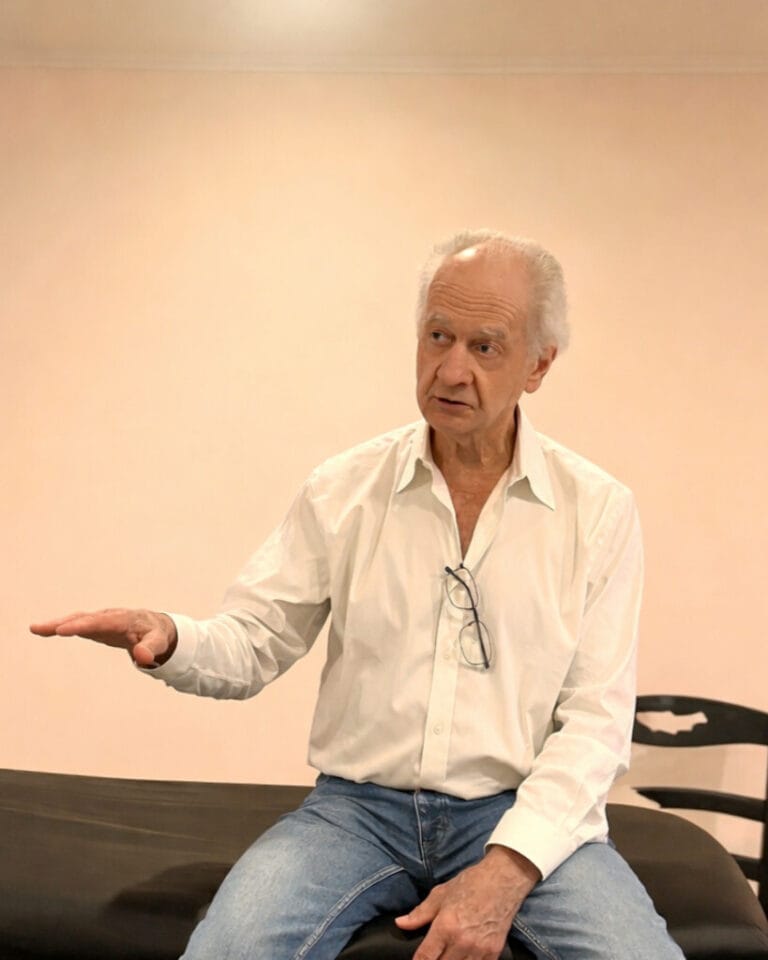
On April 23, 2026, in Boston, Massachusetts, USA, Tommy Thompson led a class in the Alexander Technique teacher training course where this was no longer an idea to understand. It became something you could feel.
A hand was placed without force. The eyes opened into space. Nothing was being done, yet something began to reorganize.
This class was not about technique. It was about a shift from effort into inhibition, from control into trust, and ultimately into Being-to-Being Connection.
Key Objectives of the Class:
- To experience how inhibition interrupts habitual patterns at their root
- To understand how the autonomic nervous system recalibrates without interference
- To explore how perception expands through vision and whole-organism awareness
- To enter the state of Being-to-Being Connection, where transformation happens without force
This blog series is based on Tommy Thompson’s Alexander Technique classes. Each post follows the flow and insights of the class to expand both self-awareness and practical consciousness applicable to everyday life.
New here?
If you’re new to the Alexander Technique, you can start with the resources below.
Alexander Technique Class Flow at a Glance
1. The Opening Question
❝ When you touch someone in the Alexander Technique, are you trying to change them, or are you in Being-to-Being Connection? ❞
Most people believe they are helping. They place their hands with an intention to release, adjust, or improve. The intention may be sincere, but it is still doing.
The moment you try to make something happen, you are no longer with the person. You are working on them.
In this class, something else became clear. The hand was placed, and nothing more was added. No correction, no direction, no effort. And yet, the body began to reorganize.
That’s not technique. It’s a relationship.
Tommy’s Word
By agreeing to let your neck be free, you have, for all intents and purposes, not done what you usually do. You stay in that moment. You live through that moment. You can’t hurry that moment.
When you stop interfering, something else begins to work. Not you, but the organism.
This is where the Alexander Technique changes. It is no longer something you do. It is something you are in.
2. Core Learnings from This Class
Core Concepts
- Change begins when you stop doing what you usually do.
In the Alexander Technique, transformation starts the moment habitual interference is interrupted. - The organism works when you stop interfering.
The autonomic nervous system does not need to be controlled. It reorganizes when given time. - Perception expands beyond the body.
When vision is included, you begin to sense more of the whole, not just the point of contact. - Touch reveals your intention.
The moment you try to fix, you are no longer in relationship. - Being-to-Being Connection is not something you create.
It appears when doing stops.
Five Key Messages
- Stop trying to make something happen.
Effort interferes with coordination. - Stay with the moment.
You cannot rush what is unfolding. - Include the space around you.
Awareness expands when attention is not fixed. - Do less with your hands.
Let the work come through your thinking. - Be with the person, not on the person.
Change happens through relationship.
Essential Terms
- Inhibition
Not doing what you usually do, allowing a different response to emerge. - Non-Doing
The shift away from effort and control, where nothing is forced. - Being-to-Being Connection
A state of contact where you are relating, not working on the person. - Relationship
Working with the person rather than imposing an outcome. - Expanded Perception
Sensing more by including vision and space, not just the body.
3. Tommy’s Insights
In Tommy’s words during class, there are not only the core principles of the Alexander Technique, but also practical wisdom that can be applied directly to daily life. His words go beyond simple advice about movement and prompt us to deeply consider how we choose to exist.“`html1. “By agreeing to let your neck be free, you have, for all intents and purposes, not done what you usually do. And you’re developing a different relationship to your autonomic nervous system, to your brain. And you trust the fact that, on some level, to let the neck be free is to not do what you usually do. And you stay in that moment. You live through that moment. You can’t hurry that moment—that’s your own orientation.”
➤ Change begins when doing stops and the organism is allowed to respond.
2. “If you give that nervous system the time, it does recalibrate, because it’s designed to, within reason. It depends on how deeply embedded this equation is. It also depends on whether or not you’re cheating. How much doing is there in my giving direction? So you’re developing a whole different relationship with your autonomic nervous system.”
➤ The organism reorganizes itself when interference is removed.
3. “I think one of the things, a teacher, not just a person, in any circumstance, there’s so much… I mean, there’s a style of teaching where they just grab you and place you where they know it’s possible to be, but they’re not really working with you. They’re putting you into a desired place because it gives them a sense of accomplishment, that they can do it. That’s not teaching. That’s a subtle manipulation.”
➤ Teaching is not control; it is relationship.
4. “So if you experience one portion of your body speaking to another portion of the body, and the arms do, in the book on hands, he talks about the hands speaking to each other. Wherever there’s a duality, there’s a unity in the body. Otherwise, I don’t think I’d be able to teach.”
➤ The body organizes through communication, not separation.
5. “Where you take this is when you work with a person, you have to honor the person. You can’t force them into something they’re not ready for. But with Ari it’s different, but other people do it too, because if this is happening and something naturally wants to free up for some reason and it hasn’t finished, if you try to catch it before it’s finished, then you’re manipulating what can happen. And all you’ve got to do is learn from it. So next time you know, okay, I’ll just let it, let it, let it finish. Oh, the other thing, you stay with it. You stay with what you want to happen, but you don’t try to make it happen.”
➤ Allow the process to complete without forcing an outcome.
6. “I go back to Frank Pierce Jones. All the other teachers from his era go back to simply working this way. He said, don’t be aware of your hand first or your neck. He said, be aware of your head moving in space around you, so that you’re doing this now. Include, as part of that awareness, the head–neck relationship to the body, but not starting with the head–neck relationship in the body first. It makes a difference. It totally changes where you teach from.”
➤ Where you place your awareness determines how change occurs.
7. “Don’t do anything with your hand. Do it all with your thoughts. Just let your hand melt right into here, with the understanding that the fascia will move as it needs to move.”
➤ Thought organizes action when effort is removed.
8. “You can touch the person anywhere in the being. And this is body, okay, but it’s really being. Being is being alive. Body is the thing through which we experience self. And when you are no longer in the body, you still experience being as self, but you’re a part of all that is.”
➤ Touch addresses the whole being, not just the body.
9. “So what Ari is doing when she’s touching you is simply connecting. So when she puts her hand on you, it’s a connection, and it’s being to being. And when you do that, you can free anything and everything.”
➤ Transformation happens through connection, not intervention.
4. Practical Tips for Everyday Life
What’s the Goal?
The goal is not to improve yourself, but to stop interfering so the organism can respond.
You don’t try to make something happen. You stop doing what prevents it.
This is not a technique you apply in certain moments. It is a way of being you can bring into everything you do.
How to Practice
- Sitting in a chair
You sit down and immediately feel the urge to adjust yourself. Instead of correcting your posture, pause. Do nothing. Let the impulse pass without acting on it. Stay with that moment and allow the body to respond on its own. - Walking outside
As you walk, you may start monitoring your body, trying to walk better. Instead, let your attention open into the space around you. Include what you see. Keep moving without trying to fix anything, and let the coordination reorganize itself. - Placing your hand on something or someone
The moment you make contact, there is often a subtle intention to change something. Notice that, and stop. Do not add anything. Stay present with the contact and allow it to deepen without effort.
What You’ll Notice
- The body begins to change without you trying to change it
- Movements feel lighter and more connected
- You sense more when you are not focusing on yourself
- A quiet sense of ease and safety begins to appear
You begin to trust what happens when you stop interfering.
5. Closing the Class
Key Takeaways
- Change begins when you stop doing what you usually do.
- The organism reorganizes when you do not interfere
- Touch reveals whether you are relating or trying to fix
- Being-to-Being Connection is not created, it appears
Core Insights
- The Alexander Technique is not something you do. It is something you are in.
- Real change begins when relationship replaces control
- When you stop interfering, the organism begins to work in its own way
A Final Invitation
Stay with the moment. Do not rush it or try to make anything happen. Place your hand, or take a step, and notice the impulse to do something, then pause and let the moment unfold without adding anything.
You don’t create the change. You allow what is already happening to reveal itself.
6. One Key Practice
The next time you are about to move, adjust, or touch something, pause for a moment. Notice the impulse to do something, then do not follow it. Stay there and let the moment unfold before you act.
Don’t follow the first impulse. Stay, and let something else respond.
7. Three Questions to Ask Yourself
- Right now, am I trying to make something happen, or am I allowing it to happen?
- Can I pause here without correcting anything, even for a moment?
- What begins to change when I do less and stay present?
8. For Those Who Wish to Learn More
Recommended Books
Touching Presence – Tommy Thompson
This book reflects Tommy Thompson’s approach to the Alexander Technique, especially in how touch is understood not as manipulation, but as a way of establishing relationship. It explores the quality of contact, the role of perception, and the importance of allowing rather than forcing change.
In relation to this class, it supports the same direction: moving away from doing and toward a more receptive way of working, where the person is not corrected, but met.
Official Website of Tommy Thompson
www.easeofbeing.com
This is the official website personally managed by Tommy Thompson, offering a wide range of resources and programs to deepen your understanding and practice of the Alexander Technique:
- Private session reservations and inquiries
- Workshop and seminar schedules
- Overview of international teacher training programs
- Essays and articles on the Alexander Technique
9. Next Class Sneak Peek
There is a moment before any change—when you decide what you are, how you feel, and how this moment should go. It happens so quickly you don’t notice, yet everything that follows is shaped by it.
What if nothing changes… because you have already defined it?
In Class 108, we’ll explore: what it means to remain in experience without defining it—and how Withholding Defining allows the system to reorganize on its own.