Relational Presence in Everyday Movement | Tommy Thompson Class 42
❝ What does it take to stay present—not just with yourself, but with someone else? ❞
It sounds simple. But presence—true presence—asks more than stillness or calm. It asks for attention that doesn’t collapse inward, and awareness that stays in motion.
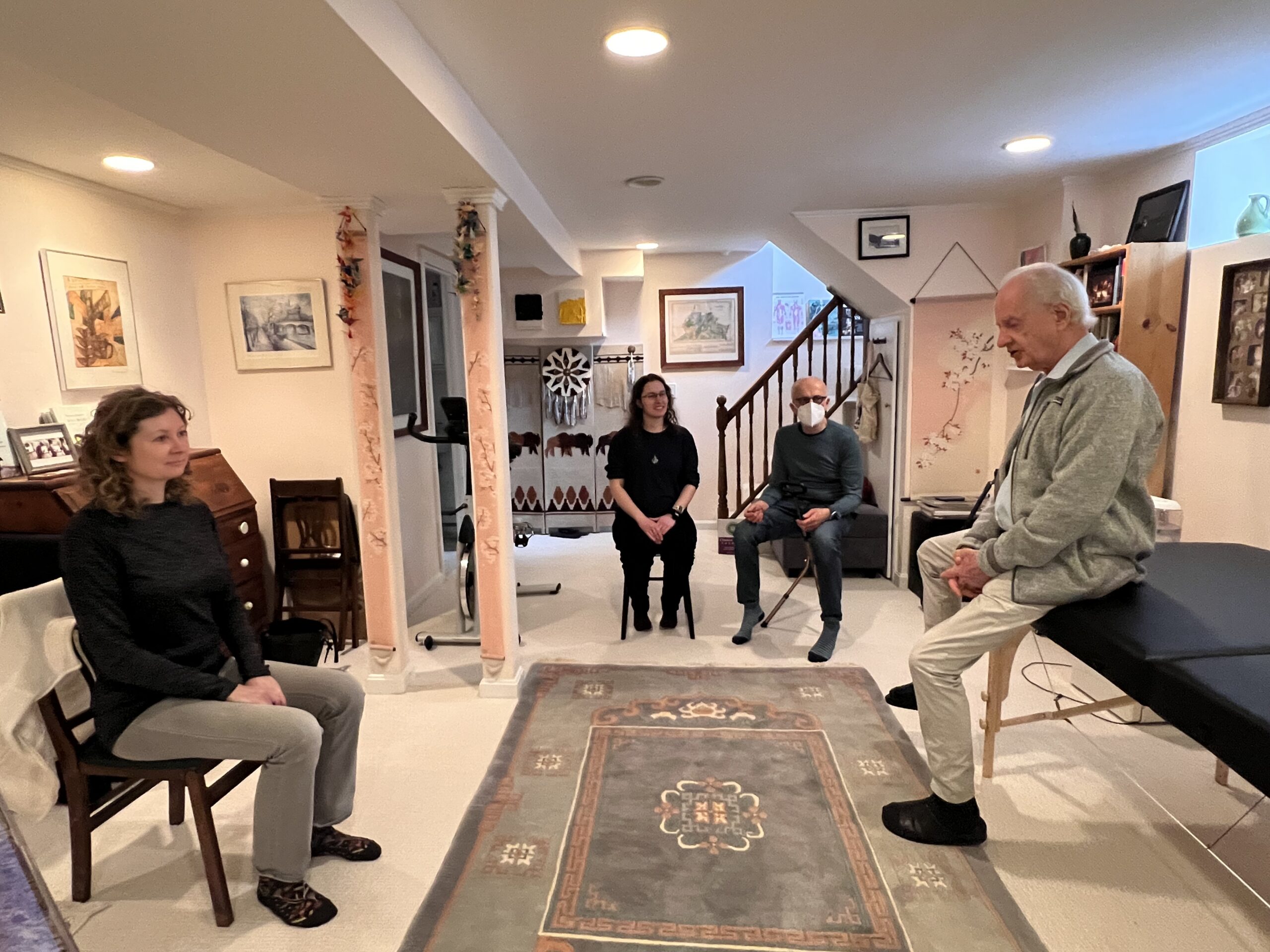
That was the question at the center of a class led by Tommy Thompson on February 27, 2025, in Boston, Massachusetts, USA, as part of the Alexander Technique teacher training course. In this class, the focus turned to relational presence—how we stay available to ourselves, our trainees, and the shared space between us without effort or interference.
Key Objectives of the Class:
- To explore presence through eye use and environmental awareness during table work
- To differentiate slow-twitch from fast-twitch support systems in movement
- To practice inhibition as a moment of conscious self-direction
- To experience the back as a living source of support, not a concept
- To deepen the teacher’s skill in perception, not correction
This blog series is based on Tommy Thompson’s Alexander Technique classes. Each post follows the flow and insights of the class to expand both self-awareness and practical consciousness applicable to everyday life.
New here?
If you’re new to the Alexander Technique, you can start with the resources below.
Alexander Technique Class Flow at a Glance

1. The Opening Question
❝ What if the simple act of keeping your eyes open could change your entire relationship to yourself? ❞
In the Alexander Technique, nothing is neutral—not your breath, your balance, or your gaze. Even the smallest moment reveals how we meet the world—and how we live.
When Ari, a trainee, asked Tommy Thompson whether it’s better to keep one’s eyes open or closed during table work, she wasn’t just talking about vision.
She was asking: How do I stay connected to the environment without losing inner clarity? How do I remain present without drifting inward or away?
Tommy didn’t give instructions. He offered direction—an embodied question.
Tommy’s Word
“Ask them what they’re experiencing.”
Because you want them to engage in a new experience of being themselves. That means listening to how they’re using themselves and responding to a different quality of experience. Attention—not effort—is the gateway to change.
“This wasn’t just a tip—it was a compass.”
For Tommy, change doesn’t begin with correction—it begins with contact. Not just physical, but perceptual. That moment of attention invites trainees into a new relationship with themselves—before direction, choice, or action. You’re not fixing them. You’re giving space for their own unfolding.
This is the heart of Tommy’s teaching: Attention leads. Change follows. Use of the self is improved not by effort, but by self-awareness.
2. Core Learnings from This Class
Core Concepts
- Use of the Self Is Never Neutral
Every moment expresses how we are using ourselves. As Tommy often stresses, it’s not about posture—it’s about how attention, direction, and inhibition shape the quality of our functioning. Even something as simple as where we place our gaze affects how we inhabit ourselves from the inside. - Presence Is Not a Concept—It’s a Relationship
Presence isn’t stillness, and it’s not about appearing calm. It’s about being in ongoing relational contact with your surroundings, your breath, your trainee, and yourself. Presence is not a state to achieve, but a way of being with. - The Back Is the Primary Source of Support
True support doesn’t come from holding or bracing—it arises when postural tone is awakened through perception. The back becomes the base—not through willpower, but through reflexive readiness. - Inhibition Creates Space for Agency
Inhibition is not resistance or delay. It is the conscious moment before action—the space where choice begins. As Tommy reminds us, “You have more time than you think. The work is in using that time differently.” - Teaching Starts With Seeing, Not Fixing
The most transformative teachers don’t direct—they perceive what is seldom seen. Lasting change happens when a student feels seen without being corrected, and met without being moved.
Five Key Messages
- Attention is the gateway to change.
Noticing comes first. Direction follows. Movement reorganizes from there. - Freedom begins in the neck.
When the neck is free, the entire system begins to cohere around that release. - Inhibition empowers choice.
The pause before action is the place where self-use can shift. - Back support is perceptual, not mechanical.
It’s activated through slow-twitch tone and subtle listening. - You teach by perceiving, not performing.
Hands follow perception. Presence shapes the teaching.
Essential Terms
- Primary Movement
The dynamic initiation that organizes the whole body in motion—often beginning with the relationship of the head, neck, and back. In classical Alexander terms, this was called “primary control,” but Tommy reframes it as primary movement to emphasize coordination over correction, and flow over fixation.
→ It’s not something to hold—it’s something to reawaken in each moment. - Withholding Definition
Tommy’s signature concept that expands the idea of inhibition. Rather than reacting or labeling what we observe—in ourselves or others—we pause. This space allows perception to deepen, free from interference.
→ When you withhold defining, you might really see yourself. - Slow-Twitch Fibers
Endurance-based muscle fibers that support sustained, effortless movement. These are activated through presence, not force.
→ Every time you free your neck, you engage more of them. - Endurance Fiber Activation
The perceptual and muscular shift that lets you do more with less effort. Clarity, duration, and support increase as you coordinate differently.
→ You’ll be able to work longer without tiring—even with just thinking. - Head-Neck Reflexes
The natural reflexes guiding whole-body integration through the release of the head and neck in relation to the spine.
→ Let the neck be free to lengthen and release through the back. - Relational Presence
Being fully with another—not through technique, but through attuned awareness. It’s not about doing something to someone. It’s about listening to their use and meeting them there.
→ An embrace is not a hug. It’s how you are with someone in the whole room. - Embrace
A metaphor for the space a teacher holds as a student approaches something vulnerable or true in themselves. This is a non-invasive way of being-with, not guiding-toward.
→ Stay. Hold the student in that embrace.
3. Tommy’s Insights
In Tommy’s words during class, there are not only the core principles of the Alexander Technique, but also practical wisdom that can be applied directly to daily life. His words go beyond simple advice about movement and prompt us to deeply consider how we choose to exist.“The way you guide someone not to drift inward during table work—like when they close their eyes and become passive—is to talk to them. Ask: ‘What are you experiencing?’ I ask this over and over—especially if they’re new—because you want them to engage in a new experience of being themselves.”
By encouraging verbal engagement, you foster dynamic presence and prevent dissociation.
“From an Alexander point of view, you’ll get more of what you want if you take that brief moment while you’re here to let your neck be free. You want to help guide him in doing that—into letting his neck be free, lengthening the muscles of the whole neck with the understanding that they extend far into the back. Before he moves, you want to establish that.”
The gateway to coordinated movement begins in the neck; freedom here organizes the whole system before action unfolds.
“What we’re doing is guiding you into engaging endurance fiber. The more you use a different quality of coordination, the more endurance fiber you activate. That’s the logic—you’ll be able to work longer without tiring, even with just thinking.”
Sustained coordination draws from postural tone, not effort—revealing a path to ease in action and thought.
“What you really want to get good at as a teacher is seeing what is seldom seen. If people feel that you’re speaking truthfully to them—if they feel embraced—they will speak truth in return. And they follow your hand.”
The teacher’s art lies in subtle perception; when safety is felt, truth and trust follow naturally.
“Appreciate the fast-twitch and the slow-twitch fibers—they work together.” What you’re saying is, you keep coming back to using the slow-twitch fiber. Every time you free your neck, you access more of it.
Functional unity arises when reflexive, postural systems lead—and effort-based systems follow.
“In that embrace, there are moments where you sense this is something someone is about to connect with. Stay. Hold them in that embrace. An embrace is not a hug. It’s a way of being with someone in the whole room.”
Embodied presence is relational; attunement deepens when the teacher sustains space without imposing.
“Withhold defining what you see.” Don’t judge it. Don’t label it. Just look. When you withhold defining, you might really see yourself—and from that, you might develop compassion. Maybe even decide to change. Decide who you want to bring into tomorrow.
Nonjudgmental awareness opens the door to genuine self-recognition and voluntary transformation.
4. Practical Tips for Everyday Life
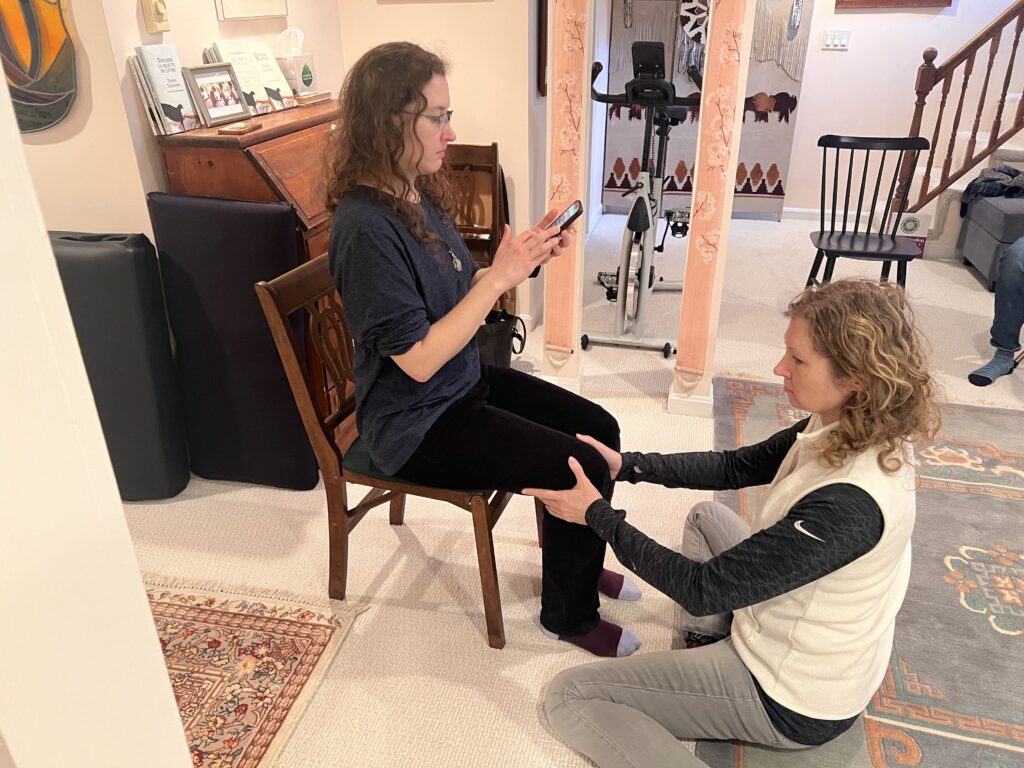
What’s the Goal?
To transform ordinary actions—like typing, checking your phone, or speaking—into opportunities for conscious use of the self. The goal is not just better posture or performance, but a shift in how we relate to ourselves during moments of intensity, interruption, or stillness. As Tommy might say: Can you stay with yourself while doing what you do?
How to Practice
- Expand, Don’t Narrow, Your Attention While Working
During any mentally focused task—such as typing, writing, or problem-solving—take a few moments to soften your visual focus. Feel your breath, your sitting bones in contact with the chair, and the space behind you. Don’t narrow your attention—let it widen. This is how you stay present without collapsing into effort. - Pause When Interrupted
When something interrupts your focus—a phone notification, a sudden sound—pause. Notice what happens. Do you tense your shoulders? Hold your breath? Lift your chest? Take just a moment to let your breath move again. That moment is where choice begins. - Use Breath as Feedback
During any focused task, ask yourself: Can I breathe easily right now? If the answer is no, don’t try to fix it—just notice. You might discover that your breath mirrors how much effort you’re putting into the task. Typing shouldn’t make your breath shallow—but it often does, because we unconsciously link effort with contraction.
What You’ll Notice
- Increased clarity and calm during tasks
- Greater awareness of body and breath under pressure
- A shift from reacting to relating—even with yourself
5. Closing the Class
Key Takeaways
- How you use yourself is how you meet the world.
- The back supports not just movement, but clarity.
- Presence isn’t something you perform—it’s something you practice.
- Inhibition is not holding back; it’s where agency begins.
- Seeing without fixing creates the space where change can emerge.
Core Insights
- You don’t need to improve yourself. You need to stop interfering with what already works.
- Relational presence starts by being with, not doing to.
- Self-awareness is the tool. Perception is the guide. Breath is the mirror.
- The body isn’t a problem to solve—it’s a conversation to stay in.
- Teaching isn’t about control. It’s about presence that invites participation.
A Final Invitation
Change doesn’t begin with effort. It begins with self-awareness. Every moment invites a different choice—and a different way of being. When you meet the world from your back—with perception instead of pressure—you don’t just move differently. You relate differently. You live differently.
6. One Key Practice
Before any action—pause.
Let the neck be free to lengthen and release through the back. Notice what you’re about to define—and don’t. That one moment is the doorway to everything in the Alexander Technique.
7. Three Questions to Ask Yourself
- What changes when I let my neck be free—before I move, speak, or think?
- Am I relating to the space I’m in—or retreating from it?
- When I pause, do I make room for new choices—or fill it with old habits?
8. For Those Who Wish to Learn More
Recommended Books
- Touching Presence – Tommy Thompson
This rare gem distills over 50 years of Tommy Thompson’s teaching into one essential volume. More than a manual, it’s a living articulation of core Alexander principles reframed through Tommy’s lens—relational presence, withholding definition, and the art of seeing what is seldom seen. Both philosophical and practical, this book invites readers into the depth and spaciousness of the work itself. - How You Stand, How You Move, How You Live – Missy Vineyard
This is one of the most accessible yet profound contemporary introductions to the Alexander Technique. Vineyard brings clarity to complex concepts such as attention, primary movement, and slow-twitch support. Her writing bridges science and somatic experience, making this a powerful resource for practitioners, teachers, and curious readers alike.
Official Website of Tommy Thompson
www.easeofbeing.com
This is the official website personally managed by Tommy Thompson, offering a wide range of resources and programs to deepen your understanding and practice of the Alexander Technique:
- Private session reservations and inquiries
- Workshop and seminar schedules
- Overview of international teacher training programs
- Essays and articles on the Alexander Technique
9. Next Class Sneak Peek
What if change doesn’t begin with doing something new—but with not doing what you always do?
In the next class, Tommy invites us into the quietest—but most powerful—moment of all:
the space between stimulus and response.
Through hands-on work, direct experience, and bold questions, we begin to explore:
- How to inhibit habitual reaction in real time
- What it means to give direction without effort
- How the conscious use of the self isn’t just about posture—it’s about how you choose to exist
Tommy asks:
“Can you pause long enough to choose a different way?”
Join us in Class 43, where the lesson isn’t how to improve your movement—
but how to stop interfering with the intelligence that’s already there.
10. Join the Alexander Technique Journey
Did this class leave a small resonance within you? Feel free to quietly hold it in your heart or share it in just a sentence or two. The comments are always open. Your one simple word may leave a gentle ripple in this ongoing journey.The journey of Resonance Flow continues across social media as well. Let’s continue this journey together.
 YouTube
 Instagram
 Threads
 Facebook