Integrating Body and Mind Through Hands-On Technique | Tommy Thompson Class 12
❝ Why does one touch have the power to shift both body and mind? ❞
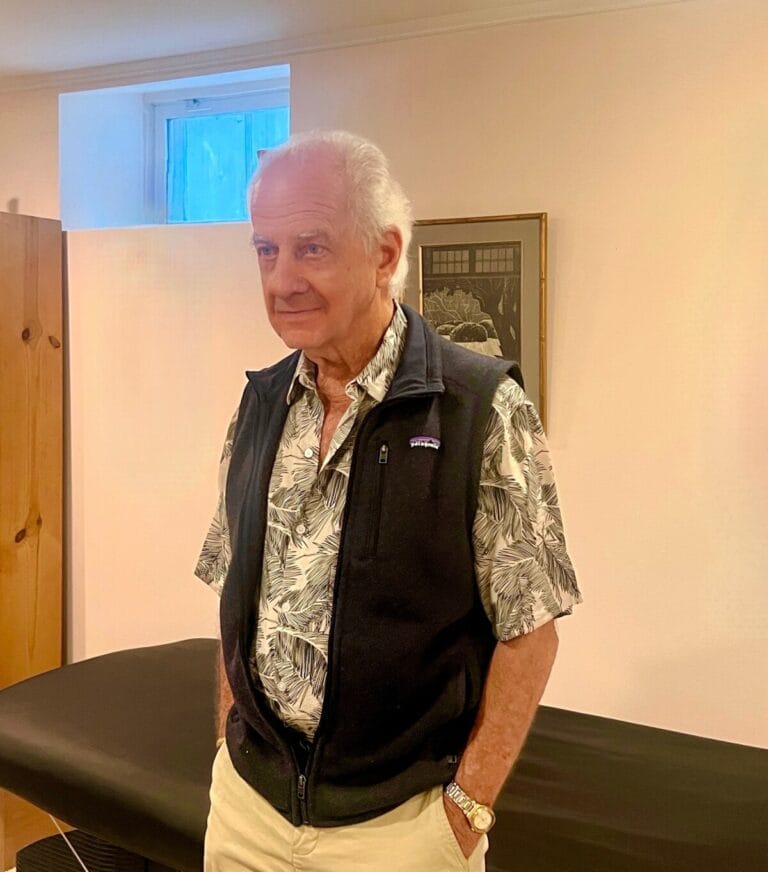
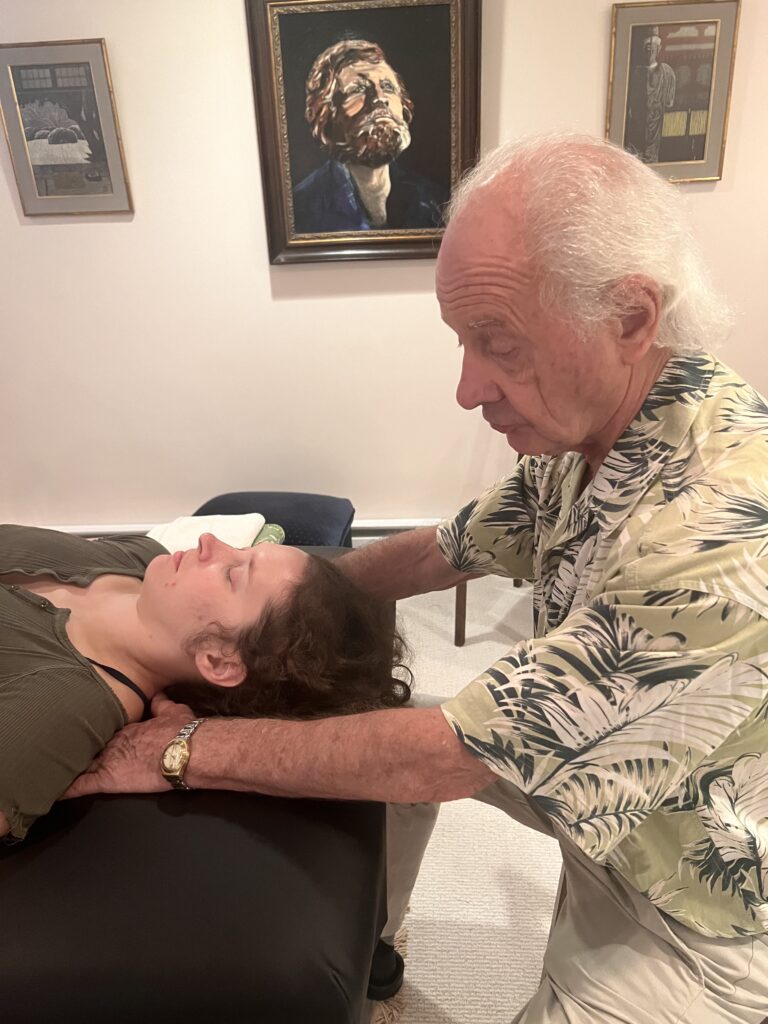
The answer lies in the Alexander Technique’s hands-on approach. On October 10, 2024, in Boston, Massachusetts, USA, Tommy Thompson led a class centered around this question—exploring how guided touch reveals the connection between thought and movement, and how it helps reorder the foundation of one’s being.
Drawing from hands-on technique and undulatory movement (a naturally rhythmic, wave-like motion that flows through the entire body), this class was not about correcting posture. It was a journey toward integrated presence.
Key Objectives of the Class:
- Restore natural alignment and freedom of movement through hands-on technique.
- Understand the interaction between thought patterns and physical coordination to unlock new possibilities.
- Experience undulatory movement as a pathway to embodied energetic harmony.
- Distinguish between relaxation and integration—and learn how to apply them in practice.
In this article, we’ll explore the insights and structure of Tommy’s class to see how hands-on technique restores the mind-body connection and opens new possibilities. Join us in this journey where transformation truly begins.
In the previous class, we explored the “still point of support”—a foundational pause from which presence and alignment arise.
Read Class 9 → Still Point of Support
This blog series is based on Tommy Thompson’s Alexander Technique classes. Each post follows the flow and insights of the class to expand both self-awareness and practical consciousness applicable to everyday life.
New here?
If you’re new to the Alexander Technique, you can start with the resources below.
Alexander Technique Class Flow at a Glance
1. The Opening Question
❝Can hands-on work lead to inner freedom, beyond mere physical contact?❞
Tommy’s Words
“An Alexander Technique teacher does not judge. Their role is to guide someone into an experience where they can discover who they might become.”
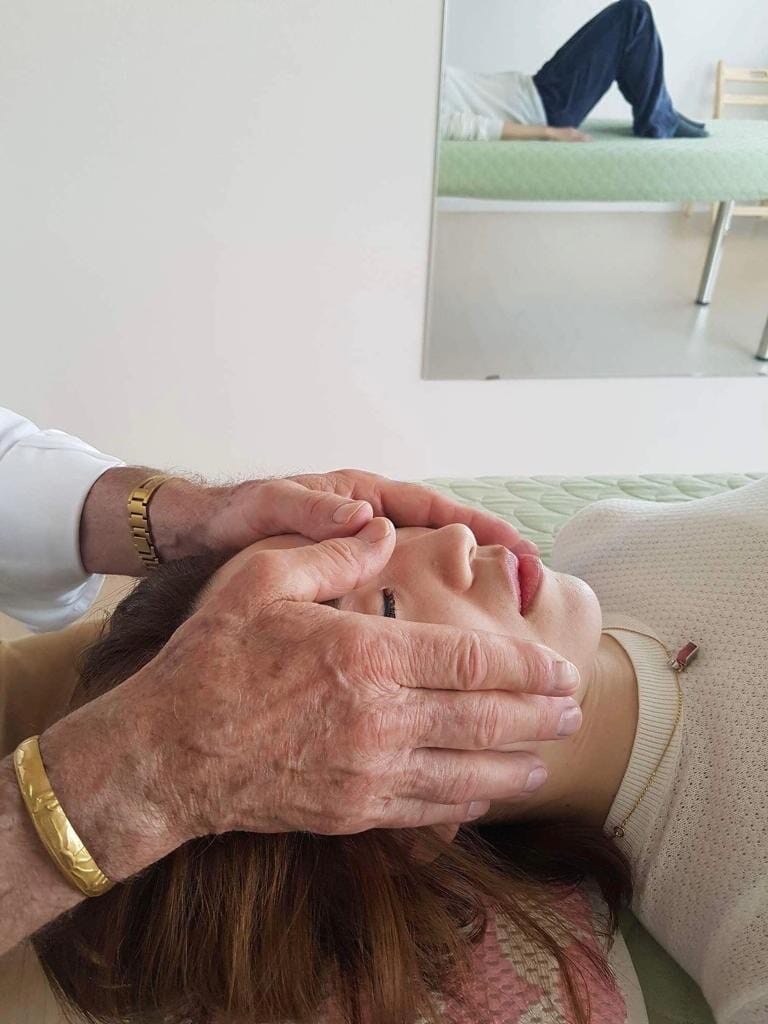
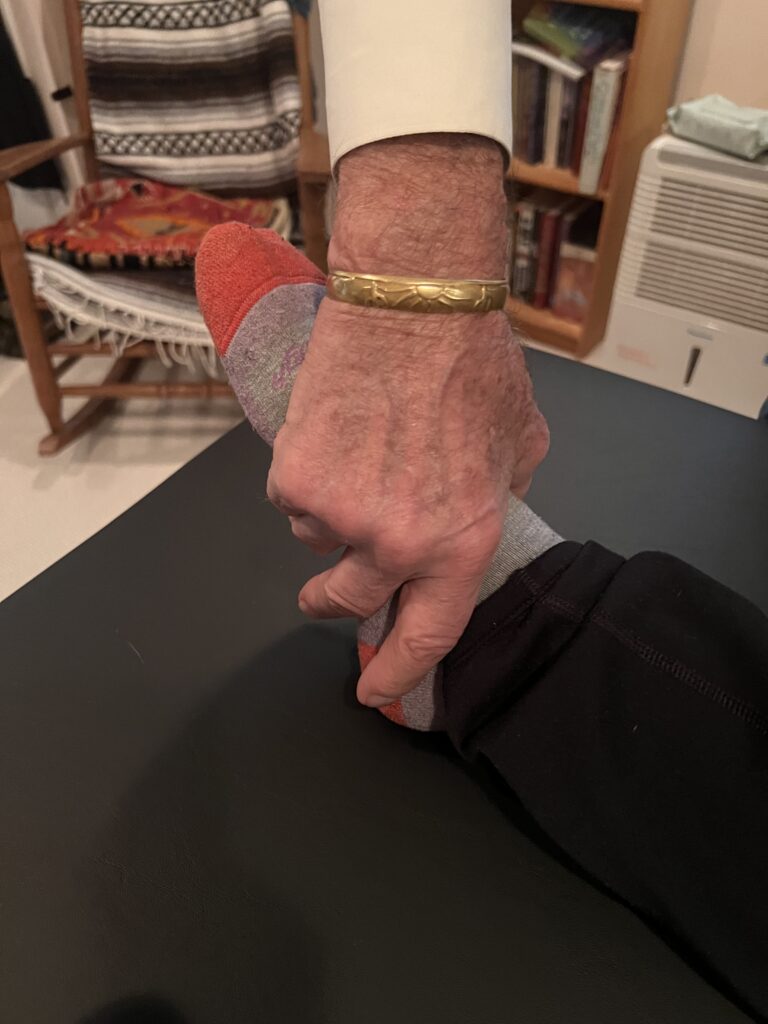
The hands-on technique in the Alexander Technique is not simply a method of physical adjustment or postural correction. It is a practical philosophy—a way of helping a person re-experience themselves anew. Through mindful touch, it supports the integration of thought and sensation, helping to recover both inner freedom and a sense of resilience.
In this class, Tommy Thompson emphasized that hands-on work is not about “fixing” from the outside, but about creating a nonjudgmental space where possibility becomes perceivable. What’s being addressed isn’t just physical alignment—it’s a restoration of trust in one’s own being.
Here, mindset is not a superficial attitude. It’s a deeply embedded structure that shapes muscular patterns and overall coordination. When we recognize that chronic tension in the head and neck might originate from fixed patterns of thought, we begin to open the door to true transformation.
- For instance, when a student lets go of the belief “I have to stand this way,” their body often grants a freedom that was previously inaccessible.
- The teacher’s touch doesn’t deliver a solution—it opens a space where the student can meet their own potential for change.
Key Points
- Hands-on work is not mechanical correction; it is an invitation to rediscover inner freedom.
- A shift in thinking can directly reshape the body’s habitual patterns.
- Nonjudgmental touch rebuilds trust and expands one’s self-awareness.
2. Core Learnings from This Class
Core Concepts
- Guidance without imposition: In the Alexander Technique, the teacher doesn’t dictate change. Instead, their role is to create the space and conditions for students to rediscover themselves.
- The interplay between thought and body: Habitual ways of thinking shape patterns of physical use. When awareness shifts, physical transformation often follows.
- Distinguishing integration from relaxation:
- Integration is a state in which the neuromuscular system coordinates movement, thought, and emotion into a coherent flow.
- Relaxation is not something we produce—it’s what emerges naturally when integration occurs.
- Non-critical observation: Whether as a teacher or a student, choosing to look for potential rather than fault opens the door to meaningful change.
- Withholding Definition:
Quickly labeling yourself or a situation—“This is who I am,” “This is how it is”—can close off new possibilities. The moment you pause that definition, something new and unexpected can begin to emerge. - Undulatory movement and the spine: When movement follows the spine’s natural curves, like a wave, the brain and body begin to relearn a more integrated way of functioning.
- The body as an energetic system: Human movement is not simply muscular—it’s an expression of energy flowing through form, often described as an undulation.
Five Key Messages
- Non-judgmental guidance expands possibility.
We grow further when we are trusted, not evaluated. - Touch is the language of integrated being.
Hands-on technique awakens physical awareness and perception in ways that words alone cannot reach. - Change occurs without resistance when it follows a natural flow.
The body and mind recalibrate more easily through rhythm than through force. - Relaxation is not a goal—it’s a byproduct of integration.
When inner coordination is restored, tension dissolves on its own. - Change begins the moment we pause our self-definitions.
Releasing fixed identities opens the door to greater freedom.
Essential Terms
- Hands-on technique
A method of using the teacher’s touch to engage the nervous system, reveal patterns of tension, and support integration through guided awareness. - Undulatory movement
A wave-like, energetic motion flowing through the body—not driven by force, but by internal rhythm and balance. - Integration
A coordinated state where physical, sensory, and cognitive processes operate as a unified system. - Relaxation
A natural outcome of internal balance—not merely the release of tension, but the felt expression of harmony. - Withholding Definition
The practice of momentarily pausing the impulse to define yourself or a situation, allowing space for new perceptions and unexpected possibilities to arise. - Non-critical approach
A perspective that recognizes and accepts what is, without judgment—fostering trust and growth. - Neuromuscular Integration
The coordinated functioning of sensory input, motor response, and cognitive awareness—at the core of how change occurs in the Alexander Technique.
3. Tommy’s Insights
In Tommy’s words during class, there are not only the core principles of the Alexander Technique, but also practical wisdom that can be applied directly to daily life. His words go beyond simple advice about movement and prompt us to deeply consider how we choose to exist.“So your focus, when you’re working, is to hold in mind that there is no criticism. And it’s you guiding the person into an experience of who they might be—or who they could become in that moment.”
In hands-on work, the teacher’s role is not to correct, but to create a nonjudgmental space where the student can enter an experience of who they might become—right here, right now.
“The body ultimately becomes a reflection of the way you think. Over time, as you change the way you think, your body will also change. If you introduce something into the flow of change that facilitates transformation, it will occur gradually and holistically.”
Shifting your thinking shifts your body—transformation is integrated, not forced.
“The moment you start to describe yourself, instead of continuing to define yourself, just pause and withhold that definition. Even though it’s a reality, holding back will allow you to let go.”
Withholding definition opens space for freedom and new possibilities to emerge.
“Relaxation is a byproduct of integration. What you’ve really done is help integrate your neuromuscular system.”
Relaxation is not a goal in itself, but a natural outcome of coordinated internal harmony.
“Undulatory is what happens—you forget, it goes through the body like that. But it’s happening at a subatomic level. You are more wave than anything else.”
Undulatory movement reflects the energetic nature of being—more wave than structure.
“You can’t truly make it happen—because you’re not just touching the surface. You’re reaching into something deeper within the individual. That person lives there—and your role is to meet them in that space. But they must find themselves before you can find them.”
Transformation doesn’t come from external intervention, but from inner recognition. As a teacher, your presence opens the space—but the student must step into it.
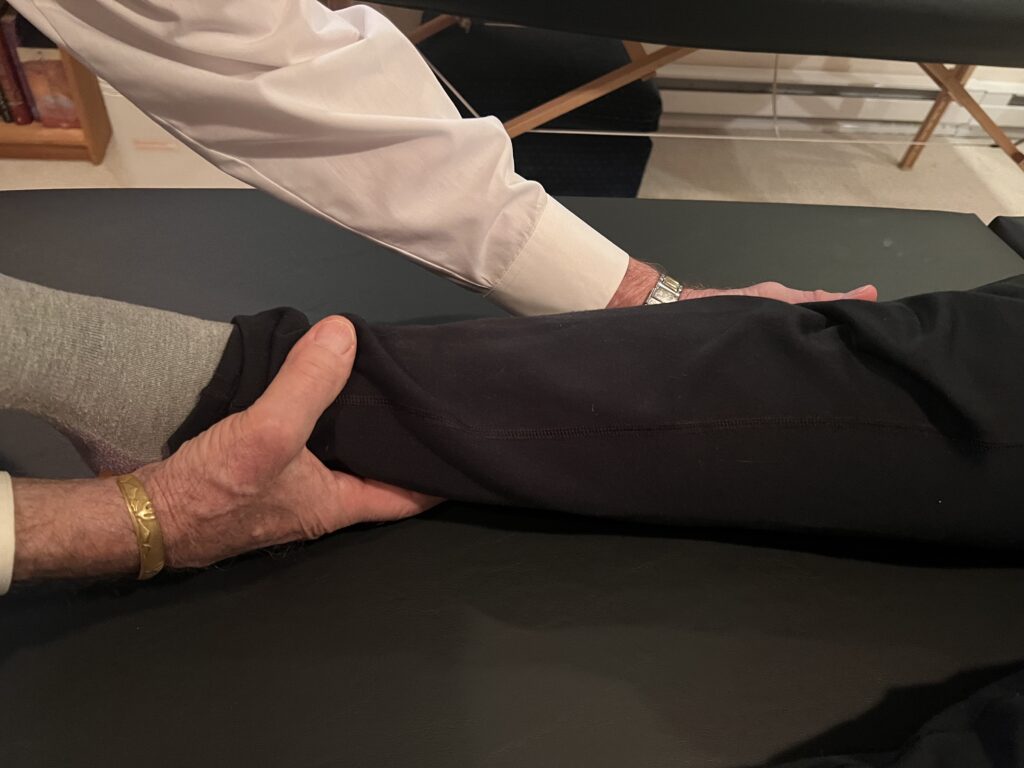
“If you follow that movement, you learn how to use your hands really well. I think you just follow the movement. Just really follow it. Don’t try to induce anything. Just follow.”
In hands-on work, the power lies not in guiding, but in following the undulatory movement with presence.
4. Practical Tips for Everyday Life
What’s the Goal?
- To pause self-definition and cultivate an attitude that embraces wider possibility and a more fluid sense of identity.
- To recognize the interplay between thought and physical response, using sensory attention to reshape lived experience.
How to Practice
- Catch the Moment You Define Yourself
Notice when a thought arises like “This is just who I am.” - Withhold Definition
Pause instead of reinforcing it, and ask yourself, “Is this truly who I want to become?” - Return to Sensory Awareness
Shift your focus to the body. Is there a release in your neck, shoulders, or jaw? Has your breathing changed?
What You’ll Notice
- When the mental frame loosens, physical tension begins to soften naturally.
- A fixed self-image gives way to a more spacious perception of who you might become.
- You start meeting yourself—and others—with an open, non-judgmental presence that feels more alive in everyday life.
5. Closing the Class
Key Takeaways
- Hands-on technique is not just physical—it’s a practice of reordering the structure of thought and being.
- When thought shifts, movement follows. And when movement reorganizes, so does your way of inhabiting yourself.
- Relaxation isn’t the goal—it’s a natural byproduct of integration.
Core Insights
- When touch is free of judgment, people begin to sense possibility from within, not pressure from without.
- Rather than forcing alignment, invite coherence by shifting how you think and sense.
- To withhold definition is not to lose yourself—it’s to grant yourself freedom beyond what you’ve known.
A Final Invitation
- Today, simply notice the moment judgment arises.
Then pause—and return to what you feel, rather than what you think. - That small pause could be the doorway to greater integration.
6. One Key Practice
Today, notice the moment you start to judge—yourself or others—and pause.
- Become aware of that split second when judgment arises. It might sound like “What’s wrong with them?” or “That’s just the way I am.”
- In that moment, pause and hold back the thought. There’s no need to react.
- Try meeting the person—or the moment—with the attitude: “What if there’s another way to see this?”
This simple pause is a practice of meeting yourself and others as they are.
- Non-judgmental awareness creates trust, and helps you see potential—rather than limitation.
- As judgment loosens its grip, your body and mind grow lighter and more flexible.
7. Three Questions to Ask Yourself
- “Have you ever noticed a moment when hands-on touch shifted something in your body or mind?”
Try to recall what sensations were awakened, and what emotional changes you experienced. - “When you shifted your thinking, what changed in your body?”
Reflect on any subtle shifts you noticed—in your posture, tension, breathing, or the way you moved. - “How did your relationships shift when you looked at others without judgment?”
Consider how a receptive perspective created more space and change for both you and the other person.
8. For Those Who Wish to Learn More
Recommended Books
- The Use of the Self – F.M. Alexander
A foundational work that lays out the core philosophy of the Alexander Technique. Through the concept of self-use, Alexander explores how thinking, awareness, and movement are intricately linked. This is essential reading for understanding the perceptual principles behind hands-on technique. - Body Learning – Michael J. Gelb
A clear and accessible introduction to the Alexander Technique, especially for newcomers. This book offers real-life examples and practical guidance for applying kinesthetic awareness in everyday life. It’s an excellent way to understand the basics of how the hands-on approach works.
Official Website of Tommy Thompson
www.easeofbeing.com
This is the official website personally managed by Tommy Thompson, offering a wide range of resources and programs to deepen your understanding and practice of the Alexander Technique:
- Private session reservations and inquiries
- Workshop and seminar schedules
- Overview of international teacher training programs
- Essays and articles on the Alexander Technique
9. Next Class Sneak Peek
In the next class, we will explore the regulation of the nervous system and how emotional patterns shift through embodied awareness.
- Autonomic nervous system & emotional response:
We’ll examine how specific nervous states influence emotions, behavior, and physical use. - Practicing inhibition:
Learn how to pause automatic reactions and create space for conscious, new choices. - The fluidity of identity:
Move beyond fixed self-perceptions and explore how identity can evolve with presence and permission.
Through practical exercises and real-world examples, this class guides you toward an experience where your nervous system, emotional patterns, thinking, and movement begin to function as one integrated system.
10. Join the Alexander Technique Journey
Did this class leave a small resonance within you? Feel free to quietly hold it in your heart or share it in just a sentence or two. The comments are always open. Your one simple word may leave a gentle ripple in this ongoing journey.The journey of Resonance Flow continues across social media as well. Let’s continue this journey together.
 YouTube
 Instagram
 Threads
 Facebook