Use of the Self: When Your Body Tells the Story of Who You Are | Tommy Thompson Class 40
❝ What story is your body telling right now? ❞
We tend to believe that who we are and how we feel lives solely in the mind. But the body always speaks first. Use of the self is not just about movement. It is the body’s chosen way of thinking, a patterned response, and a direct expression of the story you’ve lived.
We stay confined within familiar identities, shaped by repeated postures and responses. The Alexander Technique invites us to become aware of that framework—and opens the door to new possibilities.
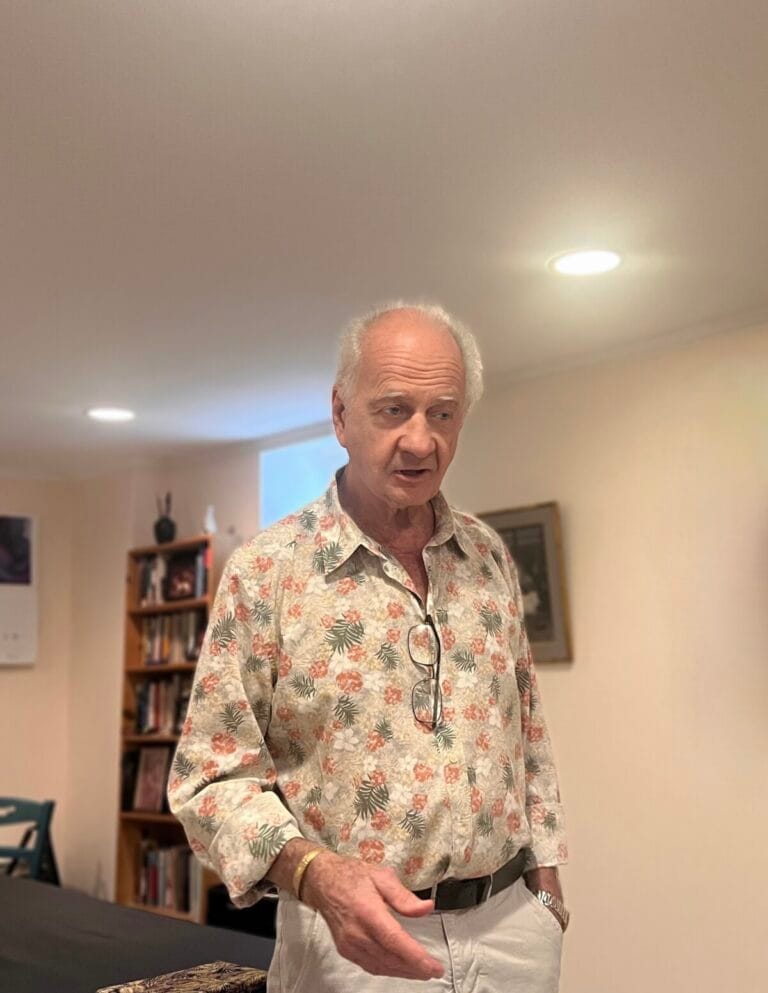
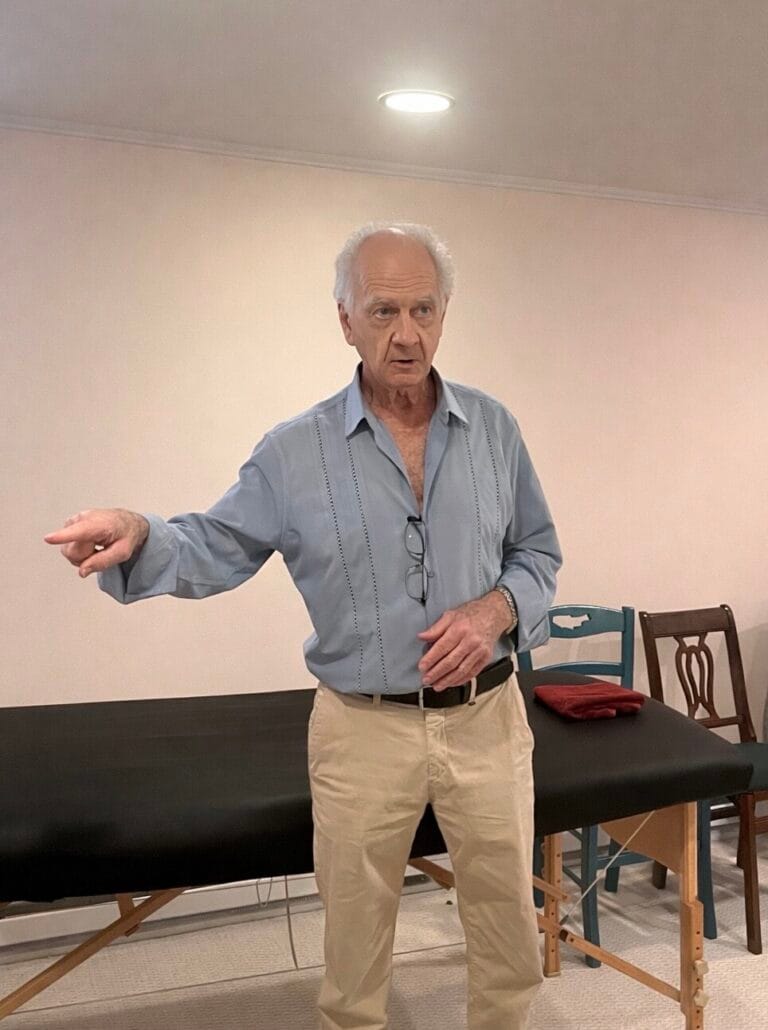
On February 25, 2025, in Boston, Massachusetts, USA, Tommy Thompson led a class in the Alexander Technique teacher training course that shed new light on the concept of use of the self, exploring the deep connections between identity, kinesthetic awareness, and personal narrative.
Key Objectives of the Class:
- Experiencing movement reorganization through the relationship between the head, neck, and back
- Recognizing the connection between facial expression and movement
- Becoming aware of the body’s embedded narrative and expanding the range of available choices
This blog series is based on Tommy Thompson’s Alexander Technique classes. Each post follows the flow and insights of the class to expand both self-awareness and practical consciousness applicable to everyday life.
New here?
If you’re new to the Alexander Technique, you can start with the resources below.
Alexander Technique Class Flow at a Glance
1. The Opening Question
❝ What story is your facial expression telling right now? ❞
Tommy says:
“When you observe someone’s facial expression, you begin to see how the entire body organizes around it. The dominant tone in the face shapes the way the body holds itself—and that’s often how a person’s personal narrative becomes visible.”
The face, as Tommy describes it, is not merely a window into emotion.
It is a central signal that coordinates the entire body. Even the subtlest shift in facial expression can redirect the course of thought—and the way we think restructures the entire architecture of our use of the self.
This is not simply a matter of “managing expressions.”
It is an invitation to observe what story your body is living right now.
The body and the face are one. Thought and reaction are inseparable. This is where the Alexander Technique begins: in a sensory experience of integration.
2. Core Learnings from This Class
Core Concepts
- Use of the self is not simply about posture or movement—it’s a quality of behavior intimately linked to one’s identity.
- This use reflects an unconscious narrative about who we believe ourselves to be.
- The relationship between the head, neck, and back serves as the central axis that coordinates both physical freedom and emotional response throughout the whole body.
- Facial expression reflects habitual patterns of thought, and the entire body tends to organize itself in relation to it.
- Even in basic movements like sitting and standing, the quality of use reveals how support is sensed and integrated throughout the system.
Five Key Messages
- Use of the self is an expression of identity.
- Support is not something that lifts you up—it emerges from a grounded sense of integration.
- Facial expression reveals both patterns of thought and patterns of physical organization.
- Change begins not with correction, but with conscious choice through awareness.
- Movement is a unified expression—not just of the body, but also of story, emotion, and reflex.
Essential Terms
- Use of the Self:
The way one organizes body, attention, and perception—reflecting an overall mode of being in the world. - Behavior:
The patterned physical and emotional responses that arise from repeated ways of using the self. - Support:
A foundational experience of contact with the ground that allows the body to extend upward with ease and coherence. - Unwinding:
Unwinding refers to the natural release of unconscious tension patterns—often revealed through gentle awareness. - Head–Neck Reflex:
A neurologically based coordination system that governs freedom of movement and overall direction through the relationship of the head and neck.
3. Tommy’s Insights
In Tommy’s words during class, there are not only the core principles of the Alexander Technique, but also practical wisdom that can be applied directly to daily life. His words go beyond simple advice about movement and prompt us to deeply consider how we choose to exist.“Once you’ve experienced a more optimal head–body relationship and begun to recognize kinesthetic patterns, it becomes easier to say, ‘Ah, now I can pay attention to how I’m using myself.’”
A clearer connection between the head and body allows for conscious awareness of one’s habitual patterns and choices.
“You can even substitute the word ‘use’ with ‘behavior’… It’s a quality of behavior you’ve become accustomed to—one that reflects your personal narrative.”
‘Use’ isn’t just about physical alignment—it represents how you live and act, shaped by your internal story.
“If you notice the facial expression—everything about her body is a direct expression of the predominant expression in her face—you can now identify the personal narrative.”
The face reveals the inner emotional and cognitive state, which is mirrored in the body’s overall organization.
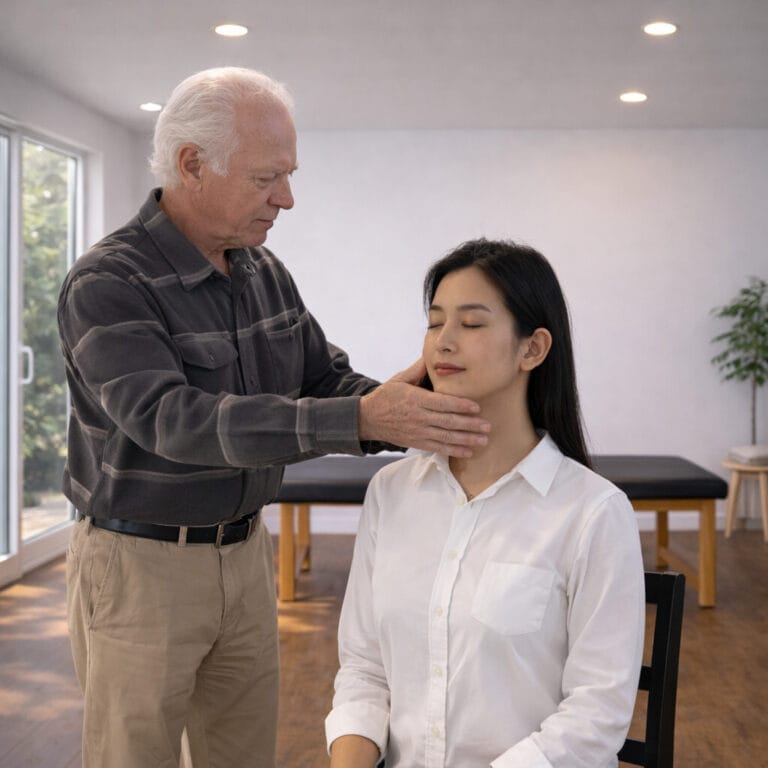
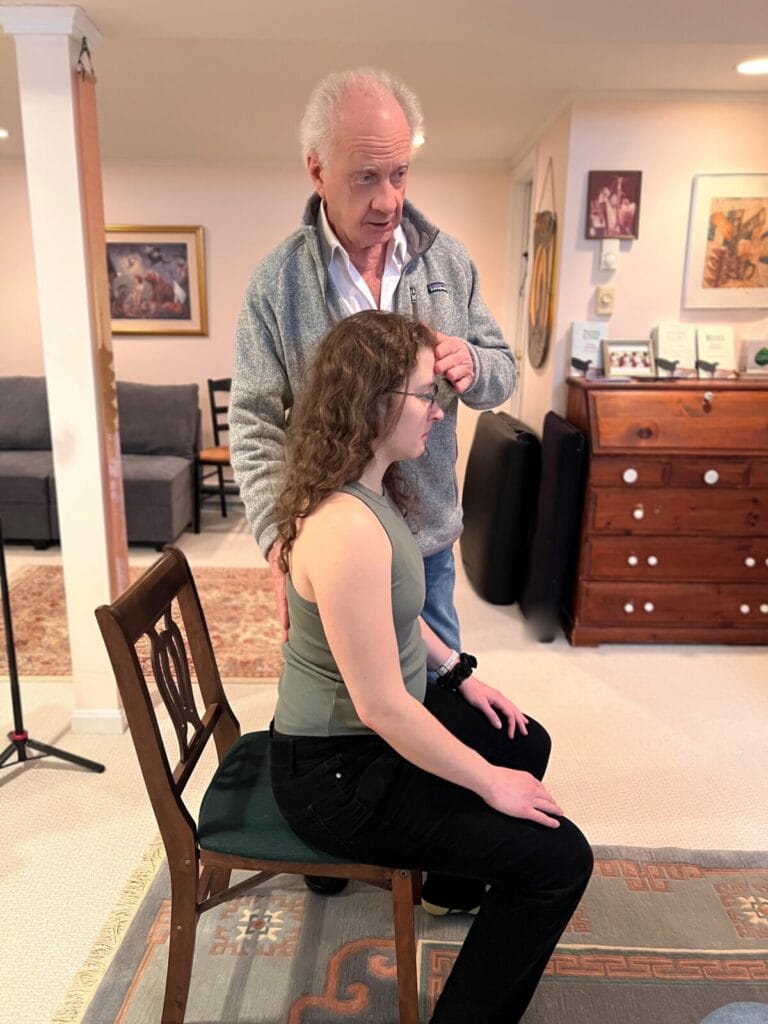
“During chair hands-on work, the teacher guides the student to become aware of how the head, neck, back, and part of the trapezius are interconnected.”
The teacher helps the student sense how the head, neck, back, and trapezius work together to support integrated, easeful movement.
“There are head–neck reflexes that influence your overall freedom of movement. The key is to stimulate those reflexes gently and intentionally at the level of the head and neck.”
These reflexes help organize the whole body through the head–neck relationship. Gentle, intentional stimulation can restore natural movement and postural freedom.
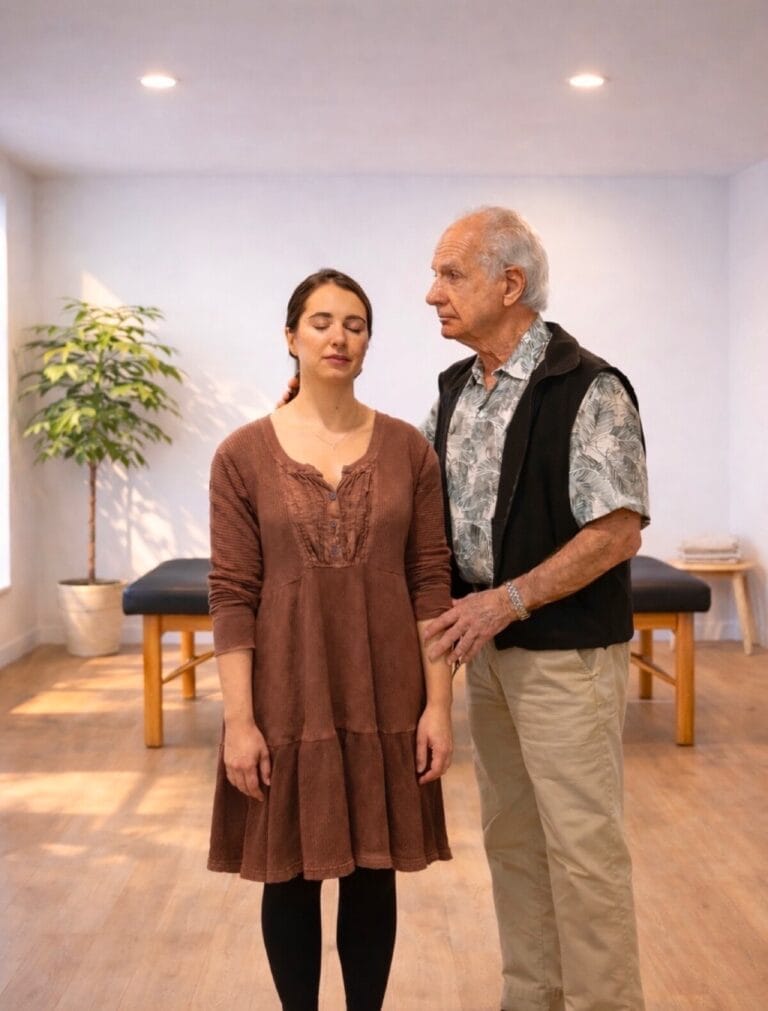
“The motivation for making someone spring-loaded is this: when everything is somewhat aligned, you can reach a state that’s not perfect, but close to complete neuromuscular self-awareness—something like communication. It feels like this: I give pressure downward, and you stand into my hand as if pushing up through your feet.”
Alignment and directional support can awaken a coordinated state that feels communicative, alive, and self-aware.
“If you don’t tighten anything—just let the neck be free to lengthen instead of shorten—then that tension doesn’t spread through the whole body. And that’s when you find real freedom of movement.”
When the neck is free to lengthen instead of contracting, muscular tension doesn’t spread through the system—and true movement freedom emerges.
4. Practical Tips for Everyday Life
What’s the Goal?
- To make the use of the self a more easeful and sustainable choice in daily life.
How to Practice
- Begin sitting by grounding your entire feet on the floor.
Avoid collapsing into the seat from your hips. Let your feet contact the ground first so the body can register support from below. - When looking at a screen, notice if your chin is jutting forward.
Whether using a phone or laptop, gently draw the chin inward and allow the head to float upward. - Before walking, ask yourself: “Where am I moving from right now?”
Are you initiating from your feet, or leading with your chest or head?
Simply noticing this can bring greater softness and organization to your movement.
What You’ll Notice
- Less unnecessary effort when sitting or standing, with a greater sense of whole-body integration.
- A growing ability to catch habitual tension patterns that arise during specific postures throughout the day.
- A deeper awareness that emotion is often embedded in movement—and that noticing it can shift both.
5. Closing the Class
Key Takeaways
- Use of the self is a choice that comes before movement.
Before you sit, stand, or act, there is a moment of choosing how to relate to yourself. - Face, body, and identity move as one stream.
Your facial expression doesn’t just reflect emotion—it signals how your whole system is organized. - Support is a response from below, not a push from above.
When your feet are truly grounded, you can rise with more lightness and freedom.
Core Insights
- Changing the body begins with changing perception.
Before trying to release muscles, recognize the patterns you’ve been living in. - Movement is a silent declaration of who you believe you are.
The way you sit, stand, and walk is a quiet statement of who you believe yourself to be.
A Final Invitation
- Your body is always writing the story of your inner life.
- If you want to change that story, just once today—pause, and ask:
“How am I using myself in this moment?”
That single question could be the beginning of everything.
6. One Key Practice
The next time you go from sitting to standing, notice how your face responds first.
We often think of movement as something the body does—but in truth, the face usually tightens or leads the direction before anything else moves. In that split second, ask: What thought or emotion is shaping this expression?
That small act of awareness can shift how you use your entire self.
Try it just once a day—as you move from sitting to standing, tune into your face. That brief recognition may become a turning point in how your whole system moves and relates.
7. Three Reflection Questions to Ask Yourself
- What story is my face telling right now?
- In what ways do I habitually support—or undermine—myself?
- Am I living in repeated reactions, or in chosen movement?
8. For Those Who Wish to Learn More
Recommended Books
- The Use of the Self – F.M. Alexander
A seminal text by the founder of the Alexander Technique, this book lays the philosophical and practical foundation for “use of the self.” Written through Alexander’s own process of discovery, it remains essential reading for those seeking to understand the origins and enduring relevance of the work. - Body Learning – Michael Gelb
An insightful yet highly readable introduction to the Alexander Technique, written in a modern and engaging voice. Particularly useful for exploring how facial expression, movement, and self-awareness interrelate, it offers practical insight into applying the Technique in daily life.
Official Website of Tommy Thompson
www.easeofbeing.com
This is the official website personally managed by Tommy Thompson, offering a wide range of resources and programs to deepen your understanding and practice of the Alexander Technique:
- Private session reservations and inquiries
- Workshop and seminar schedules
- Overview of international teacher training programs
- Essays and articles on the Alexander Technique
9. Next Class Sneak Peek
What if the body you think you’re using… is actually using you?
In our next class, Tommy will explore how the nervous system, left on autopilot, builds strategies that once served us—but now shape us in ways we don’t even notice.
We’ll look at the subtle moment when the body “decides” for you.
And more importantly, what becomes possible when you begin to decide for yourself—through presence, direction, and support.
It’s not about fixing a habit. It’s about recognizing the exact moment you’re in one—and choosing differently.
Stay tuned for Class 41.
10. Join the Alexander Technique Journey
Did this class leave a small resonance within you? Feel free to quietly hold it in your heart or share it in just a sentence or two. The comments are always open. Your one simple word may leave a gentle ripple in this ongoing journey.The journey of Resonance Flow continues across social media as well. Let’s continue this journey together.
 YouTube
 Instagram
 Threads
 Facebook