What If Self-Use Is the Real Reason You’re Not Moving Freely? | Tommy Thompson Class 35

❝ How are you using yourself—right now, in this very moment? ❞
Most people don’t ask that question. But in the Alexander Technique, it’s everything. Self-use is not about posture or control—it’s about awareness in action. It’s about the moment before you act, the choices you don’t realize you’re making, and .the support you might unknowingly be blocking.
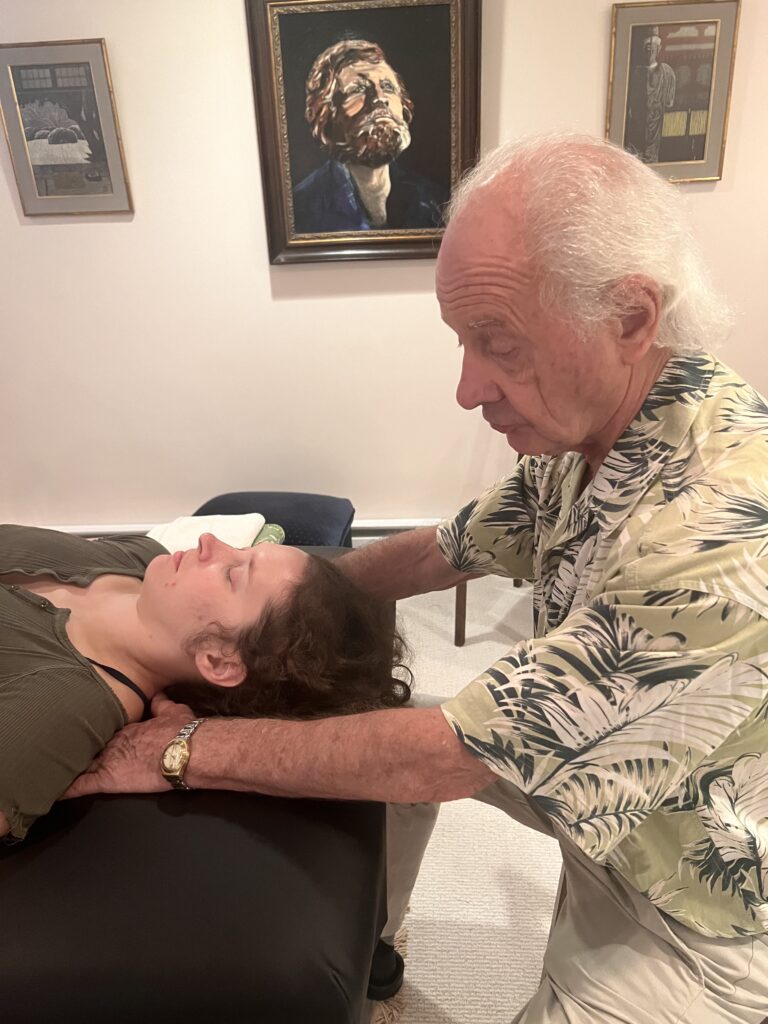
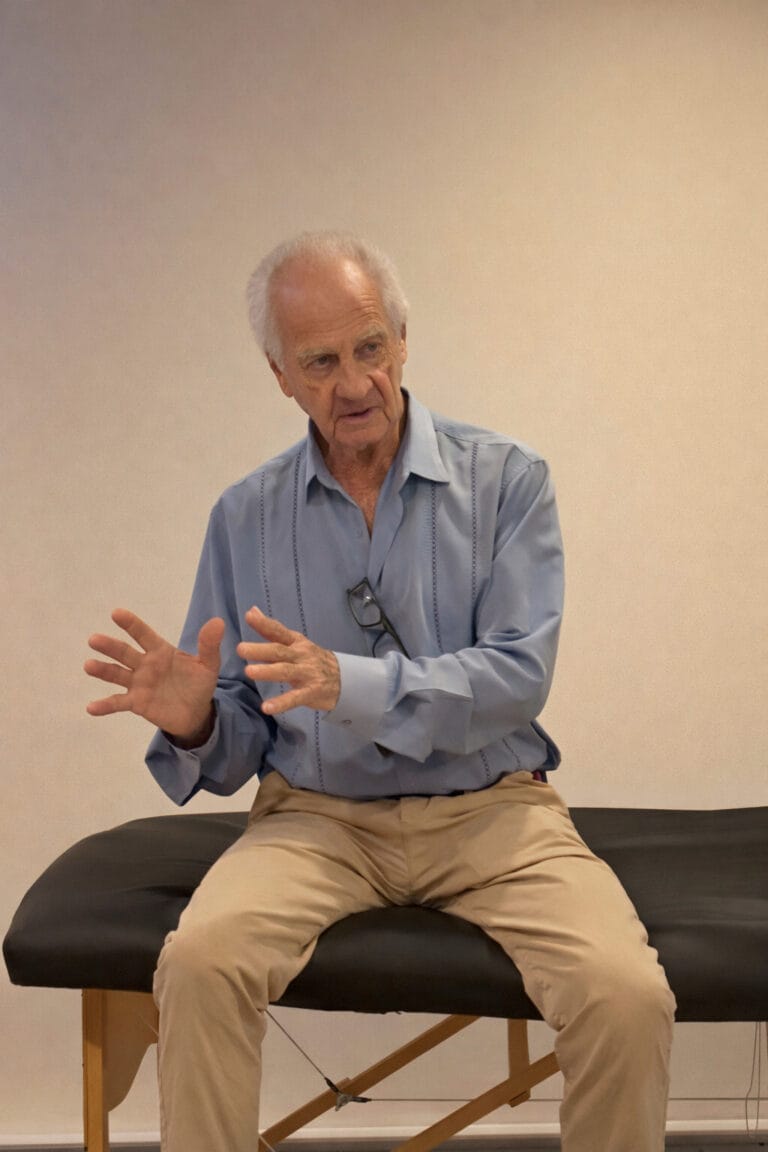
on February 11, 2025, in Boston, Massachusetts, USA, Tommy Thompson led a class in the Alexander Technique teacher training course that brought everyone back to that core realization: the way you use yourself shapes how you move, think, and relate to the world.
Key Objectives of the Class:
- To explore how Self-use shapes coordination, perception, and intention
- To help trainees recognize the body’s natural support system and learn not to interfere with it
- To apply inhibition and tweaking as tools for presence, not correction
This blog series is based on Tommy Thompson’s Alexander Technique classes. Each post follows the flow and insights of the class to expand both self-awareness and practical consciousness applicable to everyday life.
New here?
If you’re new to the Alexander Technique, you can start with the resources below.
Alexander Technique Class Flow at a Glance
1. The Opening Question
❝What are you doing to interfere with what’s already supporting you?❞
This wasn’t a rhetorical question. It was real. It was physical. It was immediate.
In this Alexander Technique class, Tommy didn’t ask trainees to adjust their posture or correct themselves. He asked them to observe the moment of interference—that precise instant when they began doing more than necessary. Because in that tiny moment, everything changes.
Most people are not lacking support. They’re just getting in the way of it. That’s where the work begins. And that’s what the Alexander Technique calls Self-use—the way you organize yourself in movement, thought, and perception, even when you’re unaware of it.
Tommy’s Word
“How close was I to recognizing that I am completely supported in all that I do—if I don’t interfere with it?”
This question, asked not as a theory but from lived experience, captures the essence of Tommy’s method: simple, precise, and grounded in embodied curiosity.
In his teaching, Self-use isn’t something you fix. It’s something you realize, moment by moment, through noticing what you’re doing—and what you’re doing to yourself.
2. Core Learnings from This Class
Core Concepts
- Self-use determines everything.
The way you use yourself—not just your body, but your thinking, perception, and intention—influences every movement and choice. - Support is already there.
You don’t need to build it, strengthen it, or create it. You need to recognize it and stop interfering with it. - Inhibition opens possibility.
The moment you pause instead of react, you enter a space where something new can happen. - Tweaking enhances awareness.
It’s not about correction. A slight shift in awareness can restore connection to support and ease. - Your body reveals how you’re thinking.
As Tommy said, “Don’t just look at the body. Look at the quality of perception and thought within it.”
Five Key Messages
- Support is not something you need to find—it’s already there.
- You don’t need to manage yourself. You need to notice.
- Even the smallest shift in awareness can change everything.
- Inhibition isn’t a pause from life—it’s an entry into it.
- You are not your habits. You are the one who notices them.
Essential Terms
- Self-Use
The way you organize and direct your whole self—body, thought, perception, and intention—in any given moment. Tommy often asked, “How am I using myself right now?” - Support
The reflexive, ever-present structure that holds you up—if you don’t interfere. As Tommy reminded the class, “You are already supported in all that you do.” - Inhibition
The capacity to pause before reacting. Not to freeze, but to choose. “I didn’t stop giving myself direction. I just withheld defining the situation as not working.” - Tweaking
A subtle adjustment—of perception, not posture—that reveals habitual interference. “Tweaking isn’t about correction—it’s about recognizing your support system.” - Primary Movement
The deep coordination of the neuromuscular system, often disrupted by habit. Tommy described it as something that reemerges when interference stops. - Awareness
The foundation of all change. Without awareness, there is no choice. Every part of Tommy’s work begins here—even before inhibition.
3. Tommy’s Insight
In Tommy’s words during class, there are not only the core principles of the Alexander Technique, but also practical wisdom that can be applied directly to daily life. His words go beyond simple advice about movement and prompt us to deeply consider how we choose to exist.“It is important to observe how you are using yourself and recognize that you are fully supported without unnecessary interference.”
→ Noticing how you interfere with your inherent support reveals the first step toward more coordinated and conscious self-use.
“Tweaking is not about correction; it is a process of helping someone recognize their natural support system.”
→ Tweaking invites awareness, not compliance—it helps the person sense what’s already functioning well beneath the habit.
“Rather than trying to change movement, it is more important to recognize how you are supported.”
→ Movement changes not by force but by realizing the support that’s already present when interference stops.
“True tweaking is about subtly adjusting a person’s understanding so they realize when they are losing their support.”
→ The aim is to awaken the person’s own recognition of loss of support—not to impose correction from the outside.
“The question is not how I am using my body, but how I am using myself. The only gauge I have is experiencing myself through my body.”
→ Transformation begins when we shift attention from form to function—from appearance to the lived experience of use.
“When observing someone, don’t just look at their body—consider their quality of thought and perception in a larger context. This turns hands-on work into an entirely different experience.”
→ Effective teaching engages not just muscle tone but the person’s attentional and perceptual state in the moment.
“You experience yourself through your body, but it is not just about physical function. It is a process connected to thinking, perception, and understanding, with the body being an integral part of it.”
→ Self-use is an embodied dialogue between thought, emotion, and action—not a mechanical process to be optimized.

4. Practical Tips for Everyday Life
What’s the Goal?
To stop interfering with your natural support—not by controlling, but by becoming aware. The goal is to bring the Alexander Technique into everyday life by noticing how you use yourself in simple, familiar moments.
How to Practice
- Pause Before You Move
Before reaching, standing, or responding—pause. Not to freeze, but to notice. Ask: “Am I allowing support or interrupting it?” - Let the Ground Support You
Whether sitting or standing, direct your attention downward. Let the ground or chair support you instead of lifting yourself up. - Shift Perception, Not Posture
Pick a daily task—walking, brushing teeth, typing. Don’t fix it. Just observe your use. Are you bracing, collapsing, or allowing ease?
What You’ll Notice
- You’ll catch yourself tensing unnecessarily.
- Everyday movements will feel lighter and more coordinated.
- You’ll feel more grounded—by allowing, not efforting.
5. Closing the Class
Key Takeaways
The essence of this class wasn’t about how to fix your posture or move “better.” It was about discovering that you are already supported, and that most of what we call effort is actually interference.
Tommy said, “You experience yourself through your body—but it’s not just about physical function. It’s a process connected to thinking, perception, and understanding.”
The invitation was simple, yet radical: Notice what you’re doing. Then ask if it’s helping or hindering.
Core Insights
As Tommy often reminded the class, the change doesn’t happen because someone fixed you. It happens because you became aware of what you were doing to yourself.
That awareness begins when you stop chasing improvement and start paying attention to the moment before movement—the space where choice lives.
It’s not about “better use,” but about truer use—the kind that comes from letting go of unnecessary control and trusting what’s already functioning beneath your habits.
A Final Invitation
So before you walk into your next task, pause.
Let your support find you.
Let your thoughts be part of your movement.
And let yourself experience what it’s like to do less—not out of passivity, but out of presence.
Because in the end, as Tommy said,
“It’s not about how you use your body—it’s about how you use yourself.”
6. One Key Practice
Catch yourself in the middle
Don’t wait until you stop.
Don’t analyze after the fact.
Instead, in the middle of a movement, a task, or a thought—
notice what you’re doing.
Right there. Right then.
You don’t need to correct it.
Just recognize:
“Am I leaving my support, or allowing it?”
That’s the work.
That’s the moment that changes everything.
7. Three Questions to Ask Yourself
Use these not to judge yourself— but to return to yourself in the midst of your day:
- What am I doing right now that might be interfering with my support?
Not what I did five minutes ago, or what I plan to do next—right now. - Am I chasing control, or am I allowing clarity?
Let the moment speak before jumping to fix it.) - Am I listening to myself as much as I’m trying to get it right?
Real awareness feels like presence, not performance.
These are not questions to solve.
They’re questions to practice—
again and again, in the middle of life.
8. For Those Who Wish to Learn More
Recommended Books
The Use of the Self – F. M. Alexander
This foundational text captures the essence of what Tommy emphasized in class: that how we use ourselves, moment to moment, shapes how we move, think, and live.
In particular, the chapter “Evolution of a Technique” shows Alexander’s personal process of discovering support not through correction, but through inhibition and awareness.
If you want to understand where the principle of non-doing and the art of subtle change originated, this is the book to start with.
Official Website of Tommy Thompson
www.easeofbeing.com
This is the official website personally managed by Tommy Thompson, offering a wide range of resources and programs to deepen your understanding and practice of the Alexander Technique:
- Private session reservations and inquiries
- Workshop and seminar schedules
- Overview of international teacher training programs
- Essays and articles on the Alexander Technique
9. Next Class Sneak Peek
What if your body already knows how to move, if only you’d stop interfering?
In the next class, we’ll continue exploring how to recognize reflexive support in daily movement—like standing, walking, and reaching—without trying to fix or control it.
Instead of adjusting posture, we’ll focus on awareness. Letting go of unnecessary doing creates space for natural movement to reappear.
In Class 36, we’ll explore:
How subtle perception, rather than correction, allows natural coordination to unfold.
10. Join the Alexander Technique Journey
Did this class leave a small resonance within you? Feel free to quietly hold it in your heart or share it in just a sentence or two. The comments are always open. Your one simple word may leave a gentle ripple in this ongoing journey.The journey of Resonance Flow continues across social media as well. Let’s continue this journey together.
 YouTube
 Instagram
 Threads
 Facebook