Conscious Movement to Interrupt Habit and Support Change – Tommy Thompson Class 41
❝ What if the way you move is shaping the way you lead, connect, and choose? ❞
What if that subtle downward pull through your spine, the tension around your neck, or the habitual set of your shoulders weren’t just physical patterns—but decisions your nervous system keeps making for you? And what if you could reclaim those decisions, moment by moment—not by force, but through conscious coordination and embodied presence?
This work is not about correcting posture. It’s about accessing choice at the level of movement, learning to intervene in automatic responses and discovering the possibility of support from within. You begin to see how deeply movement and awareness are interwoven—not as a technique to perform, but as a way of being.
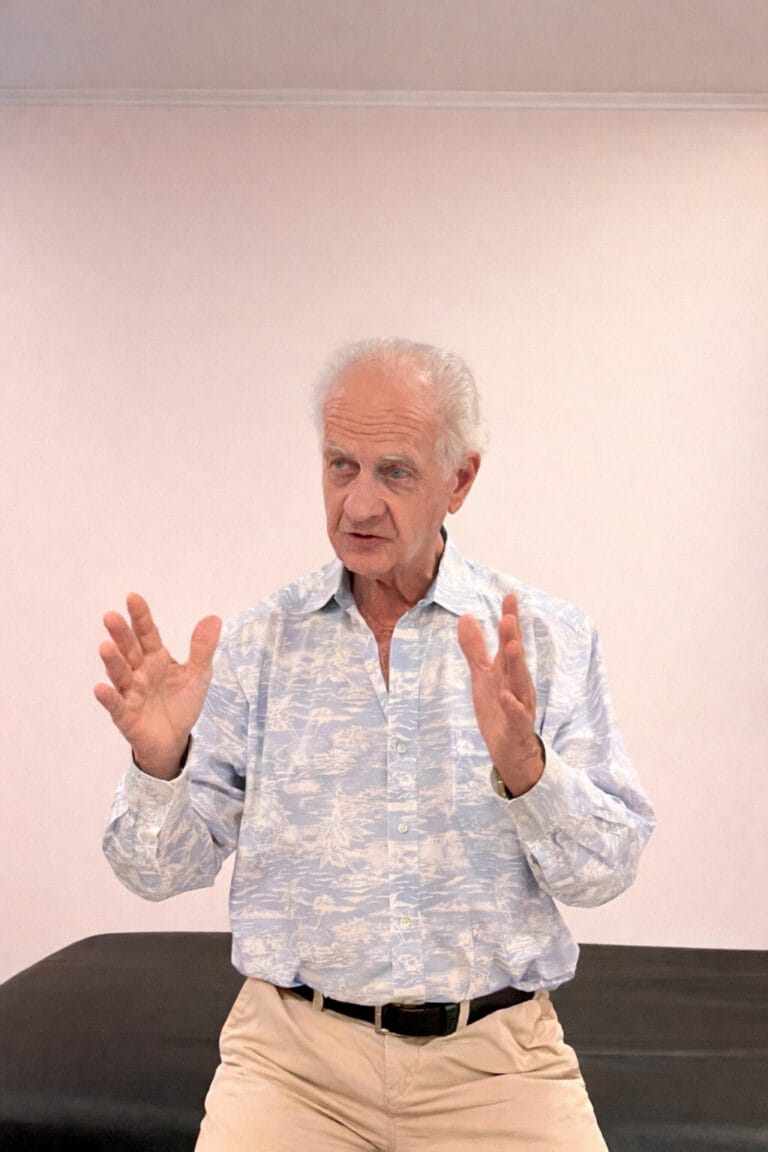
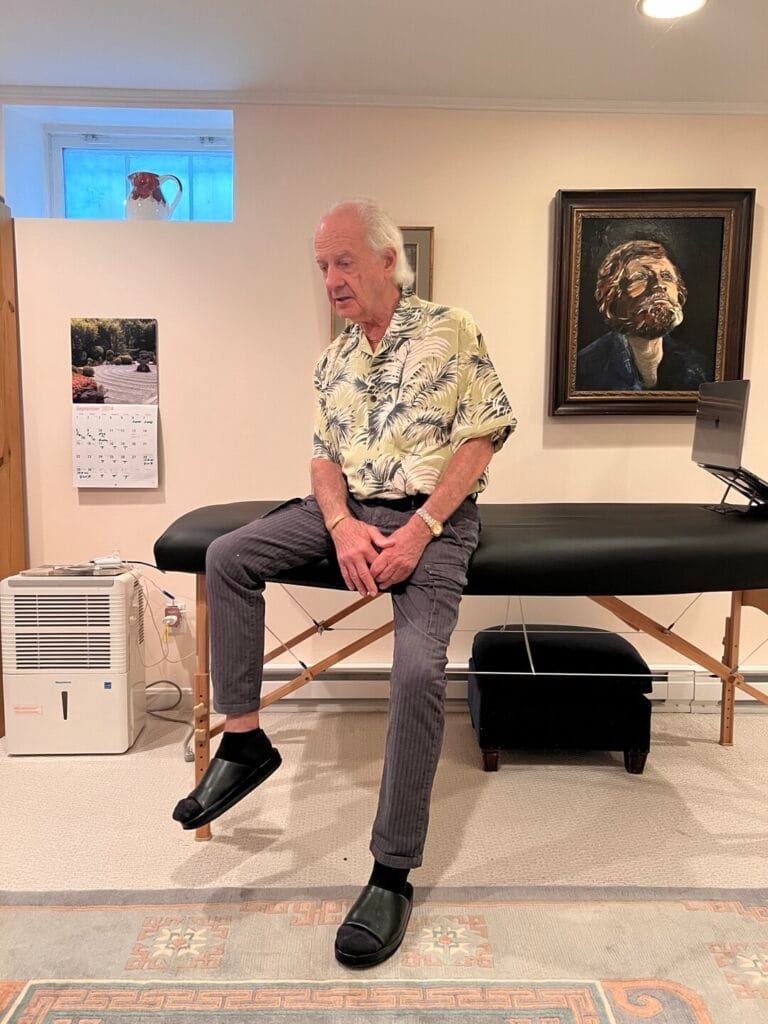
On February 26, 2025, in Boston, Massachusetts, USA, Tommy Thompson led a class in the Alexander Technique teacher training course that went far beyond physical adjustment. It was a study in how to notice, how to interrupt well-worn habits, and most of all, how to direct yourself with integrity — even in relationship, even in motion.
Class Objectives
- Cultivate sensory awareness to recognize and pause unconscious neuromuscular responses
- Develop structural clarity through the dynamic relationship of the head, neck, and back
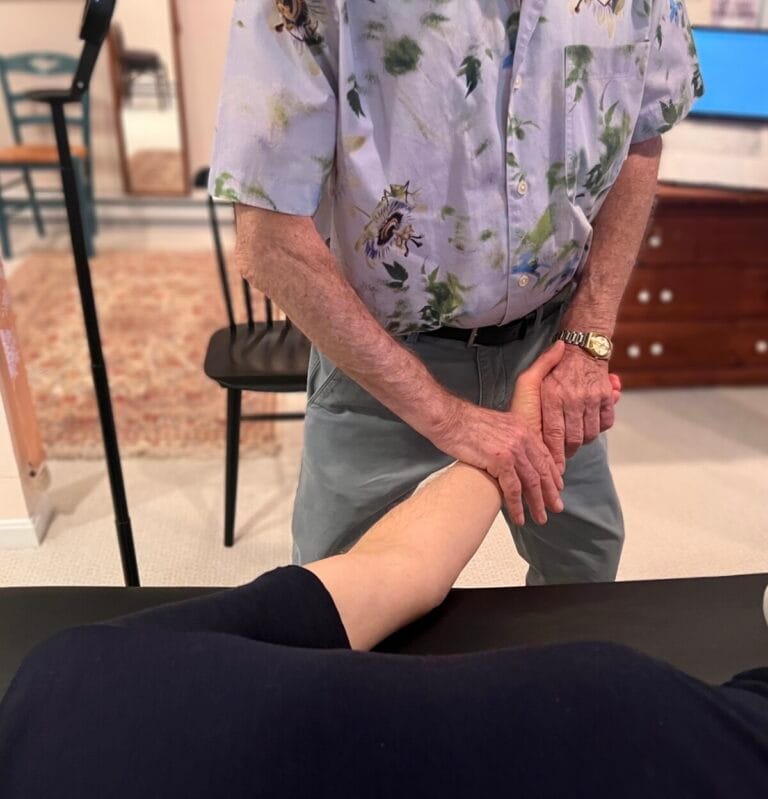
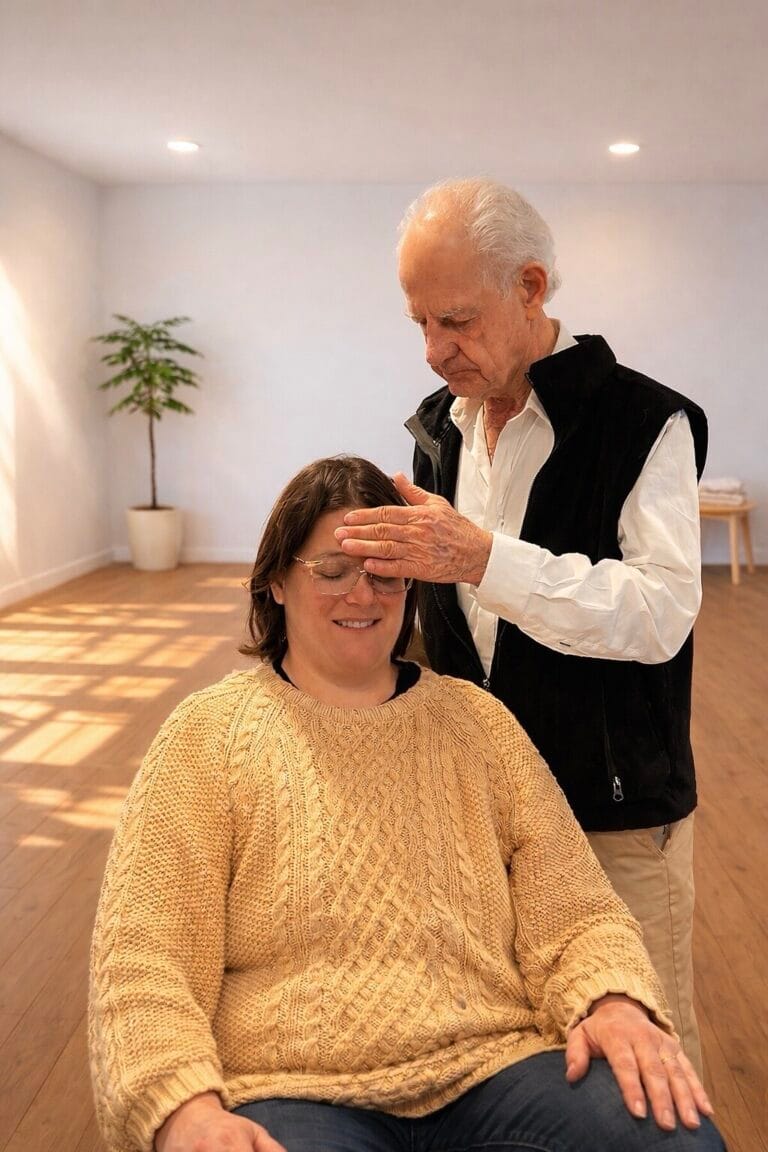
- Learn to offer support to others not through effort, but through a refined connection to yourself
This blog series is based on Tommy Thompson’s Alexander Technique classes. Each post follows the flow and insights of the class to expand both self-awareness and practical consciousness applicable to everyday life.
New here?
If you’re new to the Alexander Technique, you can start with the resources below.
Alexander Technique Class Flow at a Glance
1. The Opening Question

❝ What are you doing to yourself, right now, that’s getting in the way of something that could be easier? ❞
This question invites you to notice how you may be getting in your own way—not by doing too little, but often by doing too much without realizing it. Many of the things we do to “help” ourselves—tightening muscles, bracing for control, over-focusing—are actually the very habits that interfere with ease.
Rather than asking you to do something, the question offers a pause—a moment of quiet self-awareness in which you may begin to sense subtle patterns of interference.
It doesn’t separate the physical from the mental or the emotional. It simply shines a light on the quality of your response—your posture, your breath, your choices—and gently asks,
What if the most powerful change begins not by doing more, but by doing less, with awareness? This is the heart of the Alexander Technique: we don’t recover ease by striving for it, but by letting go of what prevents it.
Tommy’s Words
“Ease is not something you do. Ease is what happens when you stop interfering.”
This is not instruction—it’s revelation. Ease isn’t something you create. It’s something you uncover, when the extra effort falls away. In a culture obsessed with doing, that’s a radical shift.
What makes Tommy’s words powerful is their simplicity. He doesn’t tell you how to find ease. He shows you how to stop getting in its way.
2. Core Learnings from This Class: Conscious Movement
In this moment from Tommy Thompson’s class, trainees explore inhibition—pausing before movement.
Watch how interrupting the impulse allows the body to reorganize with less effort.
Conscious Movement to Interrupt Habit | Alexander Technique
Class 41 · February 25, 2025 · Boston, MA
Core Concepts
- Movement is the skill of choice
This class focused on recognizing habitual responses and reclaiming the ability to choose differently—in the moment, with awareness, rather than being pulled into automatic reactions. - Primary Control is the foundation for all movement
As defined by F.M. Alexander, this refers to the dynamic relationship of the head, neck, and back—a baseline that organizes the body’s length, balance, and coordination. - Primary Movement is lived, moment-to-moment coordination
Tommy Thompson’s evolution of Alexander’s primary control refers to the real-time coordination that begins with the head–neck–back relationship and extends into one’s whole way of being. It’s not a concept to apply, but a quality to experience—a state of self-direction, relational presence, and embodied support. - Posture is not something to attain
As Tommy says: “Posture is the organism’s total response within a gravitational field.”
In this view, posture is not a fixed shape, but a living, adaptive dialogue between gravity, perception, and direction. - Interrupting habit is the beginning of change
Even useful responses like unwinding can get in the way. The work is to notice the moment a pattern begins, pause, and choose differently. - Ease isn’t something you achieve—it’s what emerges when you stop interfering
Instead of trying harder, you’re invited to remove the unnecessary and let support and coordination arise naturally from within.
Five Key Messages
- Ease emerges when you stop interfering with yourself.
Effortless coordination isn’t achieved by trying harder—it arises when habitual tension is released. - Presence begins when you stop defining who you are.
Letting go of self-image opens space for real responsiveness in movement and in relationship. - Support others by organizing yourself first.
The quality of your touch, guidance, or interaction depends on the quality of your internal coordination. - Awareness offers you a choice—habit does not.
Recognizing patterns like pulling down or over-efforting is what creates the possibility for change. - Posture is not a fixed position, but a living response to gravity.
It reflects how the whole self relates to space, direction, and intention in the moment.
Essential Terms
- Primary Movement: Real-time coordination that begins with the head–neck–back relationship and extends into one’s way of being. A quality to experience, not a concept to apply.
- Primary Control: F.M. Alexander’s term for the head–neck–back relationship that organizes balance, direction, and length throughout the whole body.
- Unwinding: Unwinding is a natural process of release in the body, but without internal support and coordination, it can become a habitual reaction that undermines direction and connection. The key is to recognize and discern—does it come from grounded support or unconscious habit. True release begins with a pause, and change begins with a choice of direction.
- Kinesthetic Awareness: The conscious capacity to perceive patterns of use, tension, and flow from within. It is essential for self-awareness and for initiating change. Awareness brings choice; perception alone is not enough. This includes recognizing the early signs of pulling down or interference.
- Pulling Down: A patterned, unconscious response where the spine shortens, the head retracts, or the torso collapses—often as the nervous system attempts to stabilize without true support. This reflects a learned compensatory strategy, especially under stress or effort. The Alexander process begins by noticing these moments and choosing not to reinforce them.
- Spring-Loaded: Describes the body’s natural, oscillating responsiveness—movement that flows back and forth, rooted in early developmental patterns. This quality gives rise to elastic, wave-like support that continues into crawling, standing, and dynamic coordination.
3. Tommy’s Insights
In Tommy’s words during class, there are not only the core principles of the Alexander Technique, but also practical wisdom that can be applied directly to daily life. His words go beyond simple advice about movement and prompt us to deeply consider how we choose to exist.“If you kinesthetically sense pulling down through the upper body—from the neck down the front of the chest as you sit, let the neck be free. Let all the muscles of the neck be free to lengthen.”
→ When you feel a downward pull as you sit, releasing the neck is the first conscious intervention you can make.
“What you don’t want to do is reinforce the downward pull through the spine.”
→ Resisting gravity isn’t about bracing—it’s about choosing not to collapse.
“The brain activates the trapezius, pulls it back like this, and through that unwinding, opens it—allowing the head to drift away from the body.”
→ This is the brain’s way of supporting you when you don’t consciously engage, but it’s not always the most effective solution.
“We use our kinesthetic sense of perception to identify patterns we choose not to reinforce—right in that moment, for a reason.”
→ Change begins by recognizing a pattern and deciding not to continue it in the present moment.
“In this work, posture isn’t something to be attained. Posture is the organism’s total response within a gravitational field.”
→ Posture is not a fixed position but an ongoing relationship between the whole body and gravity.
“What you want to do now is work with yourself. Let your neck be free to lengthen—the purpose being to allow the movement of your head away from your body.”
→ True support starts with how you organize your own coordination—especially through your head, neck, and spine.
“You gain deeper contact—not just through your hands, but by coming into yourself. It’s about connecting with yourself.”
→ The quality of your contact with others begins with your connection to yourself.
4. Practical Tips for Everyday Life
1. Sitting Without Compression
What’s the Goal?
To sit in a way that supports natural length, internal space, and quiet responsiveness—without bracing, collapsing, or “getting it right.”
How to Practice
Pause—not to fix, but to listen. Let your neck be free. Let the head lead and the spine follow. Instead of preparing to sit, allow yourself to be moved by the intention to release downward without pulling down. Let the act of sitting become an invitation for the whole body to coordinate.
What You’ll Notice
It may feel like you’re “falling upward” into the chair. There’s a sense of lightness, alertness, and ease that remains, even in stillness. You don’t land into the chair—you arrive in it.
2. Speaking From Connection
What’s the Goal?
To speak not from effort, but from coordination—to let the voice emerge from your whole coordination rather than just the throat or will.
How to Practice
Before speaking, pause. Allow breath to move without managing it. Let your intention rise up through your spine, not push forward from your face. Speak from your back, from your support—not from trying to make an impression. Be available, and let the sound come through that availability.
What You’ll Notice
The voice may come with more resonance, warmth, and steadiness. Listeners may sense you more fully—not because you project more, but because you’re more connected with yourself while relating to them.
3. Meeting Pressure With Direction
What’s the Goal?
To stay available under stress—not by controlling more, but by choosing not to collapse inward.
How to Practice
When tension arises—whether in movement, thought, or emotion—notice if you’re pulling down or tightening around your chest or neck. Instead of reacting, pause. In that pause, allow the spine to lengthen and the head to move away from the body. Invite space and direction, even subtly.
What You’ll Notice
You won’t just feel less tension—you’ll feel more choice. The moment expands. Your presence becomes clearer, and your body responds with quiet support, not effort.
5. Closing the Class
Key Takeaways
We didn’t gather to fix posture—we came to notice what happens when we stop trying to hold ourselves together. What emerged wasn’t a technique, but a capacity: to sense, to pause, and to choose. The work wasn’t about achieving better alignment. It was about becoming available—in motion, in contact, in attention—recovering the possibility of opening to oneself in movement, in touch, and in attention.
Core Insights
- The nervous system does what it knows—until you interrupt it.
- Support comes not from effort, but from allowing your system to reorganize itself.
- Teaching isn’t correction—it’s offering a space where someone can sense their own support through yours.
A Final Invitation
There’s no final way to “get it right.” What matters is that you begin—by pausing, by noticing, by choosing not to interfere.
Tommy wasn’t asking anyone to improve themselves. He was asking them to be with themselves. And from there, everything shifts.
6. One Key Practice
Can you pause—right before you move?
Not to hesitate. Not to control.
But to give yourself just enough space to notice:
What am I about to do? Is it familiar? Is it necessary?
That pause—that single breath of awareness—is where habit ends and freedom begins.
Whether you’re reaching for a cup, placing a hand on someone, or taking a step… pause.
Let your neck be free. Let direction emerge.
Don’t try to do it. Let the movement happen—through you.
7. Three Questions to Ask Yourself
These are not questions to answer.
They are questions to live in.
- Am I moving toward or away from myself right now?
- If I didn’t have to hold myself up, what would support feel like?
- What changes when I stop trying to be right, and instead just stay with myself?
This is not about fixing. It’s about becoming available—again and again—to what’s already true in your experience. That’s where change begins.
8. For Those Who Wish to Learn More
Recommended Books
- Body Learning – Michael J. Gelb
A clear, engaging introduction to the Alexander Technique and its core principles, especially accessible for beginners. - How You Stand, How You Move, How You Live – Missy Vineyard
Deeply aligned with the spirit of Tommy’s teaching, this book integrates awareness, direction, and everyday application.
Official Website of Tommy Thompson
www.easeofbeing.com
This is the official website personally managed by Tommy Thompson, offering a wide range of resources and programs to deepen your understanding and practice of the Alexander Technique:
- Private session reservations and inquiries
- Workshop and seminar schedules
- Overview of international teacher training programs
- Essays and articles on the Alexander Technique
9. Next Class Sneak Peek
In the next class, we turn our attention to the direction of presence—not just where we are in ourselves, but how we relate to others and the space around us.
We will explore:
- How shifting the gaze alters the coordination of the neck and back
- The subtle territory between seeing and being seen
- What it means, as a teacher, to be ready to meet your student—not with intention, but with attention
This class invites a deepening of agency through relational orientation. It’s not about performing presence, but becoming available to what presence makes possible. You’ll begin to sense that how you are is already the beginning of how you teach.
10. Join the Alexander Technique Journey
Did this class leave a small resonance within you? Feel free to quietly hold it in your heart or share it in just a sentence or two. The comments are always open. Your one simple word may leave a gentle ripple in this ongoing journey.The journey of Resonance Flow continues across social media as well. Let’s continue this journey together.
 YouTube
 Instagram
 Threads
 Facebook